
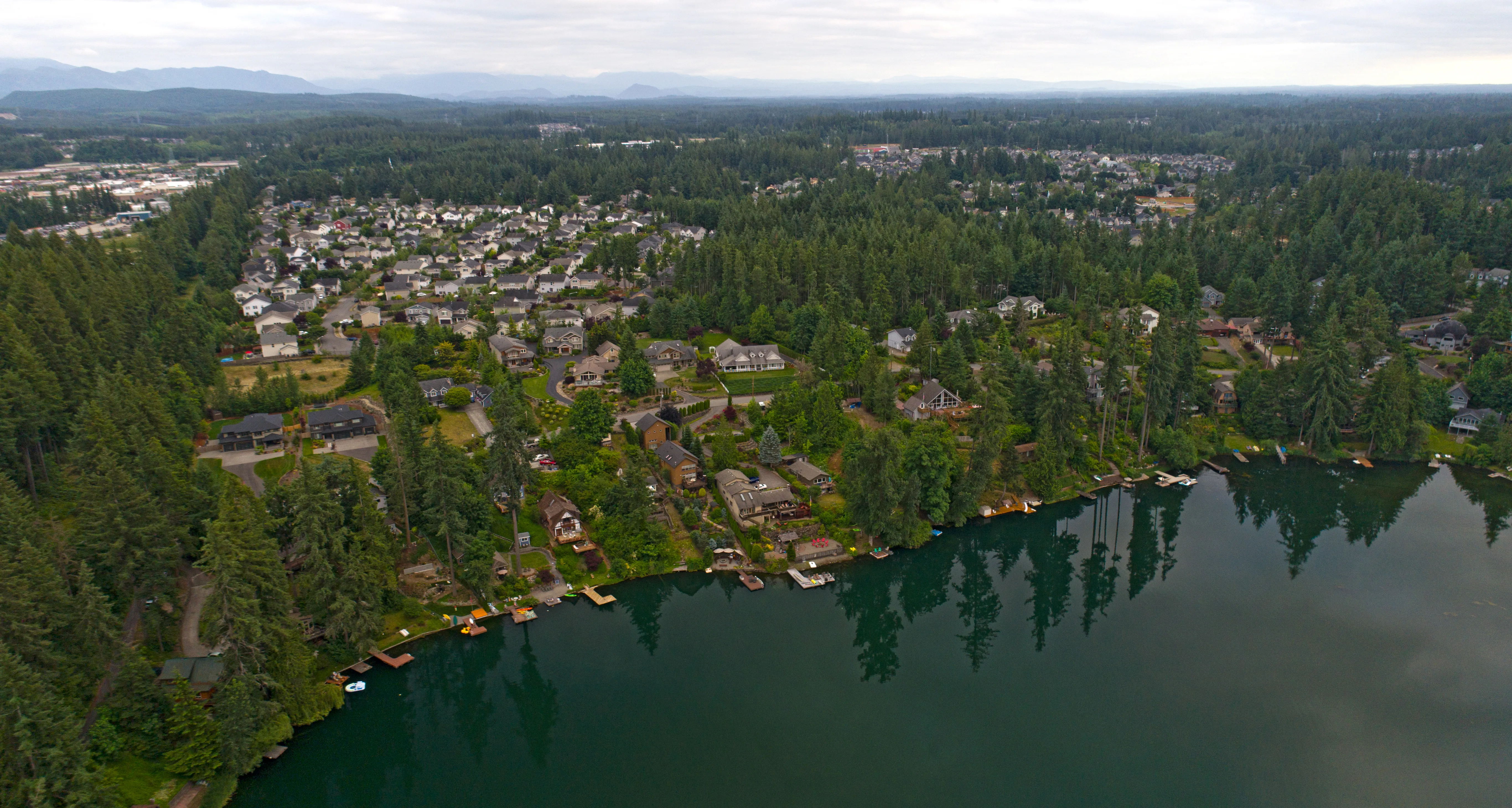
Puget Sound · Washington
Not every investor reading this is a professional landlord with a portfolio spreadsheet. Many are California homeowners who finally sold — a Bay Area bungalow, an Inland Empire rental, a Sacramento fourplex that tripled in value — and are now sitting on proceeds they need to deploy within a hard IRS deadline. Maple Valley keeps coming up in those conversations, and for good reason. With a median home price of $750,000, a vacancy rate hovering around 3%, and a school district that drives consistent family tenant demand, this corridor of South King County offers a combination of appreciation history and rental durability that's increasingly hard to find west of the Cascades.
The rental market here runs on a specific tenant profile: dual-income households relocating for work in the Seattle-Renton-Bellevue corridor, families in a transitional life stage between homes, and professional renters who want top-tier schools for their kids without a downtown commute. That demand is structural, not cyclical. Approximately 16% of Maple Valley households rent rather than own — a lower share than most suburban markets — which means each available rental unit faces genuine competition. When a well-maintained three-bedroom SFR comes to market, it typically doesn't sit.
This guide covers everything a 1031 buyer needs to evaluate Maple Valley as a replacement property market: the exchange mechanics you need to keep clean, what investment properties actually trade here and at what cap rates, the tax structure that makes Washington attractive compared to California, and the management realities that out-of-state investors consistently underestimate. Read it before you send your qualified intermediary a wire.

The foundation of a 1031 exchange is straightforward: sell a qualifying investment property, route the proceeds through a qualified intermediary (QI) — never touch the money yourself — and identify your replacement property within 45 calendar days of closing the relinquished property. The 45-day window is absolute. There are no extensions for holidays, weekends, or slow sellers. Most investors use all three identification slots the IRS allows, naming up to three properties without restriction on value, which gives you a fallback if your first choice falls through.
The 180-day closing deadline runs concurrently from the sale of the relinquished property, not from the 45-day identification deadline. That's a detail buyers frequently miscalculate — if you close the sale on March 1, you must close the replacement by August 28, regardless of when you identified. The like-kind rule is broad and frequently misunderstood: any real property held for investment or business use qualifies as like-kind to any other real property held for the same purpose. Selling a California condo and buying a Washington SFR or duplex is a clean exchange; property type doesn't need to match, just the investment intent.
The boot trap is where exchanges fall apart quietly. Boot is any value you receive from the exchange that isn't reinvested — cash left over, debt reduction, or a replacement property worth less than what you sold. Boot is taxable in the year of the exchange. To defer the full gain, the replacement property must be equal to or greater in value than the relinquished property, and you must take on equal or greater debt or compensate with additional cash. Precision matters here. A $15,000 shortfall creates a taxable event most investors didn't plan for.
The Maple Valley investment market is dominated by single-family rentals, and that reflects both the housing stock and the tenant pool. Roughly 84% of housing in the city is owner-occupied, which sounds discouraging until you realize it means well-maintained neighborhoods, stable values, and tenants who treat homes like homes. The small-multifamily supply — duplexes, triplexes — makes up only about 2.2% of the housing stock, so 1031 buyers targeting those property types will be competing for limited inventory on a compressed timeline.
Appreciation has been the primary return driver in this market. Over the past decade, Maple Valley has posted cumulative appreciation of roughly 124% — an average annual gain of 8.4%, placing it in the top 20% of appreciation markets nationally. Cap rates reflect that: SFR gross cap rates run approximately 4.5% before expenses, with net cap rates typically in the 3.5%–4.2% range depending on condition, management costs, and financing structure. Multifamily product, when it does trade, aligns closer to the broader Seattle metro benchmark of 5.5%–5.8%, though inventory is scarce enough that most transactions happen off-market.
| Property Type | Typical Price Range | Est. Cap Rate | Avg Days to Close |
|---|---|---|---|
| Single-Family Rental (3BR) | $650,000–$850,000 | 3.5%–4.5% (net) | 22–35 days |
| Duplex / Small Multifamily | $700,000–$950,000 | 4.5%–5.5% (net) | 30–45 days |
| Townhome (investor-held) | $480,000–$650,000 | 4.0%–5.0% (net) | 20–30 days |
| Small Commercial / Mixed-Use | $900,000–$1,500,000 | 5.0%–6.5% (net) | 45–60 days |
Looking to buy in Estimate your payment.
Enter your numbers to see an estimated monthly mortgage payment.
Estimate only. Excludes HOA fees and mortgage insurance.
A Bay Area investor who sold a median-priced home in 2024 or early 2025 is likely sitting on $800,000 to $1.4 million in proceeds. At Maple Valley's $750,000 median, that investor can acquire one strong SFR debt-free and still have capital remaining for reserves or a second identification. The price-to-rent ratio runs around 22x gross — not a pure cash flow play, but well within range for an appreciation-oriented investor who's already captured their equity gain in California and wants stability without ongoing state income tax exposure.
Los Angeles and Orange County sellers face the same dynamic at slightly different numbers. A mid-tier LA property that traded at $900,000–$1.2 million generates exchange proceeds that can comfortably cover a Maple Valley duplex — one of the most coveted property types here — or a well-positioned SFR in a neighborhood like Cedar Downs or Lake Sawyer where family tenant demand is particularly consistent. Southern California investors often find the transition straightforward: similar suburban character, stronger tenant protections than they expect, but no statewide rent control to navigate at the county level.
Sacramento and Inland Empire investors working with smaller exchange amounts — $400,000 to $700,000 — can use a 1031 to acquire a Maple Valley townhome or entry-level SFR, often with moderate leverage and a cleaner debt-service-coverage picture. At $480,000 to $650,000 for a townhome, a $500,000 exchange can close clean with modest financing. The Inland Empire investor accustomed to lower price-per-door economics should recalibrate expectations — cash-on-cash returns here trail what the Coachella Valley used to offer, but the tenant quality and neighborhood durability tend to be stronger.
Washington's most significant advantage for real estate investors is one that doesn't require a calculator: there is no state income tax. Every dollar of net rental income the property generates stays with the investor — not shared with Sacramento at 13.3% or with Olympia at anything. For a California investor collecting $36,000 a year in net rent, that difference is material from year one.
Washington does have a 7% capital gains tax on long-term gains exceeding $262,000 per year (the 2026 threshold), but for most small-portfolio investors, annual rental income doesn't trigger this — it applies to asset sales above that threshold, not recurring rental cash flow. The property tax rate in King County runs approximately 0.95% of assessed value — on a $750,000 purchase, that's roughly $7,125 annually. Compare that to a newly purchased California property assessed at $750,000 under current Prop 13 base rate of 1.1% plus special assessments that routinely push effective rates to 1.25%–1.4% in many counties.
| Tax Item | California | Washington |
|---|---|---|
| State income tax on rental income | Up to 13.3% | None |
| Property tax rate (new purchase) | ~1.1%–1.4% (with assessments) | ~0.95% |
| Sales tax on materials/renovation | 7.25%–10.75% (varies) | 6.5% + local (varies) |
| Capital gains tax (state level) | Up to 13.3% | 7% over $262K/year |
| No state income tax on passive income | No | Yes |
For investors who want full tax deferral with zero management burden, Delaware Statutory Trusts offer a 1031-compliant passive structure. You exchange into a fractional interest in an institutional-grade property — often multifamily or net-lease commercial — managed entirely by a sponsor. It trades active management control for complete passivity, a trade-off worth considering for investors in the $800K+ exchange range who don't want a landlord relationship at all.
Washington's landlord-tenant law is more tenant-protective than many out-of-state investors expect, though it remains significantly more balanced than Oregon's Portland-specific frameworks. As of 2026, there is no statewide rent control in Washington — landlords can raise rents to market rate between tenancies, and King County has not enacted a local rent control ordinance. Notice requirements matter: for month-to-month tenancies, a 20-day notice to vacate is required; evictions for non-payment must follow a formal unlawful detainer process that typically takes 30–60 days from notice to resolution when contested.
Professional property management in the Maple Valley area typically runs 8%–10% of gross monthly rent. Given average SFR rents in the $2,800–$3,295 range, that's $224–$330 per month in management fees — a line item that affects cap rate math significantly and must be modeled before closing. Firms serving the South King County corridor include companies like Real Property Management and locally-rooted operators that cover the Covington-Maple Valley-Black Diamond triangle. Vacancy here runs around 3%, which is below the national average, but out-of-state investors consistently underestimate the cost of tenant turnover — cleaning, minor repairs, marketing, and a month of lost rent between tenancies can erase several months of positive cash flow.
The other thing California investors tend to underestimate is how much the tenant profile matters here. Because 66% of rental households in Maple Valley are family households and nearly half include children under 18, the dominant tenant pool is a family renting by timing — between homes, relocating for work, or saving for a down payment. That means longer average tenancies and lower turnover, but also tenants who scrutinize school district boundaries, storage space, and yard access more than apartment renters do. A three-bedroom SFR with a fenced yard in the Tahoma School District boundary leases faster and retains tenants longer than a comparable unit without those features.
| Item | What to Verify | Local Resource |
|---|---|---|
| Title search | Clear title, no liens, easements, encroachments | Local title company (First American, Fidelity) |
| Sewer vs. septic | Many Maple Valley properties are on septic — confirm system age and last inspection | King County Assessor / seller disclosure |
| Flood zone status | Confirm FEMA flood zone designation — properties near Lake Wilderness and creek corridors may have exposure | FEMA Flood Map Service Center |
| Rental permit requirements | Maple Valley does not currently require a rental business license, but verify with City Hall | City of Maple Valley |
| HOA rental restrictions | Many HOAs in Maple Valley cap investor-held units at 10%–20% of community — confirm before identification | HOA governing documents / management company |
| ADU potential | Washington's 2024 ADU laws significantly expanded by-right ADU permitting; verify lot size and setbacks | City of Maple Valley Planning |
| Zoning and land use | Confirm R-1, R-2, or R-4 zoning designation and permissible uses | King County GIS |
| Current lease status | Review all active leases, rent amounts, and security deposit balances | Seller / listing agent |
| Short-term rental ordinance | Maple Valley has not enacted STR restrictions as of 2026, but HOAs may prohibit | City code + HOA documents |
| Deferred maintenance inspection | Roof, HVAC, septic, siding — cost to stabilize should be factored into cap rate | Licensed WA home inspector |
| School district boundary | Tahoma SD boundary affects tenant pool quality; confirm address is inside district | Tahoma SD boundary map |
| Property management referral | Identify a manager before closing, not after — vacancy risk during transition period | South King County PM companies |
| Title company recommendation | Use a QI-experienced title company familiar with 1031 closings in King County | First American or local affiliate |
| Tax assessment vs. purchase price | King County may reassess after sale — model at 0.95% of purchase price | King County Assessor |
| Insurance cost verification | Fire, liability, and loss-of-rent coverage in King County — get a quote before closing | Local insurance broker |

Local Expert Takeaway: The single most common mistake California 1031 buyers make in Maple Valley is treating it like a cash flow market and getting frustrated when the numbers don't match their Sacramento expectations. This market rewards appreciation investors — buy a clean, well-located SFR in the Tahoma School District footprint, stabilize a reliable family tenant, and let the equity work. Chasing the highest gross rent by skipping property condition or HOA diligence on a 45-day deadline is how investors end up with a problem they can't resolve from out of state.
Todd works directly with investors coming in on 1031 deadlines and can help you identify investment-grade properties in the Maple Valley corridor before your 45-day window runs out. If you want to keep the transaction off your personal DTI, ask him about DSCR loan structures — they're purpose-built for this scenario. Reach out before you close your relinquished property, not after.
✅ Maple Valley's 10-year appreciation rate of approximately 124% places it among the strongest appreciation markets in Washington — making it a compelling 1031 destination for equity-rich California investors targeting long-term wealth preservation over immediate cash flow.
⚠️ Net SFR cap rates in the 3.5%–4.2% range mean this market does not pencil as a pure income play at current prices. Model your returns honestly, including management fees, vacancy, and property tax at 0.95% of purchase price.
📍 Septic systems, HOA rental caps, and the 45-day identification clock are the three most common deal-killers in Maple Valley 1031 transactions — verify all three before you submit your identification letter.
Does a 1031 exchange work for out-of-state property?
Yes, absolutely. The like-kind rule under Section 1031 applies to any real property held for investment or business use in the United States, regardless of which state the relinquished or replacement property is located in. Selling a California property and reinvesting in Washington is a standard and well-established exchange structure.
What is the cap rate on rental property in Maple Valley?
SFR net cap rates in Maple Valley currently run approximately 3.5%–4.2%, with small multifamily product — when it trades — ranging closer to 4.5%–5.5%. The market is appreciation-driven rather than income-driven, so investors prioritizing current cash yield over long-term equity growth will need to calibrate expectations before making an offer.
Do I need a local property manager for a 1031 investment in Washington?
You're not legally required to hire one, but out-of-state ownership without local management rarely ends well in a market with Washington's landlord-tenant notice requirements and the tenant profile Maple Valley attracts. Professional management typically runs 8%–10% of gross rent and pays for itself in avoided turnover costs and legal compliance alone.
Explore the full Maple Valley series: The Ultimate Maple Valley Relocation Guide · Is Maple Valley Safe? · Cost of Living in Maple Valley · Best Neighborhoods in Maple Valley · Maple Valley Schools & Family Life · Maple Valley Youth Sports · Maple Valley Parks & Recreation · Retiring in Maple Valley · 1031 Tax-Deferred Exchange in Maple Valley · Maple Valley First-Time Homebuyers Guide · Moving to Maple Valley from California
Tell us what you need help with and we'll connect you with local resources.

About the Author
Todd Davidson is the founder of Living in Oregon and Living in Washington, where he publishes in-depth city guides, neighborhood resources, and local market insights covering more than 180 communities across the Pacific Northwest. While his background is in home financing and real estate, he created these digital platforms to help families research and compare regions before making a move.