
Puget Sound · Washington
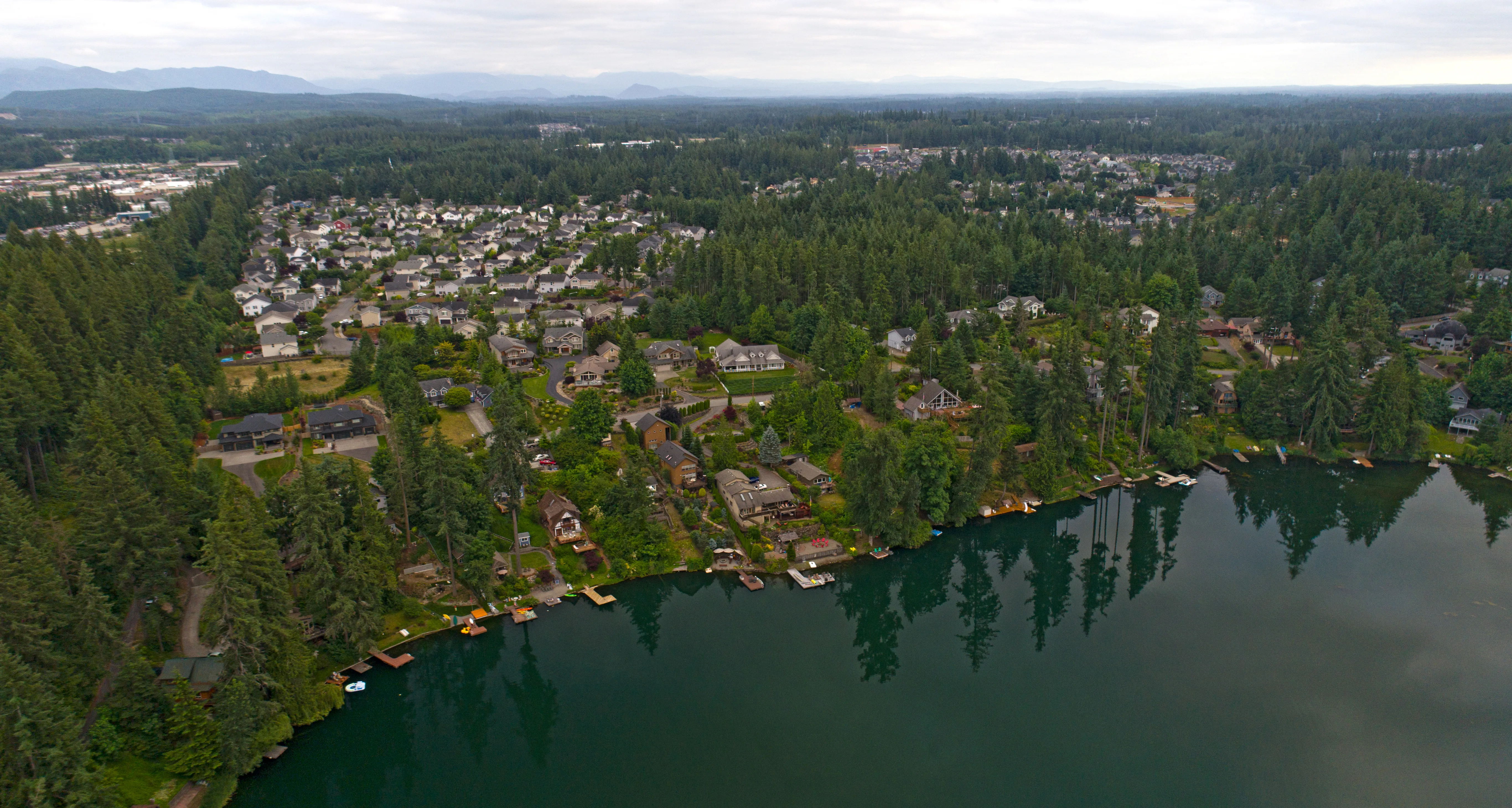
There's a specific moment most first-time buyers describe — not when they sign the offer, not even when they get the keys. It's the moment they realize this is actually happening, that all the spreadsheets and mortgage calculators and weekend drives through neighborhoods were leading somewhere real. In Maple Valley, that moment tends to arrive with a particular kind of clarity. You're looking at a well-kept craftsman on a quiet street backed by Douglas firs, the kids are already mentally claiming bedrooms, and you're doing the math in your head for the third time — hoping it works out. It usually can. But the path to that moment is more specific than most online guides let on, and Maple Valley has its own rules.
The median home price in Maple Valley sits at $750,000 — a number that stops a lot of first-time buyers cold. At current rates, that's a monthly payment that requires a household income well above what most people think of as "comfortable." And yet this market has softened meaningfully from its peak, with some data points suggesting a decline of around 6% year-over-year through mid-2026. The gap between renting here and owning here is real, but it's not as insurmountable as it first appears — especially once you understand what your actual entry-level options look like, which price tiers are realistic for a first purchase, and what help is available to close the gap on the down payment side.
This guide walks through the full picture: what your budget actually gets you in this market, the step-by-step buying process with the Maple Valley-specific nuances that matter, how credit and income qualification actually works in plain English, and which neighborhoods offer the best value entry point for someone buying their first home right now. If you've been reading general Washington real estate content and wondering how it applies to Maple Valley specifically — this is that answer.

Compared to the cities that share its commute radius, Maple Valley makes a reasonable case for itself. You're roughly 35 minutes from Seattle on a good day, which puts you in the same conversation as Renton or Kent while offering more space, newer housing stock in many neighborhoods, and Tahoma School District's consistently strong reputation — rated an A by most independent education evaluators. The city runs about 28,786 people, which means you're not living in a sprawling suburb with six-lane arterials everywhere, but you're also not so far out that you feel disconnected. For a first-time buyer who wants space, schools, and a commutable location, the case is genuine.
The honest challenge is entry price. When roughly 78% of homes in Maple Valley are owner-occupied, inventory is structurally tight — people tend to stay. Attached homes and condos are available closer to the $500,000–$550,000 range, and that's realistically where first-time buyers in the 98038 zip code are starting. Detached single-family homes that are fully updated and move-in ready generally don't appear until you're approaching the $650,000–$700,000 range. Areas around Cedar Downs, Rock Creek, and some pockets of Wilderness Village have historically offered the most accessible entry points for buyers who need to stay under $650,000 while still getting into a detached home. These aren't compromise neighborhoods — they're where a lot of Maple Valley families planted their roots before moving up within the same city.
What works in Maple Valley's favor for first-timers is what doesn't work elsewhere: Washington has no state income tax. For buyers relocating from California, Oregon, or any state with meaningful income taxes, this translates directly into purchasing power. A household earning $152,885 — roughly the Maple Valley median — keeps more of it here than virtually anywhere else in the region. That additional take-home pay factors directly into what lenders calculate as your ability to service a mortgage. It's not a program or a grant — it's structural, and it's one of the reasons Maple Valley households can carry prices that would look impossible on paper in a taxed state.
| Price Range | What You Typically Find | Neighborhood Examples | Competition Level |
|---|---|---|---|
| Under $350K | Age-restricted condos (55+), rare fixer-uppers, limited inventory | Water Gardens community | Low — very few options exist |
| $350K–$450K | Condos, some townhomes, attached units — no detached SFR | Edge of 98038, attached communities | Moderate for attached product |
| $450K–$550K | Townhomes, entry condos, occasional older detached fixer | Rock Creek, Cedar Downs fringes | Moderate to competitive |
| $550K–$650K | Older detached SFR, smaller lots, some updating needed | Cedar Downs, Rock Creek, Wilderness Village | Competitive — limited inventory |
| $650K+ | Updated detached SFR, newer builds, more lot space | Cherokee Bay, Valley Green, Maple Ridge Highlands | Competitive, especially below $750K |
The best value entry point right now for most first-time buyers is the $550,000–$650,000 tier. Demand from move-up buyers concentrates above $750,000, which means the lower end of the detached market has more room to negotiate, more sellers willing to cover closing costs, and less competition from cash or investor buyers. If your budget is below $500,000 and you're committed to the Maple Valley zip code, attached housing is the realistic path — and there's nothing wrong with building equity in a townhome for three to five years before making the jump to a detached home in the same district.
| Step | What Happens | Typical Timeline | What First-Timers Get Wrong |
|---|---|---|---|
| Get finances in order | Pull credit, pay down revolving debt, gather two years of tax returns and pay stubs | 1–3 months before searching | Underestimating how much credit card utilization affects their score |
| Pre-approval | Lender pulls hard credit, verifies income, issues a commitment letter with a specific dollar amount | 1–5 business days | Confusing pre-qualification (an estimate) with pre-approval (a real number) |
| Find an agent | Interview 2–3 buyer's agents with verified Maple Valley transaction history | 1–2 weeks | Choosing based on personality alone without checking neighborhood knowledge |
| Active search | Tour homes, track DOM, compare $/sq ft by neighborhood | 4–12 weeks | Shopping at the top of their pre-approval rather than their actual payment comfort |
| Making offers | Submit offer with earnest money, terms, and contingencies | 24–72 hours when you find the right home | Offering list price in a softening market without pulling comps |
| Under contract | Seller accepts — inspection and appraisal windows begin | Days 1–5 after acceptance | Not knowing that inspection windows in King County are often 5–10 business days |
| Inspection | Licensed inspector reviews the home — you attend and take notes | Scheduled within 5–7 days of acceptance | Waiving inspection on older Maple Valley stock to be competitive |
| Appraisal | Lender orders independent value assessment to protect their loan | Days 7–21 | Panicking if appraisal comes in low — it's a negotiation point, not a deal-killer |
| Final walkthrough | Verify the home is in the agreed condition before signing | 24 hours before closing | Skipping this step and missing repairs that weren't completed |
| Closing | Sign documents, wire funds, get keys | Day 30–45 typically | Not having closing costs ready — often 2%–3% of purchase price beyond the down payment |
What remains competitive in this market is the sub-$650,000 detached range. Sellers in that tier know their homes appeal to the largest pool of buyers — families with school-age children, first-time buyers stretching to get into Tahoma District, and buyers who've been priced out of Renton or Kent. If you find a home in that range that's been updated and priced correctly, be prepared to move within 48 hours and bring your strongest terms. In the $700,000+ range, you generally have more time and more negotiating room.
Looking to buy in Estimate your payment.
Enter your numbers to see an estimated monthly mortgage payment.
Estimate only. Excludes HOA fees and mortgage insurance.
Credit score requirements in plain English: for a conventional loan, 620 is the floor but 680 is where things get meaningfully better. The difference between a 650 and a 740 score on a $450,000 loan can easily translate to 0.5%–0.75% in rate — which at current market levels means roughly $150–$225 more per month, or $54,000–$81,000 over the life of the loan. That's not a rounding error. If your score is in the low 600s, spending 3–6 months paying down credit card balances before applying can make a larger difference than any program or grant.
For FHA loans, the floor is 580 for a 3.5% down payment, and 500–579 with 10% down. FHA is often the right path for first-time buyers who are short on down payment savings, but understand what comes with it: mortgage insurance premiums for the life of the loan unless you refinance into a conventional once you've built equity. On income qualification, most lenders use a 28% front-end debt-to-income ratio as the guideline for housing costs. To comfortably qualify for a $400,000 home purchase at current rates, you're typically looking at a gross household income of around $90,000–$95,000. For $500,000, that threshold climbs to roughly $112,000–$118,000, and for $600,000 you're generally looking at $135,000 or more. DTI — your total monthly debt payments divided by your gross monthly income — is what lenders actually care about most. If you have $800 in car payments and student loans on top of your housing costs, that eats into your qualifying power more than most buyers realize until they're sitting in front of a lender.
Washington's lack of a state income tax is genuinely meaningful for buyers relocating from places like California or Oregon. A household earning $130,000 in California might be netting $95,000 after state taxes. That same salary in Washington nets closer to $106,000 — a difference that lenders won't directly credit to you but that gives your household budget real breathing room. It also means the effective cost of homeownership here is lower than the mortgage payment alone suggests, which is worth remembering when the sticker price on a Maple Valley home makes your stomach drop.
Mistake 1: Confusing list price with what homes actually close at. In a softening market, list price is a starting point — not a ceiling. Homes in the $550,000–$650,000 range in neighborhoods like Cedar Downs or Rock Creek have closed at 97%–99% of list price in recent months, which means there's room to negotiate, especially if a home has been sitting for more than two weeks. First-time buyers who assume they need to offer over ask — because that's what they heard Washington real estate was like — are leaving money on the table in the current environment.
Mistake 2: Skipping inspection on older housing stock. Maple Valley has a meaningful share of homes built in the 1980s and 1990s, particularly in established neighborhoods like Wilderness Village and some Cedar Downs pockets. These homes can carry deferred maintenance, aging roofs, or original electrical panels that don't meet current standards. The cost of a $500–$600 inspection is nothing compared to discovering a $15,000 roof replacement need after closing. With homes sitting longer in this market, you have time to include an inspection contingency — use it.
Mistake 3: Shopping at the top of their pre-approval. A lender who pre-approves you for $700,000 is telling you what you mathematically qualify for — not what you'll feel comfortable paying month to month. Maple Valley property taxes at 0.95% on a $700,000 home add roughly $554 per month to your housing cost before you've touched a light switch. When you layer in insurance, maintenance, and HOA fees where applicable, the real monthly number is often $400–$600 above what a mortgage calculator shows. Start with your comfortable monthly payment and work backward to a price — not the other way around.
Mistake 4: Not understanding how Tahoma District boundaries affect resale. Tahoma School District is the primary reason a large portion of Maple Valley buyers choose this city over Covington or parts of Kent. Homes that sit within Tahoma boundaries consistently attract more interest at resale than comparable homes just outside the boundary. Before you fall in love with a home, verify the school assignment — don't assume. A half-mile can mean a different elementary school assignment, and buyers with kids will check.
Mistake 5: Waiting for prices to drop further. The Maple Valley market has softened from its peak, but supply remains constrained — roughly 78% of homes are owner-occupied and people aren't moving unless they have to. First-time buyers who wait for a meaningful correction often find that any rate decrease (which boosts their purchasing power) simultaneously draws more competition back into the market, erasing the advantage. The buyers who tend to feel best about their Maple Valley purchase are the ones who bought at a price they could comfortably afford and stopped watching Zillow every morning.
Most first-time buyer conversations in Maple Valley eventually focus on three or four specific areas — the ones where the price point is within reach, the commute is manageable, and the homes have held their value across market cycles.
Cedar Downs is one of the most frequently cited entry points. It's an established neighborhood with a range of home sizes, some of which were built in the late 1980s and 1990s, meaning prices can start below the city median for buyers willing to do some updating. The tradeoff is that older construction means more due diligence on inspection — but you're getting into Tahoma District on a manageable budget.
Rock Creek offers similar price characteristics, with a mix of townhomes and detached single-family homes that tend to appeal to buyers who want a move-in-ready first home without the full city-median price tag. Proximity to SR-18 makes the Seattle commute reasonable, and the neighborhood's scale — not too large, not isolated — tends to work well for buyers who want a sense of community without a mandatory HOA social calendar.
Wilderness Village is worth considering if you're open to a slightly older home in exchange for more square footage at a given price point. Some homes here start in the upper $500,000s, which for Maple Valley represents genuine value on a per-square-foot basis. It's a neighborhood that's been around long enough to feel established without feeling dated, and it sits squarely within Tahoma boundaries.
For buyers with a budget closer to $650,000 or above, Valley Green and Cherokee Bay open up — newer construction, larger lots in some cases, and the kind of curb appeal that holds resale value well. These aren't typical first-time buyer neighborhoods, but for dual-income households with combined incomes above $150,000, they represent a realistic first purchase rather than a stretch.

Local Expert Takeaway: The single most common mistake first-time buyers make in Maple Valley is anchoring their budget to the citywide $750,000 median and concluding the market isn't for them — without ever looking at what $580,000–$640,000 actually buys in Cedar Downs or Rock Creek. Those neighborhoods offer genuine entry points into Tahoma School District with detached homes, real lots, and the kind of resale trajectory that has rewarded buyers who got in early across every cycle this city has seen. Don't dismiss Maple Valley based on the headline number before you've walked through what's actually available at the bottom third of the price range.
✅ The realistic entry point for a detached home in Maple Valley is $550,000–$650,000 — that tier sits below the city median and currently has the most negotiating room of any segment in the market.
⚠️ Pre-approval is not the same as affordability — a lender's maximum is a ceiling, not a recommendation. Property taxes at 0.95% plus maintenance and insurance can push your real monthly cost $400–$600 above what the mortgage calculator shows.
📍 Tahoma School District boundaries matter at resale — verify your specific address before making an offer, not after.
Can I buy a home in Maple Valley as a first-time buyer?
Yes, first-time buyers purchase homes in Maple Valley regularly — the key is understanding which price tier and property type is realistic for your income and savings. Attached homes and townhomes are accessible in the $450,000–$550,000 range, while detached single-family entry points start around $550,000–$600,000 in neighborhoods like Cedar Downs and Rock Creek. Washington's lack of a state income tax also meaningfully increases take-home pay for buyers relocating from taxed states, which directly boosts qualifying power.
How much do I need to buy my first home in Maple Valley?
At a $600,000 purchase price with a 3% FHA down payment, you're looking at $18,000 down plus roughly $12,000–$18,000 in closing costs — so approximately $30,000–$36,000 cash to close in a typical transaction. Programs like ONE+ can reduce the down payment portion, but closing costs are generally paid regardless. A household income of $130,000–$140,000 or more is typically needed to comfortably qualify at that price with standard debt levels.
What credit score do I need to buy a house in Washington state?
FHA loans are available with a 620 minimum score for a 3.5% down payment, and conventional loans technically start at 620 as well. In practice, a score of 680 or higher gives you access to meaningfully better rates — and a score above 740 gets you the best conventional pricing available. If you're between 600 and 640 right now, three to six months of focused debt paydown before applying is often worth more than any program you might qualify for.
Explore the mortgage and program guides: ONE+ Down Payment Grant · Maple Valley First-Time Homebuyers Guide · 1031 Tax-Deferred Exchange in Maple Valley
Explore the full Maple Valley series: The Ultimate Maple Valley Relocation Guide · Is Maple Valley Safe? · Cost of Living in Maple Valley · Best Neighborhoods in Maple Valley · Maple Valley Schools & Family Life · Maple Valley Youth Sports · Maple Valley Parks & Recreation · Retiring in Maple Valley · 1031 Tax-Deferred Exchange in Maple Valley · Maple Valley First-Time Homebuyers Guide · Moving to Maple Valley from California
Tell us what you need help with and we'll connect you with local resources.

About the Author
Todd Davidson is the founder of Living in Oregon and Living in Washington, where he publishes in-depth city guides, neighborhood resources, and local market insights covering more than 180 communities across the Pacific Northwest. While his background is in home financing and real estate, he created these digital platforms to help families research and compare regions before making a move.