
Puget Sound · Washington
If you're relocating to Maple Valley with kids in tow, the school question comes first — and the answer is genuinely strong. The Tahoma School District ranks among the top 10 public districts in Washington state, posts graduation rates nearly 12 points above the statewide average, and consistently outperforms the state in both math and reading proficiency. This is not a district that merely looks good on paper; it's one that parents in Covington, Kent, and Black Diamond have been quietly envying for years.
What makes Tahoma perform at this level comes down to a combination of community investment and demographic stability. The district serves a relatively affluent, deeply engaged parent base — median household incomes in Maple Valley run around $152,885 — and that financial stability shows up in school funding support, volunteer hours, and the kind of PTA infrastructure that sustains enrichment programs when state budgets get tight. The district is compact enough that families aren't lost in bureaucracy, yet large enough to offer meaningful elective depth at the high school level.
This guide is designed to help you cut through the district rankings and figure out what actually matters for your specific situation — which elementary school your address feeds into, what the middle school transition looks like, where the district genuinely excels, and where families with specialized needs may want to look elsewhere. Whether you're moving from California, the Eastside, or across town, here's what you need to know before you make an offer.
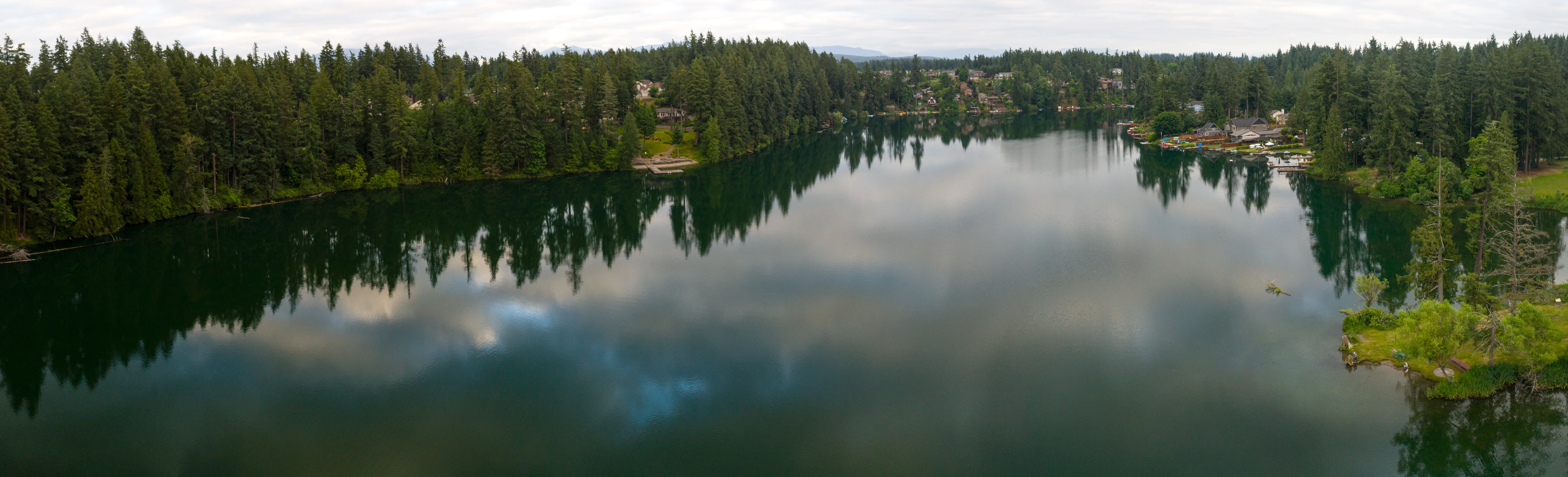
Tahoma runs nine traditional campuses — six elementary schools, two middle schools, and one high school — plus Tahoma Open Doors, an alternative credit-recovery program for grades 9–12 with an enrollment of roughly 80 students. Total enrollment sits at approximately 9,286 students, with the district serving not just Maple Valley proper but also Ravensdale, Hobart, and portions of Renton, Covington, Black Diamond, and unincorporated King County.
| Metric | Tahoma School District | WA State Average |
|---|---|---|
| Total Enrollment | ~9,286 students | — |
| School Structure | 6 elementary, 2 middle, 1 high school | — |
| Student-Teacher Ratio | ~19:1 | 18:1 |
| Per-Pupil Spending | $15,733/year | $19,251/year |
| Math Proficiency | 59–64% (district range) | 41% |
| Reading Proficiency | 70–74% (district range) | 53% |
| Graduation Rate | 94.5% (2023–24) | 82.8% |
| District Ranking | Top 10 of 247 WA districts (SchoolDigger) | — |
| Economically Disadvantaged | ~13.8% | — |
| Student Diversity | 40% minority enrollment | 52% |
Tahoma's six elementary schools all sit within Maple Valley, all serve grades PK–5, and all post proficiency numbers above state averages. But they are not identical, and knowing the distinctions helps families prioritize their home search accordingly.
Cedar River Elementary (22615 Sweeney Rd SE) is consistently the district's highest academic performer — ranked among the top 5% of public elementary schools in Washington and carrying a 5-star SchoolDigger rating, with math proficiency around 78% and reading near 83%. The catch is that its attendance zone doesn't cover central Maple Valley, so families who want Cedar River need to buy specifically within its boundary.
Rock Creek Elementary (25700 Maple Valley Black Diamond Rd) is a strong second-tier performer, ranking in the top 140 of over 1,100 Washington elementary schools, with particularly strong marks in English Language Arts. Parent reviews describe it enthusiastically, and the extracurricular programming is frequently cited — though it sits a step below Cedar River in raw academic metrics.
Glacier Park Elementary (23700 SE 280th Street) earns a Niche grade of A and draws from the southern reaches of Maple Valley. It's the second-largest elementary in the district at roughly 793 students, which means slightly larger class sizes — families sometimes weigh Glacier Park against Lake Wilderness based purely on geography and class size preference.
Lake Wilderness Elementary (24216 Witte Road SE) is the largest elementary in the district at 909 students and earns consistently solid marks. Its size brings scale advantages in specialty programming, though the tradeoff is a less intimate campus feel compared to smaller schools like Shadow Lake.
Shadow Lake Elementary (22620 Sweeney Road SE) serves around 507 students — the smallest of the six — and parents who prioritize a tighter-knit school environment often gravitate toward it for that reason. Its smaller enrollment tends to support stronger teacher-family relationships.
Tahoma Elementary (24425 SE 216th St) rounds out the six with roughly 679 students and a central location that makes it convenient for families in the core Maple Valley corridor. It's a reliable performer that doesn't carry Cedar River's headline numbers but consistently delivers strong fundamentals.
The transition to middle school in Tahoma runs through two campuses: Maple View Middle School and Summit Trail Middle School. Both serve grades 6–8 and feed into Tahoma High School. District-wide middle school proficiency sits at roughly 63% in reading and 56% in math — still well above state averages, though families sometimes notice a modest dip from the strongest elementary numbers. Middle school is where students begin accessing more robust elective tracks, including early world language options and introductory STEM electives that build toward high school programs.
Tahoma Senior High School (18200 SE 240th St) is the only traditional high school in the district — a WIAA 4A program competing in the Kingco Conference. The graduation rate, district-reported for the 2023–24 school year, sits at 94.5%, compared to a Washington statewide average of 82.8%. That gap is significant and reflects both the academic culture of the district and the relatively low economically disadvantaged population. Tahoma High offers AP coursework, dual credit options, and a range of athletics — students who are self-directed and academically motivated tend to find strong pathways here. The student who may feel less served is the one seeking specialized arts conservatory programming or a small-school environment; with a large student body, Tahoma High functions well for students who advocate for themselves within a bigger system.
Tahoma Open Doors provides an alternative pathway for students who need flexible scheduling or credit recovery, and its presence means the district isn't a one-size-fits-all structure even at the high school level.
Looking to buy in Estimate your payment.
Enter your numbers to see an estimated monthly mortgage payment.
Estimate only. Excludes HOA fees and mortgage insurance.
The number that matters most to families who've already made the move is the one that doesn't appear in any table: how their kids actually experienced the transition. Parents who relocated from the Eastside or from out of state consistently report two surprises. The first is how quickly their children felt known by teachers — class sizes in the high 19s sound large on paper, but the district's culture tends toward strong teacher continuity and staff who stay long enough to build real relationships with families. The second surprise is the extracurricular depth at the high school level, which many families from suburban California don't expect from a single-high-school district.
What catches some families off guard is the accessibility of top schools relative to their specific address. Tahoma's reputation as an A-rated district applies to the district as a whole, but elementary performance does vary meaningfully by campus. Families who bought based on the district's overall rating sometimes find their neighborhood's assigned elementary sits a level below Cedar River — still well above state averages, but not the headline number they had in mind. Checking the boundary map before writing an offer is the step most relocating buyers skip and most commonly wish they hadn't.
The district also serves a predominantly owner-occupant community — transience is low, and the consistency of the student body year to year gives teachers the ability to build curriculum around a relatively stable group. That stability shows up in the classroom in ways that don't make it into rating summaries.
Tahoma is an excellent general-education district. It is not, at least not yet, a district built for families with highly specialized academic or programmatic needs.
Gifted and highly capable learners get some differentiated support within the standard classroom structure, but Tahoma does not operate a dedicated Highly Capable Cohort (HCC) program comparable to what Seattle Public Schools or the Bellevue School District offer. Families with students who need accelerated pacing beyond the classroom level may find the options limited compared to districts on the Eastside.
Performing arts and IB programs: Tahoma High does not offer an International Baccalaureate diploma program, and the performing arts offerings — while present — are not as comprehensive as what's available at some larger 4A programs in the region. Families prioritizing a conservatory-level theater or music experience may look toward Kent-Meridian or Kentwood for those specific offerings.
Special education and intensive support services: The district provides legally required services, but families with students who need intensive behavioral or communication support sometimes find that larger districts closer to Seattle have more developed infrastructure for complex IEPs. Black Diamond and the surrounding unincorporated areas can mean longer transportation times for students who require specialized settings.
Competitive club and travel sports pathways: Tahoma competes in the Kingco Conference at the 4A level, and many sports programs are strong — but the AAU and travel sports infrastructure that surrounds some Eastside communities is less developed here. Families whose kids are on national competitive tracks in soccer, basketball, or gymnastics may find the ecosystem a bit thinner.
Maple Valley is primarily served by the Tahoma public system, and private K–12 options within the city proper are limited. The clearest nearby alternatives for families seeking non-public education are listed below.
| School | Type | Grades | Location |
|---|---|---|---|
| St. John the Baptist Catholic School | Catholic / Private | PK–8 | Covington (adjacent to Maple Valley) |
| Covington Academy | Private / Independent | K–8 | Covington |
| Sunrise Christian Academy | Christian / Private | PK–12 | Renton (~20 min) |
| Forest Ridge School of the Sacred Heart | Catholic / All-Girls | 5–12 | Bellevue (~40 min) |
| Christian Faith School | Christian / Private | PK–12 | Kent (~20 min) |
Childcare waitlists in Maple Valley tend to run long — six months to a year for the most in-demand centers is commonly reported by families who've gone through the process. Families relocating with infants or toddlers would do well to get on waitlists before their move date, not after.
The classroom experience in Maple Valley doesn't exist in isolation. The broader community infrastructure for families is genuinely well-developed for a city of under 30,000 people.
The King County Library System's Maple Valley branch anchors a lot of family activity — story times, summer reading programs, and after-school programs draw consistent crowds. The branch serves as a genuine community gathering point for parents and children who don't have the luxury of scheduling every activity in advance.
Lake Wilderness Park is where family life happens on weekends. The park includes a spray ground for younger kids, a swimming area, picnic shelters, and open fields that host informal community gathering year-round. It's also the site of the Maple Valley Days festival, a summer tradition that brings most of the city out for a long weekend of music, vendors, and community events centered around the park.
The Tahoma School District's Athletic and Activity programs extend family engagement well beyond the classroom — Tahoma High's Kingco athletic calendar is a significant social anchor, and Friday night football at Tahoma draws parent communities across the city in a way that's more typically associated with smaller towns than suburban King County cities. For families who want that kind of embedded community identity, it's one of Maple Valley's more underrated attributes.
The Maple Valley Community Center and the King County Parks programs running through Lake Wilderness provide structured youth programming — swim lessons, youth camps, and seasonal sports clinics — that supplements what the school district offers. Families with children in the 6–12 age range find the overlap between school programs and community programs creates a fairly dense activity calendar without requiring long drives.
Local Expert Takeaway: In Maple Valley, the best buying strategy for school-focused families is to treat the attendance boundary map as a non-negotiable part of due diligence — not an afterthought. Cedar River Elementary draws buyers willing to pay a premium for homes within its zone, and that demand shows up in pricing. If Cedar River isn't your target school, Rock Creek and Glacier Park offer genuinely strong outcomes at slightly more accessible price points. The single most common mistake I see relocating families make is assuming the district's A-rating applies uniformly to every campus — it doesn't, and the spread between the highest and lowest elementary performers is wide enough to matter for your child's day-to-day experience.
Is Maple Valley a good place for families?
Yes — Maple Valley is consistently one of the strongest family relocation destinations in King County south of Bellevue. The Tahoma School District's academic performance, the safety profile of the city, and the family-oriented community infrastructure at Lake Wilderness Park and the community center all reinforce each other in ways that make the $750,000 median home price feel like a reasonable trade for families who've been paying private school tuition in other markets.
What is Tahoma School District's graduation rate?
The district-reported graduation rate for Tahoma High School stood at 94.5% for the 2023–24 school year, compared to a Washington statewide average of 82.8%. That nearly 12-point gap reflects both the academic culture of the district and the community demographics — Tahoma serves a relatively stable, economically advantaged population that supports higher baseline completion rates.
How does Tahoma School District compare to nearby districts?
Tahoma consistently outperforms neighboring districts including Kent, Auburn, and Enumclaw on both proficiency measures and graduation rates. The comparison that matters most for relocating buyers is usually against the Issaquah School District to the north — Issaquah carries a stronger gifted and HCC program infrastructure, while Tahoma competes closely on overall proficiency and offers meaningfully lower home prices for comparable district quality.
Explore the full Maple Valley series: The Ultimate Maple Valley Relocation Guide · Is Maple Valley Safe? · Cost of Living in Maple Valley · Best Neighborhoods in Maple Valley · Maple Valley Schools & Family Life · Maple Valley Youth Sports · Maple Valley Parks & Recreation · Retiring in Maple Valley · 1031 Tax-Deferred Exchange in Maple Valley · Maple Valley First-Time Homebuyers Guide · Moving to Maple Valley from California
Tell us what you need help with and we'll connect you with local resources.

About the Author
Todd Davidson is the founder of Living in Oregon and Living in Washington, where he publishes in-depth city guides, neighborhood resources, and local market insights covering more than 180 communities across the Pacific Northwest. While his background is in home financing and real estate, he created these digital platforms to help families research and compare regions before making a move.