
Puget Sound · Washington
Maybe your company is relocating you to the Seattle-Tacoma corridor and someone mentioned Maple Valley as the alternative to Bellevue's price tags. Maybe you've been watching Zillow listings for months, and the combination of a Tahoma School District "A" rating and a $750,000 median home price made you stop scrolling. Or maybe you drove through on SR-169 one fall afternoon, watched Mount Rainier materialize above the treeline, and thought: people actually live here. They do — nearly 29,000 of them — and the central tension you'll navigate before committing is the same one every buyer in this city eventually confronts: Maple Valley offers a genuinely exceptional quality of life, but it demands that you make peace with being car-dependent, commute-reliant, and deliberately removed from the urban amenities you may have taken for granted.
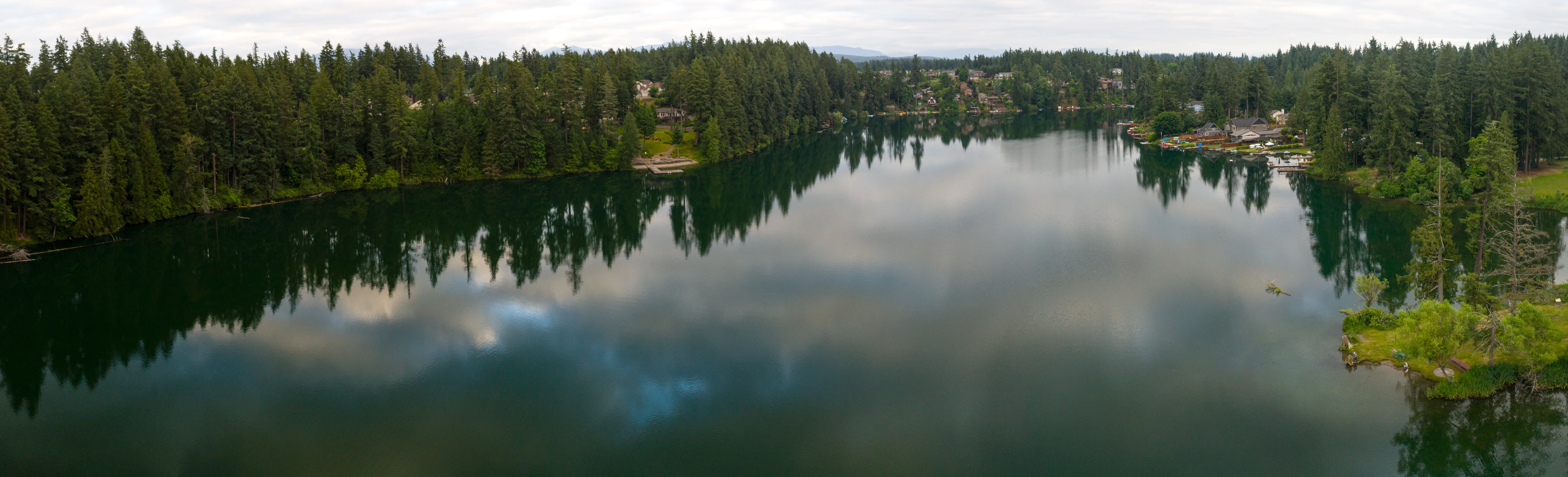
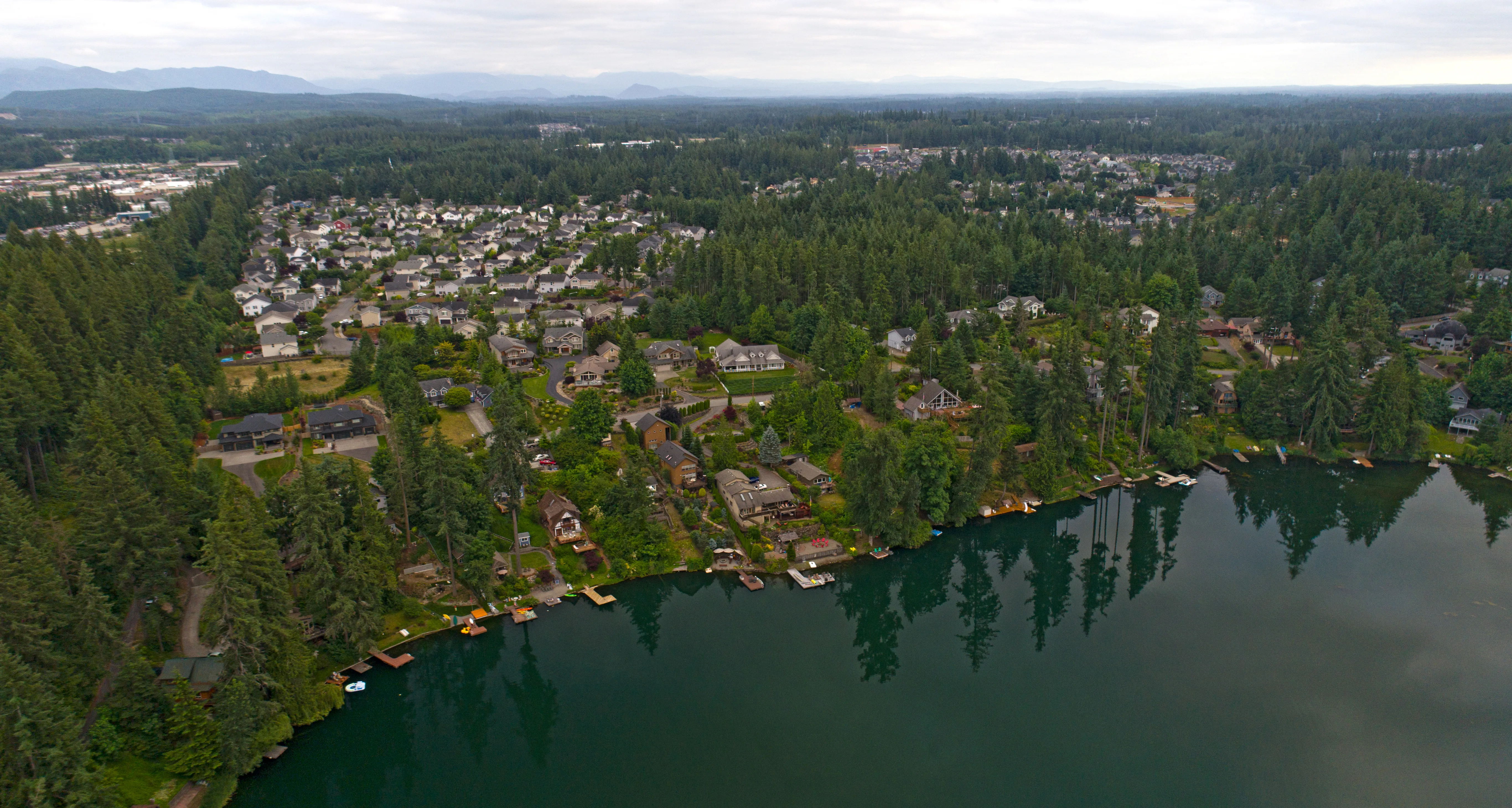
Geographically, Maple Valley sits in the Cedar River Valley about 25 miles southeast of Seattle, tucked between the Cedar River to the north, Tiger Mountain State Forest to the east, and the working-class suburbs of Kent and Covington to the west. SR-169 is the spine of daily life here — the road that carries residents in and out, connects the city's commercial strips, and occasionally backs up badly enough that locals have developed a mental catalog of alternate routes. The city incorporated in 1997, and despite population growth to roughly 28,800 residents, it has retained a distinctly exurban character: heavily forested, oriented around parks and trails, and socially anchored by the Tahoma School District rather than a traditional downtown core.
This guide will help you decide whether Maple Valley is genuinely the right fit for your household — not just whether it looks good on paper. You'll find honest assessments of the neighborhoods, the commute reality, the tradeoffs that send some families packing after three years, and the specific local details that make others stay for decades.
Before diving into specifics, it helps to know who actually thrives here and who tends to struggle with the lifestyle adjustment.
| Best For | Why |
|---|---|
| Seattle-area commuters | 35-minute average drive to Seattle gives suburban space without the full exurban penalty |
| Families with school-age children | Tahoma School District ranks among the top 5% statewide; strong extracurricular culture |
| Outdoor-lifestyle households | Tiger Mountain, Lake Wilderness Park, 10+ miles of local trails, Cascade foothills access |
| Remote workers | Larger lots, quieter streets, lower per-square-foot costs than Eastside suburbs; depends on reliable internet |
| Move-up buyers from Kent or Covington | More space and better schools without jumping to Issaquah or Sammamish prices |
| Early retirees seeking active lifestyle | Golf, arboretum, trail networks, and a community that skews active and outdoorsy |
The first thing that surprises most newcomers after six months of living in Maple Valley is how self-contained a life you can build here without ever feeling the pull to drive into Seattle. There's a Safeway, a Fred Meyer, a cluster of restaurants and services along the SR-169 corridor near Witte Road, and enough local social infrastructure — youth sports leagues, school events, the Lake Wilderness farmers market — that the city doesn't feel like a waiting room for somewhere else. What you won't find is a walkable town square, a dense restaurant row, or easy transit options. The Walk Score of 24 is not a rounding error.
The commute reality deserves specific language. On a clear Tuesday morning with no incidents, the drive from the 249th Avenue corridor to downtown Seattle runs 35–38 minutes via SR-169 north to I-405 and SR-518. On a rainy Thursday with a fender-bender on the Renton S-curves, that same commute stretches past an hour. Residents who've cracked the code typically leave before 6:30 a.m. or use the express lanes strategically. There is no Sounder station in Maple Valley, and Sound Transit bus service connects to Renton and Auburn but doesn't make Seattle transit-commuting genuinely practical for most households.
The community vibe is best described as deliberately suburban and proud of it. Maple Valley Days — a summer festival centered around Lake Wilderness Park with a parade down SR-169 — draws crowds that fill the park entirely and functions as an unofficial town reunion. Little League fields are full on Saturday mornings. The Lake Wilderness Lodge books up months in advance for weddings and private events. This is a city that socializes through organized community structures rather than spontaneous urban encounters, and for the households who prefer that rhythm, it works exceptionally well.
What surprises transplants from denser cities is how much of the social calendar is school-district-driven. Tahoma athletic events — particularly football and wrestling at Tahoma High School — function as community gathering points in a way that's rarely seen in more urban settings. If you have kids in the district, your social life largely organizes itself. If you don't, building community takes more intentional effort.
Space and value relative to the Eastside is the headline reason, but it's worth being precise about what that means in practice. At Maple Valley's $750,000 median, buyers are typically landing 2,000–2,800 square feet on a lot that would not exist at that price in Bellevue, Kirkland, or Sammamish. The newer construction in subdivisions like Wilderness Village and Daybreak brings that suburban dream home — four bedrooms, three-car garage, open concept kitchen — within reach for households earning around the city's median of $152,885.
The outdoor access is genuinely exceptional and directly integrated into daily life rather than requiring a 90-minute drive. Tiger Mountain State Forest begins essentially at the eastern edge of the city, offering dozens of hiking and mountain biking trails without trailhead parking scrambles. The Green to Cedar Rivers Trail runs three miles along an abandoned railroad corridor connecting neighborhoods to Lake Wilderness Park — residents use it for morning runs, dog walks, and bike commutes within the city. Lake Wilderness Park itself spans 117 acres with swimming, fishing, disc golf, and the event lawn where most of the city's summer social life concentrates.
The school district is not marketing copy — it is a documented, measurable advantage. Tahoma High School's graduation rate of approximately 94.5% compared against the Washington state average of 82.8% represents a meaningful gap, and the district's math proficiency rates at the high school level run roughly 12 points above the state average. The district offers dual-enrollment college courses through the University of Washington and two other state universities, which matters practically for families thinking about post-secondary costs.
The property tax situation deserves mention as a legitimate financial upside. Washington's absence of a state income tax is the well-known headline, but at Maple Valley's effective property tax rate of approximately 0.95%, the annual tax bill on a $750,000 home runs around $7,125 — lower than what many California or Oregon households pay on comparable properties. Combined with a local sales tax of 8.9% (meaningfully below Seattle and Bellevue's 10.2–10.3%), the overall tax environment is genuinely favorable for middle-to-upper-income households relocating from high-tax states.
Looking to buy in Estimate your payment.
Enter your numbers to see an estimated monthly mortgage payment.
Estimate only. Excludes HOA fees and mortgage insurance.
The car dependency is not a minor inconvenience — it is a daily structural feature of life in Maple Valley. Every errand requires a vehicle. Every kid activity requires a pickup and dropoff. If one adult in a household is without a car for any reason, the day becomes logistically complicated in a way that doesn't resolve itself. Households coming from walkable urban neighborhoods frequently underestimate how much this reshapes daily habits and budget (an extra vehicle, an extra tank of gas per week) over time.
The commercial corridor along SR-169 is functional but not inspiring. The stretch between Witte Road and the Safeway anchors Maple Valley's retail core, but it is strip-mall suburban at its most honest. There are no independent bookstores, no live music venues, and the restaurant options, while decent, are heavily chain-oriented. Black Diamond Bakery (about 10 minutes south in Black Diamond) and a handful of local spots break the pattern, but if culinary variety or cultural programming are priorities, the 35-minute drive to Seattle will be part of your weekly rhythm rather than an occasional treat.
Why some people leave Maple Valley after three to five years typically comes down to one of two things: teenagers who've outgrown the suburban lifestyle and want access to Seattle culture, or career shifts that move the primary employment center south toward Tacoma or the airport, at which point the commute math no longer works in Maple Valley's favor. A few households discover, too late, that they bought in the Hobart corridor assuming the drive to work would feel similar to the city's SR-169 neighborhoods — it doesn't, and that 15-minute difference compounds over years.
The market has also softened slightly from its 2024–2025 peak. Homes are averaging around 20 days on market with a sale-to-list ratio near 98.5%, which means the extreme bidding wars have eased but the market is not a buyer's free-for-all. With roughly 2.3 months of inventory, sellers still hold moderate leverage, particularly on well-located homes in the core school attendance areas.
Maple Valley's residential fabric is organized into a collection of subdivisions and unincorporated communities, each with a distinct character. Here are the eight most relevant for buyers relocating to the area.
Valley Green sits close to the SR-169 commercial corridor, making it one of the more convenient locations for day-to-day errands without the extended drives required from the city's eastern edges. Homes here tend toward the late-1990s to 2000s construction range, with prices generally running from the upper $600,000s into the mid-$700,000s for three- to four-bedroom single-family homes. The tradeoff is that lot sizes lean smaller and the neighborhood aesthetic is solidly tract-home suburban without much architectural variety.
Best for: Commuters who prioritize convenience and want to minimize drive time to SR-169's services.
Cedar Downs is a well-established neighborhood with mature trees and a quieter residential feel than the busier corridors closer to Witte Road. Pricing here typically runs in the $700,000–$800,000 range for updated single-family homes, with strong demand driven partly by Tahoma School District boundaries. It doesn't offer the acreage of the rural-edge neighborhoods, but it's among the more settled and socially cohesive pockets within the city proper.
Best for: Families with school-age children who want a neighborhood with established community feel and easy district access.
Cherokee Bay is oriented around its proximity to Lake Wilderness, giving residents casual access to the park's trail network and waterfront without paying the premium of true lakefront property. Homes here are a mix of 1980s and 1990s construction with updated interiors, typically priced from the mid-$600,000s to the low-$800,000s depending on lot size and condition. The catch is that some streets feel more dated in their infrastructure, and buyers doing deferred-maintenance math should budget accordingly.
Best for: Outdoor-focused households who want park adjacency without the cost of lakefront addresses.
Maple Ridge Highlands tends to attract buyers who want newer construction and larger floor plans — the subdivision has absorbed a meaningful portion of Eastside buyers priced out of Sammamish and Issaquah over the past several years. Homes here generally run from the $750,000s to the low-$900,000s, with some newer builds pushing higher. The neighborhood's elevation offers intermittent mountain views and a slightly removed feel from the SR-169 traffic pattern.
Best for: Move-up buyers seeking newer construction and larger lots with a quieter suburban atmosphere.
Lake Sawyer straddles the boundary between incorporated Maple Valley and unincorporated King County, and that distinction matters practically: larger parcels, more varied home styles, and a noticeably more rural character than the subdivisions closer to SR-169. Lakefront properties on Lake Sawyer itself command significant premiums — prices can extend well above $1 million for waterfront homes — while homes set back from the lake run more typically in the $700,000–$900,000 range. The tradeoff is a longer drive to Maple Valley's commercial services and, depending on the specific address, a commute that runs longer than the city's average.
Best for: Households seeking lake lifestyle and acreage who can tolerate the additional commute time.
Rock Creek has become one of the neighborhoods local agents mention frequently for buyers seeking a balance between price, lot size, and school district access. The area includes a mix of construction eras with homes generally priced in the $680,000–$800,000 range. Green space connectivity and a relatively low-traffic residential street pattern make it a popular choice for families with young children.
Best for: Families prioritizing Tahoma District access and a quieter street environment at a moderate price point.
Wilderness Village is a planned community that leans into the Pacific Northwest aesthetic — forested buffers between home clusters, trail connectivity, and an HOA structure that maintains common areas well. Homes here skew larger and newer, with prices commonly running from $750,000 to $925,000 for four- to five-bedroom floor plans. The HOA fees are real and should be factored into monthly cost calculations; the community infrastructure is generally well-regarded.
Best for: Households who want a maintained, trail-connected community with newer construction and are comfortable with HOA governance.
Cedar Grove occupies a quieter pocket of the city with a more established neighborhood feel and older tree canopy than the newer subdivisions. Pricing tends to come in slightly below the city median, with homes in the $650,000–$750,000 range attracting first-time buyers and downsizers alike. The neighborhood doesn't offer the flash of newer construction, but buyers who've done the deferred-maintenance work find strong value relative to comparable Eastside options.
Best for: Value-focused buyers willing to trade newer finishes for a larger lot and lower entry price.
| City | Best For | Median Home Price | Commute to Seattle | Vibe |
|---|---|---|---|---|
| Maple Valley | Families, outdoor lifestyle, school quality | $750,000 | ~35 min | Forested exurban; school-centric community |
| Covington | Budget-conscious families, SR-18 access | $580,000–$640,000 | ~40 min | Unincorporated suburban; more affordable, fewer amenities |
| Black Diamond | Rural character, acreage buyers, lower prices | $550,000–$700,000 | ~45–50 min | Historic small-town feel; limited services |
| Kent | Commuter convenience, urban amenities, diversity | $550,000–$650,000 | ~30 min | Denser suburban; more transit options |
| Auburn | Value, Sounder access, first-time buyers | $500,000–$600,000 | ~35–40 min | Mixed urban-suburban; growing commercial base |
| Enumclaw | Acreage, rural lifestyle, Mt. Rainier access | $480,000–$600,000 | ~55 min | Agricultural character; significant commute penalty |
| Category | Data |
|---|---|
| Population | ~28,786 (2026) |
| Median Home Price | $750,000 |
| Median Household Income | $152,885 |
| Property Tax Rate | ~0.95% effective rate |
| Commute to Seattle | ~35 minutes (SR-169 / I-405) |
| School District | Tahoma School District (A rating) |
| Violent Crime per 1,000 | 1.1 |
| Property Crime per 1,000 | 17.9 |
| Walk Score | 24 (car-dependent) |
| Median Rent | ~$2,189/month |
Maple Valley Days is more than a festival. Held every June at Lake Wilderness Park, it functions as the closest thing the city has to a civic ritual — the parade runs the length of SR-169 through the commercial corridor, the park fills with booths and live music, and residents who've lived here for 20 years treat it as a reunion. For newcomers, it's genuinely the fastest way to meet neighbors, understand the community's self-image, and get a read on local civic organizations. Missing your first Maple Valley Days is a social miscalculation — show up.
The Lake Wilderness Arboretum is quietly one of the best spots in the south King County region. The 42-acre botanical garden adjacent to Lake Wilderness Park doesn't get the regional attention of Bellevue Botanical Garden, but it's a legitimate destination — particularly in spring when the rhododendrons bloom — and residents use it year-round for walking and quiet morning hours. Its volunteer base is active and it anchors a strand of community engagement that gives Maple Valley some of the civic texture that purely residential suburbs often lack.
Tahoma High School athletic events are a community institution. Bear football games on fall Friday nights at Tahoma High School's stadium draw crowds that include residents without any direct connection to the school. Wrestling, particularly, has a loyal following that fills the gym well beyond the student section. If you want to understand the social rhythm of Maple Valley before you've built your own local connections, attending a home athletic event is one of the fastest ways to read the room.
What I would not do if moving to Maple Valley: I would not buy a home east of Rock Creek Road — in the Hobart corridor specifically — without doing a 7:15 a.m. Tuesday drive to your actual workplace and timing it honestly. The rural character of that stretch is genuinely appealing, and the prices can look compelling relative to in-city options. But the commute time difference between a Hobart address and a Valley Green address is not 5 minutes — it's often 15 to 20 minutes each way, and that compounds into something that changes your quality of life in a way that's hard to model on a spreadsheet before you've lived it.
Local Expert Takeaway: The buyers who thrive in Maple Valley long-term are the ones who choose their neighborhood based on their specific SR-169 on-ramp, not just the school district map. Rock Creek and Maple Ridge Highlands hit the sweet spot of Tahoma District access, reasonable commute times, and mid-$700,000 pricing that holds value well. If you're drawn to the Lake Sawyer area's rural character, negotiate aggressively — that submarket has softened more than the city core — and build the extra commute time into your daily schedule before you commit.
✅ Maple Valley delivers genuine school quality, outdoor access, and suburban space at a price point that outperforms comparable Eastside districts — Tahoma's graduation rate and college-readiness programs are the real deal, not marketing.
⚠️ Car dependency and commute variability are structural, not fixable. Budget for two vehicles, assume SR-169 will occasionally add 30 minutes to your morning, and don't buy on the eastern edge without testing the commute yourself.
📍 Your neighborhood choice within Maple Valley matters more than the city decision itself. The difference between a Valley Green address and a Hobart address is not just character — it's 15–20 minutes of commute time in each direction, every working day.
Is Maple Valley a good place to raise a family?
Yes — Maple Valley is among the stronger family environments in south King County. The Tahoma School District consistently ranks in the top 5% of Washington's 306 school districts, graduation rates run roughly 12 points above the state average, and the park-and-trail infrastructure gives families outdoor access that genuinely integrates into daily life rather than requiring weekend drives. The tradeoff for families is total car dependency and a social calendar that's heavily district-driven, which works well if you're enrolled in the schools and requires more intentional effort if you're not.
What is the crime rate in Maple Valley?
Maple Valley's violent crime rate runs approximately 1.1 incidents per 1,000 residents — well below both state and national benchmarks — making it one of the safer communities in the greater Seattle metro area. Property crime, at approximately 17.9 per 1,000, is moderate and consistent with suburban communities of similar density in the Pacific Northwest. Most residents characterize day-to-day safety in the city as a genuine strength rather than a marketing claim.
How does Maple Valley compare to Covington or Black Diamond for families?
Covington offers similar forest aesthetics and SR-18 access at lower price points — typically $580,000–$640,000 — but it's unincorporated King County without Maple Valley's school district standing, park infrastructure, or community event calendar. Black Diamond has genuine small-town charm and lower prices, but the commute penalty grows meaningfully (45–50 minutes to Seattle on average) and services are limited. For families who have prioritized school quality as the primary driver, Maple Valley consistently outperforms both alternatives on the metrics that matter to that decision.
Explore the full Maple Valley series: The Ultimate Maple Valley Relocation Guide · Is Maple Valley Safe? · Cost of Living in Maple Valley · Best Neighborhoods in Maple Valley · Maple Valley Schools & Family Life · Maple Valley Youth Sports · Maple Valley Parks & Recreation · Retiring in Maple Valley · 1031 Tax-Deferred Exchange in Maple Valley · Maple Valley First-Time Homebuyers Guide · Moving to Maple Valley from California
Tell us what you need help with and we'll connect you with local resources.

About the Author
Todd Davidson is the founder of Living in Oregon and Living in Washington, where he publishes in-depth city guides, neighborhood resources, and local market insights covering more than 180 communities across the Pacific Northwest. While his background is in home financing and real estate, he created these digital platforms to help families research and compare regions before making a move.