
Puget Sound · Washington
Maybe your company is moving you to the Seattle metro and you've already ruled out paying $1.1 million for a craftsman bungalow in Phinney Ridge. Maybe someone at a dinner party mentioned Shoreline and you filed it away — close to Seattle, better prices, good schools — but never quite figured out what that actually means in practice. Maybe you've driven Aurora Avenue through it a hundred times on your way somewhere else and assumed it was just more Seattle sprawl.
Shoreline rewards a closer look. Sitting directly north of Seattle's city limits, it occupies an interesting and sometimes awkward position: close enough to downtown that its two new light rail stations have genuinely changed the commuting calculus, yet suburban enough in character that residents come home to tree-lined streets, large lots, and neighborhood parks that don't feel like amenities you're sharing with 750,000 other people. The central tension here isn't distance — it's identity. Shoreline is simultaneously a city in its own right and a place many people treat as a launching pad to somewhere else, and which version of it you're getting depends heavily on which part of town you land in.
This guide is built for buyers and renters weighing Shoreline seriously. By the time you finish it, you'll know which neighborhoods make sense for your commute, what the $770,000 median home price actually gets you on the ground, where the light rail stations change the value equation, and what the honest tradeoffs are — including the ones the listing descriptions won't mention.
Before digging into neighborhoods and commute times, it helps to know whether Shoreline fits your actual life. The table below offers intent-based verdicts based on what different buyer profiles consistently find here.
| Best For | Why |
|---|---|
| Seattle commuters | Two light rail stations (open since August 2024) put downtown Seattle roughly 20 minutes away without touching I-5 |
| Families with school-age children | Shoreline School District ranks in the top 10% statewide; multiple elementary schools and strong community programming |
| First-time buyers priced out of Seattle | Median home price of $770,000 is significantly below comparable Seattle neighborhoods; entry-level options exist in North City and Ridgecrest |
| Remote workers who want space | Large lots, forested neighborhoods, and proximity to Sound views without urban density |
| Retirees with Pacific Northwest roots | Walkable pockets near North City and Echo Lake, healthcare access via Providence, and mature neighborhood feel |
| Move-up buyers from Mountlake Terrace or Kenmore | More neighborhood variety, better transit access, and a more established community identity than comparable-priced suburbs |
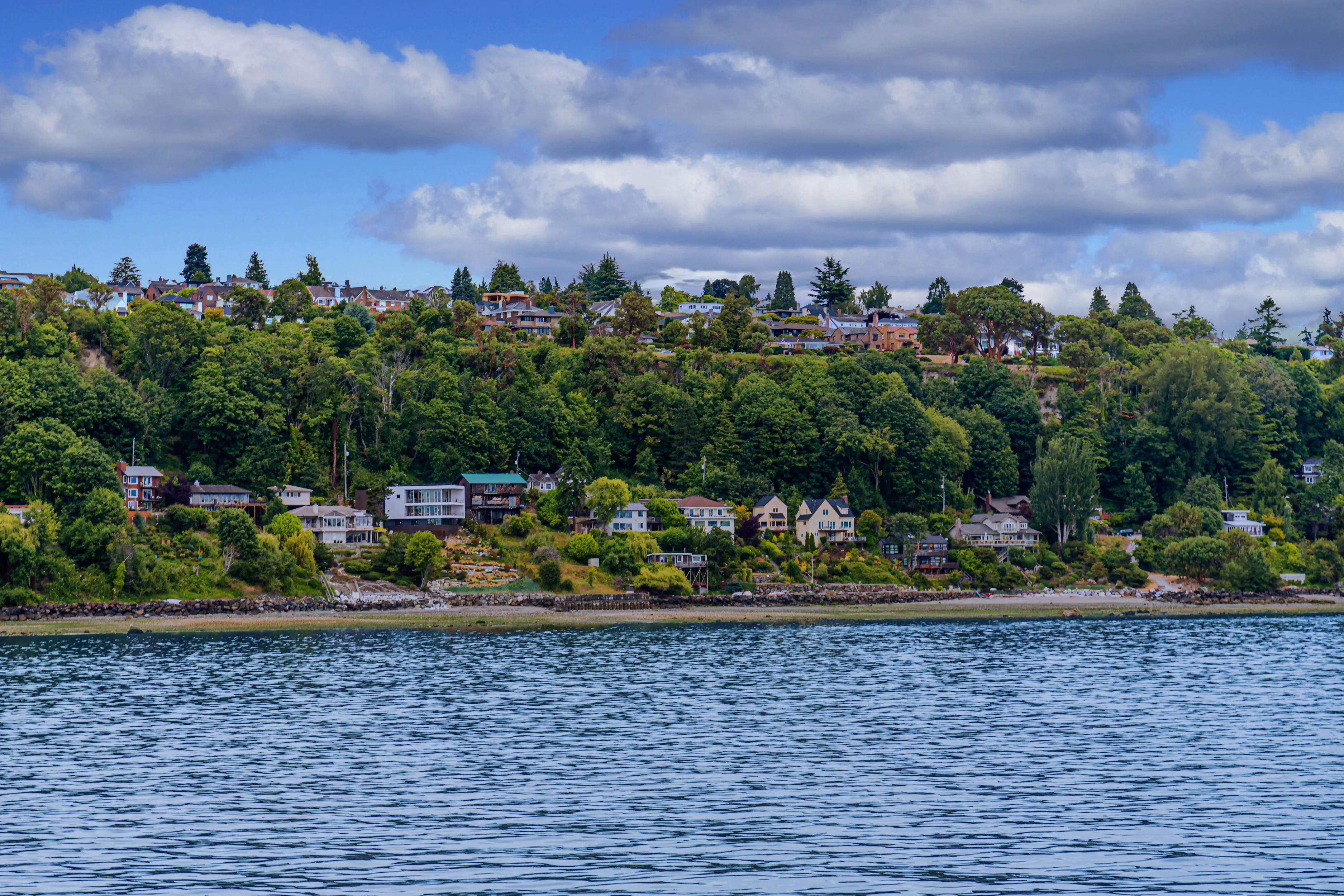
Shoreline occupies a roughly north-south rectangle, pressed between Puget Sound to the west and I-5 to the east, stretching from the Seattle city limits at N 145th Street up to the Snohomish County line. That geography matters for daily life. The western edge, running along the bluffs above the Sound, is quiet, wooded, and disconnected — in the best and occasionally frustrating sense of that word. The eastern corridor near Aurora Avenue (Highway 99) and I-5 is where most of the retail, density, and transit infrastructure lives. Most residents occupy the middle ground between those two extremes, in established post-war neighborhoods of ramblers and split-levels on generous lots.
The commute reality shifted significantly when Sound Transit launched the Lynnwood Link extension. From the Shoreline South/148th station, the trip to the University of Washington runs roughly 11 minutes; to downtown Seattle, plan on 20 to 25 minutes depending on your final destination. The 185th station serves the northern part of the city and adds a few minutes but opens up areas like Ridgecrest and north Echo Lake that previously required driving to transit. Frequency is strong — trains run every four to six minutes during peak hours — which means the experience is meaningfully different from the old bus-to-Northgate equation.
Community life in Shoreline is quieter than its proximity to Seattle might suggest. The city doesn't have a dense downtown in the traditional sense, though the North City neighborhood functions as a walkable commercial core with coffee shops, local restaurants, and the kind of street-level activity that makes errands feel human-scaled. Shoreline Community College anchors the city's educational identity and brings a modest amount of cultural programming. What locals tend to appreciate most is how little the city tries to be Seattle — it has its own rhythms, its own parks, its own Friday-night spots, and a genuine sense of residential permanence that newer suburbs often lack.
One thing that surprises many newcomers after their first few months: traffic on Aurora Avenue is genuinely bad during the afternoon commute window, roughly 4:30 to 6:30 p.m. The corridor moves retail and through-traffic simultaneously, and the stop-and-go can add 15 minutes to what looks like a short cross-city errand. Locals know to use 15th Avenue NE or the back routes through residential streets when timing matters.
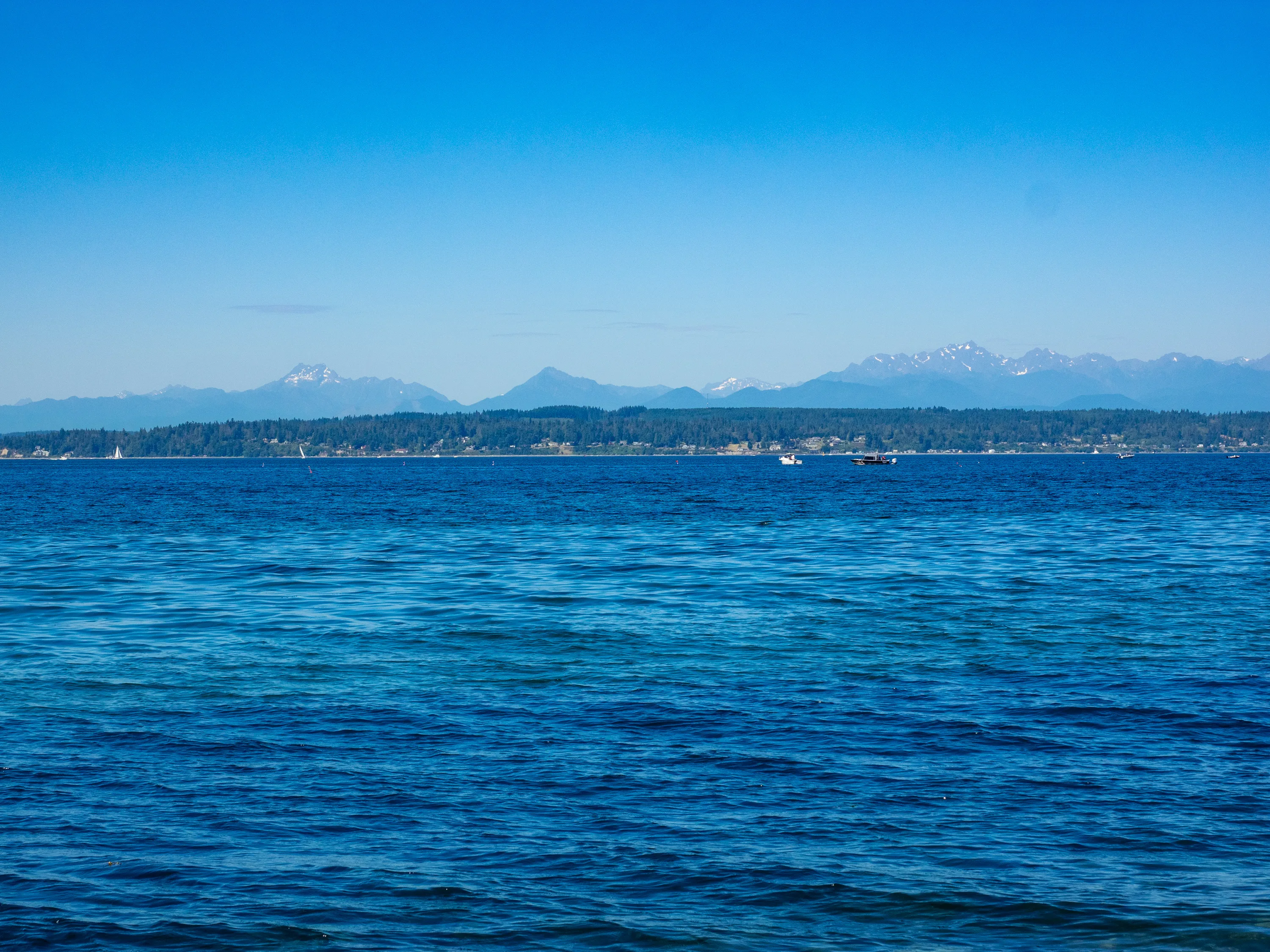
The light rail access is the headline, but it's not why people stay for twenty years. Shoreline's parks system is quietly exceptional. Richmond Beach Saltwater Park sits on the waterfront below the bluffs with picnic areas, beach access, and one of the most genuine Puget Sound views in King County. Hamlin Park covers over 220 acres of forested trails in the heart of the city. Boeing Creek Park and Echo Lake Park offer neighborhood-scale green space that feels genuinely wild compared to what Seattle's managed parks deliver at the same price point. The Interurban Trail, a paved multi-use path running north-south through the city, connects neighborhoods to transit and gives cyclists a meaningful alternative to Aurora.
The school district is a legitimate draw, not just a marketing bullet point. Shoreline School District consistently ranks among the top 10% of Washington's 300-plus districts, with strong performance at both the elementary and secondary levels. For families relocating from California or the East Coast with kids already in strong academic environments, Shoreline is one of the closer matches to what they're leaving behind, without the private school price tag.
No state income tax shapes the financial picture in ways that compound over time. Paired with a property tax rate of approximately 1.10%, the overall tax burden here compares favorably to most West Coast metros — a calculation that lands differently when you're coming from California or Oregon. The median household income in Shoreline runs around $112,751, and the workforce skews educated and employed in professional sectors, which shows up in the quality of local services and the general stability of neighborhood conditions.
What people genuinely don't expect is how rooted the community feels. Shoreline incorporated as a city only in 1995, but many of its neighborhoods have existed as recognizable communities since the 1950s. There are residents who have lived in the same house for three decades, who know their neighbors by name, who organize the July Fourth block parties and the neighborhood association meetings. That social fabric is harder to find in newer suburbs and impossible to fake.
Looking to buy in Estimate your payment.
Enter your numbers to see an estimated monthly mortgage payment.
Estimate only. Excludes HOA fees and mortgage insurance.
Shoreline is not a walkable city in the way that Capitol Hill or Fremont are walkable. Outside of North City and the immediate vicinity of the two light rail stations, most daily errands require a car. Grocery runs, hardware stores, most restaurants — they're accessible, but they're driving-accessible. The pedestrian infrastructure is improving, particularly with a $20 million federal grant funding bike routes connecting the 148th station to the Interurban Trail, but for buyers who want to live car-free, this is a meaningful limitation.
The city's retail and dining identity is still developing. Aurora Avenue offers the full Pacific Northwest strip corridor experience — national chains, car dealerships, big box retail — but it isn't the kind of commercial environment that makes people feel proud of their city. North City has genuine character, but it covers a relatively small area. Buyers coming from Portland's Hawthorne district or Seattle's Ballard will find the dining and nightlife options noticeably thinner, and that's unlikely to change dramatically in the next few years.
Why some people leave: The families who move out of Shoreline after five or ten years typically fall into one of two categories. The first group gets drawn back into Seattle as their careers advance and the commute calculus shifts — even 20 minutes on light rail is 20 minutes, and some buyers decide the Seattle price premium is worth paying when life gets busier. The second group moves further north to Edmonds, Kenmore, or Bothell in search of more space, lower prices, or access to different school districts. Neither departure story is a verdict on Shoreline itself, but they're worth understanding as you evaluate your own long-term trajectory.
Density is also coming, and not gradually. The city's comprehensive plan anticipates meaningful growth near the two light rail stations, and several large mixed-use developments are either permitted or in planning phases near the 145th and 185th corridors. Buyers who buy in those zones for the residential quiet may find the neighborhood character has shifted by the time their kids are in middle school. This is a bet worth understanding before making an offer, not after.
Innis Arden is Shoreline's most distinctive neighborhood and one of the most architecturally interesting communities in the entire Seattle metro. Developed in the 1950s on a covenant-protected stretch of blufftop property, it features mid-century modern homes on heavily wooded lots, a private swim club, and direct access to Richmond Beach Saltwater Park through neighborhood trails. The median home value sits at approximately $2.16 million, reflecting both the architecture and the irreplaceable Sound views. The tradeoff is deliberate isolation — it's not close to anything, and that's precisely the point.
Best for: Buyers seeking architectural character, privacy, and a genuine sense of exclusivity without leaving King County.
Richmond Beach sits just north of Innis Arden and shares the same bluff-and-water geography, but with a slightly more accessible price range and a stronger neighborhood commercial presence on Richmond Beach Road. Homes with unobstructed Sound views on the bluff side trade between $1 million and $1.6 million; properties set back from the water are more affordable while still carrying the neighborhood's identity. The community has an active neighborhood association and a well-used park at beach level. The catch is the same as anywhere along this corridor: you're far from the light rail stations and dependent on a car for nearly everything.
Best for: Buyers who prioritize waterfront proximity and neighborhood cohesion over commute efficiency.
North City is Shoreline's most walkable commercial district and the neighborhood most likely to appeal to buyers relocating from urban environments. The main corridor along 15th Avenue NE has coffee shops, locally owned restaurants, and a Saturday farmers market that draws residents from across the city. Home prices here typically run in the $750,000 to $900,000 range, making it one of the more accessible entry points in western Shoreline. It's also within reasonable biking distance of the 185th station. The honest limitation is lot size — North City lots tend to be smaller than what buyers find in Ridgecrest or Parkwood.
Best for: Urban transplants who want walkable daily life without Seattle prices.
Ridgecrest sits in the northeastern quadrant of the city, close enough to the Shoreline North/185th station to make it one of the strongest commuter neighborhoods in Shoreline. The housing stock is a mix of post-war ramblers and newer infill construction; prices generally land in the $750,000 to $900,000 range. The neighborhood has a community organization that predates Shoreline's incorporation and maintains a distinct local identity. The tradeoff is that the 185th corridor is developing quickly, and the immediate station area is considerably noisier and denser than the quieter residential streets a few blocks west.
Best for: Commuters who want the best combination of transit access, residential character, and price point in north Shoreline.
Echo Lake takes its name from the small lake at the neighborhood's center, which remains a genuine gathering point — kayakers, dog walkers, and families with young children use the park year-round. The housing here is some of Shoreline's most accessible, with a range roughly spanning $700,000 to $850,000 for single-family homes. The neighborhood sits between the two light rail stations, making it reasonably convenient to both without being immediately adjacent to either. Some buyers find that in-between positioning to be a reasonable compromise; others who want true walk-to-transit access will prefer Ridgecrest or North City.
Best for: Families and first-time buyers who want lake-adjacent park life and solid transit proximity without paying Richmond Beach premiums.
Parkwood is a quieter, more residential neighborhood in central Shoreline with a mix of mid-century homes and a stable, long-tenured homeowner base. Prices here run in the range of $750,000 to $920,000, and the lots tend to be generous by Shoreline standards. It doesn't have the walkability of North City or the station proximity of Ridgecrest, but for buyers who want a settled, low-turnover neighborhood with good access to Hamlin Park, Parkwood is a consistent performer. The limitation is that most errands will involve a car.
Best for: Buyers prioritizing stability, lot size, and proximity to Shoreline's best forested trails over transit access.
Meridian Park occupies the central spine of the city and represents a kind of median Shoreline experience — solid schools, reasonable Aurora Avenue access for retail needs, and a price range that roughly mirrors the city-wide median around $770,000. The neighborhood doesn't have a strong identity marker the way North City or Richmond Beach do, but that's also its appeal: it's a reliable, well-positioned middle-ground that suits a wide range of buyers. Traffic on Aurora itself is a legitimate daily friction point for residents in the western portion of the neighborhood.
Best for: Buyers who want central positioning without premium pricing and don't need a neighborhood with a strong commercial identity.
Highland Terrace sits in western Shoreline on the approach to the bluffs, occupying the price range just below Richmond Beach while offering some of the same generous lot character. Homes here typically run $800,000 to $1 million depending on age, condition, and how far west they sit. The neighborhood is predominantly single-family and quiet — there's no commercial core nearby, and the drive to light rail is meaningful. What buyers get in return is more space, more trees, and a slightly slower pace than the station-adjacent neighborhoods on the east side.
Best for: Buyers who want the western Shoreline character at a step below Richmond Beach and Innis Arden pricing.
| City | Best For | Median Home Price | Commute to Seattle | Vibe |
|---|---|---|---|---|
| Shoreline | Transit access + established neighborhoods | $770,000 | ~22 min (light rail) | Suburban with urban transit links |
| Seattle (N. end) | Urban walkability, no commute | $900,000–$1.1M+ | 0–10 min | Dense, fast-moving, neighborhood-diverse |
| Edmonds | Waterfront lifestyle, slower pace | $780,000–$850,000 | 30–40 min | Small-town ferry port character |
| Lake Forest Park | Wooded privacy, top schools | $850,000–$1M | 25 min (SR-522) | Quiet, forested, minimal retail |
| Mountlake Terrace | Price and transit value | $640,000–$700,000 | 25–30 min (light rail) | Value-focused, newer amenities |
| Kenmore | Lake access, newer construction | $750,000–$850,000 | 30 min (SR-522) | Lakefront suburban, growing commercial |
| Metric | Detail |
|---|---|
| Population | Approximately 69,966 (2026 estimate) |
| Median Home Price | $770,000 (mid-2026) |
| Median Household Income | $112,751 |
| Property Tax Rate | Approximately 1.10% |
| Commute to Downtown Seattle | ~22 minutes (light rail from 148th station) |
| School District Rating | A — top 10% in Washington State |
| Violent Crime per 1,000 | 3.4 |
| Property Crime per 1,000 | 25.3 |
| Homeownership Rate | 66.3% |
| Light Rail Stations | 2 (Shoreline South/148th, Shoreline North/185th) |
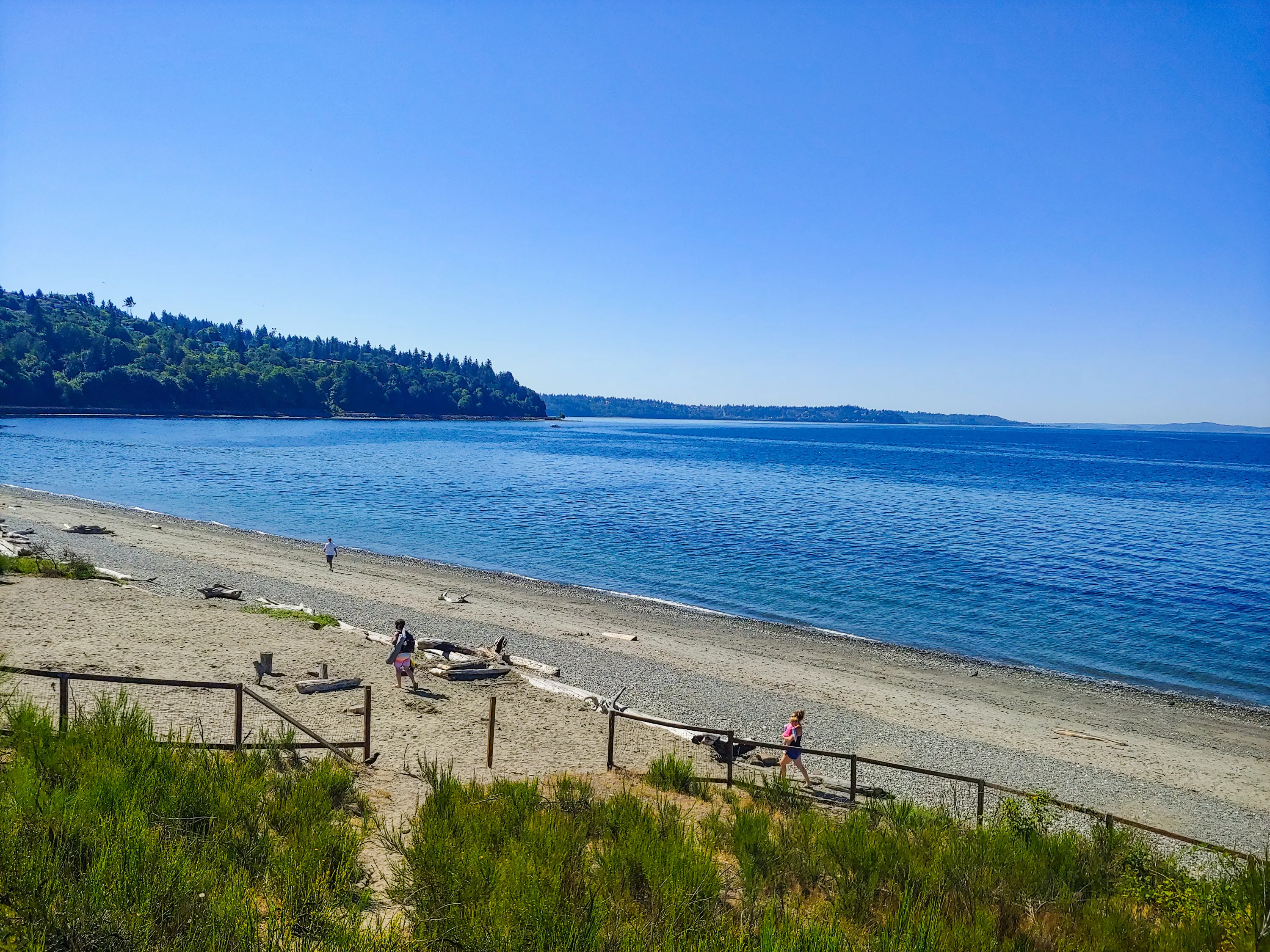
Richmond Beach Saltwater Park at low tide. The park is popular year-round, but Shoreline residents know that low-tide mornings in the summer reveal a broad rocky beach that nearly doubles in size, draws families with buckets and magnifying glasses, and feels entirely different from the packed-waterfront experience you'd expect 12 miles from Seattle. It's a genuine piece of Pacific Northwest shoreline culture — unhurried, quiet, and about 20 minutes from anywhere else you'd need to be.
The Shoreline Farmers Market runs seasonally at Town Center Plaza on the north end of the city and has built a loyal following since the city invested in its plaza infrastructure. Locals use it less as a grocery alternative and more as a weekly ritual — the kind of predictable neighborhood gathering that makes a city feel like a community rather than a zip code. It draws vendors from across King and Snohomish counties, and the Saturday morning timing makes it one of the more accessible weekday-alternative social anchors in the northern suburbs.
The aurora corridor's annual commercial metamorphosis is something longtime residents watch with a mix of amusement and genuine interest. Aurora Avenue through Shoreline has been in a slow-motion reinvention for over a decade, cycling through proposals, new developments, and corridor plans that promise mixed-use density and end up producing storage facilities and car washes. The light rail development is the most serious catalyst the corridor has seen, but locals know to treat "coming soon" timelines on Aurora with some patience.
What I would not do if moving to Shoreline: buy within two blocks east of Aurora Avenue without spending several evenings there first. The traffic noise, the pedestrian experience, and the land use mix on the Aurora corridor itself are genuinely different from the quiet residential Shoreline most buyers envision. Properties priced attractively near Aurora sometimes have that pricing for a reason, and the gap between a great map position and a livable street is worth investigating before you're under contract.
Local Expert Takeaway: If you're comparing Shoreline to northern Seattle neighborhoods, the light rail math has genuinely changed the calculation — a home near the 185th station in Ridgecrest or north Echo Lake now delivers a 20-minute downtown commute at roughly $200,000 to $300,000 below comparable Seattle neighborhoods. But don't assume proximity to the station solves everything: the neighborhoods immediately adjacent to the 148th and 185th corridors are developing quickly and will look different in five years. Buyers who want the transit benefit with lasting residential character should focus two to four blocks west of I-5, where the station is walkable but the neighborhood fabric is already established.
✅ Shoreline's light rail access is real and reliable. Two stations, service every four to six minutes at peak, and 20-minute trips to downtown Seattle make this one of the best-connected suburbs in the metro for car-optional commuters.
⚠️ The city's identity varies dramatically by neighborhood. Innis Arden and Richmond Beach are entirely different cities than North City or Ridgecrest — doing neighborhood-level research matters more here than in more homogenous suburbs.
📍 The development pipeline near both stations will reshape those corridors. Buyers should evaluate what's permitted and in planning within a half-mile of their target address before assuming current neighborhood character is permanent.
Is Shoreline a good place to raise a family?
Shoreline consistently rates as one of the stronger family destinations in the Seattle metro. The school district ranks in the top 10% statewide, parks like Hamlin Park and Echo Lake provide genuine outdoor access, and the homeownership rate of 66.3% reflects a stable, long-term residential community. Families with school-age children in particular find that Shoreline delivers academic quality and neighborhood safety at a price point that's difficult to match this close to Seattle.
What is the crime rate in Shoreline?
Shoreline's violent crime rate runs approximately 3.4 incidents per 1,000 residents, which is lower than both Seattle and many comparable suburban cities in King County. Property crime is higher at roughly 25.3 per 1,000 — a figure that's fairly typical for suburbs with active commercial corridors like Aurora Avenue. The residential neighborhoods west of Aurora and away from the highway tend to have notably lower property crime rates than the corridor-adjacent areas.
How does Shoreline compare to Edmonds or Lake Forest Park for families?
All three are reasonable suburban choices with good schools and relative proximity to Seattle, but they serve different lifestyles. Edmonds has genuine small-town waterfront character and a slower pace but a longer commute and limited transit. Lake Forest Park offers more wooded privacy and strong schools at a higher price point. Shoreline's advantage is transit — no other suburb in this comparison has two light rail stations — and its range of neighborhood types means it can accommodate more buyer profiles. The downside is that Shoreline lacks the distinct civic identity that Edmonds has built over decades.
Explore the full Shoreline series: The Ultimate Shoreline Relocation Guide · Is Shoreline Safe? · Cost of Living in Shoreline · Best Neighborhoods in Shoreline · Shoreline Schools & Family Life · Shoreline Youth Sports · Shoreline Parks & Recreation · Retiring in Shoreline · 1031 Tax-Deferred Exchange in Shoreline · Shoreline First-Time Homebuyers Guide · Moving to Shoreline from California
Tell us what you need help with and we'll connect you with local resources.

About the Author
Todd Davidson is the founder of Living in Oregon and Living in Washington, where he publishes in-depth city guides, neighborhood resources, and local market insights covering more than 180 communities across the Pacific Northwest. While his background is in home financing and real estate, he created these digital platforms to help families research and compare regions before making a move.