Puget Sound · Washington
Maybe your company just moved its offices to the Puget Sound corridor. Maybe someone at a dinner party mentioned Edmonds and you pulled it up on your phone and thought, that waterfront looks too good to be true. Maybe you've been watching Seattle prices climb and someone told you that Edmonds gives you a version of that lifestyle at a fraction of the chaos. None of those people were lying — but none of them told you the whole story either.
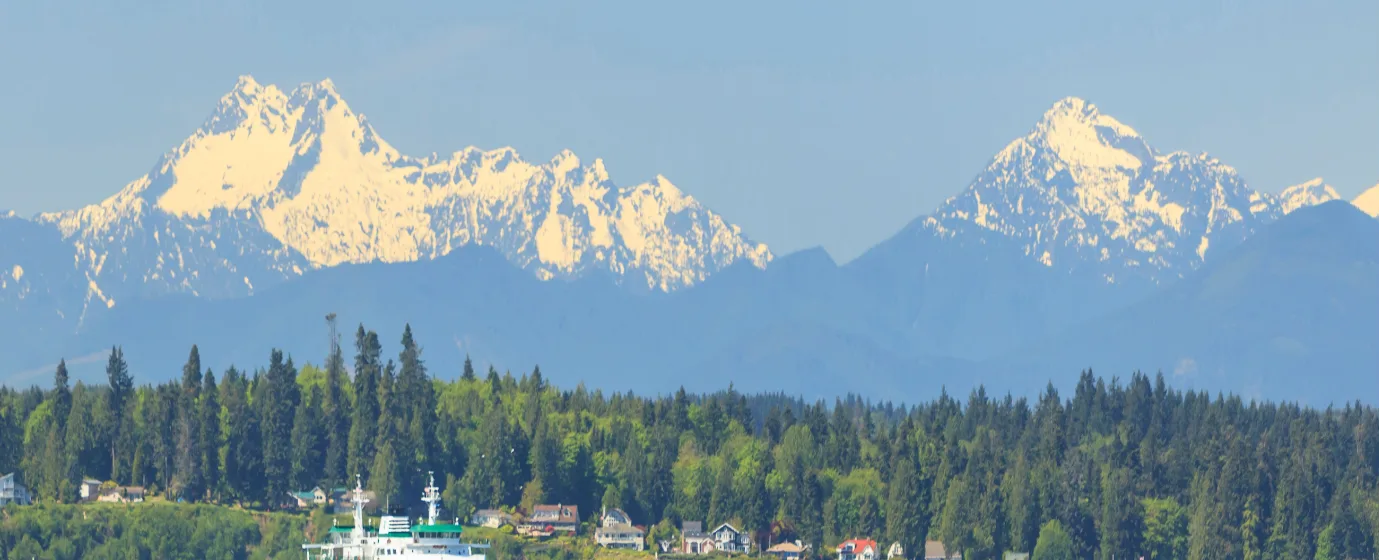
Edmonds is a genuinely beautiful small city on the eastern shore of Puget Sound, perched between the water and the forested hillsides of Snohomish County. The waterfront Bowl district is everything the Instagram photos suggest: a walkable downtown with a working ferry terminal, saltwater views toward the Olympic Mountains, and a farmers market that draws half the city on Saturday mornings. But Edmonds is also an 8.9-square-mile city with deeply distinct microzones — and the median sold price now sits north of $940,000, with waterfront-adjacent neighborhoods pushing well past $1.3 million. The city's median age of nearly 47 and a population that skews older and established shapes the pace and personality of daily life in ways that surprise buyers who expect a youthful Pacific Northwest hub.
This guide will help you figure out whether Edmonds actually fits your life — not just whether it photographs well. We'll walk through what commuting, school-aged parenting, grocery runs, and weekend routines genuinely look like here, which neighborhoods offer the most livable trade-offs at different price points, and where the city's honest shortcomings land. By the end, you'll have a clear picture of whether Edmonds is your next home or just a beautiful place to visit.
Not every buyer who falls in love with Edmonds should buy here. The city serves some lifestyles exceptionally well and fits others awkwardly. Use this table as a quick self-assessment before diving deeper.
| Best For | Why |
|---|---|
| Commuters to Seattle or Everett | 26-minute average drive to Seattle via I-5; Sounder commuter rail option adds flexibility |
| Established families with school-age children | Edmonds School District B-rated, with strong options in the Bowl and Seaview corridors |
| Active retirees | Walkable waterfront, arts programming at Edmonds Center for the Arts, low violent crime, strong healthcare via Swedish Edmonds |
| Remote workers who want small-town feel | Downtown Edmonds has independent cafés, a ferry as a recreational outlet, and none of the urban density fatigue |
| Olympic Peninsula commuters | The Edmonds-Kingston Ferry makes the peninsula accessible without living in it |
| Move-up buyers from Lynnwood or Mountlake Terrace | Step up in lifestyle and views without crossing into King County price territory — though that gap is narrowing |
Geography in Edmonds is not abstract — it determines your morning routine. The city divides loosely into two experiential zones: the Bowl (the flat, low-lying waterfront area) and everything uphill from it. If you live in the Bowl, you walk to things. You walk to the ferry, to brunch, to the Saturday farmers market at the waterfront lot, to a glass of wine at sunset. If you live in the upper hillside neighborhoods — Seaview, Meadowdale, Five Corners, Sherwood Forest — you drive to most of it, which is still fine, because nothing in Edmonds is more than ten to fifteen minutes away by car.
The commute story is genuinely competitive. Most residents drive to Seattle in around 26 minutes under normal conditions via I-5, which is faster than many neighborhoods inside Seattle itself. The Sounder commuter rail runs from Edmonds Station to King Street Station, giving downtown Seattle workers a car-free option on weekdays. The traffic reality is that southbound I-5 from Snohomish County during peak morning hours is congested at predictable chokepoints — particularly at the Lynnwood I-5 interchange and the merge near Northgate — so the 26-minute number works best for those leaving before 7:15 a.m. or after 9. Most Edmonds residents build that flexibility into their routine.
The community vibe in Edmonds leans older and established. The median age here is nearly 47 — the largest age cohort in the city is residents in their mid-to-late 60s — and that shapes everything from the pace of downtown to the dominance of owner-occupied homes and the political moderation that defines local civic life. That isn't a criticism; it means Edmonds is genuinely calm, well-maintained, and civically engaged. The Edmonds Arts Festival, which has run every June for over 60 years on the waterfront, is a genuine community anchor, not a tourism stunt. The Edmonds Center for the Arts hosts national touring acts, and the farmers market runs Saturdays from May through October with consistently strong local vendor participation.
What surprises most people after six months of living here is how much the ferry becomes part of the rhythm of life — not just as transportation, but as a recreational outlet. Watching Sounder games, evening walks to the ferry dock at sunset, and spontaneous day trips to Kingston become a natural part of the week in a way that felt like marketing copy before they moved here.
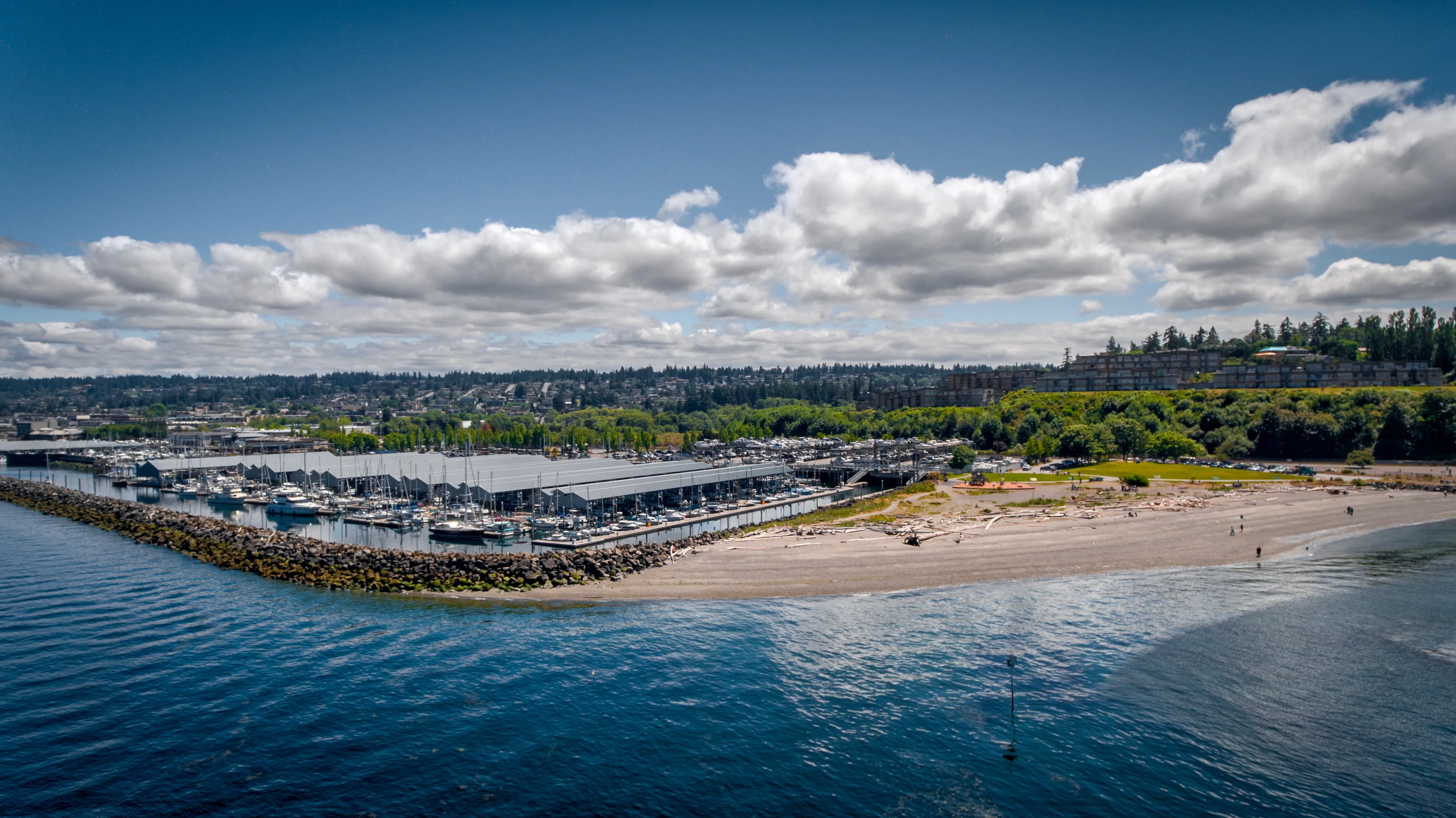
The waterfront is the real thing. Brackett's Landing Park and Marina Beach Park sit directly adjacent to the ferry terminal, giving residents sandy beach access, a public boat launch, and one of the best vantage points on Puget Sound without requiring a resort fee. The Edmonds Underwater Park is a nationally recognized scuba diving site — the first saltwater underwater marine preserve in Washington State — drawing divers from across the region year-round. These aren't amenities that residents visit twice and forget; they become anchoring features of the week.
The walkable downtown district is small but genuinely well-curated. The blocks around Fifth Avenue and Main Street hold independently owned restaurants, galleries, and boutiques that have sustained themselves for years, not months. This is not a downtown that's 70% chain restaurants with two interesting spots — it's largely locally owned, and residents develop real loyalty to specific tables and shop owners. The Edmonds Center for the Arts adds a dimension that most cities of 43,000 people simply don't have: professional-quality concert and performance programming within walking distance for Bowl residents.
Healthcare access is a practical upside that many relocating buyers overlook. Swedish Edmonds is a full-service hospital on the upper plateau of the city, providing major medical services without requiring a drive to Seattle or Lynnwood. For families, for older residents, and frankly for anyone who has lived somewhere rural and understands what it means to be 30 minutes from emergency care, this matters more than it sounds.
Safety is genuinely strong here. Violent crime runs at 3 per 1,000 residents — well below state and national averages — and the Edmonds Police Department's 2023 annual report showed overall crime down nearly 16% year over year. Property crime is more in line with regional norms for a suburban city, which is worth factoring into car and home security habits, but the day-to-day sense of safety in Edmonds is something residents mention unprompted as a reason they stay. Yost Park's forested trail system, which winds through 46 acres of urban forest between the hillside neighborhoods, gets used by runners and dog walkers at all hours without the ambient anxiety that follows people in denser urban parks.

Looking to buy in Estimate your payment.
Enter your numbers to see an estimated monthly mortgage payment.
Estimate only. Excludes HOA fees and mortgage insurance.
Price is the dominant conversation in Edmonds real estate. The median sold price over the three months ending spring 2026 was approximately $940,000 — and that figure masks significant internal variation. The Edmonds Bowl, the most desirable walkable submarket, runs a median well north of $1.3 million. Buyers who move here expecting the affordability advantage of being "north of Seattle" find that Edmonds doesn't offer much of that discount anymore in its most livable neighborhoods. Entry-level opportunities exist — Esperance has condos in the $300,000s and established ramblers in the $600,000–$700,000 range — but Esperance is unincorporated Snohomish County and doesn't carry the same city-services infrastructure or downtown proximity as the Bowl or Seaview.
The city skews noticeably older, and for buyers in their 30s with young children, that demographic reality can feel a bit quiet. There are families here, and the school district serves them well, but Edmonds doesn't have the kinetic family-suburban energy of, say, a Bothell or a Mill Creek. The parks are well-maintained and well-used, but the after-school scene at City Park or the community center doesn't buzz the way it does in cities with younger median demographics. This isn't a dealbreaker for most families — it's a lifestyle calibration, not a deficiency.
Traffic on Highway 99 through the eastern edge of Edmonds is a legitimate daily friction point for residents in the Five Corners, Esperance, and College Place areas. The 99 corridor is congested during peak hours, and the commercial strip is utilitarian rather than walkable — big-box retail, fast food, auto shops. Buyers who land in these neighborhoods expecting Bowl-adjacent charm and find Highway 99 reality instead tend to feel misled, not because anyone deceived them but because they didn't look carefully enough at the map before making an offer.
Why some people leave Edmonds tends to come down to one of two things: growing families who outgrow the price point when they need a larger home and discover the jump from a 3-bedroom to a 4-bedroom in Seaview or Meadowdale is $200,000+, and younger residents who find the pace eventually too quiet for where they are in life. Both groups typically move south — into Shoreline or north Seattle proper — rather than further north, which tells you something about the direction that feels like progress at that life stage.
The Bowl is the city's most desirable and most expensive submarket — a flat, walkable area centered on the waterfront, downtown, and ferry terminal. Homes here are a mix of Craftsman bungalows, mid-century ranchers, and newer infill construction, and the median runs approximately $1.35 million with premium waterfront parcels reaching well beyond that. The Bowl scores 90 out of 100 on competitive market scales, with homes routinely receiving multiple offers and selling in under a week during spring inventory windows.
Best for: Buyers who prioritize walkability and waterfront lifestyle above all else and are prepared to compete hard for it.
Seaview sits on the upper plateau between the Bowl and the hillside neighborhoods, giving it a quieter residential character with easy access to both the waterfront and I-5. The median here runs around $1,000,000, making it more accessible than the Bowl without sacrificing the quality of the surrounding neighborhoods. Single-family homes dominate, with mature trees and lot sizes that feel genuinely suburban rather than infill-dense.
Best for: Families who want the Edmonds school footprint and a proper yard without the full Bowl price tag.
Meadowdale is frequently cited by local agents as the top family-oriented neighborhood in Edmonds, anchored by Meadowdale Elementary and easy access to Meadowdale Beach County Park — one of the few trail systems in the area that drops directly to a saltwater beach. The median runs approximately $1.1 million. Homes here are well-maintained and turnover is low, which is both a sign of resident satisfaction and a warning for buyers: inventory is limited and competition is real when something hits the market.
Best for: Families with school-age children who want a trail-connected neighborhood with strong community identity.
Esperance is technically unincorporated Snohomish County rather than incorporated Edmonds, which matters for some buyers and not at all for others. The practical implication is a more affordable price range — condos and townhomes in the $300,000–$700,000 range make this the most accessible entry point into the Edmonds ZIP code area. The Highway 99 corridor runs along its eastern edge, so residents east of 84th Avenue West deal with more commercial traffic and less walkable surroundings than those in the Bowl or hillside neighborhoods.
Best for: First-time buyers or price-sensitive buyers who want Edmonds School District access without Bowl-area price points.
Sherwood Forest occupies the far upper hillside of Edmonds, with larger lots, more mature tree canopy, and a noticeably quieter residential atmosphere than the Bowl or Five Corners corridors. Prices here sit in the mid-to-upper $900,000 range for well-maintained single-family homes. The neighborhood has low turnover and a long-established homeowner base — the kind of street where neighbors know each other by name and the annual block parties have been running for two decades.
Best for: Buyers who want privacy, space, and established neighborhood character without needing walkable downtown access.
Five Corners is a practical, convenience-oriented neighborhood built around the commercial intersection of 212th Street SW and 84th Avenue West, with grocery, pharmacy, and retail immediately accessible. Prices generally run in the low-to-mid $800,000s, placing it below Seaview and Meadowdale while sharing the same school district. The Highway 99 adjacency creates some traffic friction, and the neighborhood lacks the aesthetic character of the Bowl or the natural setting of Meadowdale, but the day-to-day convenience is genuine.
Best for: Buyers who prioritize everyday convenience and school district access over neighborhood walkability or waterfront proximity.
Westgate is a quieter hillside neighborhood on Edmonds' western plateau, with established single-family homes, generous lot sizes, and easy access to the Bowl via the Westgate Drive corridor. It consistently appears on local safety rankings as one of Edmonds' more residential and low-incident areas. Prices here are broadly in the $850,000–$1,000,000 range depending on lot size, age, and view orientation.
Best for: Buyers who want proximity to downtown without the Bowl's competition and price ceiling.
Perrinville is a small, somewhat overlooked neighborhood at Edmonds' northeastern edge near the Lynnwood border. Prices here are among the more accessible in the city — generally in the $780,000–$900,000 range — and the neighborhood has a low-key residential character without the commercial noise of the Highway 99 corridor. Its location near the Lynnwood city line means residents can access Lynnwood's retail and the new Lynnwood Link light rail station relatively easily.
Best for: Buyers who want Edmonds' school district and community identity at a price point that doesn't require a seven-figure offer.
| City | Best For | Median Home Price | Seattle Commute | Vibe |
|---|---|---|---|---|
| Edmonds | Waterfront lifestyle, arts community, active retirees | ~$940,000 | ~26 min | Small-town polish, older demographic |
| Lynnwood | Affordability, light rail access, first-time buyers | ~$650,000 | ~30 min | Suburban utility, high-growth corridor |
| Shoreline | Seattle proximity, walkable villages, younger buyers | ~$800,000 | ~20 min | Transitional suburban-urban |
| Mountlake Terrace | Budget-conscious families, light rail proximity | ~$600,000 | ~28 min | Practical suburban, improving rapidly |
| Mukilteo | Boeing commuters, waterfront access, family-oriented | ~$850,000 | ~35 min | Quieter, aerospace-adjacent |
| Woodway | Privacy, estate-scale lots, executive buyers | $2M+ | ~30 min | Ultra-quiet, ultra-premium enclave |
| Category | Data |
|---|---|
| Population | 42,721 |
| Median Sold Home Price (Spring 2026) | ~$940,000 |
| Property Tax Rate | 0.70% |
| Median Household Income | $122,449 |
| Average Commute to Seattle | 26 minutes |
| Violent Crime (per 1,000) | 3 |
| Property Crime (per 1,000) | 30 |
| School District | Edmonds School District (B rating) |
| City Size | 8.9 square miles |
| Median Resident Age | 46.9 years |
Edmonds has an arts identity that is not decorative — it is structural. The Edmonds Arts Festival has run every June since 1957, drawing artists, sculptors, and craft vendors to the waterfront park in a format that feels like a genuine community event rather than a commercial fair. It is one of the longest-running outdoor arts festivals in Washington State, and residents treat it with the kind of ownership that comes from a decades-long tradition. If you move here before June, attend it — it tells you more about what Edmonds values than any city brochure.
The Edmonds-Kingston Ferry is also not just transportation infrastructure — it functions as a social outlet in a way that is genuinely specific to this city. Residents ride it recreationally. They take it to Kingston for lunch and back. They bring visitors on it to watch the Olympic Mountains at dusk. The ferry dock at the bottom of Main Street is a gathering point on summer evenings in a way that no park or plaza elsewhere in the city replicates, and that piece of Edmonds identity is real and irreplaceable.
The third quirk that surprises most newcomers: Rick Steves' Europe is headquartered here. The nationally known travel media operation — guidebooks, public television, Rick Steves himself — operates out of a building on Bell Street in Edmonds, and it's been here for decades. It has contributed meaningfully to the city's arts and international-mindedness, and it's one of the reasons Edmonds occasionally punches above its size in cultural conversation. The city's willingness to house a globally recognized travel company without turning it into a tourist attraction is itself very Edmonds.
What I would not do if moving here: I would not make an offer on a home in the Highway 99 corridor east of 76th Avenue West without spending a Tuesday evening commuting home from that address during peak traffic. The bottleneck at the 99/Highway 104 interchange near Five Corners is real, the commercial strip is unglamorous, and buyers who tour on Saturday mornings when traffic is light and make offers by Monday often end up with homes that feel very different at 5:45 p.m. on a Wednesday. Drive the commute in real conditions before you go under contract.
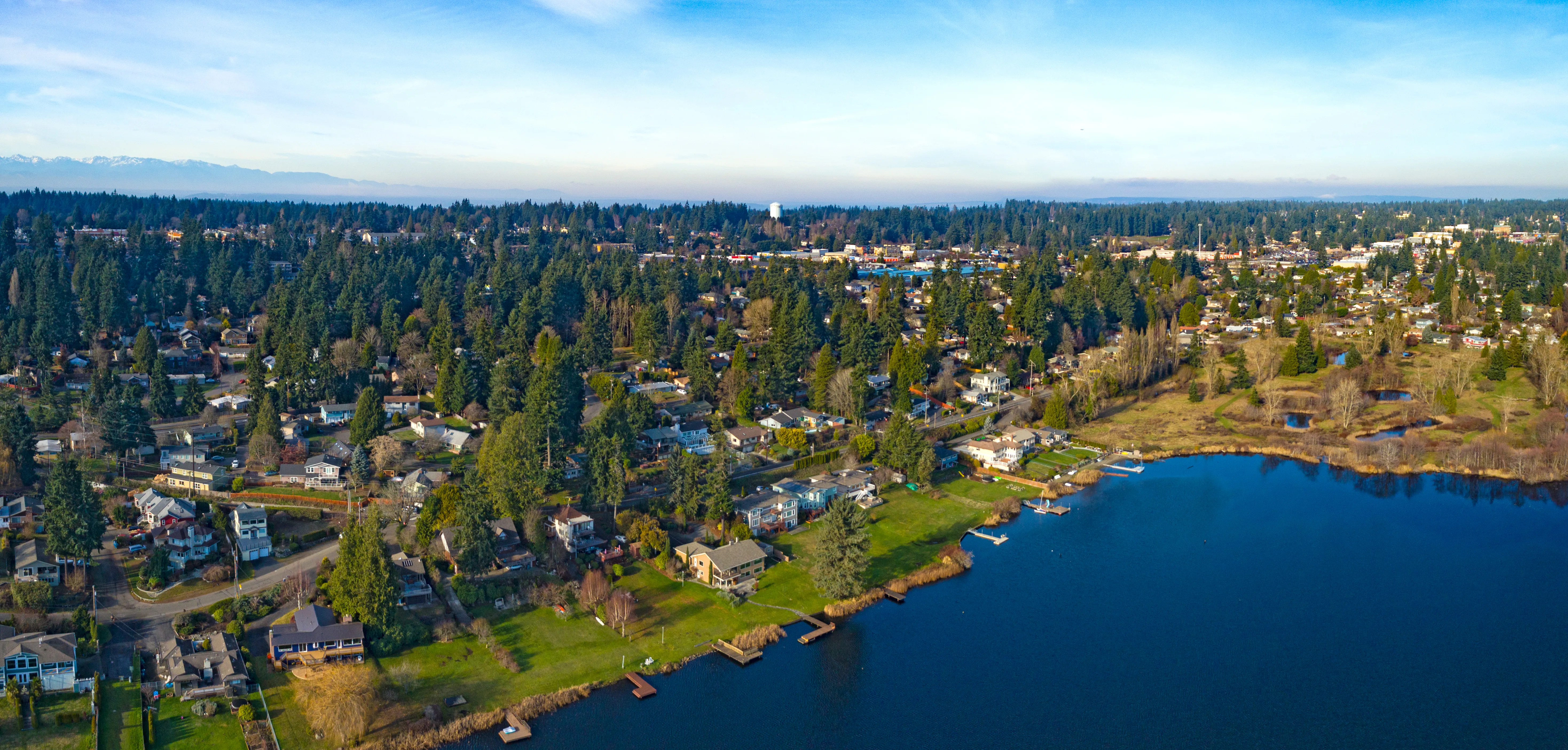
Local Expert Takeaway: If you're choosing between the Edmonds Bowl and a hillside neighborhood at a lower price point, understand that you're not just choosing between price tiers — you're choosing between two genuinely different daily lifestyles. Bowl buyers walk to their weekends; hillside buyers drive to them. Neither is wrong, but buyers who buy in Sherwood Forest expecting Bowl access often feel the gap more acutely than they anticipated. If waterfront walkability is what drew you to Edmonds in the first place, budget for the Bowl and don't compromise yourself into a neighborhood that makes you feel like you're living adjacent to the thing you actually wanted.
✅ Edmonds delivers on its reputation — the waterfront, the arts community, the commute numbers, and the safety profile are all genuine, not marketing copy.
⚠️ The price reality in desirable neighborhoods is significant — the median sold price is approaching $1 million city-wide, and the most walkable areas run $1.3 million and higher. Budget accordingly before falling in love with a specific block.
📍 Location within Edmonds matters enormously — the Bowl, the hillside, and the Highway 99 corridor are three fundamentally different living experiences wearing the same city name. Map your target neighborhood before your first showing.
Is Edmonds a good place for families?
Yes — Edmonds offers a B-rated school district, low violent crime, strong parks infrastructure including Yost Park and Meadowdale Beach County Park, and a community culture that values stability and civic engagement. Families with school-age children typically gravitate toward Seaview, Meadowdale, and the hillside neighborhoods, where lot sizes and proximity to elementary schools work well together.
What is the crime rate in Edmonds?
Edmonds has a violent crime rate of approximately 3 per 1,000 residents — well below both state and national averages — and an overall crime rate that sits below the national average of roughly 33 per 1,000. Property crime is more in line with regional suburban norms at around 30 per 1,000, so standard precautions around home and vehicle security apply, but the day-to-day safety environment here is genuinely strong.
How does Edmonds compare to nearby cities like Lynnwood or Shoreline?
Edmonds offers a more polished small-town character and direct waterfront access that neither Lynnwood nor Shoreline can match, but it comes at a meaningful price premium. Lynnwood runs roughly $300,000 below Edmonds' median with better light rail access; Shoreline is closer to Seattle with a younger demographic profile. Buyers who need to maximize square footage per dollar typically land in Lynnwood or Mountlake Terrace; buyers who are buying a lifestyle as much as a home tend to choose Edmonds.
Explore the full Edmonds series: The Ultimate Edmonds Relocation Guide · Is Edmonds Safe? · Cost of Living in Edmonds · Best Neighborhoods in Edmonds · Edmonds Schools & Family Life · Edmonds Youth Sports · Edmonds Parks & Recreation · Retiring in Edmonds · 1031 Tax-Deferred Exchange in Edmonds · Edmonds First-Time Homebuyers Guide · Moving to Edmonds from California
Tell us what you need help with and we'll connect you with local resources.

About the Author
Todd Davidson is the founder of Living in Oregon and Living in Washington, where he publishes in-depth city guides, neighborhood resources, and local market insights covering more than 180 communities across the Pacific Northwest. While his background is in home financing and real estate, he created these digital platforms to help families research and compare regions before making a move.