
Eastern Washington · Washington
There's a moment most first-time buyers describe the same way: you've been browsing Zillow for months, you think you know what you can afford, and then you sit down with a lender and the number on paper doesn't match the number in your head. In Kennewick, that moment tends to go one of two ways. Either buyers are relieved — because this market is genuinely more accessible than the Seattle metro comparisons they've been stress-reading — or they realize they haven't saved enough for closing costs, their DTI is tighter than they thought, and the house they wanted went pending in 24 days. This guide exists for both of those people. Kennewick rewards buyers who show up prepared, and it's one of the more realistic entry points for first-time homeownership left in Washington State.
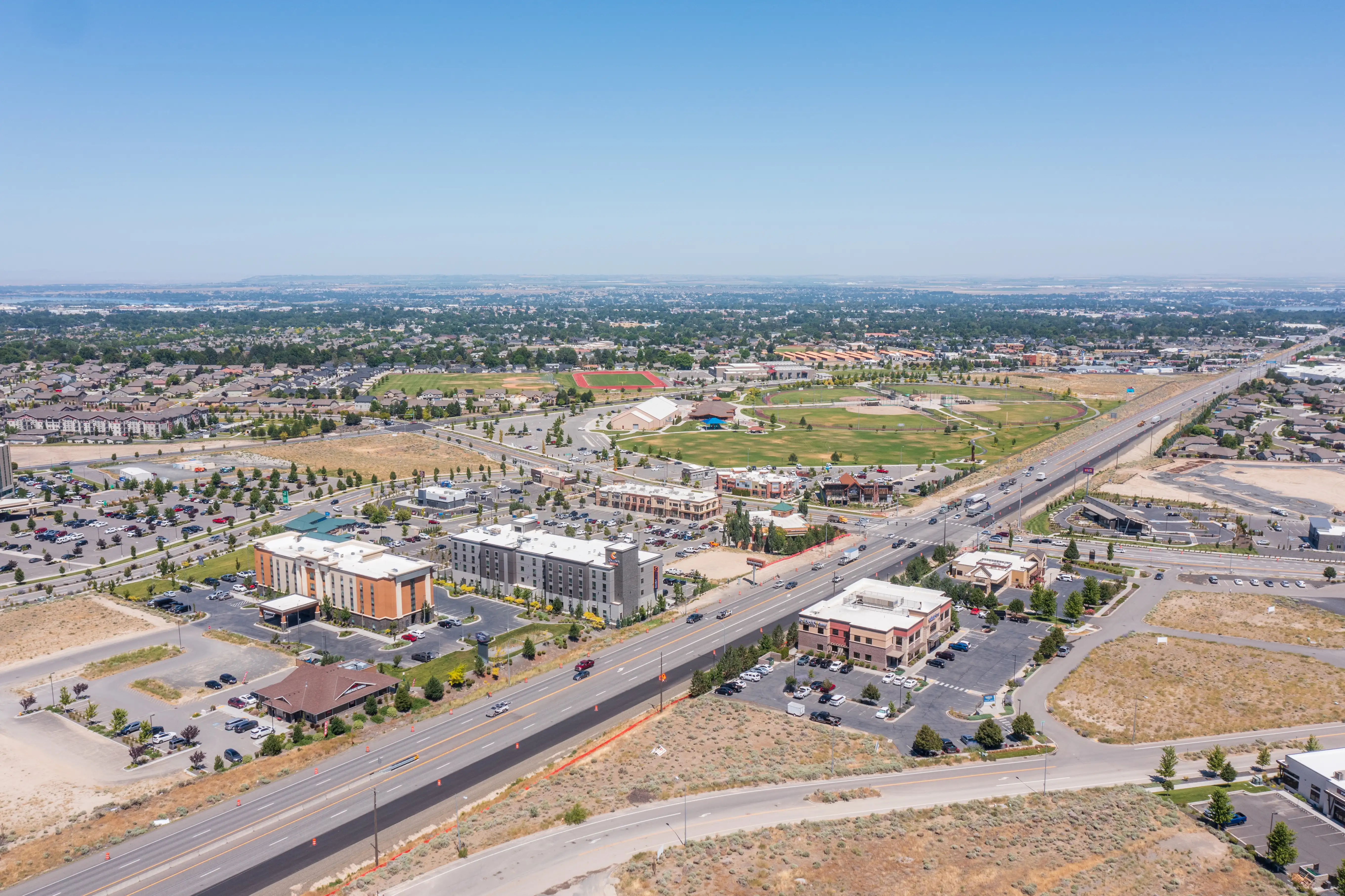
The median home price in Kennewick sits at $433,734, and while actual closed sales in mid-2025 clustered closer to $415,000–$425,000, listing prices in early 2026 have drifted toward $448,000. At that price point, a buyer putting 5% down is looking at a home in the 1,600–1,800 square foot range — likely three bedrooms, a two-car garage, and a yard — in neighborhoods like Creekstone, West Highlands, or the south Kennewick corridors off Canal Drive. That's a materially different outcome than what the same buyer would find in Bellevue, Redmond, or even Spokane's west side. The gap between renting and owning here is also closing: two-bedroom rents in Kennewick run roughly $1,400–$1,600 per month, and a 30-year mortgage on a $420,000 purchase with 5% down at current rates lands in a comparable range before you account for equity.
This guide walks through the entire buying process as it actually plays out in Kennewick — what lenders want to see, which neighborhoods pencil out at entry-level budgets, what first-timers consistently get wrong in this specific market, and how to close the cash-to-close gap with the right loan program. Washington's real estate market gets covered in broad strokes in most national guides. Kennewick has its own rhythms, its own price tiers, and its own set of traps. Here's what you actually need to know.

For a first-time buyer, Kennewick offers something increasingly rare in Washington: a market where a household income in the $70,000–$90,000 range can still realistically qualify for a home without a 20% down payment and two years of saving beyond that. The city sits in the heart of the Tri-Cities alongside Richland and Pasco, and the combination of relatively affordable prices, a diversified local employer base anchored by healthcare, food processing, and education, and no Washington state income tax creates a genuine affordability case. Schools fall under the Kennewick School District, rated B-level by most independent benchmarks, which gives buyers a solid but honest selling point at resale.
The honest side of that picture: Kennewick is a seller's market, and entry-level inventory — homes priced under $380,000 — is thin. The neighborhoods that offer the most accessible price points, such as older sections near Clearwater Avenue or established pockets in north Kennewick, tend to feature 1970s and 1980s construction that may require inspection attention and deferred-maintenance budgeting. Newer construction in south Kennewick, particularly around the Southridge and Canyon Lakes corridors, commands higher prices and draws competitive offers. First-time buyers who haven't pre-approved at a realistic number before searching often find themselves falling in love with a $480,000 home when their genuine comfort ceiling is $420,000.
The most realistic entry neighborhoods for a first-time buyer right now are West Highlands, Creekstone, and the Hansen Park area — each offering a mix of price points that align with median income qualification, decent commute access, and resale fundamentals that won't leave a buyer trapped if life changes in five years. Southridge is aspirational at entry-level but worth understanding as a target for year three or four.
| Price Range | What You Typically Find | Neighborhood Examples | Competition Level |
|---|---|---|---|
| Under $350K | Smaller older homes, some deferred maintenance, townhomes, or condos; fixer opportunity | North Kennewick, older Clearwater Ave pockets | Low to moderate |
| $350K–$450K | 3BR/2BA, 1,400–1,800 sq ft, established neighborhoods, some updates | West Highlands, Creekstone, Hansen Park | Moderate |
| $450K–$550K | 3–4BR, newer construction or well-updated homes, larger lots | Southridge, Inspiration Estates, Canyon Lakes entry | Moderate to competitive |
| $550K–$650K | 4BR, newer builds, often with HOA amenities, south Kennewick focus | Canyon Lakes, Cottonwood Springs, Cherry Blossom Meadows | Competitive |
| $650K+ | Custom or semi-custom builds, larger sq footage, premium finishes | Zintel Canyon, Vista Field, upper Canyon Lakes | Selective — fewer listings |
The sweet spot for a first-time buyer in Kennewick is the $370,000–$450,000 range. That band captures the bulk of available inventory at median price, offers enough supply to allow comparison shopping without extreme urgency, and still qualifies comfortably for FHA or conventional financing at typical first-time buyer income levels. Homes in this tier aren't perfect — expect to negotiate on cosmetic updates, HVAC age, or landscaping — but they're structurally sound and hold resale value well in a market that has appreciated modestly and consistently.
Buyers who stretch into the $450,000–$550,000 range will find newer Southridge builds and Canyon Lakes entries that feel move-in ready, but they'll face more competition and a higher cash requirement. Unless a buyer has the pre-approval depth and the savings discipline to compete in that tier confidently, the $400,000–$430,000 range with a slightly older home that's been well maintained is almost always the stronger first purchase.
| Step | What Happens | Typical Timeline | What First-Timers Get Wrong |
|---|---|---|---|
| Get finances in order | Pull credit, clear errors, reduce credit card balances, document income sources | 30–90 days before applying | Waiting until they find a house — too late |
| Pre-approval | Lender reviews income, assets, credit, issues pre-approval letter with max purchase amount | 1–3 business days | Confusing pre-qualification (soft) with pre-approval (hard — what sellers want) |
| Find an agent | Interview 1–2 buyer's agents familiar with Benton County and Kennewick neighborhoods specifically | 1–2 weeks | Skipping this step, or using a relative who doesn't know the local market |
| Active search | Touring homes, tracking comps, building familiarity with neighborhoods and price tiers | 2–8 weeks | Shopping at the absolute top of pre-approval instead of the top of comfort |
| Making offers | Agent prepares offer with price, contingencies, earnest money, and proposed closing date | Same day as decision | Submitting lowball offers in a market where homes close within 2–4% of list price |
| Under contract | Seller accepts; timelines for inspection, appraisal, and financing begin | Days 1–5 post-acceptance | Not having earnest money ready — 1–2% of purchase price is the Benton County norm |
| Inspection | Buyer hires inspector; deficiencies documented; negotiation window opens | Days 5–12 | Waiving inspection on older Kennewick housing stock — a real risk |
| Appraisal | Lender orders appraisal; must meet or exceed purchase price for loan to proceed | Days 10–21 | Underestimating this timeline; appraisal delays are the #1 closing bottleneck |
| Final walkthrough | Buyer confirms property condition matches contract terms | 24–48 hours before closing | Skipping it — condition can change between inspection and closing |
| Closing | Sign documents, wire funds, receive keys | Day 30–45 from accepted offer | Being surprised by the final closing disclosure numbers |
In Kennewick, the market is competitive but not chaotic. Most homes receive one offer on average, and buyers generally aren't forced into waiving inspection the way they might be in Seattle or even Spokane's west side during a hot stretch. That said, well-priced homes in the $380,000–$450,000 range do move quickly — often within two to three weeks of listing — so being pre-approved and ready to act is essential. Earnest money in Benton County typically runs 1–2% of the purchase price, and submitting below that range signals hesitation to sellers.
Closing timelines in Kennewick run 30–45 days from accepted offer for most conventional and FHA transactions. The most common first-timer mistake isn't the offer — it's the period between going under contract and closing. Buyers often underestimate how much documentation lenders request, how quickly appraisers are scheduled, and how disruptive a repair negotiation can become if the inspection reveals significant issues. The buyers who close smoothly are the ones who respond to lender requests within 24 hours and don't make major financial moves — new credit cards, car loans, job changes — during the escrow period.

Looking to buy in Estimate your payment.
Enter your numbers to see an estimated monthly mortgage payment.
Estimate only. Excludes HOA fees and mortgage insurance.
On a conventional loan, the floor is a 620 credit score, but 680 and above is where the rate picture meaningfully improves. A buyer at 650 versus a buyer at 740 on a $450,000 loan can easily see a rate difference of 0.5%–0.75%, which translates to roughly $130–$200 per month in payment. Over a 30-year loan, that's real money — and it's why spending 90 days paying down revolving balances before applying isn't optional if your score is sitting in the low 600s. FHA loans allow a 580 minimum with 3.5% down, and some lenders will go to 500 with 10% down, though that range carries higher costs across the board including mortgage insurance for the life of the loan.
For income qualification, lenders typically use a 28% front-end debt-to-income ratio as the guideline. That means your housing payment — principal, interest, taxes, and insurance — shouldn't exceed 28% of your gross monthly income. At a $400,000 purchase with 5% down, you're looking at needing roughly $5,400–$5,800 in gross monthly income ($65,000–$70,000 annually) to qualify comfortably. At $500,000, that figure rises to approximately $6,800–$7,200 per month. At $600,000, you're north of $8,200 per month. DTI — your total debt payments divided by gross income — is actually what most lenders scrutinize hardest, because student loans, car payments, and credit card minimums all count against you. A buyer with $550 in monthly debt obligations qualifies for meaningfully less home than a buyer with none.
One factor that genuinely surprises buyers relocating from California, Oregon, or other states: Washington has no state income tax. For someone moving from California paying 9%+ in state income tax, the take-home pay increase is immediate and significant — and lenders use gross income, not net, so this doesn't change your qualifying number directly. But it does change your monthly budget reality substantially, which means the payment that looks tight on paper often feels more manageable once you've lived a full month in Washington.
Confusing list price with what homes actually close at. In Kennewick, well-priced homes in the $400,000–$450,000 range routinely close within 1–3% of list price, and some close above it. Buyers who assume there's always 5–10% of negotiating room are the ones who lose homes to cleaner offers. Research recent comps in the specific neighborhood before making an offer — your agent should show you the last six months of closed sales within half a mile.
Skipping inspection on older housing stock. North Kennewick and sections near Clearwater Avenue have significant inventory from the 1970s and 1980s. Roofs, HVAC systems, and electrical panels in that vintage can carry meaningful replacement costs. Skipping inspection to win in a competitive situation might work out — or it might deliver a $15,000 HVAC replacement in year two. On older construction especially, the inspection contingency isn't optional caution; it's basic financial protection.
Shopping at the top of their pre-approval number. If a lender pre-approves you for $490,000, that number reflects the maximum you qualify for — not the number that will let you sleep at night. First-time buyers in Kennewick who purchase at their absolute ceiling have no buffer for property tax adjustments, HOA increases, or a car repair that coincides with a slow month at work. A useful self-test: calculate the full monthly payment at your target price and run that number for three months before buying. If it doesn't feel sustainable, it isn't.
Not understanding how school district boundaries affect resale value. Kennewick School District serves most of the city, but specific high school boundaries — Kennewick High, Southridge High, and Kamiakin High — matter to buyers with kids and therefore affect the resale pool. Homes zoned for Southridge High carry a modest premium in the south Kennewick market. If you're buying near a boundary, confirm which school serves that address before closing.
Waiting for prices to drop in a supply-constrained market. Kennewick has seen modest, consistent appreciation rather than boom-and-bust swings. Inventory remains limited at entry-level price points, and the Tri-Cities region is growing. Buyers who have been waiting since 2023 for a significant price correction have generally watched prices move the other way. If your finances are ready, waiting for a different market is often the most expensive decision you can make.
West Highlands is one of the most practical entry points in Kennewick for a first purchase. Homes here tend to run in the $360,000–$440,000 range, with a mix of late-1990s and early-2000s construction that's past the age of major immediate surprises but not so new that pricing becomes aspirational. The area sits close enough to Clearwater Avenue and Highway 395 to keep commutes manageable, and the neighborhood has a settled, family-oriented character without the premium that newer south Kennewick communities command.
Creekstone offers a similar value profile with slightly newer builds and consistent street-level appeal. Entry prices typically start in the low-to-mid $400,000s, and the range extends through the upper $400,000s for larger homes. It's the kind of neighborhood where the resale market is reliable — schools are solid, layouts are functional, and the homes don't have the quirks of older construction. For a first-time buyer prioritizing a home they can grow into rather than immediately outgrow, Creekstone is worth serious attention.
Hansen Park sits on the more accessible end of the pricing spectrum and draws buyers willing to trade newer finishes for lower entry cost. Expect homes in the $330,000–$400,000 range, with inventory that reflects a working-class, stable neighborhood rather than one in active appreciation. The catch is that you're buying a home that will require some cosmetic updating, but the acquisition price leaves room in the budget to do it on your own timeline.
Southridge is worth mentioning as a slightly longer-term aspiration. At entry, this area pushes $450,000 and up, and the newer HOA-governed sections closer to Southridge High School can approach the $500,000s. For a first-time buyer who stretches to get here, the resale fundamentals and school assignments are among the strongest in Kennewick — but it requires a financially stronger position than the other three neighborhoods on this list.
Local Expert Takeaway: The single most common mistake first-time buyers make in Kennewick is shopping the $450,000–$500,000 Southridge tier before their finances genuinely support it, then feeling stuck when they lose two or three offers. Start in West Highlands or Creekstone at $390,000–$430,000, close a home you can afford confidently, build equity for two to three years, and then make the south Kennewick move with a real down payment and a real negotiating position. The buyers who do it in that order consistently end up better off than the ones who stretched too early.
✅ Kennewick's median home price of $433,734 makes it one of the most accessible first-home markets in Washington State — particularly compared to the Puget Sound region.
⚠️ Entry-level inventory under $380,000 is thin. Buyers at that budget need to be pre-approved and ready to move quickly when the right home appears.
📍 West Highlands, Creekstone, and Hansen Park are the three neighborhoods most aligned with first-time buyer budgets, school access, and realistic resale timelines.
Can I buy a home in Kennewick as a first-time buyer?
Yes — and Kennewick is one of the more realistic markets in Washington to do it in. With a median home price around $433,734 and FHA and conventional financing options accessible at 3–5% down, buyers with solid employment and reasonable credit are closing homes here regularly. Being pre-approved before you start touring is essential; homes in the $400,000–$440,000 range don't sit long.
How much do I need to buy my first home in Kennewick?
With FHA financing at 3.5% down on a $420,000 purchase, you're looking at roughly $14,700 in down payment plus closing costs that typically run 2–3% of the loan amount — call it $8,000–$12,000 more. Total cash to close is often in the $22,000–$27,000 range for a mid-range purchase. Your lender will give you a loan estimate with exact numbers once you're pre-approved.
What credit score do I need to buy a house in Washington state?
FHA loans allow a 580 minimum with 3.5% down. Conventional loans start at 620, though you'll see meaningfully better interest rates at 680 and above. Your credit score is one number — but your full credit picture, including payment history, revolving balances, and recent hard inquiries, matters just as much to lenders as the score itself.
Explore the full Kennewick series: The Ultimate Kennewick Relocation Guide · Is Kennewick Safe? · Cost of Living in Kennewick · Best Neighborhoods in Kennewick · Kennewick Schools & Family Life · Kennewick Youth Sports · Kennewick Parks & Recreation · Retiring in Kennewick · 1031 Tax-Deferred Exchange in Kennewick · Kennewick First-Time Homebuyers Guide · Moving to Kennewick from California
Tell us what you need help with and we'll connect you with local resources.

About the Author
Todd Davidson is the founder of Living in Oregon and Living in Washington, where he publishes in-depth city guides, neighborhood resources, and local market insights covering more than 180 communities across the Pacific Northwest. While his background is in home financing and real estate, he created these digital platforms to help families research and compare regions before making a move.