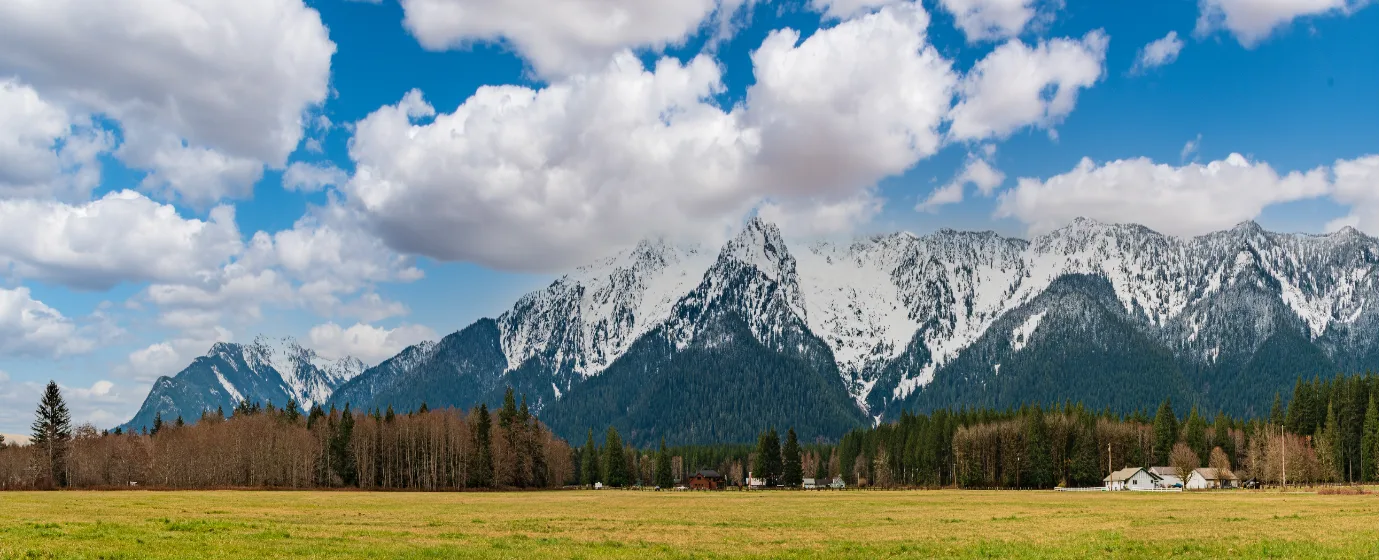
Puget Sound · Washington
Not everyone reading a 1031 guide is a professional investor with a portfolio manager on speed dial. A significant slice of the California capital flowing into the Pacific Northwest right now belongs to homeowners — people who sold a Bay Area house they'd been renting out for a decade, or landlords tired of Sacramento's regulatory environment, who are looking to roll proceeds into something that produces income without the California overhead. Lynnwood, Washington deserves a serious look as a replacement property destination. It sits 22 minutes from Seattle, just opened a light rail station that's reshaping its rental map, and still offers entry points for small multifamily that have largely disappeared from the greater Seattle core.
The Lynnwood rental market is remarkably durable for a suburb of its size. With 48% of households renter-occupied — nearly 8,000 renter households — the tenant pool here isn't thin. Demand draws from multiple engines: Edmonds College enrollment keeps the College District submarket consistently occupied, Boeing and healthcare workers along the I-5 corridor need affordable alternatives to Seattle pricing, and the arrival of the Lynnwood Link light rail in August 2024 has made the city accessible to downtown Seattle commuters who can't justify Seattle rents. The property types that trade most often as investment vehicles are 1950s–1960s ramblers converted to rentals, small multifamily (duplexes through fourplexes), and increasingly, newer townhome developments near the transit corridor.
This guide covers the mechanics of a 1031 exchange for readers who want a clean refresher, the Lynnwood investment property market in concrete terms, why Pacific Northwest markets are attracting California capital specifically, the Washington tax picture compared to California, and a due diligence checklist built for an out-of-state buyer on a 45-day clock.
The IRS gives you 45 calendar days from closing on your relinquished property to identify replacement properties — and the clock starts the day you close, not the day you receive the proceeds. You can identify up to three properties under the three-property rule without restriction, or more properties if their combined fair market value stays within 200% of the relinquished property's value. Most investors stick to three. The identification must be in writing, delivered to your qualified intermediary before midnight on day 45 — no extensions exist for any reason, including natural disasters under current rules.
The 180-day closing deadline runs concurrently from the same closing date, not from the end of the identification window. Your replacement property purchase must close within 180 days. The qualified intermediary is not optional — this is the entity that holds your proceeds between transactions, and if funds touch your account at any point, the exchange is disqualified. Choosing an experienced QI before you list your relinquished property is one of the most important steps you can take.
The "like-kind" rule is broader than most investors assume. Real property exchanges for real property — that covers SFRs, duplexes, apartment buildings, commercial properties, and land, all interchangeably. The boot trap catches investors who don't reinvest the full amount: any cash left over or debt reduction that isn't offset by new debt becomes taxable in the year of the exchange. Structuring the acquisition so that your new debt equals or exceeds your old debt keeps the exchange fully tax-deferred.
The median sold price for Lynnwood homes as of early 2026 runs in the $775,000–$815,000 range depending on the month and data source, with active SFR listings frequently asking closer to $940,000–$950,000 — a gap that creates a meaningful negotiation window for buyers who aren't rushed. Small multifamily trades at approximately $100,000 per door before land premium, which means a well-located duplex typically prices between $700,000 and $950,000. The price-to-rent ratio sits around 31–33x using current rent averages, which tells you two things simultaneously: buying is expensive relative to renting (which sustains your tenant pool) and cap rate compression on SFRs is real.
| Property Type | Typical Price Range | Est. Cap Rate | Avg Days to Close |
|---|---|---|---|
| Single-Family Rental | $760,000–$950,000 | 3.5%–5.0% | 27–35 days |
| Duplex / Triplex | $700,000–$1,100,000 | 4.5%–5.5% | 30–45 days |
| Fourplex (small multifamily) | $950,000–$1,400,000 | 5.0%–6.0% | 35–50 days |
| Commercial / Office | Varies widely | Not recommended | 60–90+ days |
Small multifamily moves fastest in this market — well-priced duplexes within walking distance of the light rail corridor or Edmonds College routinely go under contract before many 1031 buyers finish their due diligence. Office assets are not a fit for most investors in this cycle; the Lynnwood submarket carried a vacancy rate near 21% in 2024, and that gap hasn't materially closed.

Looking to buy in Estimate your payment.
Enter your numbers to see an estimated monthly mortgage payment.
Estimate only. Excludes HOA fees and mortgage insurance.
California investors executing 1031 exchanges have been rotating into Pacific Northwest markets at an accelerating pace. The math is straightforward: the same dollar amount that buys a single-family rental in a secondary California market often buys a duplex — or a duplex plus a SFR — in Lynnwood. That spread in purchasing power, combined with Washington's tax structure, is what drives the conversation.
A Bay Area homeowner who relinquishes a property at $1.4 million has enough proceeds to acquire a Lynnwood duplex and a single-family rental simultaneously — debt-light or debt-free — while diversifying across two income streams. Bay Area investors are accustomed to cap rates in the 2.5%–3.5% range; Lynnwood's 5%–6% range on small multifamily represents a genuine yield upgrade. The cultural adjustment is minor: Seattle's tech-driven economy feels familiar.
Southern California investors selling mid-tier rentals in the $800,000–$1.2 million range find that their exchange proceeds buy comfortably into Lynnwood's sweet spot. Los Angeles and San Diego landlords are also the most likely to have navigated rent control frameworks, so Washington's landlord-tenant environment — more balanced, no statewide rent control as of 2026 — tends to feel like relief rather than a learning curve.
Sacramento and Inland Empire investors often arrive with lower exchange amounts — $450,000 to $750,000 — and need to identify properties carefully to avoid boot. Lynnwood's condo and townhome inventory, which has active product in the $580,000–$680,000 range, creates viable replacement options for this segment. The Inland Empire investor accustomed to high-desert vacancy risk finds Lynnwood's 5.6% residential vacancy rate reassuring.
Washington's absence of a state income tax is the headline advantage that California investors understand immediately. Every dollar of net rental income is yours — no 9.3%, no 13.3% top bracket, no installment-payment obligation to Sacramento. For a rental property generating $30,000 in annual net income, that difference is $2,800–$4,000 per year depending on the investor's California bracket, compounding across a hold period.
| Tax Item | California | Washington |
|---|---|---|
| State income tax on rental income | 1%–13.3% depending on bracket | None |
| Property tax rate on new purchase | ~1.1%–1.25% (new Prop 13 basis) | ~1.07% (Snohomish County) |
| State sales tax | 7.25% (varies by county) | 6.5% + local (typically 10.2% in Lynnwood) |
| Capital gains on sale | Taxed as ordinary income + 3.8% NIIT | 7% on gains over $262,000/year |
| Depreciation recapture | Taxed as ordinary income at CA rates | No state income tax — federal only |
Washington does levy a 7% capital gains tax, but only on long-term gains exceeding $262,000 per year as of 2026 — most smaller investors holding a single rental property won't trigger it in a given tax year. The one tax consideration that catches California investors off guard is Washington's sales tax on materials and furnishings. If you're rehabbing a rental — new appliances, flooring, fixtures — those purchases carry Washington's combined tax rate of approximately 10.2% in the Lynnwood area. California investors accustomed to doing renovation math without sales tax (for labor, at least) need to build that line into their budgets.
On depreciation: a 1031 exchange carries the depreciation basis from the relinquished property forward — it does not reset to the new property's purchase price. For long-held California properties with a thin remaining basis, this is a relevant cash flow consideration. Delaware Statutory Trusts offer an alternative for investors who want the 1031 tax deferral without active management — DST interests qualify as like-kind replacement property and are worth discussing with your QI if the management burden of a Lynnwood rental doesn't fit your situation.
Washington's landlord-tenant law is more balanced than California's, but it's not landlord-permissive. Current state law requires specific written notice periods before rent increases, mandates detailed move-in inspection processes, and has tightened eviction procedures meaningfully in recent years. There is no statewide rent control as of 2026, and Lynnwood has not enacted local rent stabilization — but investors should monitor Snohomish County and city council activity, as this is an active policy area regionally.
Out-of-state owners consistently underestimate two things: the notice requirements before entering a unit (48 hours written notice for non-emergency access is standard) and the documentation burden for move-out disputes. Washington requires landlords to provide itemized written statements for any deduction from a security deposit within 30 days of move-out, with supporting receipts — failures here result in forfeiture of the full deposit and potential penalties. Hiring local property management isn't just a convenience for out-of-state owners; it's a liability hedge.
Property management fees in the Lynnwood market run 8%–10% of gross rents for full-service management. Firms with presence in the Snohomish County market include Windermere Property Management and several independent operators serving the Edmonds–Lynnwood corridor. Factoring management fees into your underwriting before you make an offer — not after — is the discipline that separates investors who hit their return targets from those who don't.
| Item | What to Verify | Local Resource |
|---|---|---|
| Title search | No liens, easements, or encroachments | Washington title company (First American, Stewart, Fidelity National) |
| Sewer/septic status | City sewer connection vs. septic — most urban Lynnwood is city sewer | City of Lynnwood Public Works |
| Flood zone | FEMA flood zone designation — rare but check near Scriber Lake area | FEMA Flood Map Service Center |
| Rental permit requirements | Lynnwood requires business license for rental properties | City of Lynnwood Development Center |
| HOA restrictions on rentals | Some townhome/condo HOAs cap rental percentage or require owner-occupancy periods | HOA governing documents |
| Zoning & ADU potential | R-1/R-2 zoning allows ADUs under Washington state law — verify lot size eligibility | Lynnwood Planning Division |
| School district confirmation | All Lynnwood is served by Edmonds School District — affects tenant pool quality | Edmonds School District boundary maps |
| Current lease status | Month-to-month vs. fixed-term; existing rent vs. market rent; any pending disputes | Request estoppel letters from current tenants |
| Deferred maintenance inspection | Roof age, HVAC, foundation — 1960s–1970s housing stock requires careful inspection | Washington state-licensed inspector |
| Property management referral | Line up management before close if you're out-of-state | Windermere Property Management (Snohomish County) |
| Short-term rental ordinances | Lynnwood prohibits most STR activity without specific permitting — not a primary Airbnb market | City of Lynnwood Municipal Code |
| Environmental review | UST (underground storage tank) history for older commercial-adjacent properties | Washington State Dept. of Ecology |
| Insurance quote before close | Washington weather increases roof and water intrusion claims vs. California norms | Get quote before earnest money goes hard |

Local Expert Takeaway: The single mistake California 1031 buyers make most often in Lynnwood is underwriting the rental income at Bay Area or LA rent levels — they see a 2-bedroom unit and mentally assign $2,800–$3,000/month based on where they came from. Lynnwood's 2-bedroom average runs closer to $2,195–$2,280. Run your cap rate math on Washington numbers before you identify the property, not after, or you'll overpay for an asset that delivers 60% of the yield you modeled.
✅ Lynnwood's rental demand is structurally durable — 48% renter-occupied households, light rail access to Seattle, and Edmonds College enrollment create a tenant pool that doesn't depend on any single employer or economic cycle.
⚠️ SFR cap rates are compressed — at a 31–33x price-to-rent ratio, single-family rentals in Lynnwood pencil at 3.5%–5.0%. Small multifamily delivers meaningfully better returns, and that's where most 1031 buyers should focus their identification strategy.
📍 The 45-day window is not theoretical pressure — it's real pressure — well-priced duplexes near the Lynnwood transit corridor move in under two weeks. Tour the market and pre-negotiate with sellers before your relinquished property closes if at all possible.
Does a 1031 exchange work for out-of-state property?
Yes — the 1031 exchange rules apply regardless of where the relinquished or replacement property is located. A California investor selling a San Jose rental can exchange into a Lynnwood duplex without any geographic restriction, as long as both properties are held for investment or business use and the exchange timelines are met.
What is the cap rate on rental property in Lynnwood?
Small multifamily properties — duplexes through fourplexes — typically trade at cap rates in the 4.5%–6.0% range in Lynnwood, with properties in better locations closer to the lower end of that range. Single-family rentals compress to the 3.5%–5.0% range given acquisition prices relative to achievable rents. Commercial and office assets are not competitive in this submarket at present.
Do I need a local property manager for a 1031 investment in Washington?
It's not legally required, but out-of-state owners who self-manage Washington rentals carry meaningfully higher legal and compliance risk. Washington's landlord-tenant code has specific notice, documentation, and deposit-return requirements that differ from California's — missing them can cost more than a year's worth of management fees. Most out-of-state 1031 investors find that budgeting 8%–10% of gross rents for professional management is the decision that keeps the investment performing as modeled.
Explore the full Lynnwood series: The Ultimate Lynnwood Relocation Guide · Is Lynnwood Safe? · Cost of Living in Lynnwood · Best Neighborhoods in Lynnwood · Lynnwood Schools & Family Life · Lynnwood Youth Sports · Lynnwood Parks & Recreation · Retiring in Lynnwood · 1031 Tax-Deferred Exchange in Lynnwood · Lynnwood First-Time Homebuyers Guide · Moving to Lynnwood from California
Tell us what you need help with and we'll connect you with local resources.

About the Author
Todd Davidson is the founder of Living in Oregon and Living in Washington, where he publishes in-depth city guides, neighborhood resources, and local market insights covering more than 180 communities across the Pacific Northwest. While his background is in home financing and real estate, he created these digital platforms to help families research and compare regions before making a move.