
Puget Sound · Washington
Maybe your employer is relocating you to the North Seattle corridor and someone in HR mentioned Mountlake Terrace as the commuter sweet spot. Maybe you've been watching Shoreline prices climb past your budget and a friend said to look thirteen miles north. Or maybe you pulled up the light rail map after the Lynnwood Link extension opened and noticed a station sitting right inside a city you'd never heard of — a city with mid-$600s home prices and a direct train to downtown Seattle. The tension at the heart of every Mountlake Terrace buying decision is this: it looks like a quiet, overlooked suburb on paper, and in practice it's becoming one of the fastest-moving real estate markets in Snohomish County.
Geographically, Mountlake Terrace is compact — just over four square miles tucked between Lynnwood to the north, Shoreline to the south, and Edmonds to the west. That compactness is part of its appeal. Lake Ballinger anchors the eastern edge, Ballinger Park gives the city its open-space identity, and the Recreation Pavilion serves as a genuine community hub rather than a name on a map. Daily life here runs along 56th Avenue W and 212th Street SW corridors, with Highway 99 and I-5 both accessible within minutes. The city was carved out of a former airfield in 1949 to house returning veterans, and that mid-century DNA — generous lots, single-story ramblers, wide residential streets — still defines its neighborhoods seven decades later.
This guide will help you decide whether Mountlake Terrace fits your life. You'll get an honest look at what the housing market actually costs, which neighborhoods suit which buyers, how the commute holds up on a Tuesday morning in February, and the legitimate reasons some people love it here for decades while others find themselves looking at Edmonds or Shoreline within a few years. No spreadsheet captures all of that — but this guide comes close.
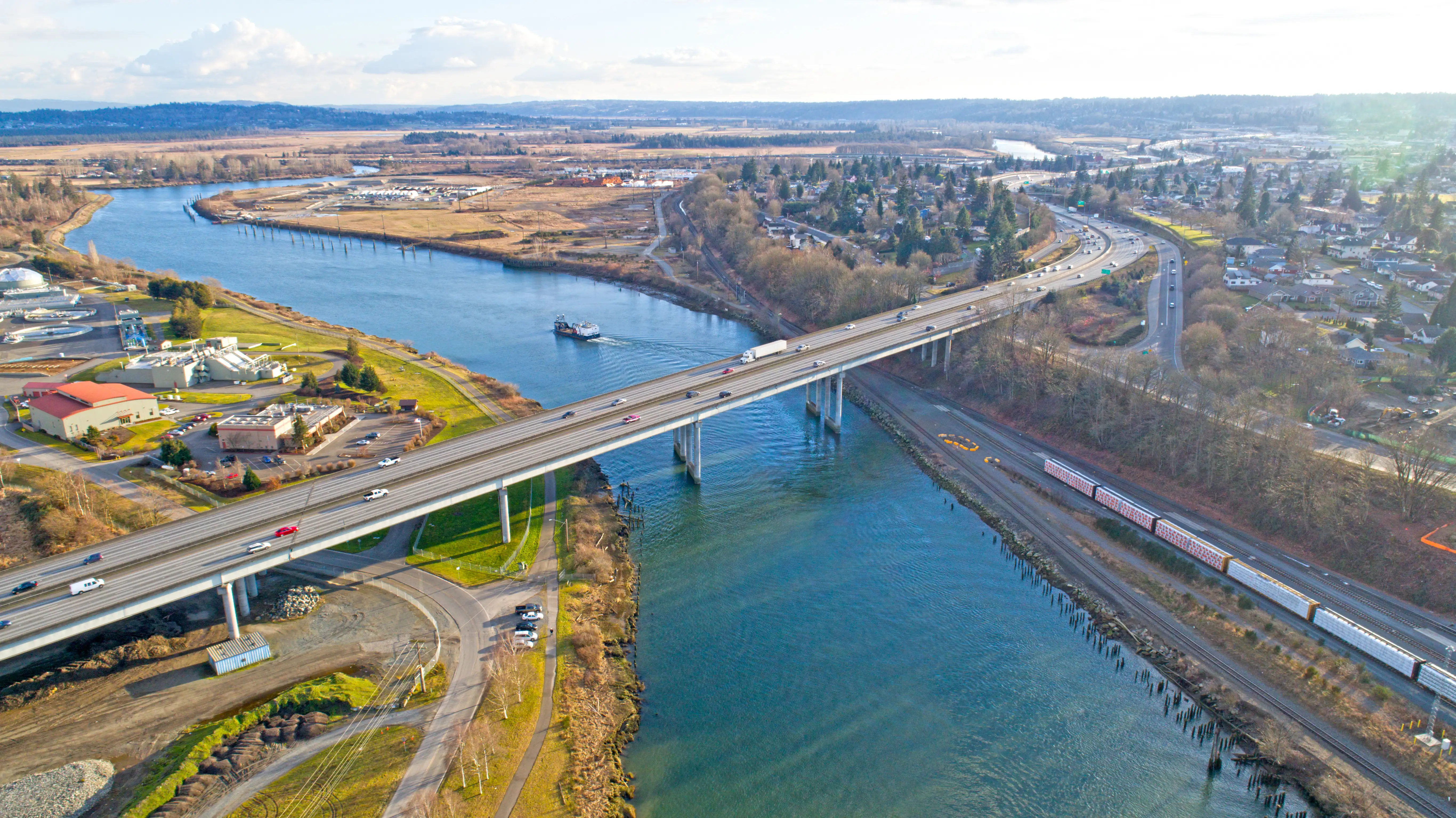
| Best For | Why |
|---|---|
| Seattle commuters | Light rail from Mountlake Terrace Station puts downtown Seattle roughly 28 minutes away — without a car |
| First-time buyers priced out of Seattle/Shoreline | Median home prices below most comparable Seattle suburbs, with townhomes near transit starting well below the city median |
| Families with school-age children | Edmonds School District serves the city with a solid B+ rating; Ballinger Park and the Recreation Pavilion add genuine family infrastructure |
| Remote workers who value green space | 269+ acres of parks, Lake Ballinger access, and the Interurban Trail offer real outdoor proximity without rural trade-offs |
| Transit-dependent households | One of the few Snohomish County cities with direct Link light rail access, plus Community Transit and King County Metro bus service |
| Retirees downsizing from Seattle | Lower price point, accessible recreation, and a stable community without the density or noise of urban neighborhoods |
The first thing that surprises most people who've only driven through on Highway 99 is how residential and quiet the interior streets actually are. The commercial corridors along 56th Avenue W and near the Town Center carry most of the daily activity — coffee, groceries, errands — while the neighborhoods behind them feel more like a 1950s bedroom community than an inner-ring suburb in transition. Neighbors tend to know each other. The streets are wide. The ramblers sit on lots generous enough for actual yards, which feels increasingly rare this close to Seattle.
The commute reality in 2026 is genuinely different from what it was four years ago. The Mountlake Terrace Station on Link light rail — located at 6001 236th Street SW — opened as part of the Lynnwood Link extension in August 2024 and has steadily become the city's single most consequential infrastructure feature. Trains run roughly every eight minutes during peak hours, and the University of Washington is only eleven minutes away. The downtown Seattle connection at approximately 28 minutes is competitive with driving from Shoreline or Kenmore on anything resembling a busy morning.
Driving is still how most households move through daily life — the city averages two cars per household, and the I-5 and Highway 99 access points are genuine conveniences for anyone headed south to Shoreline or north toward Lynnwood. The honest friction comes on 212th Street SW during the evening window between 4:30 and 6:00 PM, where the approach to the I-5 interchange can stack up noticeably. Knowing that and timing errands or pickups accordingly is the kind of local knowledge that separates a frustrated first year from a smooth one.
What makes the community feel unusually cohesive for a city this size is the Recreation Pavilion. It functions as a genuine third place — not just a gym with a sign out front, but a facility that draws residents for fitness classes, aquatics, and programs that create the kind of repeated casual contact that actually builds neighborhood identity. Ballinger Park amplifies that during warmer months, with the 220-foot fishing pier and beach access at Lake Ballinger pulling families out of their houses and into shared space in ways that a trail or a playground alone don't quite replicate.
Light rail access changes the math on Seattle proximity. Before August 2024, Mountlake Terrace's commuter story was good but not exceptional — a decent I-5 drive, solid Community Transit connections, but no rail. The Lynnwood Link extension rewrote that narrative. Residents can now reach the University District in eleven minutes and Sea-Tac Airport in roughly 56 minutes by train, which matters both for daily commuters and for households with frequent travelers. The station's 891-space park-and-ride also makes it accessible for residents who live farther from the station itself.
The housing stock is genuinely distinctive. Mountlake Terrace was built out in the post-war era on what was formerly a disused airfield, which means the dominant housing type is the mid-century rambler — single-story, on a real lot, with the kind of proportional indoor-outdoor relationship that newer construction rarely replicates. A $675,000 single-family home here often sits on a lot that would cost significantly more in Shoreline, and the bones of the construction hold up well with modest updating. That lot size also means room for additions, ADUs, and gardens — flexibility that matters to buyers planning a long tenure.
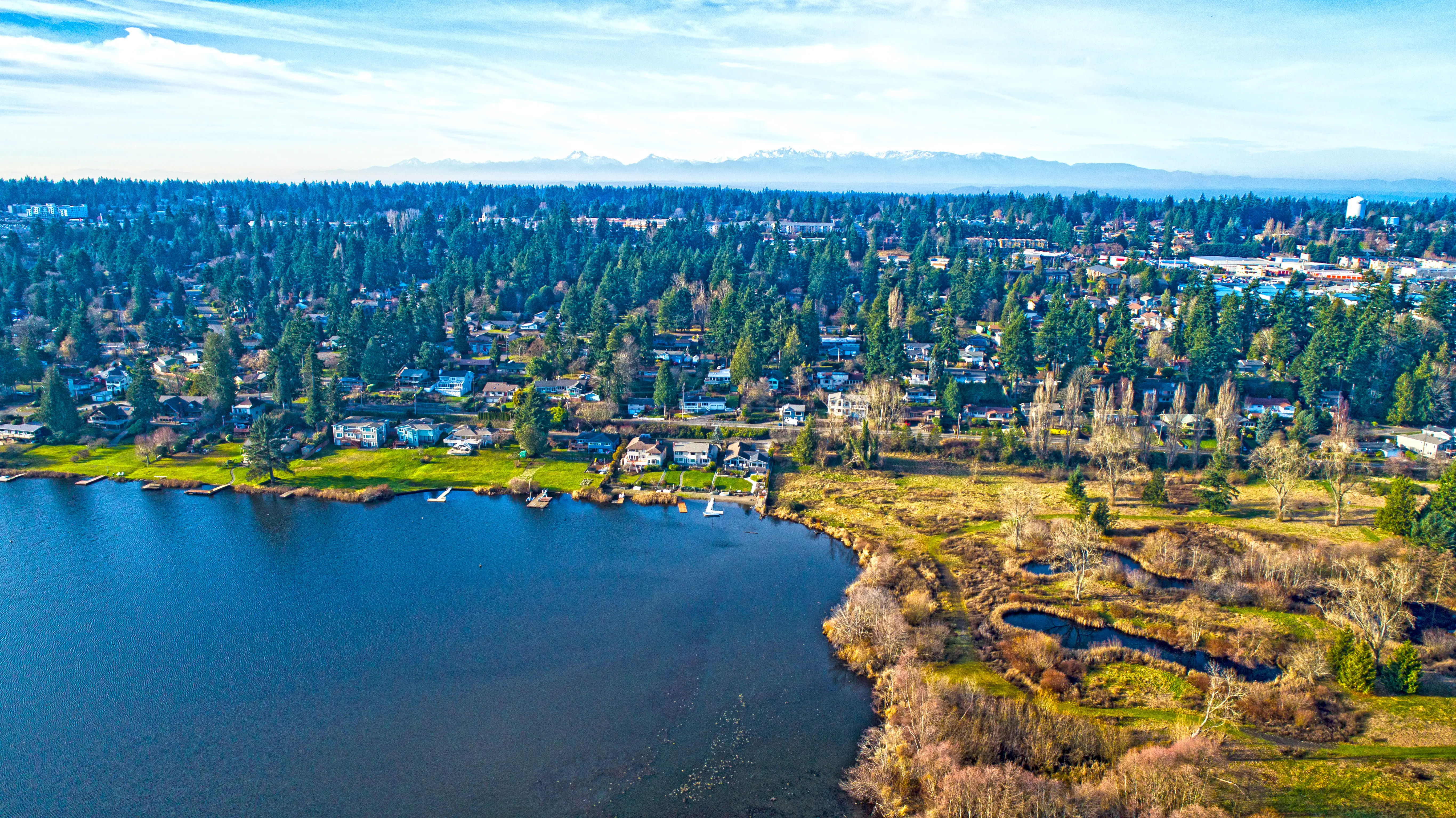
The parks system is legitimately impressive for a city of this size. Ballinger Park alone covers 55 acres along the north and east shores of Lake Ballinger, with a multipurpose sports complex, a 42-acre natural area converted from a former golf course, and a boat launch onto the 100-acre lake. The Hazel Miller Universally Accessible Playground at Ballinger Park — winner of the 2025 Washington Recreation and Park Association Spotlight Award — reflects an investment in inclusive design that's rare at the municipal level. Terrace Creek Park, Veterans Memorial Park, Evergreen Playfield Park, and Hall Lake round out a system that totals more than 269 acres.
The city also carries a financial profile that rewards homeowners over time. The effective property tax rate sits at approximately 0.72%, meaningfully below the national median of around 1.02%. Unemployment in the broader area runs roughly 36% below the national rate, and the city's poverty rate is commonly cited at about half the national average. Those aren't lifestyle features, but they describe a stable economic base that tends to support consistent neighborhood upkeep and long-term property values.
Looking to buy in Estimate your payment.
Enter your numbers to see an estimated monthly mortgage payment.
Estimate only. Excludes HOA fees and mortgage insurance.
The dining and nightlife scene is thin. Mountlake Terrace has everyday conveniences — an Albertsons, a handful of local restaurants, the Crazy Moose Casino if that's your thing — but it is not a destination for food culture, and residents who care about that tend to drive south to Shoreline's Aurora Avenue corridor or into Seattle proper. That's a fifteen to twenty minute drive depending on traffic and time of day, which becomes the standard answer to "where should we go for dinner?" This is a trade-off some households make entirely at peace with; others find it grinds on them after the first year.
The housing supply is tight and moving fast. Homes spending an average of five days on market means buyers need to be financially ready before they're emotionally ready — pre-approval in hand, preferences calibrated, and decision-making compressed into timelines that exclude the luxury of sleeping on an offer. Buyers relocating from slower markets often find the pace genuinely stressful. Missing a home in MLT because you wanted a second weekend to think about it is common, and it tends to happen once before buyers adjust their process.
The city's size means it lacks some services that larger neighboring cities carry. Lynnwood, just to the north, has a broader commercial base, more restaurant variety, and a regional shopping center in Alderwood Mall. Shoreline, to the south, has a stronger arts and dining identity. Mountlake Terrace sits between those options without fully replicating either. For households that want a walkable daily life — coffee shop, farmers market, weekend errands on foot — the Town Center is improving but not yet there.
Why do some people leave? The most common pattern is families whose children age out of the local school system and who simultaneously discover that their equity has grown enough to afford Edmonds or Shoreline. Others leave because the density near the transit corridor — newer townhome developments visible from 236th Street SW — conflicts with the quiet suburban feel they originally moved here to find. The city is genuinely in transition, and depending on which direction that transition runs, that's either the best time to buy or a reason to wait and watch.
Town Center is the most transit-proximate neighborhood in the city, concentrated around the Mountlake Terrace light rail station and the 56th Avenue W commercial corridor. The housing mix skews heavily toward newer townhomes and condos — which drives a sub-neighborhood median closer to $534,000, below the city-wide figure. The density here is notably higher than the rest of MLT, and the tradeoff is walkability to transit and everyday retail at the cost of lot size and quiet.
Best for: First-time buyers and commuter households who want light rail at their door and are comfortable with attached housing.
Gateway occupies the northern approach to the city near the Lynnwood border, with a mix of older single-family homes and commercial uses along Highway 99. It's one of the more affordable entry points into Mountlake Terrace, and its proximity to both I-5 and the transit center makes it practical for commuters. The streetscape along 99 is utilitarian, which affects walkability and curb appeal for some buyers.
Best for: Budget-conscious buyers who prioritize commute access over neighborhood aesthetics.
Lake Ballinger is the most desirable address in the city for buyers who want water proximity and a quieter residential character. Homes here sit near or along the lake's shoreline, with access to Ballinger Park's beach and pier within walking distance. Single-family homes in this area run closer to the upper end of the city range — often $700,000 to $750,000 for well-maintained ramblers — reflecting the premium for lake views and park adjacency.
Best for: Families and established buyers who want green space, lake access, and a neighborhood that feels settled and stable.
Melody Hill is a mid-city residential neighborhood defined by classic post-war ramblers on generous lots, quiet streets, and a demographic mix that skews toward longer-tenure homeowners. It feels like the archetypal MLT experience — wide sidewalks, mature trees, the occasional remodeled kitchen visible through open blinds. Prices here track close to the city median, roughly in the $635,000–$680,000 range for single-family homes.
Best for: Buyers looking for the classic Mountlake Terrace mid-century rambler experience at a price that hasn't yet reflected transit premiums.
Cascade View sits in the western portion of the city with slightly more elevation and, on clear days, the kind of mountain sightlines the neighborhood name implies. The housing stock is similar to Melody Hill — mid-century single-family on established lots — but the terrain and views add a premium that pushes some homes above the city median. It's quieter than the transit corridor neighborhoods and less developed commercially.
Best for: Buyers who prioritize residential quiet and are willing to pay a modest premium for elevation and view potential.
Cedar Terrace is a southern-sector neighborhood with strong access to Shoreline and the Lake Forest Park border. The housing mix includes mid-century single-family homes alongside some newer infill construction, and the commute to Seattle — whether by car via I-5 or by connecting to the light rail corridor — is among the shorter options in the city. It's a practical neighborhood that trades on location more than lifestyle distinction.
Best for: Households split between Shoreline and Mountlake Terrace who want the most southerly MLT address possible.
Lakeside Terrace neighbors the lake corridor and shares some of the recreational appeal of the Lake Ballinger neighborhood, with slightly more distance from the water and a correspondingly more accessible price range. The neighborhood has a high proportion of single-family homes on established lots with mature landscaping, giving it a quieter and more private character than the transit-adjacent areas.
Best for: Buyers who want lake-area adjacency and a residential feel without paying full Lake Ballinger lakefront premiums.
Mountlake Terrace Ridge sits on elevated ground that provides separation from the busier commercial corridors and some of the best long-range sightlines in the city. Homes here tend to be mid-century to late-century single-family construction, with lot sizes that reflect the city's original suburban ambitions. The neighborhood is well-established and draws buyers who want distance from the increasing density near the transit center.
Best for: Buyers who want the quiet, elevated, established-neighborhood feel of classic MLT and are actively avoiding the transit corridor's newer density.
| City | Best For | Median Home Price | Commute to Seattle | Vibe |
|---|---|---|---|---|
| Mountlake Terrace | Light rail commuters, first-time buyers | $635,000 | ~28 min by rail | Post-war suburban, in transit transition |
| Shoreline | Buyers wanting stronger walkability and dining | $750,000+ | ~20–25 min by rail | Urban-edge suburb with arts identity |
| Lynnwood | More commercial variety, newer construction | $580,000–$620,000 | ~35 min by rail | Commercial hub with broader retail |
| Edmonds | Ferry access, waterfront lifestyle, small-town feel | $800,000+ | 40–50 min (express bus/ferry) | Coastal village, strong downtown |
| Lake Forest Park | Wooded residential privacy, Lake Washington proximity | $900,000+ | 30–40 min by car/bus | Quiet, heavily wooded, premium pricing |
| Bothell | Newer construction, larger homes, Canyon Park corridor | $750,000–$850,000 | 35–45 min by car | Growing tech suburb, newer feel |
| Metric | Detail |
|---|---|
| Population | Approximately 25,200 (2024 Census estimate) |
| Median Home Price | $635,000 (Zillow/Redfin blended index, 2026); SFH median closer to $675,000 |
| Median Household Income | Approximately $101,400–$107,700 |
| Property Tax Rate | Approximately 0.72% |
| School District | Edmonds School District (B+ rating) |
| Commute to Downtown Seattle | ~28 minutes by Link light rail |
| Violent Crime per 1,000 | 3.3 |
| Property Crime per 1,000 | 19 |
| Light Rail Station | Mountlake Terrace Station (Lynnwood Link, opened August 2024) |
| City Size | 4.16 square miles |
| Park Acreage | 269+ acres |
Mountlake Terrace has one of the most underrated disc golf setups in Snohomish County. The 18-hole course tucked into the city's park system draws serious players from across the region, and on a weekday morning you'll find a rotating group of regulars who treat it like a neighborhood institution rather than a park amenity. It's the kind of thing that doesn't show up on most relocation guides and ends up being something residents mention in their first year with a combination of surprise and genuine enthusiasm.
The Fourth of July at Ballinger Park is a full community production, not an afterthought. The city organizes one of the more attended Independence Day events on the north side of the county, with the lake providing a natural amphitheater for the fireworks display. It draws residents from neighboring cities and functions as an annual reminder of what a small, tight-knit city can pull off when it invests in shared public space. Locals who've lived here more than a few years typically describe it as the event that makes the city feel real to them.
What I would not do if moving to Mountlake Terrace: I would not buy a home on the east side of Highway 99 assuming the commercial corridor noise won't matter after a few weeks. It matters. The stretch of 99 through the city carries consistent traffic at every hour, and the homes closest to that corridor — particularly in the Gateway area east of the highway — deal with ambient road noise that interior neighborhoods don't experience. Spending an afternoon at a property before making an offer, specifically during peak traffic hours, is the one piece of site research that saves the most regret.
The city's post-war origins as a veterans housing development are woven quietly into its identity. Veterans Memorial Park on 238th Street SW is a small but maintained space that acknowledges that founding story, and the city's council-manager government style reflects the pragmatic, community-oriented ethos that attracted those first residents in 1949. It's not nostalgia — it's a cultural baseline that shapes how the city approaches everything from park maintenance to the pace of new development decisions.
Local Expert Takeaway: If you're comparing Mountlake Terrace to Shoreline, the decision usually comes down to whether you want today's lifestyle or tomorrow's equity story. Shoreline already has the walkability and dining scene; MLT is still building toward it, but the light rail corridor near Town Center is where that future is being priced in right now. Buyers who get into the Lake Ballinger and Melody Hill areas before the next wave of transit premium recognition tend to feel best about their purchase three to five years out. Don't skip the south-side neighborhoods in your search — Cedar Terrace and Lakeside Terrace are frequently overlooked and routinely offer the best value per square foot in the city.
✅ The light rail connection is real and it changes the commute math. Twenty-eight minutes to downtown Seattle by train, with trains running every eight minutes at peak hours, makes Mountlake Terrace a legitimate Seattle commuter city — not a distant suburb where transit is technically possible.
⚠️ The market is fast. Five days average on market means buyers who aren't pre-approved and decisive will lose homes repeatedly. The pace here surprises relocating buyers more than any other single feature of the market.
📍 Neighborhood choice within MLT matters more than the city-level stats suggest. The Town Center townhome corridor and the lakeside single-family neighborhoods are essentially different buying decisions — different housing types, different price ranges, different community feel. Treat them as separate markets.
Is Mountlake Terrace a good place for families?
Mountlake Terrace offers genuine family infrastructure — Edmonds School District with a B+ district rating, Ballinger Park's inclusive playground and lake access, and the Recreation Pavilion with programming for kids of all ages. The city's low poverty rate and unemployment figures reflect the kind of economic stability that supports well-maintained neighborhoods and active community investment.
What is the crime rate in Mountlake Terrace?
Mountlake Terrace reports a violent crime rate of approximately 3.3 per 1,000 residents, which is meaningfully below most urban-adjacent communities in the Puget Sound region. Property crime runs around 19 per 1,000, which is moderate and consistent with suburban cities of comparable density — largely opportunistic vehicle and package theft rather than home intrusion.
How does Mountlake Terrace compare to nearby cities for commuters?
Among Snohomish County cities with direct light rail access, Mountlake Terrace offers one of the stronger combinations of price and transit proximity. Shoreline is closer to Seattle and carries stronger walkability, but median prices are substantially higher. Lynnwood has a slightly longer light rail ride and a more commercial character. Mountlake Terrace hits a middle position — better transit than most Snohomish options, lower prices than Shoreline, and a residential feel that commuter buyers typically find more livable than Lynnwood's denser corridors.
Explore the full Mountlake Terrace series: The Ultimate Mountlake Terrace Relocation Guide · Is Mountlake Terrace Safe? · Cost of Living in Mountlake Terrace · Best Neighborhoods in Mountlake Terrace · Mountlake Terrace Schools & Family Life · Mountlake Terrace Youth Sports · Mountlake Terrace Parks & Recreation · Retiring in Mountlake Terrace · 1031 Tax-Deferred Exchange in Mountlake Terrace · Mountlake Terrace First-Time Homebuyers Guide · Moving to Mountlake Terrace from California
Tell us what you need help with and we'll connect you with local resources.

About the Author
Todd Davidson is the founder of Living in Oregon and Living in Washington, where he publishes in-depth city guides, neighborhood resources, and local market insights covering more than 180 communities across the Pacific Northwest. While his background is in home financing and real estate, he created these digital platforms to help families research and compare regions before making a move.