
Puget Sound · Washington
The Bay Area software engineer who took remote work seriously and finally bought a house with a yard — keeping their San Francisco salary while paying Silverdale property taxes — is not an edge case anymore. It's a pattern. The San Diego family who stopped dreading August utility bills and wildfire evacuation alerts. The Sacramento buyer who sold a 1,400-square-foot townhome and bought a four-bedroom house on a wooded lot for less money. California-to-Washington migration has been building for years, and Silverdale keeps appearing on the shortlist for a specific reason: it offers genuine affordability relative to the Puget Sound region, a credible military-and-healthcare job market, and enough Pacific Northwest lifestyle substance to justify the move — without the Seattle price tag that often makes the math fall apart.
That said, Silverdale is not California with rain. The winters here are genuinely gray in a way that surprises people who moved expecting Seattle-chic urban energy or Bay Area-style mild sun. The pace is different. The food scene is different. The social fabric of an unincorporated Kitsap Peninsula community is not the same as Walnut Creek, Irvine, or even Sacramento's midtown. This guide exists to make sure you know what you're walking into — because the buyers who arrive prepared tend to stay, and the ones who arrive with unchecked California assumptions tend to spend two years wishing they'd done more research.
What follows covers the full financial picture by California origin market — what your equity buys here, what the tax math actually looks like, and what the lifestyle shift genuinely involves. There's also an interactive comparison tool that pulls data for your specific California city. The goal is a clear-eyed answer to the question every California transplant asks before they make an offer: is this actually worth it?

| Silverdale, WA | Bay Area | Southern CA | Sacramento Metro | Central Valley | |
|---|---|---|---|---|---|
| Median Home Price (approx. 2026) | $567,840 | $1,400,000+ | $850,000–$1,100,000 | $530,000–$620,000 | $350,000–$480,000 |
| Property Tax Rate (effective) | ~0.86% | ~1.1–1.2% | ~1.1–1.2% | ~1.1–1.2% | ~1.1–1.2% |
| State Income Tax | None | Up to 13.3% | Up to 13.3% | Up to 13.3% | Up to 13.3% |
| State Sales Tax | 6.5% + local (~8–9.5%) | 7.25% + local (~9–10.5%) | 7.25% + local (~9.5–10.75%) | 7.25% + local (~8.75%) | 7.25% + local (~8–9%) |
| Avg Utilities (monthly est.) | ~$160–$200 | ~$220–$280 | ~$180–$260 | ~$200–$280 | ~$220–$320 |
| Avg 1BR Rent | ~$1,600–$1,900 | ~$3,000–$3,800 | ~$2,200–$2,900 | ~$1,700–$2,100 | ~$1,100–$1,500 |
A Bay Area buyer selling a $1.4 million house in, say, Walnut Creek and purchasing in Silverdale at the median $567,840 is not just trading down in square footage — they're likely eliminating their mortgage entirely or walking away with $600,000 in investable equity after closing. Even with Washington's slightly higher sales tax, that freed capital changes the financial picture of every subsequent year. The buyer who was paying $7,800/month on a 30-year mortgage in Sunnyvale and then pays $2,400/month — or nothing — in Silverdale has effectively given themselves a raise that no promotion would have delivered.
The income tax advantage is the number that California buyers consistently underestimate until they see their first Washington paycheck. California's top marginal rate hits 13.3%, but even at a moderate $150,000 household income, the effective state tax burden in California runs roughly $10,000–$13,000 per year. Washington collects zero. For a remote worker keeping their California salary, that difference compounds every single year — and it isn't offset by Washington's sales tax unless you're spending at an extraordinary rate on taxable goods.
Washington's lack of a state income tax is the single largest financial reason California professionals relocate here, and it deserves more than a footnote. At a household income of $120,000, the effective California state income tax runs approximately $7,000–$8,500 per year depending on filing status and deductions. At $150,000, that figure climbs to roughly $10,500–$13,000. At $200,000, California is collecting somewhere in the range of $16,000–$19,000 in state income tax annually. Washington collects none of it.
| Tax Item | California | Washington | Net Impact for Transplant |
|---|---|---|---|
| State Income Tax | Up to 13.3% (effective ~6–10% at $120K–$200K) | 0% | $7,000–$19,000/year savings depending on income |
| Capital Gains Tax | Taxed as ordinary income (up to 13.3%) | 7% on long-term gains over $262,000/year | Most W-2 earners unaffected; high earners watch this |
| Property Tax (effective) | ~1.1–1.2% on new purchase value | ~0.86% (Kitsap County) | Lower annual tax in WA on comparable purchase price |
| Sales Tax | 7.25%+ local (avg ~9–10.75%) | 6.5% + local (avg ~8–9.5%) | WA slightly lower in most counties |
| Estate / Inheritance Tax | None (state level) | WA estate tax on estates over $2.09M | Relevant only for high-net-worth buyers |
| Senior Property Tax Relief | CA Prop 19 partial relief | WA income-based exemption for 61+ | Meaningful benefit for retiring transplants |
Washington does levy a 7% capital gains tax, but this applies only to long-term capital gains exceeding $262,000 per year — meaning it's irrelevant to the vast majority of W-2 earners and is primarily relevant to investors realizing large gains in a single tax year. For most California families relocating with a salary and a home sale, the capital gains tax is a non-factor. Property taxes in Kitsap County at approximately 0.86% are also meaningfully lower than what a California buyer would face on a newly purchased home at California's standard assessed rate — the savings are real on both sides of the ledger.
Seniors considering the move should also know that Washington offers an income-based property tax exemption for homeowners 61 and older. The specifics are income-tested and worth reviewing with a Kitsap County assessor, but for retirees on fixed or moderate incomes, the combination of no income tax and potential property tax relief makes the Washington calculus even more favorable.
A buyer leaving San Jose, Fremont, or Palo Alto with $1.4 million in equity walks into Silverdale's market with more purchasing power than almost any other buyer in the county. At the median price of $567,840, they can buy without a mortgage and still have more than $800,000 to invest, save, or place in income-producing property. For those who want to buy at the top of what Silverdale offers, the new Solitude at Skyfall development — 29 single-family homes priced above $1.1 million on one-to-three-acre lots near Newberry Hill — is where Bay Area equity buyers are showing up. The builder has confirmed that buyers from California are actively touring the community.
At the luxury tier, neighborhoods like Newberry Hill and the Skyfall area deliver what Bay Area buyers often describe as "the property I could never have afforded at home" — acreage, views toward Dyes Inlet or the Olympics, and new construction quality. For Bay Area buyers not interested in spending more than they need to, neighborhoods like Ridgetop and Anderson Hill offer well-maintained homes in the $480,000–$650,000 range, where cash offers or low-LTV financing put them in an extremely strong negotiating position in a market where the average home receives two offers.
A buyer coming out of Irvine, Pasadena, or San Diego with $900,000 in equity occupies a comfortable position in Silverdale's market. They're likely to purchase well-equipped homes in the $500,000–$750,000 range — think larger Ridgetop homes, newer construction in Sterling Hills, or premium listings in Bucklin Ridge — and still retain $200,000–$400,000 to place elsewhere. For SoCal buyers who've been watching their neighbors flee to Texas, the Pacific Northwest alternative offers meaningfully better summers, access to outdoor recreation that matches or exceeds what they had in Southern California, and no income tax to replace the one they're giving up.
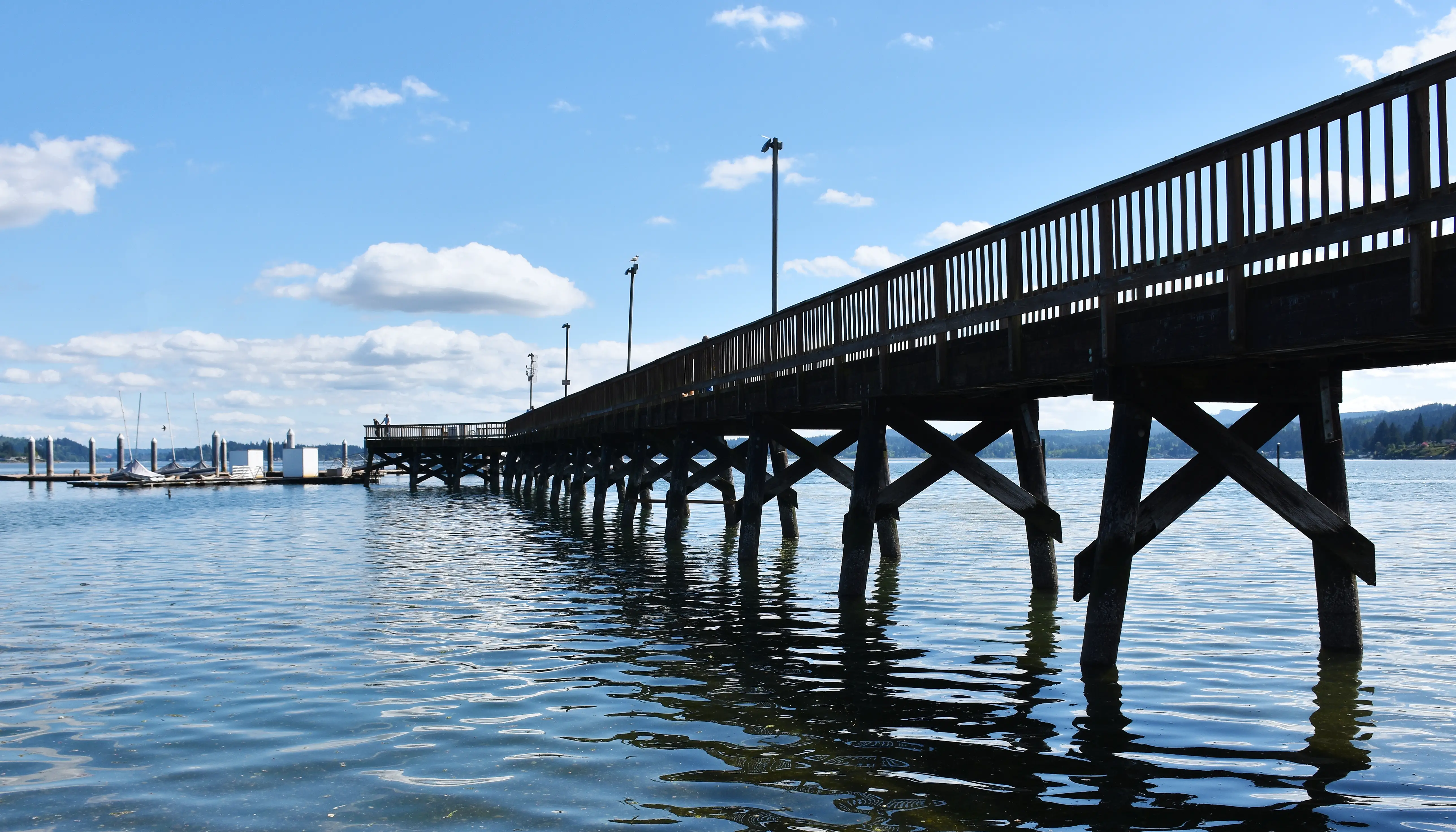
Southern California buyers often find that Silverdale's lifestyle gap feels smaller than they expected. The water access along Dyes Inlet, the Kitsap Peninsula's proximity to Olympic National Park, and the Silverdale Waterfront Park's summer energy scratch a similar itch as coastal California communities — just with different weather parameters.
Sacramento and Inland Empire buyers present the most interesting case study. A buyer leaving Elk Grove or Roseville with $550,000 in equity can comfortably purchase a four-bedroom home in Silverdale's Clear Creek or Anderson Hill neighborhoods in the $480,000–$560,000 range and retain meaningful cash. The housing cost gap is smaller than what Bay Area buyers experience, but the income tax savings — often $6,000–$10,000 per year for households in this income band — close that gap substantially over a five-year horizon.
These buyers also benefit from Washington's lower effective property tax rate compared to California's post-purchase assessment. On a $550,000 purchase, the annual property tax in Kitsap County runs approximately $4,730 — compared to roughly $6,050 on a similar California purchase at 1.1%. It's not life-changing, but it's real, and it compounds.
Buyers leaving Fresno, Modesto, or Stockton with $350,000–$450,000 in equity face the narrowest financial spread. They can buy in Silverdale's entry tier — homes in the $420,000–$500,000 range in neighborhoods like Central Kitsap or Meadowdale — but they won't have Bay Area-style equity reserves left over. What makes the move compelling for this group is almost entirely about income tax savings and quality-of-life factors: cooler summers, dramatically better air quality (Central Valley air quality is among the worst in the nation), and access to outdoor recreation that simply doesn't exist in their origin market. The financial case is tighter, but for families who've been renting in the Valley, Silverdale still offers homeownership at a manageable price point with a Washington paycheck that goes further without state income tax.

Looking to buy in Estimate your payment.
Enter your numbers to see an estimated monthly mortgage payment.
Estimate only. Excludes HOA fees and mortgage insurance.
Here's what a friend who moved from San Diego three years ago would actually tell you: Silverdale's weather is not what ruins California transplants. It's the specific character of the gray that gets them. From October through April, Silverdale averages around 180 rainfall days per year and a December that delivers only about 54 hours of sunshine for the entire month. That's not rain like a California winter storm — it's persistent overcast with light drizzle that becomes the ambient condition of your life for six months. Against Southern California's 266+ sunny days per year or Sacramento's 236, Silverdale's 156 annual sunny days represent a real and significant adjustment that no amount of advance research fully prepares you for.
What California transplants consistently say after their first full year, though, is that the summers make the trade feel worthwhile. July and August in Silverdale are legitimately spectacular — warm, dry, with highs in the mid-70s to low 80s, and the kind of lingering evening light that doesn't exist in California latitudes. The Silverdale Waterfront Park fills up on summer weekends with the kind of neighborhood energy that feels earned after eight months of gray. Dyes Inlet kayaking, the Clear Creek Trail system, and easy access to Olympic National Park give outdoor-oriented California families a summer calendar that competes seriously with anything they had on the West Coast. The trade-off is the October-to-April stretch — and the buyers who thrive here are the ones who commit to outdoor winter activities rather than waiting for California sun that won't arrive.
What California transplants genuinely miss goes beyond sunshine. The food scene in Silverdale is solid but not San Francisco. The social energy of a 21,000-person unincorporated community is fundamentally different from a California city of similar size that has developed an urban identity. Year-round beach access — the kind where you'd actually wear a swimsuit — doesn't exist here the way it does in San Diego or even Los Angeles. And the specific cultural density that California metro areas provide, whether that's a particular ethnic food corridor, a festival calendar, or simply the energy of a city that sees itself as important, is absent in ways that take time to name but that California transplants feel within the first six months.
If you want to see how Silverdale compares directly to the city you're leaving, use the tool below — it covers the 120 largest California cities with current housing and tax data.
Home prices: Redfin median sale data, Q1–Q2 2026. Select your city to compare.
Ready to talk through what your specific California equity could do in Silverdale? Todd can model your exact scenario in a single call.
Mistake 1: Treating Silverdale as a uniform market. California buyers who research the median home price and assume it reflects what they'll find everywhere in Silverdale are in for surprises at open houses. The range runs from entry-level homes in the $420,000s in Central Kitsap to $1.1 million-plus new construction in the Skyfall/Newberry Hill area. A buyer who budgeted $550,000 based on the median and then falls in love with a Ridgetop home at $680,000 has a problem that earlier research would have prevented. Know your specific target neighborhood before you make the trip.
Mistake 2: Underestimating the income tax math on monthly cash flow. This one cuts both ways. California buyers often know abstractly that Washington has no income tax, but they haven't run the actual monthly number. A buyer earning $160,000 who moves from California to Silverdale doesn't just save on housing — they add roughly $900–$1,100 per month to their net take-home pay from state income tax elimination alone. That figure changes what mortgage payment is comfortable, what renovations are feasible, and what retirement contributions are possible. Run the actual number before you set your housing budget.
Mistake 3: Assuming California-style winter commuting. Silverdale's main arteries — Silverdale Way, Ridgetop Boulevard, and the State Route 3 corridor toward Bremerton — handle rain and occasional ice very differently from California's dry-weather roads. The Bremerton-to-Seattle commute via the Bremerton ferry is a genuinely useful option, running about 60 minutes on the water, but it's weather-dependent in ways that matter in November and February. Buyers who work in Seattle or at Naval Base Kitsap should test-drive the commute in January, not July, before deciding which neighborhood to anchor in.
Mistake 4: Expecting California outdoor culture year-round. California outdoor life — trail running in January, beach bonfires in November, golf in December — doesn't translate to Silverdale. The Clear Creek Trail system and the Silverdale Waterfront Park are genuinely excellent amenities, but they're primarily fair-weather spaces. California transplants who don't build a winter indoor routine or commit to PNW-specific winter activities like hiking in the rain, mountain sports, or serious home gym investment often describe their first winter as longer and more isolating than they anticipated. This isn't a reason not to move — it's a reason to prepare differently than you would for a California winter.
Bay Area sellers arriving with $1.2 million or more in equity face a pleasant problem: the conventional wisdom around mortgage strategy largely doesn't apply. At Silverdale's price points, a Bay Area seller can purchase all-cash and still retain substantial liquid reserves — and in a market where homes average two offers and go pending in roughly 39 days, an all-cash offer from a California buyer carries real negotiating leverage. For sellers who held investment property in California, a 1031 exchange into Kitsap County investment property is worth exploring before the sale closes; the Silverdale 1031 Exchange guide covers this in detail.
Southern California sellers with $700,000–$1.2 million in equity have enough for a substantial conventional down payment that keeps them well below Silverdale's price points without touching jumbo territory. Most Silverdale homes are priced below the conforming loan limit, which simplifies underwriting significantly compared to what SoCal buyers were dealing with at home. A 40–50% down payment at this equity level delivers a monthly payment that often shocks buyers accustomed to California mortgage math — in a good way.
Sacramento and Inland Empire buyers whose equity lands in the $400,000–$650,000 range may find that WSHFC Home Advantage or similar Washington down payment assistance programs aren't necessary — but they're worth reviewing, particularly for first-time buyers who haven't owned a Washington-state property before. Buyers in this equity band who need to carry a mortgage on a Silverdale home should expect a conventional loan to be straightforward at Silverdale's price points, with strong LTV ratios that reflect favorably in underwriting.
Local Expert Takeaway: The California buyer who runs only the housing cost comparison is leaving the best part of the analysis off the table. For a household earning $150,000 — a common income level among remote workers and military officers relocating to Kitsap — Washington's zero income tax is worth roughly $11,000–$13,000 per year in additional take-home pay compared to California. Over five years, that's $55,000–$65,000 that either pays down a mortgage faster, funds retirement contributions, or builds the cash reserves that California cost of living made impossible. Run that number before you set your Silverdale price ceiling — you may find you can afford more house than you thought, and still come out ahead.
✅ Washington's zero income tax is worth $7,000–$19,000 per year for most California households — this is the financial story that housing cost comparisons alone don't capture. At $150K in household income, the monthly take-home difference is roughly $900–$1,100.
⚠️ Silverdale winters are genuinely gray. October through April averages around 180 rainfall days per year with December delivering only about 54 hours of sunshine for the month. California transplants who don't build a deliberate winter routine — and who expect year-round outdoor access — commonly describe their first six months as harder than expected.
📍 Silverdale is not uniform. The market spans from $420,000 entry-level homes in Central Kitsap to $1.1 million-plus new construction near Newberry Hill. Know your target neighborhood — not just the median — before you make the trip.
Is moving from California to Silverdale worth it?
For most California households earning above $100,000, the combination of dramatically lower housing costs and Washington's zero income tax makes the financial case very strong. A family earning $150,000 saves roughly $11,000–$13,000 per year in state income taxes alone, on top of whatever mortgage reduction they achieve by buying at Silverdale prices versus California prices. The lifestyle trade-offs — gray winters, a smaller food scene, a more suburban pace — are real, but buyers who arrive prepared for them tend to put down roots quickly.
How much cheaper is housing in Silverdale vs. California?
Against Bay Area markets, Silverdale's median home price of $567,840 represents savings of $800,000 or more on a comparable property. Against Southern California metros like Irvine or San Diego, the gap is typically $300,000–$600,000. Against Sacramento and parts of the Inland Empire, the price gap narrows considerably — but the income tax savings compensate for much of it over a five-year horizon. Against Central Valley markets, Silverdale is actually comparable in price or modestly higher, making the quality-of-life and tax factors the primary drivers of the case for moving.
What do I need to know about moving from California to Washington?
Washington does not have a state income tax, which is typically the largest financial benefit for California transplants. The state does levy sales tax at 6.5% plus local rates — typically 8–9.5% in Kitsap County — and a 7% capital gains tax on long-term gains above $262,000 per year, though the latter affects relatively few W-2 earners. Washington requires a new driver's license and vehicle registration within 30 days of establishing residency. Homeowners over 61 may qualify for an income-based property tax exemption. Most California transplants report the legal and financial transition is straightforward — the larger adjustment is the weather and pace shift.
Explore the full Silverdale series: The Ultimate Silverdale Relocation Guide · Is Silverdale Safe? · Cost of Living in Silverdale · Best Neighborhoods in Silverdale · Silverdale Schools & Family Life · Silverdale Youth Sports · Silverdale Parks & Recreation · Retiring in Silverdale · 1031 Tax-Deferred Exchange in Silverdale · Silverdale First-Time Homebuyers Guide · Moving to Silverdale from California
Tell us what you need help with and we'll connect you with local resources.

About the Author
Todd Davidson is the founder of Living in Oregon and Living in Washington, where he publishes in-depth city guides, neighborhood resources, and local market insights covering more than 180 communities across the Pacific Northwest. While his background is in home financing and real estate, he created these digital platforms to help families research and compare regions before making a move.