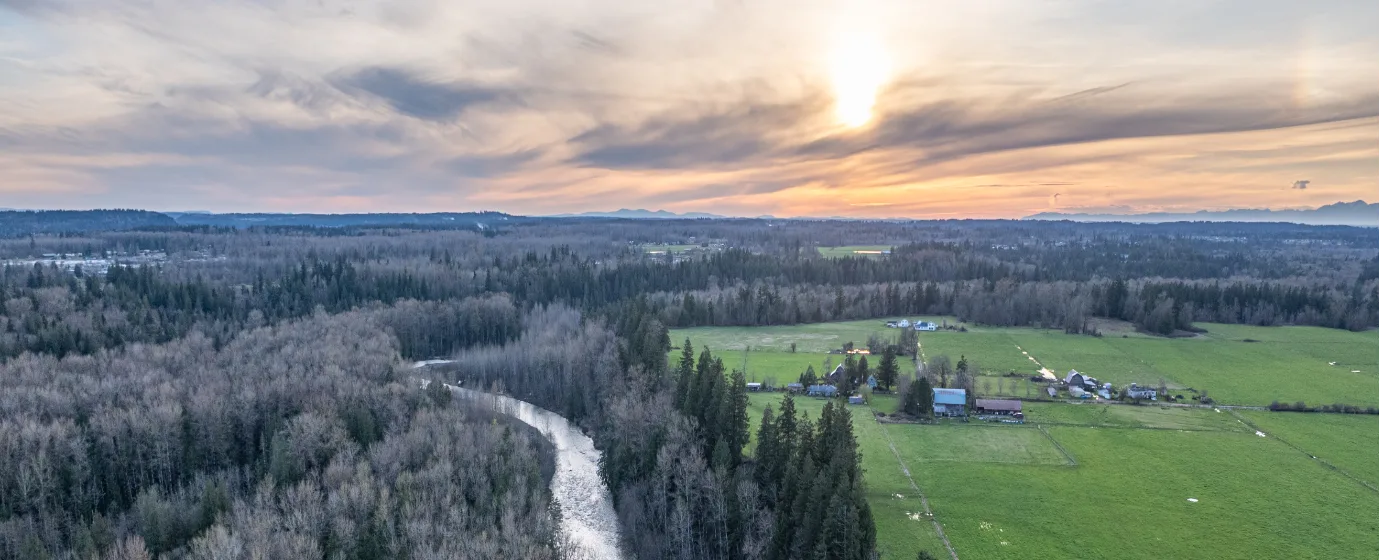
Puget Sound · Washington
Maybe your employer just announced a hybrid schedule and you're finally free to leave Seattle proper. Maybe you've been watching King County home prices climb for three years and someone mentioned Auburn as the place where the math still works. Maybe you drove SR-167 south past Renton and kept going until the valley opened up, and something about it stuck. Auburn doesn't announce itself the way Bellevue does, and it doesn't have Kirkland's waterfront mystique — but for a growing number of buyers priced out of the northern suburbs, it's the city that keeps coming back up in the search results. The central tension here is real: Auburn sits at the edge of affordability in a metro that is rapidly running out of it, which means what you're really deciding isn't whether Auburn is a good city — it's whether Auburn is the right city at this moment, before the next wave of appreciation redraws the map again.
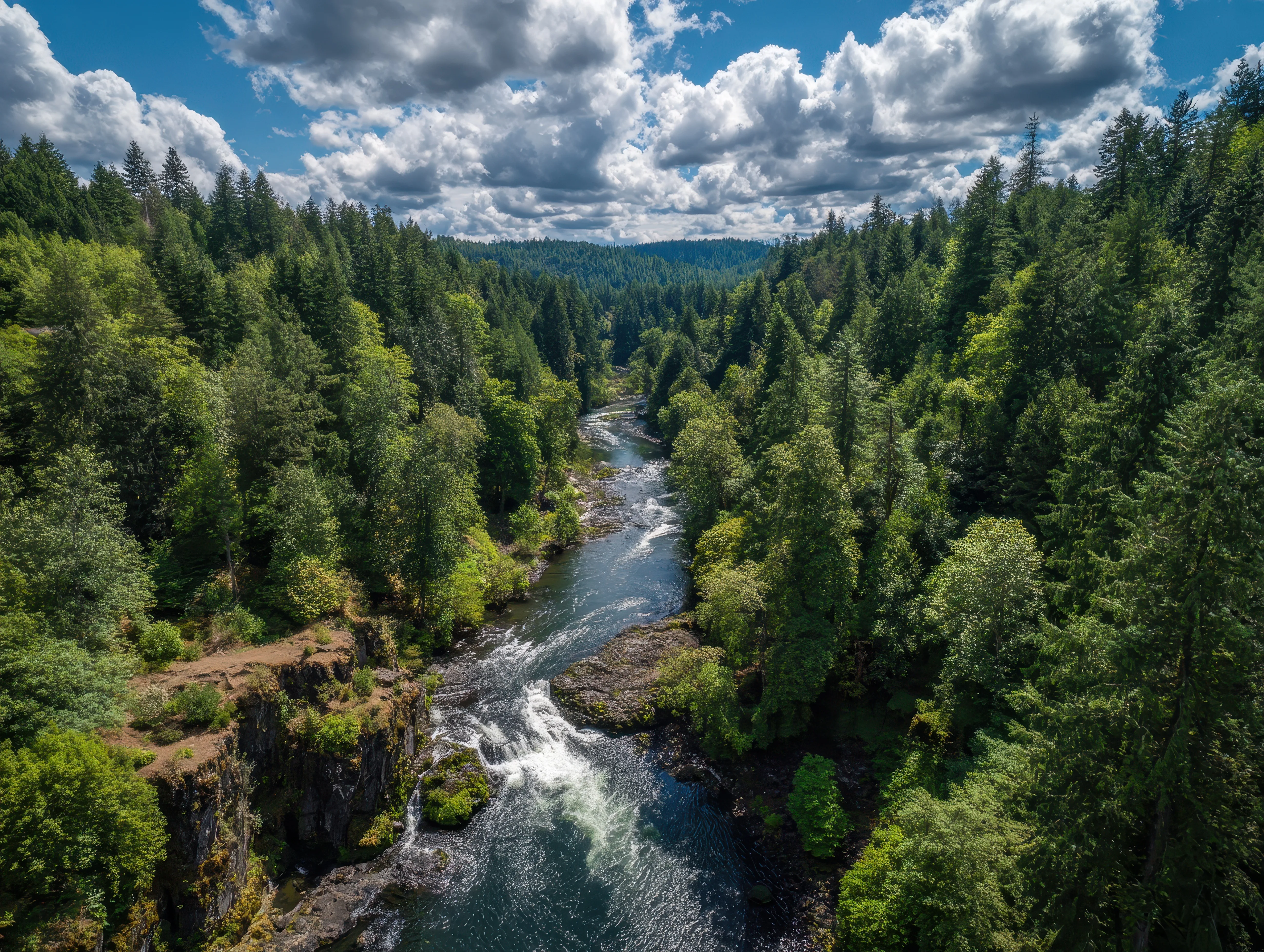
Geographically, Auburn occupies the Green River Valley between Seattle and the Cascade foothills, roughly 30 miles south of downtown Seattle and wedged between Kent to the north and Sumner to the southeast. SR-167, SR-18, and SR-164 frame the city's bones, and the Sounder commuter rail line running through Auburn Station ties the city to Seattle and Tacoma in a way that few South King County cities can claim. The valley floor — where the industrial corridors, the casino, Emerald Downs, and most of the older housing stock live — feels distinctly different from the hilltop neighborhoods like Lakeland Hills, Lea Hill, and West Hill, where newer construction and quieter cul-de-sacs draw families willing to trade walkability for space. Understanding that geographic split is the first thing any serious buyer here needs to internalize.
This guide will help you answer the questions that apartment listings and Zillow thumbnails can't: Which neighborhood fits your life? What does the commute actually feel like on a Tuesday in February? What are the honest tradeoffs in a city that's still working out its identity? Whether you're a first-time buyer, a family relocating from out of state, or a retiree sizing down from a Eastside home, what follows is the unfiltered picture of what living in Auburn, Washington actually looks like in 2026.
Not every city works for every buyer, and Auburn is no exception. The table below cuts through the noise with intent-based verdicts — read it before you book a showing.
| Best For | Why |
|---|---|
| Commuters to Seattle or Tacoma | Sounder rail reaches Seattle in roughly 35 minutes; SR-167 and SR-18 connect to I-5 and I-405 |
| First-time buyers | Median sold price near $577,000 — meaningfully below Bellevue or Renton; condos and townhomes start in the low $300s |
| Families with school-age children | Newer neighborhoods like Lakeland Hills offer community amenities and suburban quiet; Green River College anchors Lea Hill |
| Remote workers with occasional office days | Lower cost base, larger homes, and solid broadband options make the value case strong |
| Retirees downsizing from the Eastside | Proximity to MultiCare Auburn Medical Center, walkable Veterans Memorial Park, and lower price points than Bellevue-area alternatives |
| Buyers who want space over walkability | Single-family homes with yards, newer construction, and room to breathe — at a price point Seattle's northside can't offer |
The valley floor is where Auburn's blue-collar identity lives — and it's not a bad thing. Boeing's regional footprint, the Muckleshoot Casino, the industrial corridors along the Green River, and the working-class neighborhoods of South Auburn and Terminal Park give the city a grounded, unpretentious energy that stands in sharp contrast to the manicured suburbs farther north. The farmers market, the Sounder station, the local diners on Auburn Way — this is a city that works for a living, and residents who appreciate that authenticity tend to stay for decades.
Climb out of the valley toward Lakeland Hills or Lea Hill, and the feel shifts considerably. Newer subdivisions, community parks, and quieter cul-de-sacs define these hilltop neighborhoods, which attract families moving from more expensive cities who want the suburban script — good neighbors, a garage, a yard, and a reasonable commute. The geographic divide between valley and hilltop isn't just visual — it shapes school assignments, commute routes, and the daily rhythm of life in ways that aren't obvious from a map.
On the commute side, Sounder's 13 daily round-trips between Auburn and Seattle are genuinely useful for traditional office workers — but "genuinely useful" comes with an asterisk. The train runs weekday mornings and afternoons only, which means evening events or irregular schedules require a car or a longer bus ride. If you're driving north on SR-167, budget 45 to 60 minutes to Seattle during the 7–9 a.m. window; southbound afternoons on the 4–6 p.m. stretch are equally unforgiving. The commute story here is good by South King County standards, not perfect.
What surprises most people after six months of living in Auburn is how self-contained the city actually is. With Emerald Downs for horse racing in the summer, White River Amphitheatre pulling major touring acts, Muckleshoot Casino for a Friday night out, and the Green River Trail system for weekend recreation, residents discover they're leaving the city less often than they expected. Auburn isn't a city where people drive to Bellevue every weekend — it has enough going on to keep daily life interesting without requiring a highway trip.
Affordability relative to the Puget Sound region is Auburn's single strongest argument, and it's a durable one. A median sold price near $577,000 puts detached single-family homes in reach for households earning around the city's $97,884 median income — a combination that has become nearly impossible north of Renton. Entry-level condos and townhomes in the $300,000 to $450,000 range give single buyers and couples a genuine foothold in King County homeownership without requiring a decade of savings.
The Sounder connection changes the calculus for a specific type of buyer: the office commuter who needs Seattle access but can't justify a Beacon Hill or Columbia City mortgage. Boarding at Auburn Station, the train covers the distance to King Street Station in roughly 35 minutes — faster than most people can drive from Renton on a bad day. The station's six bus bays connecting to Sound Transit Express, King County Metro, and Pierce Transit make Auburn a legitimate transit hub, not just a parking lot with a platform.
Recreation infrastructure punches well above the city's size. The Green River Trail runs for miles through the valley, connecting parks and neighborhoods in a way that gives cyclists and walkers a genuine amenity. Game Farm Wilderness Park and Auburn Environmental Park offer the kind of Pacific Northwest outdoor access that people pay a premium for in Issaquah or Snoqualmie — here it's simply part of the neighborhood. Emerald Downs brings horse racing culture to the valley floor every summer, and White River Amphitheatre hosts national touring acts in a venue that feels far larger than the city around it.
The presence of MultiCare Auburn Medical Center anchors the city's healthcare infrastructure and provides stable, well-paying employment for a significant slice of the workforce. Green River College, serving roughly 8,000 students on its Lea Hill campus, creates a steady stream of cultural programming, workforce training, and community connection that shapes the city's educational atmosphere beyond just the K-12 system. Boeing's regional presence, combined with Zones (technology), and Muckleshoot Casino's hospitality and gaming operations, mean Auburn's employment base is genuinely diversified across sectors — a stabilizing factor during economic cycles that can destabilize more single-industry cities.
Looking to buy in Estimate your payment.
Enter your numbers to see an estimated monthly mortgage payment.
Estimate only. Excludes HOA fees and mortgage insurance.
The Auburn School District carries a profile that requires honest discussion. The district serves a genuinely diverse student population across 26 schools — Niche ranks it among the top three most diverse districts in Washington — but academic proficiency scores run below the state average, and a four-year graduation rate commonly reported around 62 percent represents a meaningful gap from the statewide figure near 77 percent. Families with strong academic priorities often supplement district offerings with enrichment programs, private tutoring, or by targeting specific feeder pathways — Auburn Riverside being the district's highest-ranked high school — rather than assuming uniform outcomes across all schools.
Property crime is the second tradeoff worth naming directly. At approximately 39.7 incidents per 1,000 residents, Auburn's property crime rate runs well above the national average — a figure that reflects the realities of the valley floor commercial corridors and some older residential neighborhoods more than it reflects the hilltop subdivisions. Vehicle theft and package theft are the most commonly reported concerns among residents; the experience varies considerably by neighborhood, and buyers doing due diligence should look at specific addresses rather than citywide averages.
The valley's industrial character creates friction in some parts of the city that buyers from more polished suburbs don't always anticipate. Noise from train yards, trucking corridors along Auburn Way, and the general texture of a working-industrial city can feel jarring after a childhood spent in quieter suburbs. This isn't a reason to cross Auburn off the list — but it is a reason to spend time in the specific neighborhood you're considering before making an offer.
Why some people leave Auburn tends to come down to one of three things: the schools push families toward Federal Way or Enumclaw for specific program offerings; the commute that felt manageable at first becomes grinding over years of irregular Sounder schedules; or buyers who originally priced themselves into a valley-floor home spend a few years there and decide the hilltop neighborhoods are worth the price premium — and find themselves moving within the city rather than out of it.
Lakeland Hills is Auburn's most polished residential offering — a master-planned community built primarily from the 1990s through the 2010s, sitting on the south hillside with a portion extending into Pierce County. Homes here are larger, newer, and better-maintained than the Auburn average, with HOA-managed parks, trails, and community amenities that give the neighborhood a self-contained quality. Prices generally run above the city median, with most single-family homes priced between $600,000 and $750,000 depending on size and vintage. The one catch buyers should understand upfront: confirm which county your parcel falls in, because the Pierce County portion carries different tax rates and school assignments than the King County side.
Best for: Families with children who want newer construction, community amenities, and a quieter suburban environment.
Lea Hill sits on the plateau east of the Green River Valley, home to Green River College and a mix of established subdivisions and newer residential pockets. The neighborhood tends to attract buyers who want suburban quiet without Lakeland Hills' price premium — a working range roughly in the $530,000 to $640,000 range for single-family homes. The plateau's elevation gives residents a sense of separation from the valley's industrial energy, and the college presence adds a layer of activity that keeps the neighborhood from feeling purely residential. Getting in and out of Lea Hill requires navigating a handful of two-lane roads that can back up during peak hours — something commuters should test on a weekday before committing.
Best for: Buyers who want suburban quiet and slightly lower price points than Lakeland Hills, with proximity to Green River College.
West Hill is one of Auburn's less-discussed neighborhoods — a hillside area west of Auburn Way with a mix of older ranch homes and 1970s–1990s construction that offers some of the city's more modest price points. The neighborhood tends to attract buyers focused on value over amenity, with single-family homes commonly available in the $480,000 to $560,000 range. It's a working-class residential area with straightforward access to Auburn Station and the valley's employment corridors. The tradeoff is that West Hill doesn't have the community infrastructure of Lakeland Hills or the Green River College anchor of Lea Hill — it's a place where buyers get square footage and land at a price that's hard to find closer to Seattle.
Best for: Value-oriented buyers and first-time homeowners who prioritize proximity to the Sounder station and valley employers.
Downtown Auburn is in the middle of a slow rebuild, and depending on your tolerance for "in progress," it's either an opportunity or a frustration. The Auburn Station anchor provides genuine foot traffic, and the downtown core along Auburn Way North has seen investment in streetscaping and mixed-use development — but the commercial strip still carries the inconsistency of a city center finding its footing. The median price in downtown's immediate catchment area runs notably below the city median, commonly in the low-to-mid $400,000 range for attached homes and smaller single-family properties. For buyers who want walkable access to the train and don't need the suburban polish of the hilltops, downtown Auburn offers the best transit access in the city.
Best for: Commuters who want to walk to Auburn Station and buyers comfortable with an evolving urban environment.
South Auburn occupies the southern end of the valley floor, blending residential neighborhoods with commercial corridors along Auburn Way South. The housing stock skews older — much of it built in the 1960s through 1980s — and price points reflect that, with single-family homes often available below the city median. It's a neighborhood where buyers can find genuine value, particularly on lots with larger yards, but they should budget for updates and pay close attention to the specific streets they're considering. The area's proximity to the industrial corridors means noise and traffic are factors that vary meaningfully block by block.
Best for: Budget-conscious buyers willing to take on older homes and do selective renovations in exchange for below-median pricing.
East Auburn runs along the foothills east of the valley, where residential development thins out and the Cascade Mountain backdrop becomes more prominent. Homes in this area vary considerably — some pockets offer newer construction with genuine mountain views, while others feature older rural-residential properties on larger lots. Prices span a wide range, roughly $480,000 to $700,000 or above depending on acreage and condition. For buyers who want space, privacy, and a connection to outdoor recreation along SR-164 toward Enumclaw, East Auburn delivers something the valley floor cannot.
Best for: Outdoor-oriented buyers seeking larger lots, mountain adjacency, and room between neighbors.
North Auburn sits closest to the Kent border and benefits from that proximity — strong SR-167 access, shorter commute distances to Renton and Bellevue, and a housing stock that trends toward the 1980s and 1990s construction common across South King County. Prices here run in a range broadly similar to the city median, with single-family homes typically in the $540,000 to $620,000 range. It's a functional suburban neighborhood without the defined character of Lakeland Hills or the college-town energy of Lea Hill, but its northern position shaves meaningful time off commutes to the tech corridors north of the valley.
Best for: Commuters to Kent, Renton, or Bellevue who want a south King County base without driving all the way into the valley.
Christopher is a quieter established neighborhood in the northeastern part of Auburn, characterized by tree-lined streets, mid-century to 1990s homes, and a residential character that feels removed from the commercial energy of Auburn Way. Homes in Christopher tend to attract long-term residents who value stability and community familiarity, with prices generally tracking close to the city median. It doesn't offer the amenity packages of Lakeland Hills, but it also doesn't carry the HOA overhead — an appeal to buyers who want suburban residential quiet on their own terms.
Best for: Buyers who want a quiet, established neighborhood close to north Auburn without HOA restrictions.
| City | Best For | Median Home Price | Commute to Seattle | Vibe |
|---|---|---|---|---|
| Auburn | Affordability + Sounder access | ~$577,000 | ~35 min (Sounder) | Working-class valley meets hilltop suburban |
| Kent | Similar price point, shorter commute | ~$580,000–$620,000 | ~30 min (Sounder) | Dense, diverse, more urban infrastructure |
| Federal Way | Budget buyers, I-5 corridor | ~$540,000–$570,000 | 40–50 min by car | Suburban strip-mall character, Light Rail coming |
| Sumner | Small-town feel, Pierce County | ~$520,000–$560,000 | 40–45 min by car | Quiet, rural-adjacent, slower pace |
| Enumclaw | Maximum space and mountain access | ~$490,000–$530,000 | 55–65 min by car | Rural/agricultural, tight-knit community |
| Algona / Pacific | Rock-bottom pricing, small footprint | ~$450,000–$510,000 | 45 min+ by car | Small-city, limited amenities, maximum affordability |
| Category | Data |
|---|---|
| Population | 84,747 (2026) |
| Median Home Price | ~$577,000 (Zillow/Redfin, early 2026) |
| Median Household Income | $97,884 |
| Property Tax Rate | 1.19% |
| Commute to Seattle | ~35 min (Sounder); 45–60 min by car |
| Violent Crime Rate | 5.4 per 1,000 residents |
| Property Crime Rate | 39.7 per 1,000 residents |
| School District | Auburn School District (B+ overall rating) |
| Top Employer | Boeing, MultiCare Auburn Medical Center, Muckleshoot Casino |
| Major Recreation | Green River Trail, Emerald Downs, White River Amphitheatre, Game Farm Wilderness Park |
Emerald Downs is one of those places that becomes genuinely important to Auburn's social calendar in ways outsiders don't expect. The thoroughbred racing season runs from April through September, and the track at 2300 Ron Crockett Drive has become a gathering point for local families, date nights, and community fundraisers in a way that feels specific to Auburn — not a generic entertainment option, but an institution woven into summer life here. Longtime residents will often have a specific spot in the grandstand they return to every season.
The Muckleshoot Tribe's cultural and economic presence in Auburn is something new residents should understand as part of the city's identity, not just its economy. The Muckleshoot Casino and resort complex on Auburn Way South is one of the largest employers in the region, and the tribe's investment in the surrounding community — through education funds, infrastructure partnerships, and cultural preservation — shapes Auburn in ways that go well beyond a casino's typical footprint. This is a city with a genuine indigenous presence that predates its incorporation and continues to influence its character.
The White River Amphitheatre experience is a local institution in its own right — a 20,000-capacity outdoor venue that hosts major touring acts through the summer and fall, creating traffic realities on Auburn Way South that local residents have long since memorized. If you're buying near the SR-164 corridor or in South Auburn, plan your Friday nights accordingly during concert season.
What I would not do if moving to Auburn: I would not buy on the valley floor near the South Auburn industrial corridor without spending a weekday morning there between 6 and 8 a.m. The train yard activity, Auburn Way South truck traffic, and noise from the industrial operations in that zone are real — they're not deal-killers for everyone, but buyers who've lived in quieter suburbs consistently underestimate how much it affects daily life. Drive it early, on a workday, before you fall in love with the listing price.
Local Expert Takeaway: The buyers who get the best value in Auburn right now are those who distinguish between the valley floor and the hilltop markets rather than treating the city as a single price point. If your priority is Sounder access and you're flexible on neighborhood character, the areas near downtown and North Auburn offer the best transit value. If you're a family prioritizing school environment and community infrastructure, put your search energy into Lakeland Hills and the higher-performing Lea Hill pockets — the price premium is real, but so is the lifestyle difference. And for any buyer considering the valley floor at below-median pricing, make the commute test your first visit, not your second.
✅ Auburn's affordability window is real but narrowing. A $577,000 median in King County with Sounder rail access is a combination that won't last indefinitely — buyers who understand the geographic split between valley and hilltop will be best positioned to act before the next appreciation cycle.
⚠️ The school district requires homework. A district-wide graduation rate around 62 percent and below-average proficiency scores mean families should research individual school assignments and feeder pathways rather than assuming uniform quality across Auburn's 26 schools.
📍 Your neighborhood choice matters more here than in most cities. The difference between Lakeland Hills and South Auburn in terms of price trajectory, school quality, noise environment, and daily-life quality is larger than the map suggests — this is a city where the specific address matters enormously.
Is Auburn a good place to raise a family?
Auburn can work well for families, particularly in the hilltop neighborhoods of Lakeland Hills and Lea Hill where newer construction, community parks, and quieter streets create a conventional suburban environment. The school district's overall profile requires individual school research — families who engage with specific feeder pathways and supplement where needed tend to report positive experiences. The city's recreation infrastructure, from Game Farm Wilderness Park to the Green River Trail, gives families with active kids genuine options without leaving the city.
What is the crime rate in Auburn?
Auburn's violent crime rate runs approximately 5.4 incidents per 1,000 residents, which is elevated relative to some neighboring suburbs but broadly reflects the character of a working-class city with active commercial corridors. Property crime — at roughly 39.7 per 1,000 — is the more significant concern, particularly vehicle theft and theft from vehicles near commercial zones. Experience varies considerably by neighborhood; hilltop areas like Lakeland Hills tend to report substantially lower incident rates than the valley floor.
How does Auburn compare to Kent and Federal Way?
Auburn sits close to Kent in home price but offers a distinctly different geographic and cultural character — Kent is denser, more urban in infrastructure, and slightly closer to the tech corridors north on SR-167. Federal Way edges Auburn on raw price point and will gain Light Rail connectivity in the coming years, but currently lacks Auburn's Sounder frequency and the recreational anchors that White River Amphitheatre and Emerald Downs provide. For buyers choosing between the three, the decision often comes down to commute direction, school priority, and whether valley-floor or hilltop suburban character suits their lifestyle.
Explore the full Auburn series: The Ultimate Auburn Relocation Guide · Is Auburn Safe? · Cost of Living in Auburn · Best Neighborhoods in Auburn · Auburn Schools & Family Life · Auburn Youth Sports · Auburn Parks & Recreation · Retiring in Auburn · 1031 Tax-Deferred Exchange in Auburn · Auburn First-Time Homebuyers Guide · Moving to Auburn from California
Tell us what you need help with and we'll connect you with local resources.

About the Author
Todd Davidson is the founder of Living in Oregon and Living in Washington, where he publishes in-depth city guides, neighborhood resources, and local market insights covering more than 180 communities across the Pacific Northwest. While his background is in home financing and real estate, he created these digital platforms to help families research and compare regions before making a move.