
Puget Sound · Washington
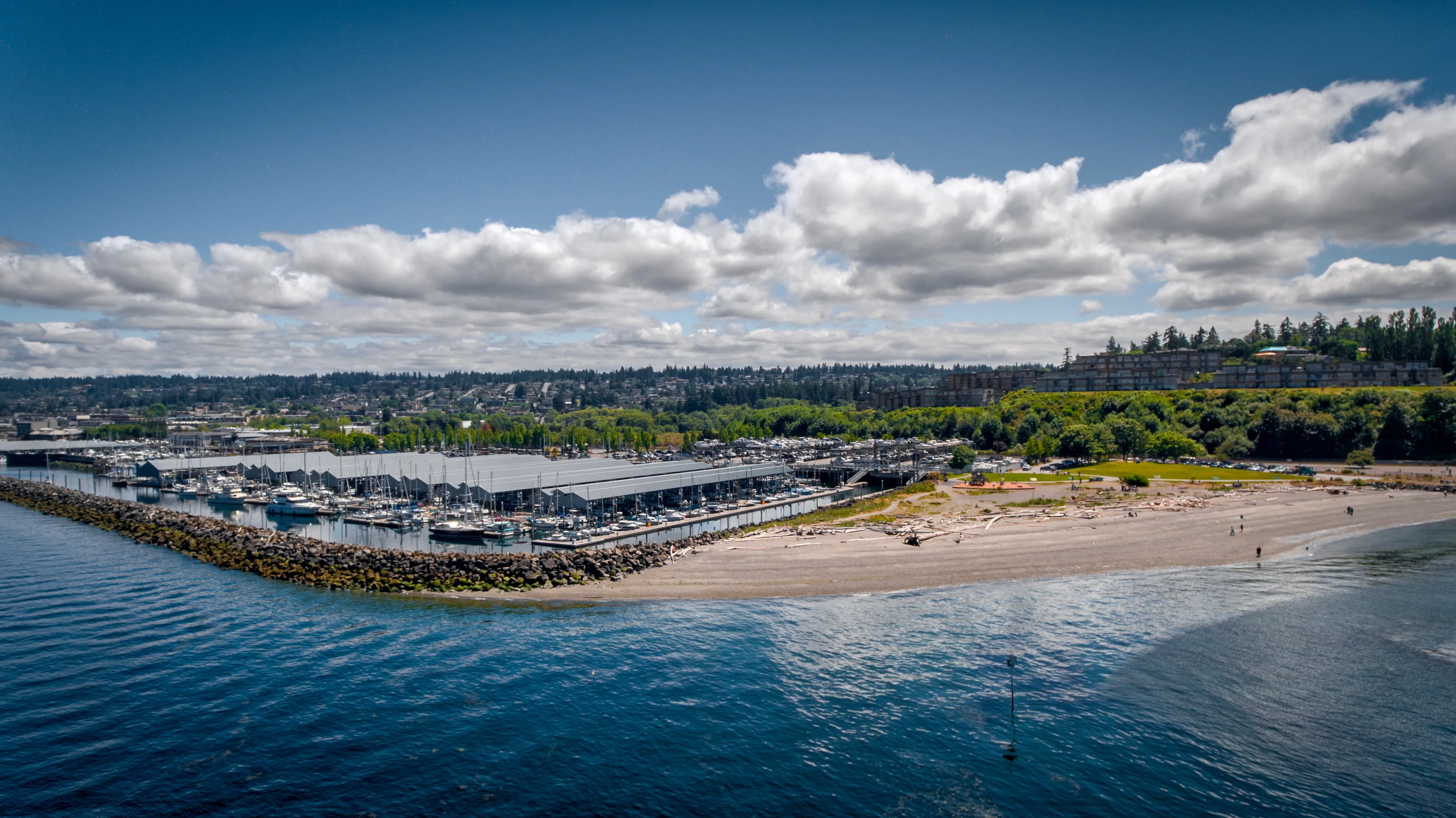
Not everyone reading this is a professional investor with a portfolio spreadsheet. A significant share of people exploring 1031 exchanges in the Pacific Northwest are California homeowners who finally sold — a Bay Area rental, a Southern California investment property, a Sacramento house that tripled in value — and are now sitting on proceeds they need to deploy within a strict federal timeline. Edmonds, Washington has quietly become one of the more interesting replacement property markets for that exact buyer. It sits on Puget Sound, 26 minutes north of Seattle, with a stable rental base, a premium coastal address, and property prices that look surprisingly reasonable compared to what those proceeds came from.
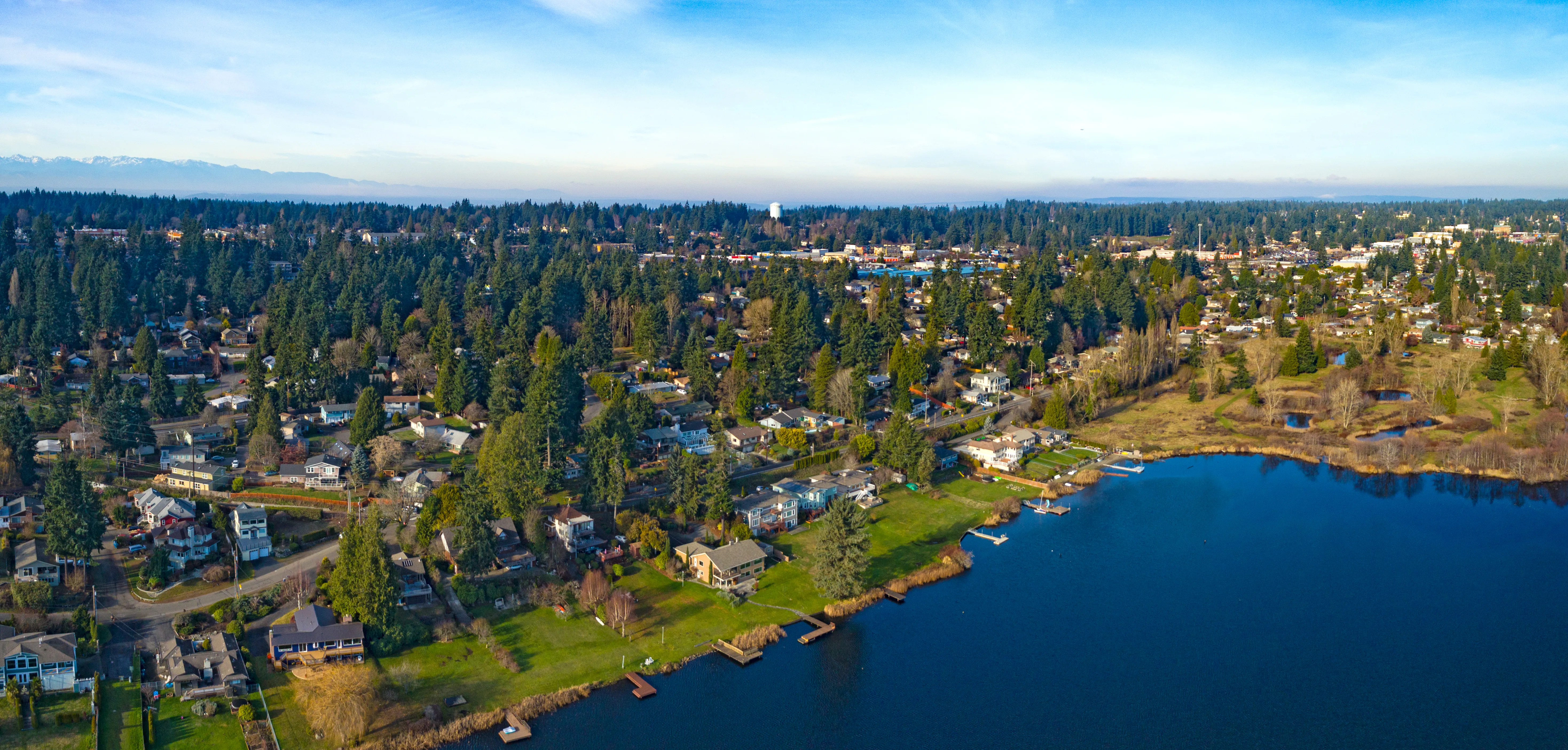
Rental demand in Edmonds is durable for reasons that don't show up in a spreadsheet. About 30% of households here are renter-occupied — roughly 5,500 units citywide — and the tenant pool skews toward working professionals and families with school-age children who want proximity to Seattle without the urban price or density. The properties that trade most often as investment vehicles are single-family rentals in neighborhoods like Seaview and Five Corners, small multifamily in the 2–4 unit range near the downtown core, and the occasional condo or townhouse purchased specifically for long-term tenancy. Inventory runs tight, which matters a great deal when you're on a 45-day identification clock.
This guide covers 1031 exchange mechanics in plain English, what the Edmonds investment property market actually looks like in 2026, how Washington's tax structure compares to California's, and what out-of-state owners consistently underestimate about operating a rental here. Whether you're identifying your first replacement property or your fourth, the specifics of this market are worth understanding before you make an offer.
The core concept is straightforward: sell an investment property, reinvest the proceeds into a "like-kind" replacement property, and defer the capital gains tax that would otherwise be due. The IRS defines "like-kind" broadly for real property — a single-family rental in California qualifies to exchange into a duplex in Washington, a commercial building, raw land, or a DST interest. The exchange doesn't reset your depreciation basis, but it does keep a large tax bill off the table until you eventually sell without exchanging.
Two deadlines control everything. From the date your relinquished property closes, you have 45 days to formally identify your replacement property in writing to your qualified intermediary. You then have 180 days from that same closing date to complete the acquisition. These timelines run concurrently — the 180-day clock doesn't start fresh after identification. Miss either window and the exchange fails, the proceeds become taxable, and there's no extension for buyer's remorse or deal delays.
A qualified intermediary (QI) is required from the start — not optional, not something you add after closing. The proceeds from your sale must flow directly to the QI and never touch your hands or your bank account. If you receive the funds even temporarily, the exchange is disqualified. On the replacement side, the "boot trap" catches investors who don't reinvest all proceeds: any cash you receive back, or any net mortgage debt relief not offset by new debt, becomes taxable in the year of exchange. The cleanest executions involve reinvesting 100% of net proceeds into equal or greater debt.
Edmonds is a premium suburban market, and the numbers reflect that. The median sold price across the city runs approximately $926,000 to $940,000 based on NWMLS transaction data — well above the Puget Sound suburban average. For investors, this means you're buying into a market with a ceiling and a floor that both sit higher than neighboring Lynnwood or Mountlake Terrace, but the tenant pool quality and vacancy risk are correspondingly better. Properties are moving in roughly 28 days from list to close on average, which matters when you're trying to meet a 1031 deadline.
Cap rates in Edmonds reflect the compressed suburban Seattle dynamic. Single-family rentals in the $800K–$1.1M range typically produce traditional cap rates in the 3% to 4% range, which sounds modest but is consistent with Snohomish County suburban pricing versus rent levels. Small multifamily — duplexes and 4-plexes — trades at closer to 5% to 6% when purchased at the right basis. The cash-on-cash picture tightens considerably with leverage at current rates, which is exactly why 1031 buyers arriving with cash proceeds have a structural advantage over conventional investors financing from scratch.
The rental vacancy picture is favorable for landlords. Regional occupancy stays above 94%, and the Edmonds submarket is specifically called out in Puget Sound forecasts as a stronger-growth corridor due to affordability-driven demand. Average rents run about $1,749 for a one-bedroom and $2,206 for a two-bedroom, with the market clustering most rentals between $1,501 and $2,000 per month. The construction pipeline for new multifamily across the region has collapsed to a 10-year low, with completions projected to drop by more than 50% in the coming year — a supply constraint that historically pushes vacancy down and rent growth up.
| Property Type | Typical Price Range | Est. Cap Rate | Avg Days to Close |
|---|---|---|---|
| Single-Family Rental (3BD/2BA) | $820,000 – $1,100,000 | 3.0% – 4.0% | 28–35 days |
| Duplex (2-unit) | $950,000 – $1,300,000 | 4.5% – 5.5% | 30–40 days |
| Small Multifamily (3–4 unit) | $1,200,000 – $1,700,000 | 5.0% – 6.5% | 35–50 days |
| Condo / Townhouse | $450,000 – $750,000 | 2.5% – 3.5% | 20–30 days |
Condos and townhouses move fastest and are easiest to close within a 1031 window, but they carry the thinnest cap rates and often come with HOA rental restrictions that can disqualify them as replacement properties. Duplexes and small multifamily move more slowly and require more diligence, but they're where the cash flow math starts to work for a 1031 investor not relying on leverage.

Looking to buy in Estimate your payment.
Enter your numbers to see an estimated monthly mortgage payment.
Estimate only. Excludes HOA fees and mortgage insurance.
California capital has been moving north into the Pacific Northwest for a decade, and the 1031 exchange is one of the primary mechanisms. The math is simple: sell an appreciated California property, identify replacement property before the 45-day window closes, and land in a state with no income tax on rental earnings. Edmonds specifically attracts investors who want a coastal address, strong schools (which directly affect the tenant pool), and proximity to a major employment hub — without paying Seattle prices.
A Bay Area investor selling a single-family rental that appreciated from $400,000 to $1.4 million is sitting on roughly $1 million in net equity after commissions and taxes owed. In Edmonds, that figure is enough to purchase a duplex in the $950,000–$1.1M range debt-free and still have reserves for immediate repairs or a light renovation. That debt-free structure completely changes the cash flow picture — even at a 4% cap rate on a $1M property, you're generating roughly $40,000 in gross annual income without a mortgage payment reducing it.
Southern California investors — particularly those selling in Los Angeles, Orange County, or San Diego — often arrive with proceeds in the $600,000 to $900,000 range. At that basis, the most realistic Edmonds replacement strategy is a well-located single-family rental in Seaview or Five Corners, or a condo near the downtown core paired with careful attention to HOA rental rules. The SoCal investor is often more familiar with appreciation-driven investing than cash flow, and Edmonds fits that mindset — it's a market where property values have historically trended upward alongside regional employment growth.
Sacramento and Inland Empire sellers often arrive with smaller proceeds — $400,000 to $650,000 — but still enough to identify a replacement property in Edmonds without stretching the 1031 into unrealistic territory. A 2-bedroom condo in the $450,000–$550,000 range or a townhouse with no HOA rental restriction is the most realistic fit for this buyer. The Sacramento investor also tends to be more cash-flow-oriented, which means the conversation about cap rate expectations is an important one to have before the 45-day clock starts.
The single most important tax fact for a California investor landing in Washington: Washington has no state income tax. California taxes net rental income at ordinary income rates — up to 13.3% at the top bracket. Every dollar of net rental income you earn on an Edmonds property stays entirely in your pocket at the state level. For an investor generating $40,000 in annual net rental income, that difference alone amounts to roughly $5,300 per year compared to a California-resident landlord — without doing anything else differently.
| Tax Item | California | Washington |
|---|---|---|
| State income tax on rental income | Up to 13.3% | None |
| Property tax rate on new purchase | ~1.0%–1.2% (Prop 13 on new purchase) | ~0.70% (Snohomish County) |
| Sales tax on materials/renovation | 7.25%–10.75% | 6.5% + local (~9.2–10.4% combined) |
| Capital gains tax on future sale | Up to 13.3% (ordinary income rate) | 7% on gains over $262,000/year |
| Depreciation carryover in 1031 | Carries over, not stepped up | Same federal rule applies |
Washington's 7% capital gains tax, enacted in 2021 and upheld by the state Supreme Court, applies only to long-term gains exceeding $262,000 per year as of 2026. For most individual investors earning rental income — not selling a portfolio in a single year — this threshold doesn't affect annual operations at all. It becomes relevant only at disposition, and even then, the 1031 can be used again to defer it.
Property taxes in Snohomish County run approximately 0.70% of assessed value. On a $940,000 property, that's roughly $6,580 per year — meaningful but lower than many California investors are accustomed to paying on a newly purchased property subject to re-assessment at purchase price.
Washington's combined sales tax (state plus local) runs in the 9% to 10% range depending on jurisdiction. Unlike Oregon — which has no sales tax — Washington applies this to building materials and furnishings when you're rehabbing a rental. Factor a 10% cost premium on any renovation budget as a realistic placeholder.
For investors who want cash flow with zero management responsibility, a Delaware Statutory Trust (DST) is worth knowing about. DSTs qualify as like-kind replacement property in a 1031, allowing investors to park proceeds into professionally managed real estate portfolios without becoming a landlord at all. They're not Edmonds-specific, but they're a valid option for investors who exhaust their local options before the 45-day window closes.
Washington operates under a landlord-tenant code that has been updated meaningfully in recent years. As of 2026, there is no statewide rent control, though the legislature has continued to revisit the issue. Required notice periods for rent increases, lease terminations, and entry have been extended in recent sessions — landlords must provide more advance notice than they may be accustomed to in other states. None of this is unmanageable, but out-of-state owners who assume Washington operates like a landlord-friendly Southern state will be caught off guard.
Local property management runs typically 8% to 10% of gross monthly rent in the Edmonds and Snohomish County market. On a property renting for $2,400 per month, that's $192 to $240 per month for professional management — a cost that pays for itself in tenant screening quality, maintenance coordination, and legal compliance, especially for an out-of-state owner who can't respond to a plumbing call at 11pm. Two established companies covering Edmonds-area properties include Renters Warehouse Seattle North and North Pacific Property Management, both of which operate in Snohomish County.
What out-of-state owners most commonly underestimate is the speed at which deferred maintenance becomes a tenant-relations issue in Washington. The state's habitability standards are enforced actively, and tenants know their rights. An older Edmonds SFR — particularly those built in the 1960s and 1970s that dominate the mid-market — often arrives with a roof, plumbing, or electrical item that needs attention. Budgeting a minimum of 1% of purchase price per year for ongoing maintenance is a conservative but realistic baseline for this housing stock.
| Item | What to Verify | Local Resource |
|---|---|---|
| Title search & liens | Clean title, no undisclosed encumbrances | Title company (First American, Chicago Title) |
| Sewer/septic status | Connected to City of Edmonds sewer or private septic | Edmonds Public Works / seller disclosure |
| Flood zone status | FEMA flood map designation; 7% of properties have moderate risk | FEMA Flood Map Service Center |
| Rental permit requirements | City of Edmonds rental registration requirements | City of Edmonds Community Development Dept. |
| HOA restrictions on rentals | Confirm condo/townhouse CC&Rs allow long-term rental | HOA documents via listing agent |
| ADU zoning potential | Washington state law allows ADUs on most SFR lots; confirm setbacks and utility capacity | Edmonds Planning Division |
| School district boundaries | Edmonds School District serves most of city; affects tenant pool quality | Edmonds School District boundary maps |
| Current lease status | Month-to-month vs. fixed term; existing tenant in place vs. vacant | Review lease docs before identification |
| Deferred maintenance inspection | Roof age, HVAC, plumbing, electrical — critical on 1960s–1980s stock | Licensed WA home inspector |
| Short-term rental ordinance | Edmonds STR regulations and registration requirements | City of Edmonds municipal code |
| Qualified intermediary setup | QI must be engaged before your relinquished property closes | National QI firms (IPX1031, Asset Preservation) |
| Title company recommendation | WA uses escrow-based closing — different process than most California counties | Escrow officers familiar with 1031 purchases |
| Property management referral | Interview PM before closing if you'll be managing remotely | Local PM firms serving Snohomish County |
| Zoning classification | Confirm RS (residential single) vs. RM (residential multi) for intended use | Edmonds zoning map |
Local Expert Takeaway: The most common mistake California 1031 buyers make in Edmonds is identifying a condo or townhouse as their replacement property without verifying HOA rental restrictions first. A surprising number of Edmonds condo associations cap the percentage of units that can be rented at any given time — if that cap is already met, you own a property you legally cannot rent, which disqualifies the exchange. Verify rental allowance status in the CC&Rs before you submit your identification letter to your QI, not after. For SFR buyers, the ADU angle is the move that changes the economics — if the lot and setbacks support it, a detached ADU on a Five Corners or Seaview property can add $1,200 to $1,600 per month in income without significantly increasing the purchase price.
✅ Washington's zero state income tax on rental earnings is the single biggest structural advantage for California investors — the difference over a 10-year hold can exceed $50,000 on a mid-sized rental.
⚠️ Edmonds cap rates run thin by national standards (3%–5% for most property types), which means 1031 buyers arriving with full cash proceeds have a decisive advantage over leveraged investors in this market.
📍 The 45-day identification window is real pressure in a market with 1.3 months of inventory — start touring properties before your relinquished property closes, not after.
Does a 1031 exchange work for out-of-state property?
Yes — the like-kind requirement under IRC Section 1031 applies to all U.S. real property regardless of state. A California investor can sell a property in Los Angeles and exchange into a duplex in Edmonds, Washington without any geographic restriction. The exchange must be structured through a qualified intermediary in both states, and the timelines apply identically.
What is the cap rate on rental property in Edmonds?
Single-family rentals in Edmonds typically produce cap rates in the 3% to 4% range given current price levels. Small multifamily properties — duplexes and 3–4 unit buildings — run closer to 5% to 6.5% depending on condition and location. These figures reflect the compressed suburban Seattle pricing dynamic; the trade-off is lower current yield for stronger long-term appreciation and a high-quality tenant pool.
Do I need a local property manager for a 1031 investment in Washington?
You're not legally required to use a property manager, but out-of-state owners who self-manage Washington rentals frequently run into compliance issues with the state's updated landlord-tenant notice requirements and habitability standards. A local PM running 8%–10% of gross rent handles maintenance coordination, legal notices, and tenant screening — and in a market where tenant protections are enforced actively, that expertise is worth the cost for most remote investors.
Explore the full Edmonds series: The Ultimate Edmonds Relocation Guide · Is Edmonds Safe? · Cost of Living in Edmonds · Best Neighborhoods in Edmonds · Edmonds Schools & Family Life · Edmonds Youth Sports · Edmonds Parks & Recreation · Retiring in Edmonds · 1031 Tax-Deferred Exchange in Edmonds · Edmonds First-Time Homebuyers Guide · Moving to Edmonds from California
Tell us what you need help with and we'll connect you with local resources.

About the Author
Todd Davidson is the founder of Living in Oregon and Living in Washington, where he publishes in-depth city guides, neighborhood resources, and local market insights covering more than 180 communities across the Pacific Northwest. While his background is in home financing and real estate, he created these digital platforms to help families research and compare regions before making a move.