
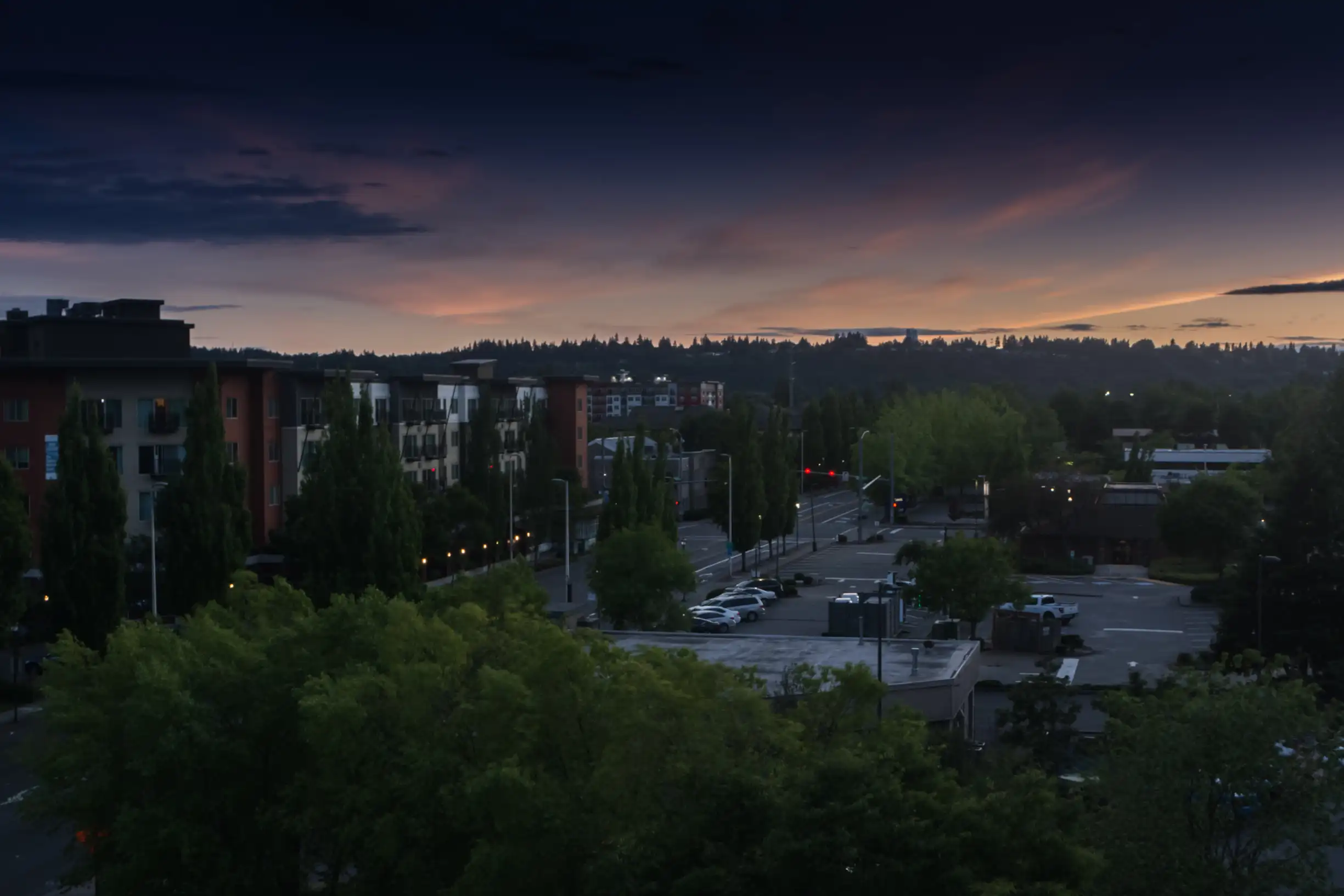
Puget Sound · Washington
Not everyone deploying 1031 proceeds is a professional investor with a portfolio of properties. Many of the buyers entering the Kent market right now sold a California home — sometimes one they lived in for decades — and are looking to roll those gains into something that actually cash-flows in a lower-cost, landlord-adjacent market. Kent is showing up on that radar for good reason. At a city-wide median of $594,000, it sits dramatically below the King County median of $880,000, yet it sits 30 minutes from Seattle, directly adjacent to major aerospace employment, and in the path of sustained renter demand that kept the market stable through the 2025 correction.
The Kent rental market is built on workforce housing. Boeing, Blue Origin, Oberto, and the dense logistics corridor along the Green River Valley employ tens of thousands of workers who need housing near the job site — and most of them rent. Renters make up roughly 44% of Kent's real estate occupants, occupying nearly 20,000 units. That tenant pool is broad-based and durable, not dependent on any single employer or industry sector. The property types that trade most often as investment vehicles are single-family rentals, small multifamily (duplex through fourplex), and aging apartment complexes that carry meaningful value-add potential given that more than a quarter of the rental stock was built in the 1980s.
This guide walks through 1031 exchange mechanics, the Kent investment property market in 2026, why California capital is flowing here, Washington's tax advantages, the property management reality on the ground, and a due diligence checklist built for buyers on a 45-day clock.

The mechanics of a 1031 are simpler than the IRS makes them sound. You sell a relinquished property, and the proceeds go directly to a qualified intermediary (QI) — you cannot touch the money. From the day the relinquished property closes, you have 45 days to formally identify replacement properties in writing to your QI, and 180 days total to close on one of them. Miss either deadline by a single day and the exchange fails, triggering full capital gains recognition.
The like-kind rule is broader than most people assume. Real property exchanges for real property — full stop. A California duplex can exchange into a Washington commercial building, a raw land parcel, or a single-family rental without issue. What triggers the "boot" problem is when you receive something that isn't real property in the deal: cash, debt relief not offset by new debt, or personal property mixed into the transaction. Any boot is taxable in the year of the exchange. The cleanest executions trade up in value, take on equal or greater debt, and leave zero cash on the table.
The qualified intermediary cannot be your attorney, accountant, or a family member. They must be an independent third party holding the funds in a segregated trust account. In Washington, QI services are available locally, and your title company can often refer you to vetted providers familiar with King County closings.
Kent's investment market is defined by one central tension: strong rental demand meets thin inventory and compressed margins at current prices. The housing market carries a Redfin Compete Score of 85 out of 100, homes sell in roughly 14 days on average, and active listings on the market at any given time number only around 400. For a 1031 buyer on a 45-day identification clock, that compression creates real urgency — you cannot take a leisurely touring approach.
| Property Type | Typical Price Range | Est. Cap Rate | Avg Days to Close |
|---|---|---|---|
| Single-Family Rental | $500,000–$750,000 | 3.5%–4.5% | 14–21 days |
| Duplex / Triplex | $650,000–$950,000 | 4.5%–5.5% | 21–30 days |
| Small Multifamily (5–20 units) | $1.2M–$3.5M | 5.0%–5.5% | 30–45 days |
| Light Industrial / Commercial | $1.5M–$8M+ | 5.5%–6.5% | 30–60 days |
Single-family rentals move fastest — typically off the market before the average buyer has finished underwriting. Small multifamily and light industrial take longer and allow more negotiation. The Kent Valley's industrial corridor remains one of the strongest commercial submarkets in the greater Seattle area, with the 2021 benchmark deal at a 5.5% stabilized cap rate on a fully leased industrial asset still frequently cited by commercial brokers as a reference point for the submarket.
At a $594,000 median and gross monthly rents around $2,400 for a three-bedroom single-family home, the implied gross yield on SFR runs close to 4.5%. After property taxes at 1.18%, management fees, insurance, and maintenance reserves, net operating cap rates for SFR land between 3.5% and 4.5%. That is tight by Midwest standards but competitive within the Seattle metro, where many submarkets deliver less. The value-add play — buying aging 1980s-era stock, renovating units, and resetting rents under the new stabilization framework — is where more experienced investors are finding the margin.
Looking to buy in Estimate your payment.
Enter your numbers to see an estimated monthly mortgage payment.
Estimate only. Excludes HOA fees and mortgage insurance.
The fundamental math that drives California capital into Washington is straightforward: proceeds that barely bought a replacement property in the Bay Area buy two properties here. That's not a pitch — it's arithmetic.
A Bay Area investor exiting a $1.4 million single-family home with $900,000 in net proceeds can realistically acquire a Kent duplex and a standalone rental outright, debt-free — or leverage into a small multifamily and hold significant cash reserves. That same capital in San Jose would struggle to fund a single replacement property without significant additional financing. Kent's workforce rental demand and proximity to major employers make the comparison land.
Los Angeles and San Diego investors have increasingly targeted the Pacific Northwest after watching King County's absorption data. A Pasadena or Torrance homeowner rolling $600,000 in exchange proceeds has workable acquisition power at Kent's median price point, particularly in the duplex category. Southern California investors tend to be most familiar with tenant-protection statutes and adjust more quickly to Washington's landlord-tenant framework.
Sacramento and Inland Empire sellers typically exit at lower price points, making Kent's median a stretch rather than a discount. That said, investors from these markets often bring stronger cash-flow expectations and find Kent's compressed cap rates challenging. The better fit for this capital is typically the value-add multifamily play or small commercial, where returns are slightly wider and the entry price is negotiable.
Washington has no state income tax — one of only nine states in the country with that distinction. For a California investor used to the state's top marginal rate of 13.3% applied to rental income, the difference is material. Every dollar of net rental income from a Kent property stays whole; none of it goes to Sacramento.
| Tax Item | California | Washington |
|---|---|---|
| State income tax on rental income | Up to 13.3% | None |
| Property tax rate on new purchase | ~1.1%–1.2% (Prop 13 resets on sale) | ~1.18% |
| State sales tax | 7.25%–10.75% | 6.5%–10.4% (state + local) |
| Long-term capital gains (state) | Up to 13.3% | 7% over $262,000/year |
| Depreciation basis in a 1031 | Carries over | Carries over |
Washington's 7% capital gains tax — enacted in 2022 and upheld by the state Supreme Court in 2023 — applies only to long-term capital gains above $262,000 per year. For most small investors collecting rental income, this threshold is rarely triggered by operating income alone. It becomes relevant when they eventually sell the property and recognize gains above the threshold in a single tax year. The depreciation basis carries over from the relinquished property in a 1031; it is not stepped up. Factor that into long-term projections.
Washington's sales tax does apply to construction materials and furnishings used in a rental renovation — a meaningful line item if you're acquiring a value-add property. Budget it into rehabilitation estimates from the start. On the property tax side, California's Prop 13 artificially suppresses effective rates on long-held properties, meaning a California investor selling a 20-year-old asset is often comparing a 0.3%–0.5% effective rate to Washington's 1.18% — and experiencing sticker shock. At Kent's median price, annual property taxes run approximately $7,009. That figure belongs in the first year pro forma, not as a footnote.
For investors who want no management burden whatsoever, a Delaware Statutory Trust (DST) offers a passive 1031-compliant vehicle. You exchange into a fractional ownership of an institutional property — no tenants, no maintenance calls, no property manager to hire. Liquidity is limited and the returns are modest, but for investors prioritizing simplicity after a high-stress sale, it is worth having in the conversation.
Washington's landlord-tenant law is among the more tenant-protective frameworks in the country, and the landscape shifted significantly in 2025 with the passage of HB 1217. Annual rent increases are now capped at 7% plus CPI or 10%, whichever is lower — the calculated cap for 2026 is 9.683%. Landlords cannot increase rent during the first 12 months of a tenancy, and any increase requires 90 days' written notice via a standardized form delivered by certified mail. The cap applies to most residential properties, though new construction with a certificate of occupancy issued within the past 12 years is exempt — a meaningful carve-out for investors targeting newer inventory. Owner-occupied duplexes, triplexes, and fourplexes are also exempt.
Out-of-state owners consistently underestimate two things: the notice requirements and the documentation burden. Washington requires specific written notices for lease violations, entry, nonpayment, and termination — each with defined timelines. Getting those wrong doesn't just create tenant friction; it can invalidate an eviction process and reset the clock entirely. Hiring a local property manager is not optional for a remote investor.
Kent has established local property management operations, including firms operating within the South King County corridor that specialize in single-family and small multifamily management. Typical management fees run 8%–10% of gross collected rents. At $2,031 average monthly rent for a two-bedroom unit, that translates to roughly $195–$203 per month per unit in management costs. Factor that alongside Washington's roughly 6% statewide apartment vacancy rate when stress-testing your first-year cash flow.
| Item | What to Verify | Local Resource |
|---|---|---|
| Title search | Liens, easements, encumbrances | Washington licensed title company |
| Sewer / septic status | Connection to municipal sewer vs. septic | City of Kent Public Works |
| Flood zone status | FEMA flood map designation, Green River proximity | FEMA Flood Map Service Center |
| Rental permit requirements | City of Kent rental housing inspection program | City of Kent Business Licensing |
| HOA rental restrictions | CC&Rs, rental caps, leasing approval process | HOA governing documents |
| ADU zoning potential | Washington ADU laws are strong — verify parcel zoning | City of Kent Planning Division |
| Short-term rental ordinances | Kent STR permit status if Airbnb-style use is intended | City of Kent Code Compliance |
| Current lease review | Lease term, rent amount, last increase, security deposit | Request from seller at mutual acceptance |
| Rent stabilization compliance | HB 1217 notice history, any increases in past 12 months | Seller disclosure, lease addenda |
| Deferred maintenance inspection | Roof, HVAC, foundation, plumbing — especially 1980s stock | Licensed Washington home inspector |
| School district verification | Kent School District boundaries can affect tenant demand by neighborhood | Kent School District enrollment map |
| Property management referral | Vetted South King County PM firms | Local real estate broker referral |
| Title company recommendation | Experienced in 1031 closings and QI coordination | Escrow/title preferred vendors |
| Environmental concerns | Green River proximity, industrial corridor adjacency | King County GIS |
| 45-day ID clock management | Property identified in writing to QI before deadline | Qualified intermediary confirmation |

Local Expert Takeaway: The single most common mistake California investors make in Kent is underpricing the property management layer. They budget for the management fee but not for the compliance infrastructure — the 90-day notice tracking, the lease documentation, the first-12-months rent freeze on new tenancies under HB 1217. Buy a 1980s duplex in East Hill or Scenic Hill, self-manage from out of state, and you will learn Washington landlord-tenant law the hard way. Hire a local PM before you close, not after your first tenant dispute.
✅ Kent's workforce rental demand is structural, not cyclical. Boeing, Blue Origin, and the Kent Valley logistics corridor anchor tenant demand across multiple economic cycles — vacancy sits near 6% regionally, and the bulk of Kent's rental stock is workforce housing that does not compete with luxury deliveries.
⚠️ HB 1217 changes the pro forma math. Rent stabilization caps increases at 9.683% in 2026, and the 12-month freeze on new tenancies limits your ability to reset rents immediately at acquisition. Any underwriting that assumed uncapped rent growth needs to be revised.
📍 The 45-day clock is your enemy if you haven't done pre-work. With Kent's median days on market around 14 days and only ~400 active listings at any given time, buyers who start their property search after the relinquished property closes commonly miss the window. Identify target properties, build broker relationships, and get financing in place before the clock starts.
Does a 1031 exchange work for out-of-state property?
Yes — the like-kind rule is geographic-agnostic. A California investor can sell a relinquished property in Los Angeles and identify a Kent, Washington duplex as the replacement property without issue. The exchange proceeds must still flow through a qualified intermediary, and both the 45-day identification and 180-day closing deadlines apply regardless of where either property is located.
What is the cap rate on rental property in Kent?
Cap rates vary meaningfully by property type. Single-family rentals in Kent currently deliver net cap rates in the 3.5%–4.5% range after expenses. Small multifamily — duplex through twenty-unit — runs 4.5%–5.5%. Light industrial in the Kent Valley, one of the stronger commercial submarkets in the greater Seattle area, runs 5.5%–6.5%. The tightest returns are in SFR; the most investable spread for most 1031 buyers lies in the small multifamily category.
Do I need a local property manager for a 1031 investment in Washington?
For out-of-state owners, it is effectively non-negotiable. Washington's RLTA requires specific written notices for virtually every landlord action — entry, rent increases, lease violations, nonpayment, and termination — each with defined timelines and formatting requirements under HB 1217. Getting any of those wrong can invalidate an eviction and restart the legal process. A local property manager who knows King County procedure is the most important line item in your operating budget.
Explore the full Kent series: The Ultimate Kent Relocation Guide · Is Kent Safe? · Cost of Living in Kent · Best Neighborhoods in Kent · Kent Schools & Family Life · Kent Youth Sports · Kent Parks & Recreation · Retiring in Kent · 1031 Tax-Deferred Exchange in Kent · Kent First-Time Homebuyers Guide · Moving to Kent from California
Tell us what you need help with and we'll connect you with local resources.

About the Author
Todd Davidson is the founder of Living in Oregon and Living in Washington, where he publishes in-depth city guides, neighborhood resources, and local market insights covering more than 180 communities across the Pacific Northwest. While his background is in home financing and real estate, he created these digital platforms to help families research and compare regions before making a move.