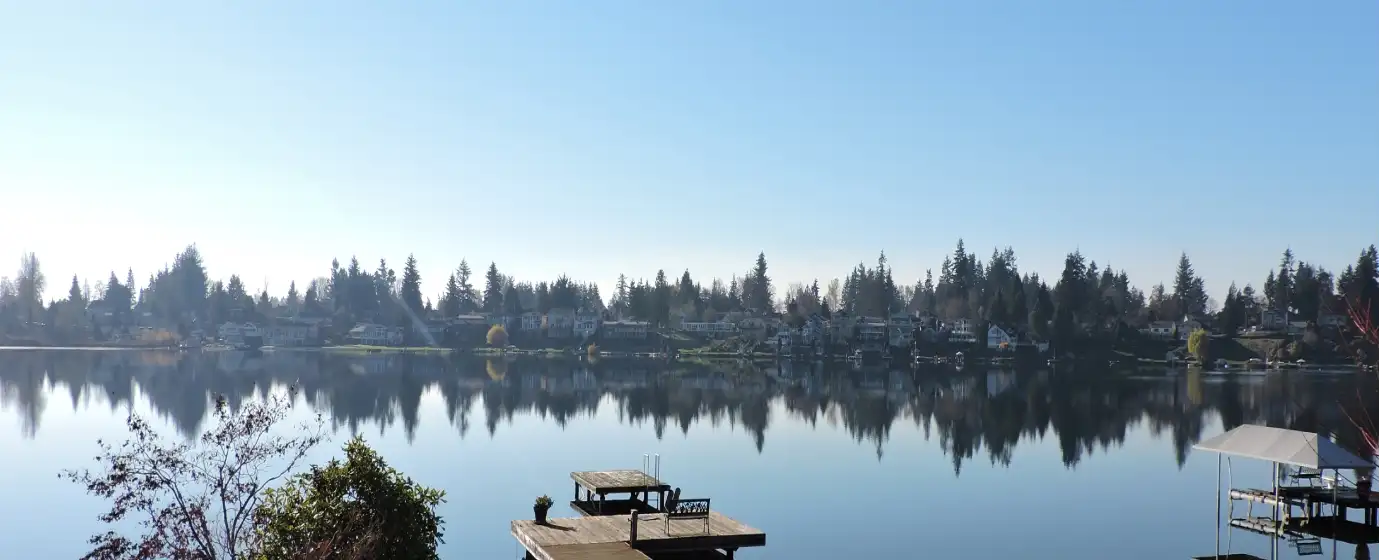
Puget Sound · Washington
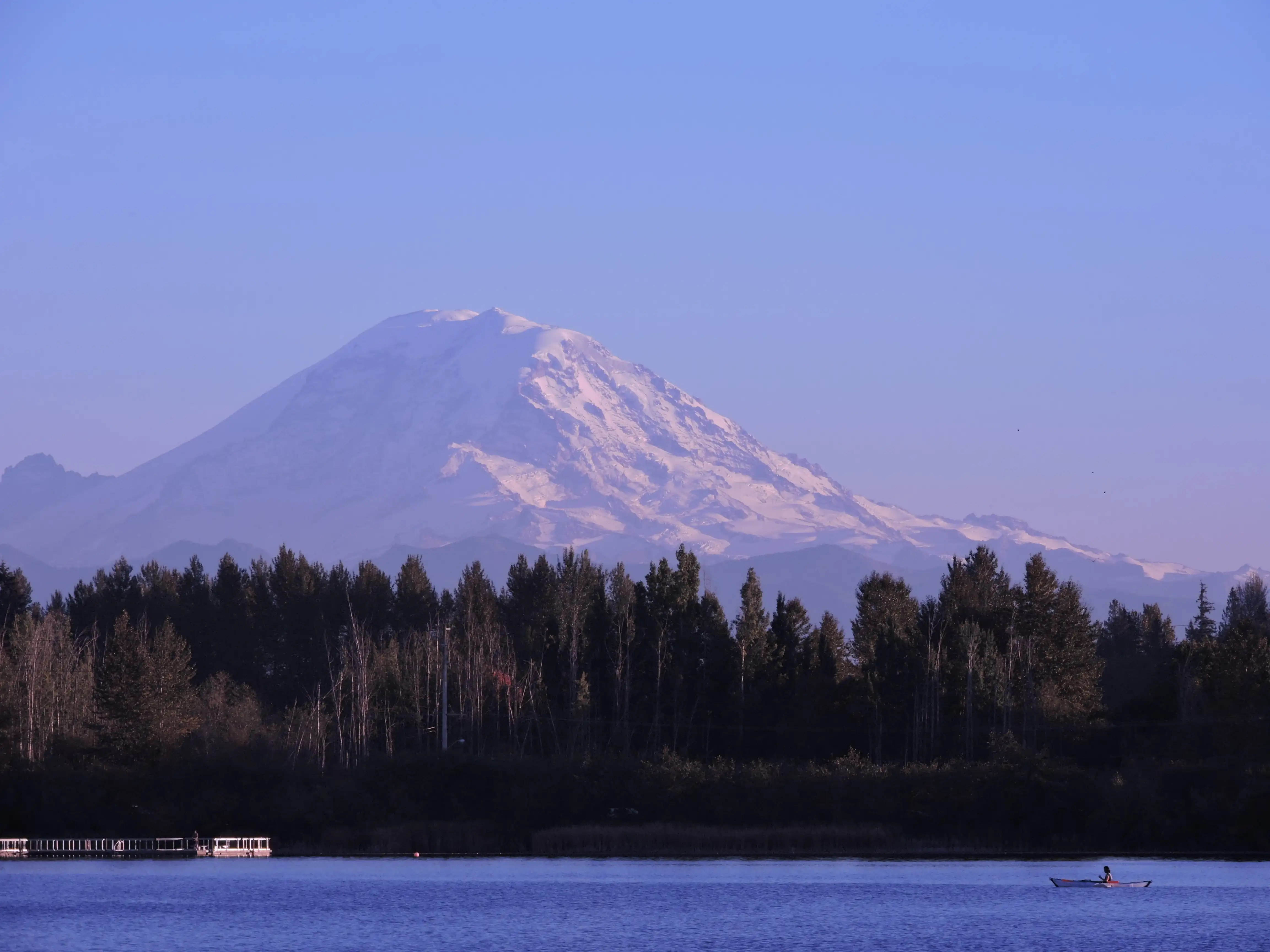
Maybe your employer is moving operations to the South King County industrial corridor and you've started looking at what's actually within 30 minutes of the warehouse district. Maybe you've been watching Seattle and Bellevue prices climb past a million dollars and someone told you Kent is where you get actual square footage without leaving King County. Maybe you drove down SR-167 on a clear day, caught a glimpse of Mount Rainier over the valley, and wondered why you'd never looked at this place seriously. Whatever brought you here, Kent has a way of confounding expectations — it's simultaneously one of the most economically productive cities in Washington and one of the least understood by outsiders.
Kent sits at the heart of the Green River Valley, roughly 20 miles south of Seattle, flanked by elevated neighborhoods that rise up on the west and east sides of the valley floor. The city's industrial spine runs along the lowland — Boeing, Blue Origin, Oberto, Starbucks roasting, REI distribution — which means the city's economy is genuinely diverse and its workforce doesn't disappear the moment tech has a bad quarter. Those elevated neighborhoods, East Hill to the east and West Hill toward I-5, are where most of the residential buying action happens. Understanding this geography is the single most important thing you can do before making an offer in Kent.
This guide will help you figure out whether Kent is actually the right move for your household, which neighborhoods match how you live, and what the market looks like for buyers entering in 2026. It covers commute reality, school context, local quirks, and the honest tradeoffs alongside the genuine reasons more than 136,000 people have decided to put down roots here.
Kent isn't a universal fit, but for the right buyer profile it's one of the most compelling value plays left in King County. The table below cuts through the broad strokes.
| Best For | Why |
|---|---|
| Commuters to Seattle or the South King corridor | 30-minute average commute to Seattle by car or Sounder commuter rail from Kent Station; also practical for Boeing Renton, Auburn plants, and SeaTac-area employers |
| Families with school-age children | Kent School District earns a solid B rating; East Hill and Scenic Hill have strong elementary options and more space per dollar than most of King County |
| First-time buyers | Entry-level condos and townhomes start in the $400,000s — meaningful in a county where the median across all cities sits at $880,000 |
| Aerospace and manufacturing workers | Boeing and Blue Origin both operate major Kent facilities; living locally eliminates a significant commute burden |
| Remote workers needing space | The $594,000–$640,000 price range buys a 3-4 bedroom home with a yard that would cost $900,000+ in Bellevue or Kirkland |
| Retirees on a fixed budget | Below-county-median pricing, ShoWare Center for entertainment, and established parks system make Kent workable without the premium of Covington or Renton's west side |
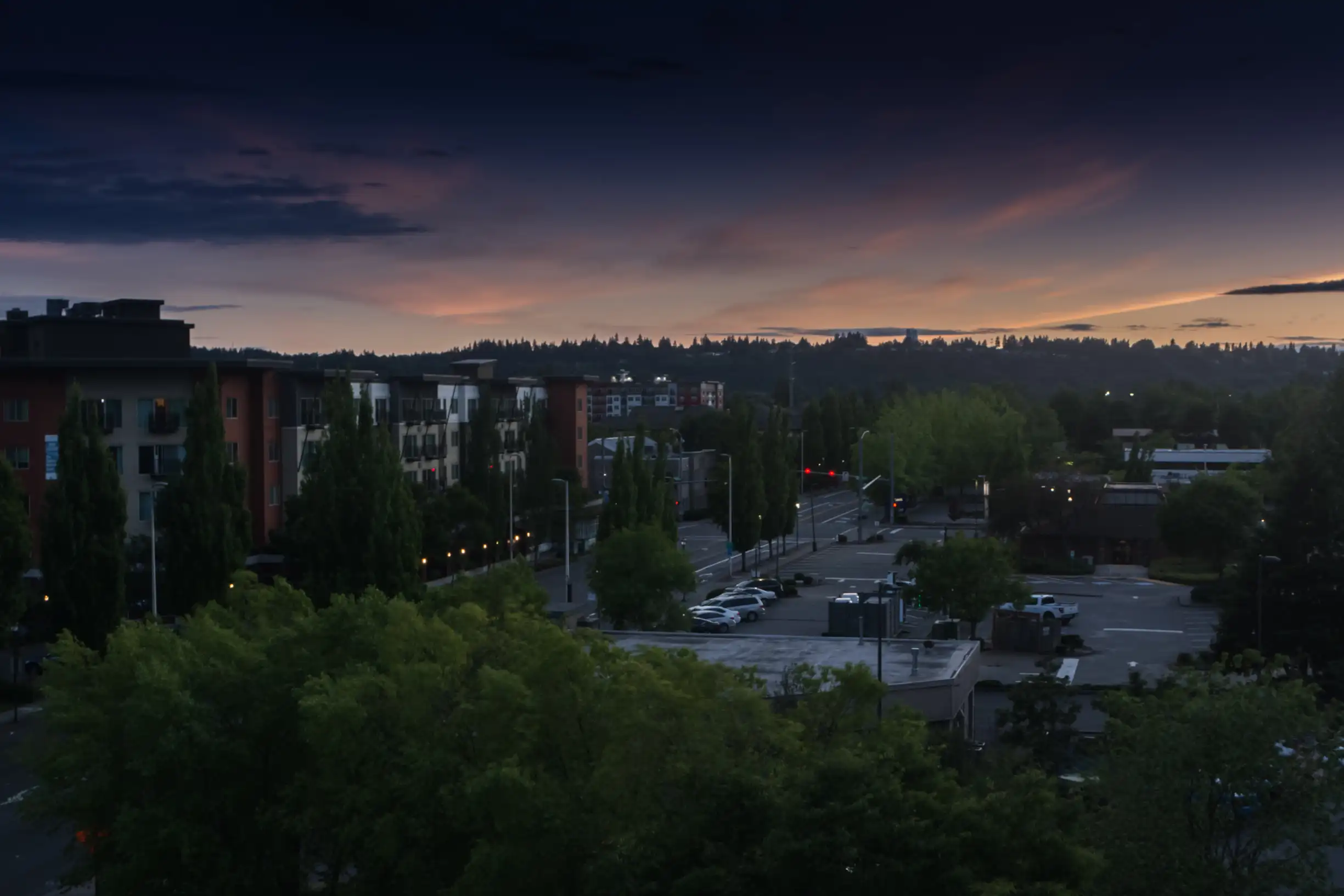
Living in Kent means inhabiting a city with a split personality, and getting comfortable with that split is the key to enjoying it. The valley floor is functional, industrial, and humming with economic activity — you pass distribution centers and aerospace facilities on your way to the Sounder platform at Kent Station. Climb up to East Hill or Scenic Hill, though, and the character shifts completely: wide residential streets, territorial views of Mount Rainier on clear days, and a pace that feels genuinely suburban in a way that Renton's hillside or Federal Way's sprawl never quite manages.
The commute reality is better than the address implies. Kent Station sits on the Sounder South line, which means downtown Seattle is a direct train ride away without touching I-5. By car on SR-167 and I-405, the 30-minute average commute to Seattle holds reasonably well outside of peak rush — though SR-167 northbound between 4:00 and 6:00 p.m. is a known pinch point that adds 10 to 20 minutes on bad days. Residents heading south toward Auburn or Tacoma have it easier. The practical tip most Kent commuters learn quickly: the Sounder platform at Kent Station fills fast on weekday mornings, and parking is finite — factor that in if you're planning to use rail regularly.
The community fabric reflects Kent's demographics honestly. With roughly 22% of residents identifying as Asian and over 13% as Black or African American — alongside significant Pacific Islander and Latino communities — Kent is one of the most genuinely diverse cities in the Puget Sound region, not just in a demographic footnote sense but in the day-to-day experience of its neighborhoods, schools, and restaurants. That diversity is one of the things long-term residents consistently cite when asked why they stayed. Kent doesn't feel like a monoculture, and for a lot of buyers that's a deliberate feature of the choice.
What surprises most people after six months here is how much the city operates as its own self-contained ecosystem. ShoWare Center draws concerts and Seattle Thunderbirds hockey games to downtown. Kent Station's retail village handles most everyday shopping without a highway trip. The Green River Trail connects neighborhoods on foot or by bike in a way that doesn't feel like a distant amenity — it genuinely gets used. Newcomers often arrive expecting a pass-through suburb and find themselves building a full life without leaving city limits as often as they thought they would.
The value proposition within King County is hard to argue with. A buyer priced out of Renton's west side or Burien often lands in Kent and realizes they're getting 400 more square feet and a two-car garage for the same monthly payment. The city's median home price is approximately 40% above the national average but sits far enough below the King County median to create real purchasing power — the kind that means a growing family can afford a yard rather than a townhome courtyard.
The employment base is arguably Kent's most underrated asset. Boeing's Kent Space Center and Blue Origin's headquarters are both major operations here, and Oberto Sausage Company, Starbucks' roasting operation, and REI's distribution infrastructure all add depth to the local economy. That concentration of employers means the local housing market doesn't rise and fall entirely with a single sector's fortunes — and it means a lot of residents can eliminate a long commute entirely.
The parks system punches above the city's weight class. Lake Meridian Park on the east side offers swimming, boating, and a beach that functions as a genuine summer gathering spot for the surrounding neighborhoods. Green River Natural Resources Area provides 304 acres of wetlands, ponds, and birding habitat accessible year-round. Mill Creek Canyon Earthworks Park — a 104-acre environmental art installation designed by Bauhaus-trained artist Herbert Bayer — manages stormwater in a way that doubles as a trail corridor through one of East Hill's most interesting green spaces. These aren't passive reserves; they're actively used.
The Sounder rail connection is a real commuter advantage that many suburban South King County cities lack. Kent Station puts residents on a direct line to King Street Station in Seattle — no transfers, no freeway dependency. For households with one downtown Seattle worker, the ability to commute by rail while the other partner drives to a local employer is exactly the kind of logistical flexibility that makes a two-income suburban life function smoothly.
Looking to buy in Estimate your payment.
Enter your numbers to see an estimated monthly mortgage payment.
Estimate only. Excludes HOA fees and mortgage insurance.
No Kent relocation guide is complete without a clear-eyed look at what the city's price point reflects. Property crime runs high. At 37 incidents per 1,000 residents, the property crime rate is meaningfully above both state and national norms. This isn't evenly distributed — the valley floor and some sections of Downtown Kent experience the concentration — but it's a real number that residents encounter in the form of car break-ins, package theft, and occasional catalytic converter theft. Most East Hill and Scenic Hill buyers report this as an abstract concern rather than a daily one, but it would be irresponsible not to flag it upfront.
The geographic split that makes Kent interesting also makes it uneven. The valley floor industrial character — necessary, economically important, and not going anywhere — creates a psychological and practical divide that buyers feel on their first few drives through the city. Neighborhoods near SR-167 and the manufacturing corridor feel fundamentally different from the hillside residential areas, and buying near the valley without fully understanding that distinction is the most common mistake relocating buyers make here.
Traffic on key arterials is a genuine quality-of-life factor. SR-167, Military Road, and 104th Avenue SE all carry significant congestion loads during commute hours. Residents in East Hill's southeastern sections often navigate through Covington or use back roads through the canyon to avoid bottlenecks — it's the kind of local knowledge that takes a few months to acquire and that no map app reliably suggests.
Why do some people leave Kent? The most common reasons long-term residents cite are the property crime rate, the desire for a quieter pace as kids age out of school, and the pull of smaller cities like Covington or Maple Valley where the suburban density is lower. A subset of buyers who come from Seattle also report missing walkable neighborhood commercial streets — Kent's walkability is concentrated around Kent Station and downtown, and the broader residential grid is car-dependent in the way most suburban cities at this scale tend to be.
East Hill is the neighborhood most buyers end up in, and the reasoning is straightforward: it offers the most consistent combination of space, schools, and appreciation history of any part of Kent. Sitting above the valley floor on roughly nine square miles of elevated terrain, it's a practical place to settle — services, shopping, and daily needs cluster along 104th and SE 240th without requiring a highway trip. Prices run approximately $630,000 to $875,000 for single-family homes, with newer 2020s construction pushing toward $1 million in the canyon-adjacent areas. The honest tradeoff is that East Hill's success has made it Kent's most in-demand corridor, which means competition and less room to negotiate.
Best for: Families with school-age children who want King County proximity without Eastside pricing.
Scenic Hill earns its name on the clear days when Mount Rainier appears framed at the end of residential streets, but it's the neighborhood's quieter pace and mid-century home stock that actually retain residents. Median prices in the neighborhood run around $690,000, with well-maintained lots and a settled feel that newer master-planned communities often lack. It's close enough to downtown Kent that errands don't require a drive, yet insulated enough from the valley commercial strip to feel genuinely residential. The catch is that the housing stock skews older, which means buyers should budget for updates on kitchens and mechanicals.
Best for: Buyers who want territorial views, a quieter street environment, and walkable access to downtown without paying East Hill prices.
West Hill's defining feature is access — to I-5, to SeaTac Airport, and to the north-south commute corridors that connect Kent to both Seattle and Tacoma. Families here tend to have at least one member commuting beyond the immediate Kent employment base, and the neighborhood's highway adjacency makes that practical in a way that East Hill can't match for north-south travel. Views of the Olympic Mountains and Puget Sound appear from several elevated streets. The tradeoff is that proximity to SR-99 and the airport-industrial corridor gives certain pockets a less residential feel than buyers expecting something quieter might anticipate.
Best for: Two-income households where one partner commutes north toward Seattle or south toward Tacoma and needs fast I-5 access.
Downtown Kent is the city's most walkable address and its most in-transition one. Kent Station — the retail and transit hub at 400 W Gowe St — anchors the neighborhood's daily life, and ShoWare Center at 625 W James St brings enough events and Thunderbirds hockey games to generate foot traffic that most suburban downtowns envy. Revitalization has attracted newer restaurants and creative businesses, and the neighborhood skews younger than the hillside residential areas. Housing is primarily condos and townhomes, with prices generally running $300,000 to $550,000 for attached product. The honest limitation is that property crime concentrations are higher near the valley floor, which is something to factor into a condo purchase decision.
Best for: Remote workers, young professionals, or empty nesters who want walkability and transit access at a price point that doesn't exist in Seattle proper.
The Lakes is Kent's master-planned community answer to resort-style suburban living — man-made lakes, walking trails, and an HOA structure that maintains a cohesive aesthetic in a way Kent's older neighborhoods don't attempt. It attracts buyers who want a specific type of quiet, amenity-rich environment and are willing to trade some of the city's eclectic character for it. Prices cluster in the mid-$500,000s to low $700,000s, making it accessible relative to comparable master-planned communities in Covington or the Eastside. HOA fees are an additional carrying cost to account for in the monthly budget.
Best for: Buyers who want a maintained community environment, walking-trail access, and a consistent neighborhood aesthetic.
Lake Meridian is where Kent's outdoor lifestyle concentrates most visibly. The park itself offers swimming, non-motorized boating, and a genuine beach atmosphere in summer that draws residents from across the east side. Homes near the lake carry a premium — expect prices in the $650,000 to $850,000+ range for lakefront-adjacent single-family homes, with some properties pushing higher. The neighborhood's appeal is straightforward: the lake is the amenity, and the community that forms around it has a cohesion that purely residential neighborhoods don't develop as organically. The limitation is that summer weekends bring traffic and crowds to the park that can feel at odds with the quiet the neighborhood projects the rest of the year.
Best for: Active households who want a genuine recreational anchor — kayaking, paddleboarding, summer swimming — as part of daily life.
Mill Creek sits in East Hill's shadow but offers a quieter, slightly more affordable entry into Kent's hillside neighborhoods. The canyon area and trail connectivity through Mill Creek Canyon Earthworks Park give it a green, outdoor-oriented character that appeals to buyers who want recreational access without the price pressure of Lake Meridian. Single-family homes generally run $500,000 to $680,000, with the lower end of that range accessible for buyers willing to take on older construction. The neighborhood's proximity to the canyon trail system is its strongest selling point — it's the kind of access that appreciates in value as remote work makes daily trail use a realistic part of life.
Best for: Buyers who want trail access, lower price pressure than East Hill, and a green buffer from the valley floor.
Panther Lake occupies a practical middle ground between East Hill's concentration and the more westward neighborhoods closer to I-5. It's residential and unpretentious — the kind of neighborhood where long-term residents have deep roots and newer buyers find more room to negotiate than in Kent's hotter corridors. Prices generally run in the $500,000 to $700,000 range for single-family homes. It lacks the specific amenity anchor (a lake, a trail system, a downtown transit hub) that drives premiums in other parts of Kent, which is also why buyers get more home per dollar here than the city's median might suggest.
Best for: First-time buyers and value-focused households who want a residential East Hill-adjacent location without the competition of Kent's top-tier corridors.
| City | Best For | Median Home Price | Commute to Seattle | Vibe |
|---|---|---|---|---|
| Kent | Value, space, diverse employment base | ~$594,000 | ~30 min (car or Sounder) | Industrial-suburban split; diverse and practical |
| Renton | Boeing proximity, hillside views, I-405 access | ~$700,000–$750,000 | ~25–30 min | More polished suburban; faster appreciating west side |
| Auburn | More affordable, larger lots, quieter pace | ~$530,000 | ~35–40 min | Slower, more spread out; fewer urban amenities |
| Covington | Quiet suburban, good schools, small-town feel | ~$640,000–$680,000 | ~35–45 min | Predominantly residential; no true downtown |
| Federal Way | Affordability, I-5 access, proximity to Tacoma corridor | ~$510,000 | ~35 min | More commercial strip; improving but uneven |
| SeaTac | Airport proximity, rental investment, transit access | ~$480,000 | ~20–25 min | Dense, transit-oriented; less residential feel |
| Metric | Detail |
|---|---|
| Population | Approximately 136,585 (2026 projection) |
| Median Home Price | $594,000 (CSV baseline); working market range ~$620,000–$640,000 |
| Property Tax Rate | Approximately 1.18% |
| Median Household Income | Approximately $92,302 |
| Average Commute | 30 minutes |
| Violent Crime per 1,000 | 4.9 |
| Property Crime per 1,000 | 37 |
| School District | Kent School District (B rating) |
| Key Employers | Boeing, Blue Origin, REI, Oberto, Starbucks, Columbia Distributing |
| Sounder Rail Access | Yes — Kent Station (Sounder South line) |
Kent has a few cultural touchstones that don't make it onto the standard relocation brochures. The first is the Thunderbirds hockey tradition. The Seattle Thunderbirds play at ShoWare Center in downtown Kent, and for a large contingent of east side South King County residents, attending Thunderbirds games is a genuine community ritual — not a novelty outing. The arena seats around 6,500 and fills up for weekend games in a way that gives downtown Kent a legitimate entertainment pulse on nights when the rest of the commercial strip is quiet.
The second tradition worth knowing is the Hydroplane and Raceboat Museum, which sits on West Valley Highway and houses one of the most specific and genuinely fascinating museum collections in Washington state. Kent was historically tied to unlimited hydroplane racing culture through the Green River Valley industrial community, and the museum preserves that history in a way that surprises first-time visitors who assumed it would be niche. It's the kind of local institution that signals something real about where this city came from.
The third is Mary Olson Farm, a preserved 19th-century homestead along the Green River that hosts living history events and seasonal programming. It's an anchor for Kent's historical identity in a city that could otherwise feel like it has no pre-industrial memory. Families with kids who've done every regional nature center discover it and often become regulars.
What I would not do if moving to Kent: I would not buy in the valley floor corridor near SR-167 and the industrial zone without spending time there on a Tuesday morning and a Friday evening. The industrial traffic — semi-trucks, shift changes, early morning distribution runs — is part of daily life in those pockets, and buyers who visit only on weekend afternoons sometimes don't fully register it until after closing.

Local Expert Takeaway: If your budget is $550,000–$700,000 and you're choosing between Kent and its neighbors, prioritize the elevated East Hill and Scenic Hill corridors over anything near the valley floor — the price difference between hilltop and valley floor is narrower than the lifestyle difference. Buyers who want trail access without East Hill pricing should look at Mill Creek Canyon-adjacent listings specifically before assuming they need to go to Covington or Maple Valley to find that character. And if Sounder rail matters to your household, buy within a 10-minute drive of Kent Station — the parking situation at the platform is the one commute variable that will surprise you.
✅ Kent delivers King County proximity at a meaningful discount — the city's median home price sits well below the county-wide figure, creating real purchasing power for buyers priced out of Renton, Burien, or the Eastside.
⚠️ Property crime is the honest asterisk — at 37 incidents per 1,000 residents, it's above average, and while it concentrates near the valley floor and downtown, buyers should go in clear-eyed rather than assume it's a statistic that won't touch their neighborhood.
📍 Geography is the most important variable in any Kent buying decision — East Hill and Scenic Hill behave like different cities compared to the valley floor, and the distinction is more impactful than any individual listing's specs.
Is Kent a good place for families?
Kent offers a solid foundation for families with school-age children — the Kent School District carries a B rating, East Hill has established elementary options, and the parks system provides genuine recreational anchors like Lake Meridian Park and the Green River Trail. Families who do best here tend to prioritize space and value over walkable commercial streets, and they usually land in the East Hill or Lake Meridian corridors where the residential character is strongest.
What is the crime rate in Kent?
Kent's violent crime rate runs approximately 4.9 incidents per 1,000 residents, which is moderate for a city of this size and comparable to regional peers. Property crime is the more significant concern at 37 per 1,000 — above both state and national norms — and concentrates most heavily near the valley floor and downtown commercial areas. Buyers choosing East Hill, Scenic Hill, and Lake Meridian-area neighborhoods typically report a day-to-day experience that doesn't reflect the citywide aggregate.
How does Kent compare to nearby cities like Renton or Auburn?
Kent sits between Renton and Auburn on both price and amenity density. Renton's west side offers a more polished suburban streetscape and slightly faster appreciation but at a meaningfully higher price point. Auburn is more affordable and quieter but involves a longer commute and fewer urban anchors. Kent's specific advantage is the Sounder rail connection, the aerospace employment concentration, and the fact that its hillside neighborhoods offer a residential quality that neither Auburn's flat grid nor Federal Way's commercial strip can replicate at the same price level.
Explore the full Kent series: The Ultimate Kent Relocation Guide · Is Kent Safe? · Cost of Living in Kent · Best Neighborhoods in Kent · Kent Schools & Family Life · Kent Youth Sports · Kent Parks & Recreation · Retiring in Kent · 1031 Tax-Deferred Exchange in Kent · Kent First-Time Homebuyers Guide · Moving to Kent from California
Tell us what you need help with and we'll connect you with local resources.

About the Author
Todd Davidson is the founder of Living in Oregon and Living in Washington, where he publishes in-depth city guides, neighborhood resources, and local market insights covering more than 180 communities across the Pacific Northwest. While his background is in home financing and real estate, he created these digital platforms to help families research and compare regions before making a move.