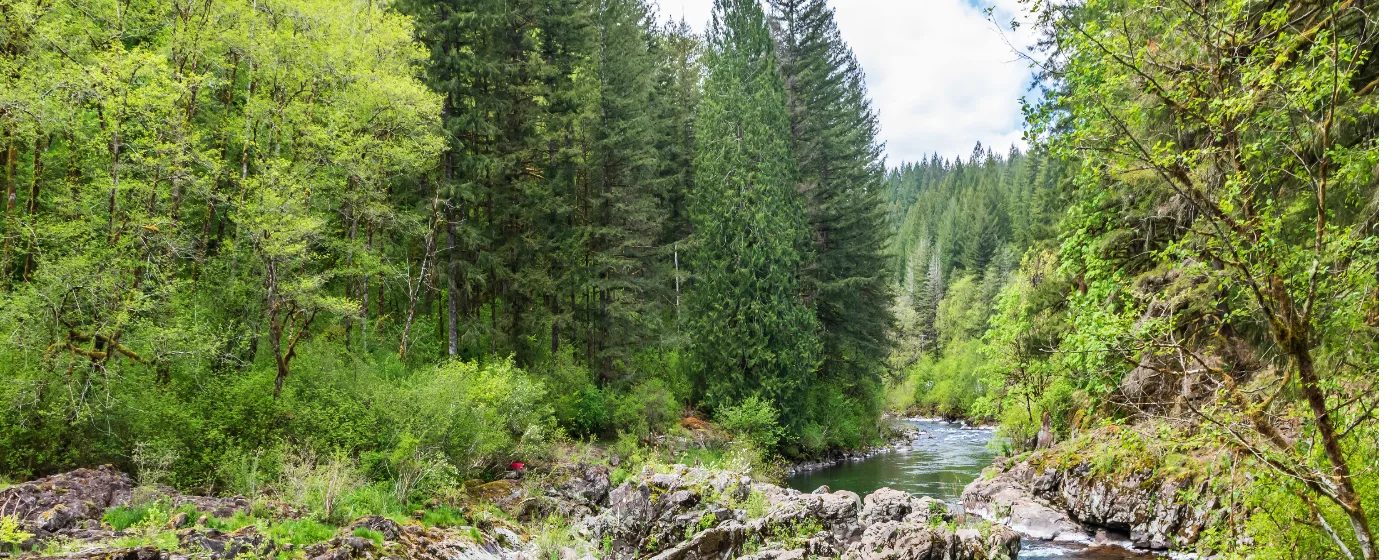
Southwest Washington · Washington
Maybe your company is relocating you to the Portland metro and someone mentioned Battle Ground as a place where your housing budget actually works. Maybe you've been watching Camas prices climb past $700,000 and a coworker said you could get the same square footage in Battle Ground for a hundred thousand less. Or maybe you just drove through on SR-503, saw the open fields, the newer subdivisions, the downtown with actual character, and thought: what is this place, and why don't more people talk about it? The honest answer is that Battle Ground occupies a genuinely interesting position in Clark County — affordable enough to attract first-time buyers and young families priced out of Vancouver's south end, rural enough to feel like you've escaped the sprawl, and close enough to Portland that the trade-off only costs you about 35 minutes on a normal commute morning.
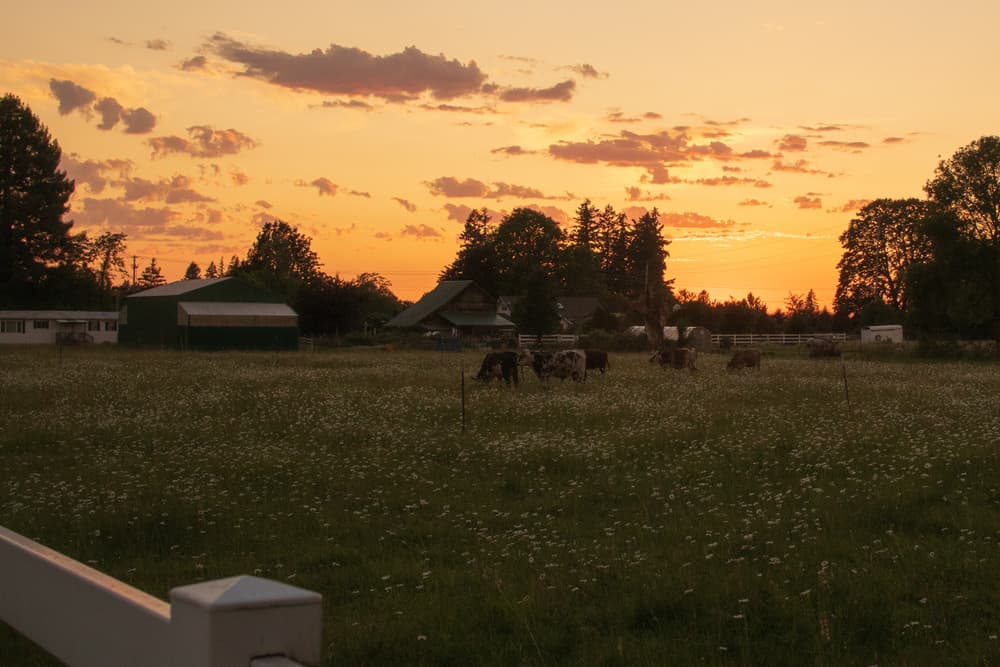
What shapes daily life here is the geography. Battle Ground sits about 11 miles north-northeast of Vancouver, at the rough geographic center of Clark County, where SR-502 and SR-503 intersect and the terrain transitions from suburban grid to rolling farms and tree farms within minutes of your neighborhood. The city covers just under 9 square miles, but the greater Battle Ground area — including the Brush Prairie corridor and the Dollars Corner growth zone — feels significantly larger. Growth is real and accelerating; the population has climbed more than 15% since the 2020 census and now sits at approximately 24,000 residents, with new subdivisions visible from nearly every direction on the outskirts of town.
This guide is built for people making a real decision: whether to put Battle Ground on a short list or cross it off. You'll find honest takes on the commute, a neighborhood-by-neighborhood breakdown, a direct comparison with the other Clark County cities you're probably weighing, and the local quirks that don't show up on any Zillow listing. By the end, you'll know whether Battle Ground matches your actual life or just your spreadsheet.

Before diving into the details, here's the honest intent-based breakdown. Battle Ground doesn't work for everyone — but when it fits, it fits extremely well.
| Best For | Why |
|---|---|
| Portland commuters | 32–45 minutes via SR-503 to I-5 or I-205 under normal conditions; manageable for most commute schedules |
| Families with school-age children | Battle Ground Public Schools' graduation rates are rising, and CAM Academy offers a standout math-and-science option for grades 3–12 |
| First-time buyers | Entry-level inventory in the high $400,000s — below most of Camas and Ridgefield — with active new construction |
| Remote workers | Large lots, quiet neighborhoods, newer construction with office-ready layouts, at prices that make home offices practical |
| Buyers wanting space | 5-acre and 10-acre rural parcels with outbuildings accessible relative to comparable acreage in Camas or Ridgefield |
| Retirees downsizing from acreage | Lower-maintenance newer construction neighborhoods paired with proximity to Vancouver's medical facilities |
The first thing you notice when you move to Battle Ground is that it actually has a downtown. Not a strip mall rebranded as a town center — a real Main Street with a hardware store, local restaurants, a library branch, and a farmers market that draws the whole community on Saturday mornings between May and October. That farmers market, held on Main Street, has become one of the most consistent community gathering points in Clark County's smaller cities, with vendors running produce, baked goods, crafts, and local food alongside live music most weeks of the season.
The commute reality is important to understand clearly before you sign anything. On a normal weekday morning with no incidents, the drive from Battle Ground to downtown Portland runs around 35 minutes via SR-503 south to I-5. On a rough morning — rain, a fender bender near the Salmon Creek interchange, or the predictable backup on I-5 approaching the Columbia River crossing — that same drive can stretch past 55 minutes. The northbound return commute in the afternoon is generally more forgiving. Buyers who work in Vancouver proper, rather than Portland, have a meaningfully easier time: Vancouver is only 11 miles south, and the SR-503 corridor moves well outside peak hours.
The community itself skews younger than you might expect for a city of this size. The median age is roughly 34, the schools are full, and youth sports leagues operate at the scale of a city twice Battle Ground's population. One of the more distinctive facts about Battle Ground's demographic fabric is that it's home to one of the largest concentrations of Old Apostolic Lutheran Christians in the entire United States — a community that values large families, strong neighbor relationships, and deep civic participation. You feel this in subtle but real ways: neighborhood mutual aid is common, community events draw genuine turnout, and the social fabric in many subdivisions feels tighter than you'd expect from cookie-cutter new construction.
The human friction moment worth knowing before you buy: the SR-502 and SR-503 intersection at the south end of town becomes a genuine pinch point between 7:30 and 8:30 a.m. on school days, when subdivision traffic, school drop-off traffic, and commuter traffic all converge simultaneously. Buyers who choose neighborhoods on the north or west side of town and head south toward I-5 are navigating this intersection every single morning. It's manageable, but it's real — and buyers who work unconventional hours or can leave before 7:15 a.m. barely notice it.
Washington's lack of a personal income tax is the first financial advantage that relocating Oregonians notice, and it reshapes the math on almost every household budget. A family earning the local median of approximately $105,000 annually saves several thousand dollars per year compared to the same income in Portland proper — and that gap compounds meaningfully over a decade of homeownership.
The space-to-price ratio in Battle Ground is genuinely hard to match in Clark County's more prominent cities. Entry-level homes start in the high $400,000s for older or smaller construction, and the median sold price across 2025 and into 2026 has tracked in the $520,000–$560,000 range depending on the season and product type. For that price, buyers typically land newer construction with three to four bedrooms, a two-car garage, and a lot size that allows a real backyard — not a postage stamp. Move into the $600,000–$750,000 range and the construction quality, lot depth, and interior finishes step up noticeably.
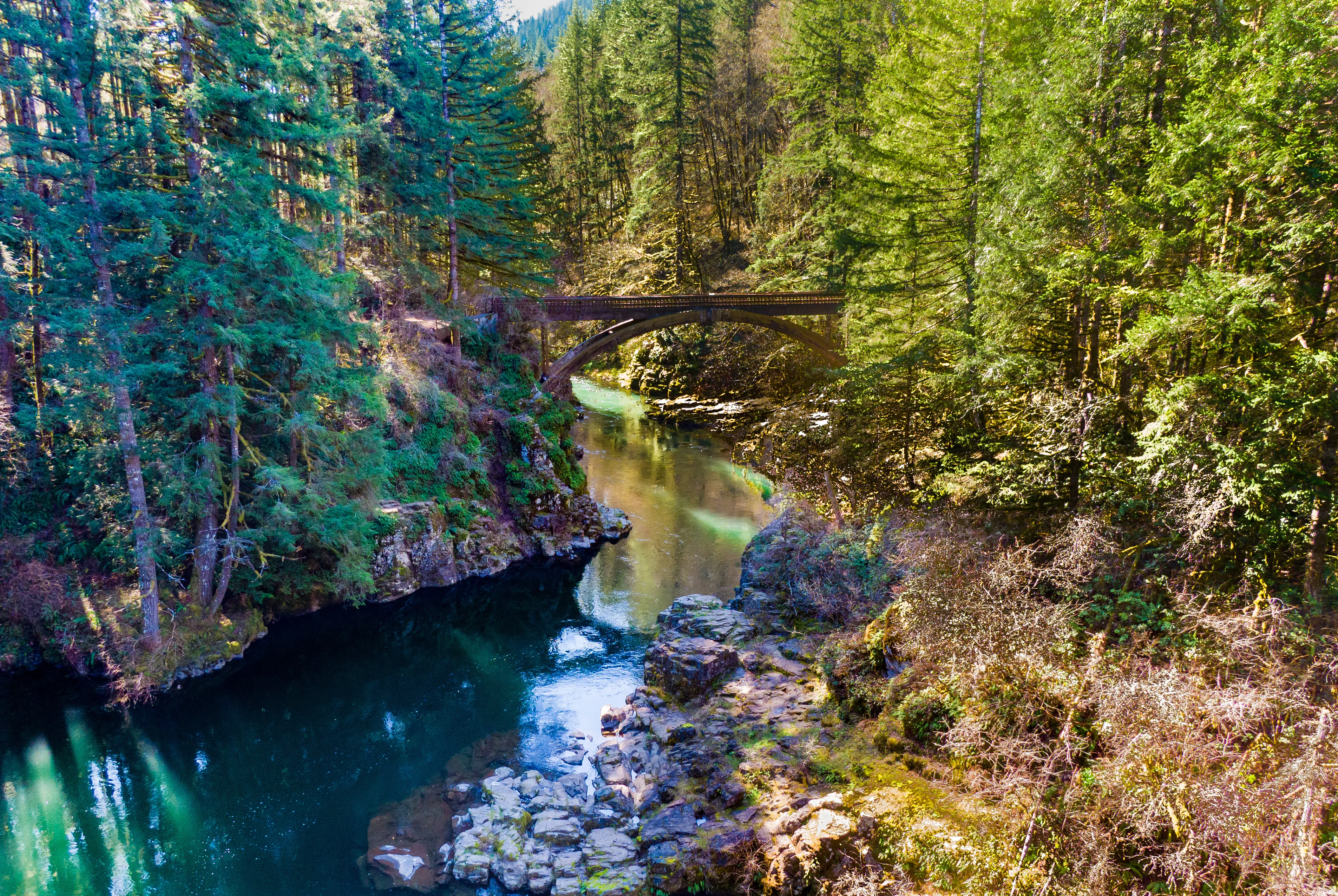
The outdoor access within a short drive of Battle Ground is a legitimate lifestyle advantage. Battle Ground Lake State Park, a few minutes north of the city center, offers a spring-fed lake with swimming, fishing, camping, and trails that feel a world away from the suburbs. Lewisville Regional Park — one of Clark County's premier parks — sits just minutes from most Battle Ground neighborhoods and provides river access, off-leash dog areas, picnic facilities, and trail connections that make weekend recreation effortless. Daybreak Regional Park adds additional trail miles and natural area access on the city's east side.
The new construction pipeline has been a steady asset for buyers who want modern layouts and warranties rather than 1990s floor plans with deferred maintenance. The Dollars Corner corridor north and east of the city center has absorbed significant development activity, and multiple subdivisions have delivered finished inventory with open-concept layouts, energy-efficient construction, and smart-home wiring that older Southwest Washington stock simply doesn't offer. For first-time buyers especially, the ability to buy new rather than renovated is a meaningful quality-of-life factor.
Looking to buy in Estimate your payment.
Enter your numbers to see an estimated monthly mortgage payment.
Estimate only. Excludes HOA fees and mortgage insurance.
The commute to Portland is workable but not comfortable in the way that commutes from Camas or the Salmon Creek neighborhoods of Vancouver can be comfortable. SR-503 is a two-lane state highway through much of its southern run, and the stretch between Battle Ground and the I-5 interchange has no good alternatives when an incident occurs. Buyers who commute daily to Portland should make that drive twice — once in the morning during peak hours, once at 5:30 p.m. — before closing. Remote workers and Vancouver-bound commuters are essentially unaffected by this dynamic, but it matters significantly for anyone heading downtown Portland or to the Beaverton-Hillsboro tech corridor.
Walkability is limited in a way that genuinely surprises some buyers. Downtown Battle Ground's Main Street is pleasant and walkable, but most of the city's residential neighborhoods require a car for everyday errands. Fred Meyer is the anchor grocery option, and while the commercial corridor on SR-503 covers most household needs, it's not a pedestrian environment. The C-TRAN "The Current" on-demand service launched in September 2025 and provides some transit flexibility within the city, but Battle Ground remains primarily car-dependent by design.
Why some people leave comes down to two honest patterns. Buyers in their early 30s who move here for the housing value occasionally find themselves wanting more nightlife, more restaurant variety, and more walkable urban energy after a few years — and they typically migrate south toward Vancouver's Uptown or Hazel Dell corridors, or into Portland proper. The second pattern is buyers who underestimate the commute burden on a dual-income household where both partners head to Portland-area jobs: two people doing that drive five days a week is a different calculation than one.
The school district deserves an honest assessment rather than a simple grade. Battle Ground Public Schools' most recent graduation rate — 81.8% district-wide — represents the highest in a decade and reflects genuine upward momentum. CAM Academy, the district's math-and-science magnet option serving grades 3 through 12, is ranked among the top 130 public middle schools in Washington and consistently outperforms district and state averages. The overall district Niche grade of B- reflects real variation in performance across schools, not a uniformly middling system. Families who engage with the district and explore options like CAM Academy tend to report strong outcomes; families expecting a top-ranked district comparable to Camas should calibrate expectations accordingly.
Battle Ground has expanded significantly in the past decade, and the neighborhoods below represent the areas most active buyers encounter — from established subdivisions near the city core to newer development on the edges.
Quail Hollow is one of Battle Ground's more established residential neighborhoods, offering single-family homes from the late 1990s and early 2000s with mature landscaping and neighborhood-scale parks within easy walking distance. Prices here typically track in the $480,000–$560,000 range, reflecting the neighborhood's age but also its settled, quiet character. The commute south toward SR-503 is direct, and the absence of new construction activity means significantly less construction traffic than newer corridors.
Best for: Buyers who want an established neighborhood feel at a price point below newer construction.
Adjacent to Quail Hollow and sharing a similar era of construction, Quail Reserve offers slightly larger lot sizes and more variation in architectural style than the average Battle Ground subdivision. Homes here sit comfortably in the $510,000–$580,000 range and tend to attract buyers who want proximity to Battle Ground's core amenities without the premium of the newest development corridors.
Best for: Move-up buyers from starter homes who want more space without moving to the rural fringe.
Meadow Glade is among Battle Ground's most consistently desirable sub-areas, with larger lot sizes, more custom and semi-custom construction, and a rural residential character that distinguishes it from tightly packed subdivisions closer to the city core. Prices in this area trend higher — frequently in the $600,000–$800,000 range for standard residential configurations, with acreage parcels reaching beyond that. The Meadow Glade Community Church and the strong Old Apostolic Lutheran community presence give this area a distinct neighborhood identity.
Best for: Families or buyers who want more land and a strong community feel without leaving the greater Battle Ground area.
Parkway Heights sits in a well-positioned pocket of Battle Ground's central residential zone, with convenient access to SR-503 and the city's commercial corridor. Construction here skews toward the 2000s and early 2010s, with homes in the $490,000–$560,000 range. It's an area that works efficiently as a base camp — close to Fred Meyer, the library, and the community center — without demanding a premium for that convenience.
Best for: Commuters and busy households who prioritize daily errand efficiency.
Cedar Heights represents some of Battle Ground's newer suburban development, with homes from the mid-2010s onward featuring more contemporary floor plans and finishes than older sections of the city. The neighborhood draws families with younger children, proximity to elementary school zones, and typical pricing in the $530,000–$620,000 range. Lot sizes are modest compared to Meadow Glade but larger than urban Clark County comparisons.
Best for: Families with school-age children who want newer construction without the full new-development premium.
Austin Heights is a quieter residential corridor on Battle Ground's north side, characterized by slightly elevated terrain that gives some parcels long views across the surrounding farmland. Pricing generally tracks the city median closely, in the $510,000–$590,000 range, with a mix of construction eras and lot configurations. The northward orientation means slightly longer access to the SR-503 commute corridor but a more removed, less-trafficked residential feel.
Best for: Buyers who want a quieter neighborhood and aren't making a daily Portland commute.
The Lewisville area, situated northeast of the city core near Lewisville Regional Park, blends suburban residential development with the kind of rural adjacency that draws buyers who want space without committing to full acreage ownership. The park itself — one of Clark County's most complete regional parks — is essentially a backyard amenity for residents in this corridor. Prices here can vary considerably depending on lot size, ranging from the high $400,000s for smaller residential configurations to $700,000 or more for larger parcels.
Best for: Outdoor-oriented buyers who want immediate trail and park access as part of daily life.
Tukes Valley represents Battle Ground's rural-residential fringe at its most accessible, with larger parcels, agricultural character, and a distinctly slower pace than the city's core subdivisions. This is where 5-acre and 10-acre properties with shops, wells, and outbuildings appear at price points that would be significantly higher in Camas or Ridgefield. The commute is the catch — buyers here are adding 5 to 10 minutes to whatever their base SR-503 drive already looks like. But for buyers who want genuine agricultural property within a reasonable orbit of Portland, it's a compelling option.
Best for: Hobby farmers, equestrian buyers, and anyone who wants space measured in acres rather than square feet.
| City | Best For | Home Price (Median) | Commute to Portland | Vibe |
|---|---|---|---|---|
| Battle Ground | Space, value, new construction | ~$523,000 | 35–45 min | Small-town suburban with rural adjacency |
| Vancouver | Urban amenities, jobs proximity | ~$480,000–$540,000 | 25–35 min | Mid-size city suburban, more walkable corridors |
| Ridgefield | Upscale suburban, top schools | ~$650,000+ | 35–45 min | Planned community feel, newer, polished |
| Camas | Premium schools, established neighborhoods | ~$700,000+ | 35–50 min | Affluent suburban, strong school identity |
| Woodland | Maximum space, lower prices | ~$420,000–$480,000 | 45–55 min | Small town, longer commute, more rural |
| La Center | Rural, affordable, very quiet | ~$480,000–$530,000 | 45–55 min | Rural residential, limited services |
The comparison that matters most for most buyers is Battle Ground versus Ridgefield. Ridgefield's schools and amenity base are somewhat stronger on paper, but buyers give up roughly $125,000 in entry price. For families where school rankings are the driving factor, Ridgefield often wins the decision. For buyers whose priority is square footage, lot size, and avoiding new-construction premiums, Battle Ground typically wins.
| Metric | Detail |
|---|---|
| Population | Approximately 24,000 (2026) |
| Median Home Price | $523,000 (mid-2026 typical value) |
| Property Tax Rate | Approximately 0.82% |
| Median Household Income | Approximately $105,000 |
| Commute to Portland | 32–45 minutes via SR-503 / I-5 or I-205 |
| School District | Battle Ground Public Schools (B- overall; CAM Academy B+) |
| Violent Crime (per 1,000) | 3.3 |
| Property Crime (per 1,000) | 29.8 |
| Sales Tax | 8.9% |
| Climate | Mild summers, wet winters; ~52 inches annual precipitation |
| Washington Income Tax | None |
Battle Ground's Saturday Farmers Market on Main Street is genuinely not optional if you want to understand the community. Running May through October, it draws hundreds of residents weekly and functions less like a market and more like the city's living room — a place where neighbors catch up, kids run loose, and the social networks that define small-town life get renewed every week. First-time visitors are often surprised that a city this size supports a market this well-attended, and regulars will tell you the October harvest weeks are particularly worth planning around.
The Old Apostolic Lutheran community is something no honest guide to Battle Ground can skip. It's not a curiosity — it's a foundational element of the city's character. Battle Ground hosts one of the largest OAL communities in the United States, which shapes the city's social fabric, its very young median age, its neighborhood culture of mutual support, and its tendency toward larger household sizes. New residents who understand this context tend to feel immediately embraced by the community. Those who don't understand it sometimes misread the demographic as simply "conservative suburb" and miss the warmth underneath it.
Battle Ground Days, the city's annual summer festival, typically runs in late July and includes a parade through downtown, carnival rides, live music, and a street fair that shuts down Main Street for a weekend. It's one of those small-city events that punches well above its weight in community participation, drawing attendance from across Clark County and functioning as the unofficial high point of Battle Ground's civic calendar.
What I Would Not Do: I would not buy on the west side of SR-503 between Main Street and the SR-502 intersection without first driving that corridor at 7:45 a.m. on a Tuesday in September. The school-day traffic compression that occurs when subdivision exits, Kiwanis Park traffic, and the morning commute stack simultaneously is real, and streets that feel quiet on a weekend showing can feel genuinely congested during the school year. Buyers whose daily routines are time-sensitive should either choose a neighborhood with a different egress pattern or verify their specific street's actual morning behavior before closing.
Local Expert Takeaway: If your decision comes down to Battle Ground versus Ridgefield or Camas, the question to answer first is whether you're optimizing for school rankings or household financial flexibility — those two priorities pull in different directions in Clark County. For buyers whose priority is space, newer construction, and keeping their monthly payment manageable while still living within 40 minutes of Portland, Battle Ground's Meadow Glade and Cedar Heights corridors currently offer the strongest combination of lot size, build quality, and resale fundamentals in the $520,000–$650,000 range. CAM Academy's presence as a district-wide magnet option means families willing to engage with the school system actively can access a B+ academic environment without paying Camas prices to live near it.
✅ Battle Ground's strongest selling point is the space-to-price ratio in Clark County — newer construction, substantial lots, and proximity to Portland at a median home price well below Camas and Ridgefield.
⚠️ The commute requires realistic testing — the 35-minute average on SR-503/I-5 is accurate under normal conditions, but the morning window is narrow. Buyers who commute daily to Portland should drive the route at peak hours before committing.
📍 CAM Academy changes the school calculation — the district's overall B- rating masks a standout magnet school option serving grades 3–12 that ranks among Washington's top 130 public middle schools and draws students from across the district.
Is Battle Ground a good place for families?
Battle Ground is well-suited for families who value space, community character, and access to outdoor recreation. The city's median age of roughly 34 reflects a genuinely family-oriented demographic, youth sports participation is high, and CAM Academy provides a strong academic track within the public school system. Families who engage actively with the district's options tend to report strong outcomes, particularly at the secondary level.
What is the crime rate in Battle Ground?
Battle Ground's violent crime rate runs approximately 3.3 incidents per 1,000 residents — below many comparable suburban cities and generally considered safe by Clark County standards. Property crime at 29.8 per 1,000 is the more notable figure and reflects patterns common to growing suburban communities with active commercial corridors; this number is worth understanding but does not represent an unusual profile for a city of Battle Ground's size and growth trajectory.
How does Battle Ground compare to Ridgefield and Camas?
Battle Ground sits meaningfully below both Ridgefield and Camas in median home price — roughly $125,000–$180,000 less than Camas at the median — while offering comparable or larger lot sizes and similar commute times to Portland. Ridgefield and Camas carry stronger overall school district ratings, which justifies the premium for many families. Battle Ground's advantage is financial flexibility: buyers who prioritize space, newer construction, and keeping monthly costs manageable consistently find it outperforms both on value delivered per dollar spent.
Explore the full Battle Ground series: The Ultimate Battle Ground Relocation Guide · Is Battle Ground Safe? · Cost of Living in Battle Ground · Best Neighborhoods in Battle Ground · Battle Ground Schools & Family Life · Battle Ground Youth Sports · Battle Ground Parks & Recreation · Retiring in Battle Ground · 1031 Tax-Deferred Exchange in Battle Ground · Battle Ground First-Time Homebuyers Guide · Moving to Battle Ground from California
Tell us what you need help with and we'll connect you with local resources.

About the Author
Todd Davidson is the founder of Living in Oregon and Living in Washington, where he publishes in-depth city guides, neighborhood resources, and local market insights covering more than 180 communities across the Pacific Northwest. While his background is in home financing and real estate, he created these digital platforms to help families research and compare regions before making a move.