
Eastern Washington · Washington
Maybe you've been priced out of Seattle or the Eastside and someone mentioned Ellensburg as the alternative. Maybe Central Washington University brought you out for a campus visit and you stayed for the afternoon, surprised by the brick storefronts and the wide open sky. Maybe you've driven I-90 through the Kittitas Valley a dozen times and wondered what it would actually feel like to stop — to live here instead of just pass through. Ellensburg has a way of catching people off guard. The central tension isn't whether it's a "real" city or a small town. It's whether you can build a life that doesn't require Seattle prices — and whether you're genuinely ready for the trade-offs that come with that.
Geographically, Ellensburg sits at the junction of I-90 and I-82, tucked into the Kittitas Valley along the Yakima River, just east of the Cascade Range. The mountains that make Seattle feel dramatic are visible from your backyard here — but they're behind you, not around you. The valley opens up into agricultural land and high desert in every direction, and the light and scale of the place feel genuinely different from western Washington. Central Washington University anchors the economy and the population, which skews young — the median age hovers around 25 — making Ellensburg feel more energetic than you'd expect from a city of roughly 20,000.
This guide is designed to help you figure out whether Ellensburg is actually the right move. Not whether it's affordable (it is, relative to the I-5 corridor) — but whether the commute math works for your job, whether the neighborhood you're eyeing suits your household, and whether the things that frustrate long-term residents will frustrate you too. By the end, you'll have enough grounded specifics to make that call with confidence.

Not everyone who considers Ellensburg should move here. But for the right household, the fit is remarkably good. The table below cuts through the generic appeal and maps specific buyer profiles to the reasons Ellensburg actually delivers for them.
| Best For | Why |
|---|---|
| Remote workers | Sub-$450K median, fast-improving broadband, mountain access without mountain prices |
| Families with school-age children | Ellensburg School District earns a solid B rating; CWU cultural events add unexpected richness |
| First-time buyers | Entry points starting in the mid-$300s for condos; significantly below state median |
| Retirees seeking an active outdoor lifestyle | River trails, state parks, mild four-season access — without the Wenatchee price premium |
| University employees and staff | CWU is the dominant employer; living within 10 minutes of campus is genuinely achievable |
| Commuters willing to trade space for affordability | I-90 access is real, but Seattle is 105 minutes away — this math works only for hybrid schedules |
The first thing people notice after moving to Ellensburg — usually around month three — is how dramatically the social calendar is shaped by the university's rhythms. When CWU is in session, downtown along Pearl Street feels alive: coffee shops occupied by laptop workers, events at the Sarah Spurgeon Gallery, foot traffic around the historic district. When students leave for summer, the city exhales. It's not a ghost town, but the energy shifts noticeably, and that cycle becomes part of your life whether you're affiliated with the university or not.
The commute reality deserves an honest conversation. At 105 minutes to Seattle under normal conditions, the I-90 drive is manageable if you're doing it once or twice a week — genuinely difficult if you're going five days. Snoqualmie Pass can add 20 to 40 minutes in winter conditions, and closures, while not frequent, do happen. The flip side is that Ellensburg-to-Yakima runs about 35 to 40 minutes, making it a reasonable commute base if your work is in the Yakima Valley corridor. For fully remote workers, the calculus is completely different — you're buying quality of life, not commute proximity.
Day-to-day living centers around downtown Ellensburg, which is compact, walkable by small-city standards, and grounded by genuinely good bones. The Kittitas County Courthouse anchors one end of the historic district; Dick and Jane's Spot — the folk-art yard installation on North Pearl that has been a quirky local landmark for decades — is the kind of thing that tells you this is not a generic Pacific Northwest suburb. Iron Horse Brewery draws after-work crowds on Thursdays. The Ellensburg Farmers Market runs seasonally in the downtown core. The city manages to feel like it has a personality, which is not something you can say about every Eastern Washington community of this size.
The geographic reality of the Kittitas Valley also shapes what's missing. There's no major regional mall, no Costco inside the city, and medical specialties beyond what Kittitas Valley Healthcare provides mean a drive to Yakima or a telehealth call. Families with children who have complex medical needs, or retirees who anticipate frequent specialist visits, tend to weight that more heavily over time than they expected to when they first arrived.
The affordability math in Ellensburg is real and not offset by hidden costs the way some smaller cities can be. At a median sold price in the $430,000 range — roughly 12% below the Washington state average — buyers are getting homes with actual square footage, actual yards, and actual garages. That figure represents genuine purchasing power that simply doesn't exist in Bellevue, Kirkland, or even Wenatchee. For a household earning the area's median income of around $55,000, homeownership is still a stretch, but it's a reachable stretch in a way it isn't in most of western Washington.
Outdoor access here is exceptional and underpriced. Irene Rinehart Riverfront Park puts you on the Yakima River within minutes of downtown. The L.T. Murray Wildlife Area and the Taneum drainage offer serious hiking and mountain biking without a two-hour drive. In winter, Snoqualmie Pass ski areas are 45 minutes west on I-90. The Ellensburg Rodeo, held every Labor Day weekend, draws crowds from across the region and functions as a genuine community anchor — it has run continuously since 1923, and attending it once makes clear why locals organize their fall around it.
Central Washington University brings a level of cultural infrastructure that cities this size rarely have. The Sarah Spurgeon Gallery shows regionally significant work. The CWU music department produces concert series that draw beyond the student body. The Clymer Museum of Art downtown focuses on Western American art and is a genuinely worthwhile afternoon. The Kittitas County Historical Museum offers enough depth on the valley's agricultural and Indigenous history to hold adult interest. These aren't consolation prizes for not living in Seattle — they're a different and legitimately enriching version of a cultural life.
The community itself tends to be tight in the way small cities with genuine identity usually are. People recognize each other at the Wednesday farmers market. The Ellensburg Blue agate — the third-rarest gem in the world, found only in this region — is the kind of obscure local pride point that signals a place with real roots. Rotary Park along the river, Olmstead Place State Park just southeast of town, and the general walkability of the historic neighborhoods give daily life a texture that doesn't require a drive to enjoy.

Looking to buy in Estimate your payment.
Enter your numbers to see an estimated monthly mortgage payment.
Estimate only. Excludes HOA fees and mortgage insurance.
Ellensburg's homeownership rate sits at roughly 33%, which means the majority of households — around 66% — are renters, most of them CWU students. That demographic reality has practical consequences. Rental demand keeps prices for smaller properties elevated in ways that can surprise buyers expecting every segment to be affordable. It also means that in the University District and immediately adjacent blocks, the neighbor mix skews heavily toward transient student renters rather than long-term owner-occupants, which affects everything from neighborhood noise levels to how invested people around you are in property upkeep.
The income-to-price gap is worth understanding clearly. The home price-to-income ratio in Ellensburg runs around 6.6 — actually 22% above the Washington state average — because CWU's student population pulls the median household income down significantly. The county-level median income is closer to $70,000; the city figure of $55,438 reflects a college town dynamic. Buyers moving here from careers in Seattle or the Puget Sound corridor are often well-positioned to buy comfortably, but locals who have spent their careers at Kittitas Valley Healthcare or in agricultural services may find the affordability story more complicated than the statewide comparison suggests.
Flooding is a genuine consideration in some parts of the city. Roughly 61% of Ellensburg properties face moderate flood risk over a 30-year horizon, according to available risk modeling. Buyers should verify flood zone status carefully — particularly in lower-lying areas near the Yakima River — because flood insurance can shift the ownership cost picture meaningfully.
Why some people leave is worth stating plainly: the isolation accumulates. After two or three winters of Snoqualmie Pass delays and the realization that every specialty shopping trip or major medical appointment requires a 35-to-105-minute drive, some households conclude the affordability premium isn't worth the friction. Families who moved from suburbs with diverse retail corridors, multiple hospital systems, and dense extracurricular options often find themselves recalibrating expectations they didn't realize they had. Ellensburg rewards people who come in with clear eyes about what small-city life actually costs in time and convenience.
The historic core runs along Pearl Street and the blocks surrounding Kittitas County Courthouse, with brick commercial buildings that survived the rebuilding after the 1889 fire and residential streets that mix Victorian-era homes with mid-century bungalows. Walkability here is real — coffee, restaurants, the farmers market, and the Clymer Museum are all on foot. Prices for single-family homes in the immediate downtown area typically run in the $380,000–$500,000 range, with the older stock carrying maintenance realities that buyers should factor in. The tradeoff is proximity to CWU foot traffic and student-adjacent noise on weekend evenings.
Best for: Buyers who want genuine walkability and a connection to Ellensburg's historic character, and don't mind older homes.
The blocks immediately surrounding CWU's campus are dominated by rental stock — approximately two-thirds of housing citywide is rental, and that ratio runs even higher here. Owner-occupant buyers do purchase in this area, often as investment properties, but primary residence buyers should go in knowing that the neighbor mix skews heavily toward students. What the University District offers is access to CWU's athletic facilities, the SURC, and cultural programming within walking distance. Prices for smaller homes and condos start below $350,000, making it one of the more accessible entry points in the city.
Best for: CWU employees, investors targeting student rental demand, or buyers who genuinely enjoy a campus-adjacent lifestyle.
Northwest Ellensburg sits west of the university and north of the downtown core, with a mix of mid-century ranches and newer infill development on streets like Brick Road and the corridors feeding into Manastash Road. This area attracts buyers who want a quieter residential feel without traveling far from downtown amenities. Prices generally land in the $400,000–$500,000 range for single-family homes, and the proximity to both CWU and I-90 access makes it functionally convenient. The tradeoff is that the housing stock varies significantly in condition and age, so inspection diligence matters more here than in newer subdivisions.
Best for: Buyers who want proximity to downtown and the university without being directly in the student-rental core.
The northern and eastern edges of the city tend to carry the most affordable price points in Ellensburg, with more modest homes and older construction predominating. These neighborhoods serve households looking to enter the market at the lowest possible price point — homes in the mid-$300s appear here with more regularity than in the southern and western parts of the city. The tradeoff is that amenity access requires a drive more often, and the housing stock reflects more deferred maintenance on average. Currier Creek Estates on the north end, listed around $474,000 for newer construction, represents the upper end of what buyers find here.
Best for: First-time buyers prioritizing price over neighborhood prestige, or investors building an affordable rental portfolio.
Mountain View occupies a section of the city where the terrain begins to rise slightly, offering better sight lines and a slightly more removed feel from the university-area density. Homes here are predominantly single-family detached, built across a range of eras, and the neighborhood tends to attract established families and longer-term Ellensburg residents. Pricing runs in the $430,000–$520,000 range for typical inventory. The proximity to Ellensburg High School makes it a practical choice for families with teenagers, and the commute to downtown or CWU stays under ten minutes.
Best for: Families with high-school-age children who want a settled, owner-occupant neighborhood feel.
Radio Hill sits on the elevated terrain to the west of Central Washington University and carries some of the highest prices in the city, with larger lots, newer construction, and homes that can exceed 4,000 square feet. The views across the Kittitas Valley are legitimately dramatic, and the neighborhood's position above the valley floor gives it a different physical character than the flatland grid below. Expect to pay in the $550,000–$700,000+ range for the larger homes here. The catch is that the road network up the hill limits walk-in convenience, and buyers pay a clear premium for the elevation and space.
Best for: Move-up buyers or relocating professionals who want the most residential space and views Ellensburg has to offer.
Mallard Meadows is one of Ellensburg's newer development areas, anchored by D.R. Horton construction on South Mallard Way, with entry prices around $415,000. The appeal is new construction quality — warranties, energy efficiency, open floor plans — without the premium that comparable new builds command in western Washington. The neighborhood is family-oriented and growing, with a demographic mix that skews toward young families and first-time buyers. The honest tradeoff is that the surrounding area still has the incomplete infrastructure feel of newer subdivisions: limited mature trees, developing street patterns, and retail access that requires a drive.
Best for: Buyers who prioritize new construction quality and lower maintenance costs over walkability or established neighborhood character.
Wildcat Acres sits in the southern part of Ellensburg, in a zone that local agents often identify as among the more desirable residential sections of the city. The neighborhood name references CWU's Wildcat mascot, and the area draws a mix of university-affiliated and non-affiliated households. Homes here tend to be well-maintained single-family properties with reasonable lot sizes, and prices track close to the city median in the $430,000–$490,000 range. The southern location puts it closer to Highway 97 access and the I-82 interchange, which matters for residents making regular runs toward Yakima.
Best for: Buyers who want a solid, well-located residential neighborhood without the premium of Radio Hill or the new-construction feel of Mallard Meadows.
| City | Best For | Median Home Price | Commute to Seattle | Vibe |
|---|---|---|---|---|
| Ellensburg | University-anchored small-city life, affordability | ~$450,000 | 105 min | College town meets agricultural valley |
| Cle Elum | Outdoor recreation, smaller community | ~$520,000 | 85 min | Mountain gateway, growing resort community |
| Yakima | Affordability, regional medical access, urban amenities | ~$315,000 | 145 min | Agricultural metro with urban infrastructure |
| Roslyn | Historic character, boutique community | ~$480,000 | 95 min | Small, tight-knit, arts-adjacent |
| Kittitas | Rural quiet, ultra-affordable | ~$310,000 | 115 min | Agricultural, minimal amenities |
| Wenatchee | Regional hub with river access | ~$445,000 | 150 min | More urban Eastern WA hub, outdoor recreation |
| Metric | Detail |
|---|---|
| Population | ~20,680 (2024–2026 estimate) |
| Median Sold Home Price | $450,000 (city baseline; recent actuals ~$430,000–$458,000) |
| Median Household Income | ~$55,438 |
| Property Tax Rate | ~1.02% |
| Commute to Seattle | ~105 minutes (I-90, normal conditions) |
| Violent Crime per 1,000 | 2.6 |
| Property Crime per 1,000 | 33.6 |
| School District Rating | B (Ellensburg School District) |
| Homeownership Rate | ~33% |
| Median Rent | ~$1,258/month |
| Median Age | ~25 (university-influenced) |
The Ellensburg Rodeo is not optional social participation. Running every Labor Day weekend since 1923, the rodeo transforms the entire city — accommodations fill up months in advance, downtown Pearl Street becomes a different place, and the community's agricultural identity asserts itself in a way that surprises newcomers who moved here primarily for the university. It's genuinely one of the top professional rodeos in the country and draws competitors and spectators from across the West. If you're not a rodeo person when you arrive, give it one honest year before deciding.
Dick and Jane's Spot on North Pearl Street is a folk-art installation that has been evolving on the property of artists Dick Elliott and Jane Orleman for decades. It covers the exterior of their home and yard with reflectors, bicycle wheels, bottle caps, and hand-painted elements — and it functions as an unofficial Ellensburg landmark that residents use to orient themselves. It's the kind of place that signals immediately that Ellensburg has genuine creative DNA, not just a university campus grafted onto an agricultural town.
The Ellensburg Blue agate draws rock hounds and collectors from around the world. The blue chalcedony found in the region is legitimately the third rarest gem on earth and can only be sourced here. Local shops carry it, and finding a piece yourself in the surrounding hills is a hobby that long-term residents take seriously. It's a small thing, but it's the kind of hyperlocal identity that makes Ellensburg feel rooted in its specific geography rather than interchangeable with any other mid-sized Pacific Northwest city.
What I would not do if moving to Ellensburg: I would not buy in the lower-lying areas immediately adjacent to the Yakima River without personally verifying the FEMA flood zone designation and getting a flood insurance quote before making an offer. The fact that roughly 61% of Ellensburg properties carry moderate 30-year flood risk is something that catches buyers by surprise — particularly those coming from western Washington where this issue is less common. A $450,000 home with a $2,400/year flood insurance bill is a meaningfully different ownership equation than the same home without it.

Local Expert Takeaway: The buyers who get the most out of Ellensburg are those who stop treating it as a compromise and start treating it as a deliberate choice. If you're hybrid remote and can handle two Snoqualmie Pass drives per week, focus your search in the Mallard Meadows corridor or Wildcat Acres — you'll get newer construction, better flood-zone positioning, and a buyer pool that skews toward families rather than investors. Avoid the blocks immediately north of CWU's campus for a primary residence unless you genuinely want the student-rental energy around you. And budget for the Rodeo weekend in year one — it will tell you more about whether Ellensburg is your town than any open house will.
✅ Ellensburg delivers real affordability — the median sold price runs roughly 12% below the Washington state average, and new construction entry points in Mallard Meadows start around $415,000.
⚠️ The commute to Seattle is 105 minutes under normal conditions — hybrid workers need to stress-test this against winter pass conditions before committing.
📍 The southwest quadrant — Wildcat Acres, Grasslands, Kestrel Point, and the Radio Hill area — generally offers the strongest resale fundamentals and the most owner-occupant-oriented neighborhoods in the city.
Is Ellensburg a good place to raise a family?
Ellensburg offers a solid environment for families with school-age children. The Ellensburg School District carries a B rating, and the presence of Central Washington University brings cultural programming — concerts, galleries, athletic events — that most cities this size simply don't have. Outdoor access through Irene Rinehart Riverfront Park, Olmstead Place State Park, and the broader Kittitas Valley trail network gives families with active kids plenty to work with year-round.
What is the crime situation in Ellensburg?
Violent crime runs at approximately 2.6 incidents per 1,000 residents — a relatively low figure for a city with a large transient student population. Property crime is the more meaningful concern at 33.6 per 1,000, which is higher than Washington's smaller suburban cities but consistent with university towns where bike theft and opportunistic property crime inflate the numbers. Awareness matters more than alarm — the same common-sense precautions that work anywhere apply here.
How does Ellensburg compare to Yakima for families relocating to Central Washington?
Yakima offers a lower median home price and more urban infrastructure — larger hospital system, more retail, stronger regional employment base. Ellensburg offers a higher school district rating, the university's cultural and recreational resources, and a smaller-city feel that many families find more manageable. The practical comparison usually comes down to employment: if your work or job search is centered in the Yakima Valley, Yakima is the more logical base. If you're remote or employed through CWU or Kittitas Valley Healthcare, Ellensburg's quality-of-life advantages tend to win out.
Explore the full Ellensburg series: The Ultimate Ellensburg Relocation Guide · Is Ellensburg Safe? · Cost of Living in Ellensburg · Best Neighborhoods in Ellensburg · Ellensburg Schools & Family Life · Ellensburg Youth Sports · Ellensburg Parks & Recreation · Retiring in Ellensburg · 1031 Tax-Deferred Exchange in Ellensburg · Ellensburg First-Time Homebuyers Guide · Moving to Ellensburg from California
Tell us what you need help with and we'll connect you with local resources.
About the Author
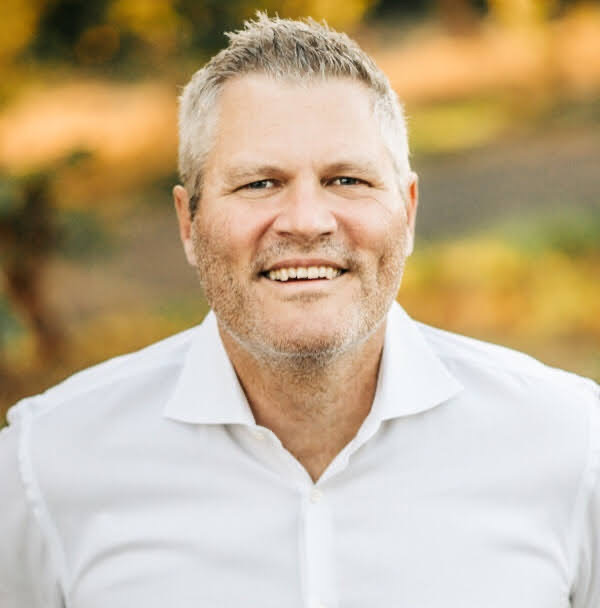
Todd Davidson is the founder of Living in Oregon and Living in Washington, where he publishes in-depth city guides, neighborhood resources, and local market insights covering more than 180 communities across the Pacific Northwest. While his background is in home financing and real estate, he created these digital platforms to help families research and compare regions before making a move.