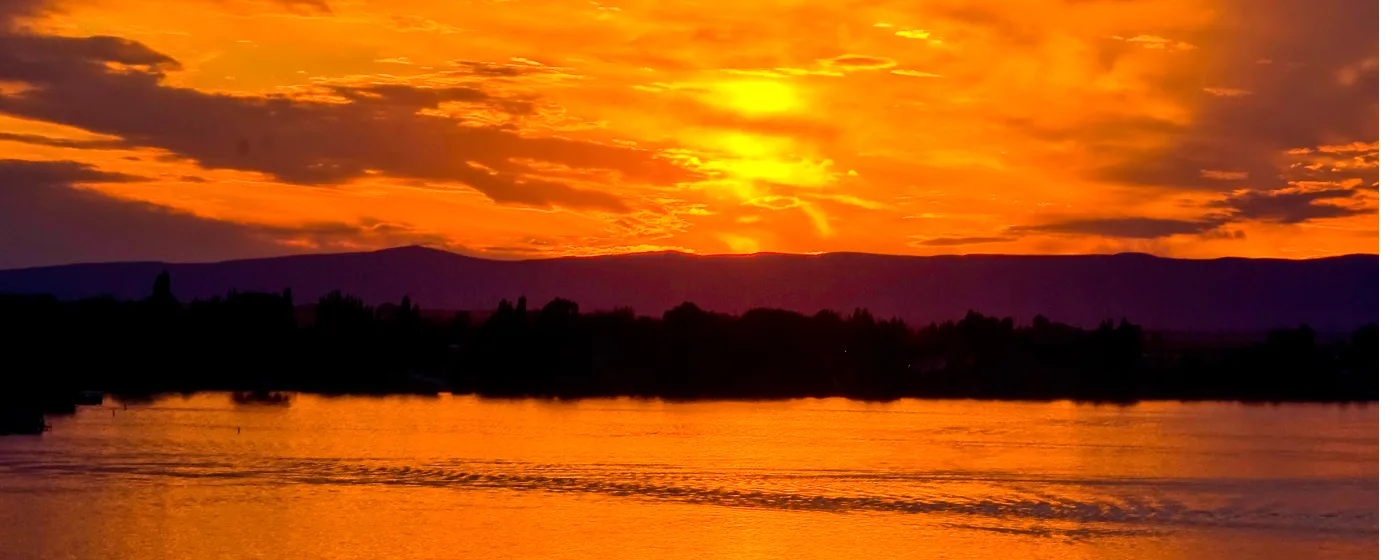
Eastern Washington · Washington
Maybe your employer is moving operations to Eastern Washington and Moses Lake kept coming up in the search results. Maybe you've been watching Western Washington home prices climb past half a million for a starter home and someone in a Facebook group mentioned Grant County as the alternative nobody talks about. Maybe you drove through on I-90 heading east and thought it looked like a lot of flat land and fast food, and now you're wondering whether you dismissed it too quickly. Moses Lake is a city that consistently surprises people who give it a real look — and consistently frustrates people who move here expecting it to be something it isn't.
The lake itself is the thing most outsiders miss entirely. Eighteen miles long, over 6,500 acres, with more than 120 miles of shoreline wrapping through and around the city — Moses Lake is not a scenic backdrop. It's the organizing feature of daily life here. Which neighborhood you live in is less about zip code and more about your relationship to the water: whether you want a dock, a view, a park, or just proximity. Beyond the lake, the city sits in the semi-arid Columbia Basin, where the sun shines roughly 300 days a year, snow is measured in inches not feet, and the nearest Costco trip to a major metro is a commitment. The commute to Seattle runs nearly three hours. That fact shapes everything.
This guide is built for people making a real decision. Whether you're weighing Moses Lake against Ephrata or Quincy, trying to understand which neighborhoods are worth the price premium, or just figuring out whether this city's trade-offs work for your life — you'll find honest answers here, grounded in what the market actually looks like in 2026.
| Best For | Why |
|---|---|
| First-time buyers | With a median sold price around $355,000 — roughly 27% below the national average — Moses Lake is one of the most accessible entry points in Washington State |
| Remote workers | Reliable fiber internet access, low overhead, lake lifestyle, and no state income tax make this a serious contender for location-independent professionals |
| Manufacturing & industrial workers | REC Silicon, SGL Carbon Fibers, Genie Industries, and J.R. Simplot all have significant local operations — good wages don't require a long commute |
| Retirees on a fixed income | Low housing costs, mild winters by Eastern WA standards, walkable lakefront parks, and a calm pace make the numbers work for retirees |
| Families prioritizing affordability | A three-bedroom home with a yard and decent schools is still achievable here without dual six-figure incomes |
| Outdoor recreation households | Boating, fishing, dune riding, and waterfowl hunting at Potholes Reservoir and Columbia National Wildlife Refuge are essentially out the back door |
The city doesn't feel like a bedroom community because it isn't one. Moses Lake has its own economic engine — manufacturing, healthcare, agriculture, education — and that gives it a self-contained rhythm that distinguishes it from towns that exist primarily to house commuters. The downtown core along Third Avenue and Broadway has the bones of a working small city: a library, a museum and art center, local diners, and civic institutions that have been here for decades. It's not a restaurant row and it's not going to be mistaken for Leavenworth. But it functions.
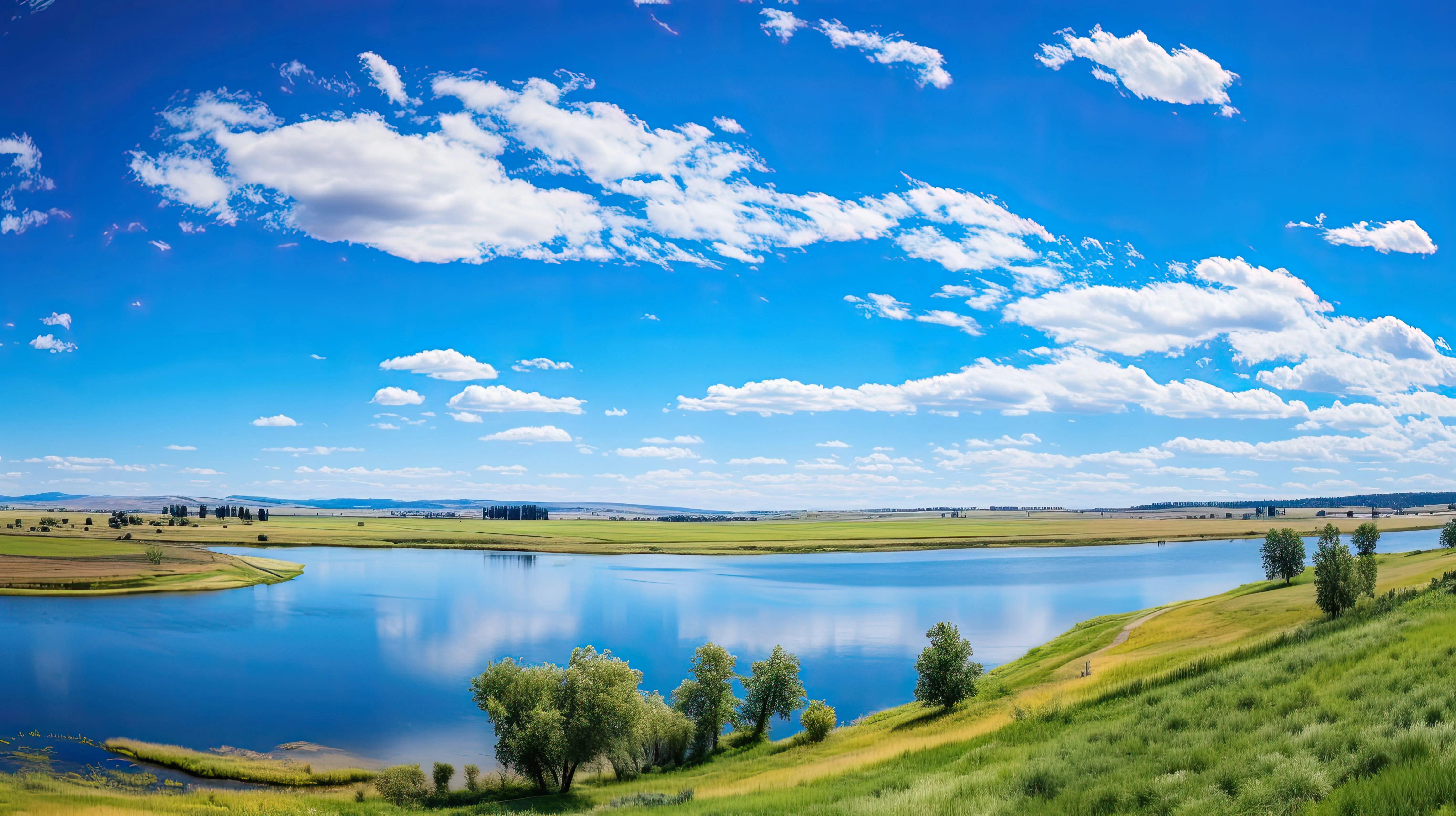
The lake changes the feel of everything. On a weekday evening in July, the boat launches are busy, the parks along the shore draw families, and the water catches enough afternoon light that you forget you're surrounded by high desert. Blue Heron Park and Cascade Park both sit on the water with real amenities — lawns, picnic facilities, launch access — and they're free. That's a quality-of-life asset that doesn't show up in cost-of-living calculators but shows up in how residents describe their daily experience.
What surprises most people after six months of living here is how quickly the size of the city stops feeling limiting. Moses Lake has its own hospital (Samaritan Healthcare), its own community college (Big Bend Community College), its own fairgrounds, its own water park (Surf 'n Slide), and enough retail to handle most weekly needs. The gap people feel is usually in dining variety and specialty shopping — the drive to Spokane or the Tri-Cities fills that need a few times a year, but it takes planning.
The traffic reality is uncomplicated: there isn't much. The average one-way commute runs around 18 minutes locally, which is genuinely rare in 2026. The street grid is navigable, the major roads don't bottle up, and most neighborhoods are a 10-minute drive from most services. The one friction point worth noting is the Highway 17 and I-90 interchange at rush hour when agricultural trucks are moving — but "rush hour" here means 15 minutes of slower traffic, not 45.
The lake is not a gimmick. Eighteen miles of navigable water inside city limits means that boating, paddleboarding, kayaking, and fishing aren't weekend trip activities — they're Tuesday afternoon activities. Families who relocate here from landlocked suburbs routinely describe the lake access as the reason they've stayed longer than they originally planned. The lakefront parks are well-maintained, the public launch ramps are accessible, and the combination of warm, dry summers and calm water makes Moses Lake one of the better recreational lakes in the state for casual users who don't want to fight crowds.
The affordability math is genuinely hard to argue with. At a median sold price around $355,000 and no Washington State income tax, households that would be stretched thin in the Puget Sound corridor find themselves with meaningful financial flexibility here. Property taxes run approximately 1.08%, which is manageable on a home in this price range. Renters considering a purchase find the gap between renting (median rents run roughly $1,200/month) and owning is the smallest it's been in years given current inventory levels.
The outdoor recreation extends well beyond the lake. The Columbia National Wildlife Refuge sits immediately south of the city, offering serious birdwatching, fishing at the seep lakes, and quiet that's genuinely rare. The sand dunes along the lake's north shore attract off-road vehicle riders and add a geographic oddity that residents either love or find puzzling. Potholes State Park, a short drive south, is a legitimate destination — not just a local park — with camping, fishing, and wildlife in a landscape that looks unlike anything in Western Washington.
The employment base here is more diversified than most outsiders expect. REC Silicon, SGL Carbon Fibers, Genie Industries, and J.R. Simplot collectively employ thousands of people in manufacturing and industrial roles that pay competitive wages. Samaritan Healthcare and Confluence Health anchor the medical sector. Big Bend Community College provides both employment and workforce development. This diversity means the local economy doesn't collapse when one sector slows — a resilience that matters for homebuyers thinking about long-term property values.
Looking to buy in Estimate your payment.
Enter your numbers to see an estimated monthly mortgage payment.
Estimate only. Excludes HOA fees and mortgage insurance.
The distance to Seattle is not something you negotiate with. At approximately 177 minutes on a good day — longer in winter or with traffic near Snoqualmie Pass — Moses Lake is not a commutable distance from the metro. Buyers who take jobs in Moses Lake with plans to "visit Seattle occasionally" tend to visit less and less over time, not because Moses Lake is unpleasant but because the drive is simply a genuine commitment. If your career, family, or social life is anchored in the Puget Sound region, the distance will become a consistent source of friction.
The school district carries a C rating, and that's a real consideration for families who are relocating specifically for their children's education. The Moses Lake School District serves a large and diverse population, and outcomes vary significantly by school and by student. Families who engage actively — visiting schools, researching specific programs, and staying involved — tend to have much better experiences than those who assume the district will perform like the higher-rated districts in the suburbs of Bellevue or Spokane. The district is not a reason to cross Moses Lake off the list, but it's a reason to do your homework before choosing a neighborhood.
The retail and dining landscape reflects the city's size honestly. There's a Walmart, a Target, grocery stores, and the major fast food chains. There is not a Whole Foods, a walkable neighborhood with a dozen independent restaurants, or a thriving craft brewery scene. For some households that's irrelevant; for others it's a persistent low-grade frustration. The drive to Spokane — roughly 90 minutes — handles the gaps for most people, but that trip requires intention.
Why some people leave comes down to a predictable pattern: young professionals or couples who moved here for affordability hit their early thirties, have kids, start thinking about school quality and social infrastructure, and find themselves wanting more density of options. That's not a character flaw in Moses Lake — it's a mismatch between life stage and what a city of 27,000 can offer. The people who stay long-term tend to be those for whom the lake, the space, the calm, and the financial breathing room outweigh what they've traded away.
The northern reaches of the city offer newer construction on larger lots with mountain views to the north and easy highway access. Homes here tend to be built from the 1990s onward, with several subdivisions developed in the 2000s and 2010s that still feel relatively fresh. Prices run from roughly $300,000 for modest entry-level homes up toward $420,000 for newer builds with more square footage. The area suits buyers who prioritize newer construction and a quieter residential feel over proximity to the water.
Best for: Buyers who want newer construction and room to spread out without lakefront pricing.
The Peninsula neighborhood wraps into one of the lake's three main arms, offering views in multiple directions and some of the most desirable residential real estate in the city. Homes here range from modest mid-century ranchers to substantially updated properties with private dock potential, and the price range reflects that spread — from the low $300s up past $500,000 for fully lakefront parcels. The Peninsula is where long-term Moses Lake residents tend to upgrade once they're ready to commit to the city.
Best for: Buyers who want lake access and long-term appreciation potential in Moses Lake's most recognizable residential corridor.
Downtown Moses Lake runs along Third Avenue and Broadway with civic buildings, local retail, and the Moses Lake Museum & Art Center as anchors. Housing stock here is older — many homes date to the 1950s through 1970s — and prices reflect both age and walkability to services, generally in the $250,000–$330,000 range. The neighborhood suits buyers who value proximity to the library, shops, and the Japanese Peace Garden over newer construction.
Best for: First-time buyers or retirees who want walkable daily errands and don't need a large yard or newer finishes.
Cascade Valley sits on the western side of the city near Cascade Park, giving residents immediate access to one of Moses Lake's main lakefront parks and the associated launch facilities. The neighborhood is established and primarily single-family, with homes ranging from the high $200s to the mid-$400s depending on lot size and proximity to the water. This is a neighborhood where people stay for a long time — turnover is lower than the city average and neighbors tend to know each other.
Best for: Families and outdoor-oriented buyers who want park access without paying lakefront premium prices.
The Sand Dunes area takes its name from the active dune formations along the lake's north shore — a genuinely unusual geographic feature that draws off-road vehicle enthusiasts and gives the neighborhood a distinct character. Homes here tend to be more affordable than lakefront neighborhoods, with many properties in the $250,000–$340,000 range. It's a neighborhood with a loyal following among buyers who enjoy recreational access but aren't interested in the polish of newer subdivisions.
Best for: Buyers who want recreational personality and lower entry prices and don't need neighborhood walkability.
Larson sits on the site of the former Larson Air Force Base on the east side of Moses Lake, and the neighborhood still reflects that legacy in its street grid and housing stock — much of which was built in the post-war decades. The area has seen steady revitalization as buyers discover that the square footage you get per dollar here is among the best in the city. Expect prices from roughly $230,000 to $320,000 for well-maintained single-family homes. The Grant County Fairgrounds are nearby, which brings energy a few times a year and background noise when events run.
Best for: Value-focused buyers who want large lots and older construction they can improve over time.
McCosh Park is a centrally located neighborhood that takes its name from the adjacent city park — a well-used green space with sports facilities and community gathering infrastructure. The housing here is a mix of mid-century ranchers and some 1980s-era construction, with prices that tend to stay in the $270,000–$360,000 range. The central location means shorter drives to most of the city's services, schools, and the lake access points.
Best for: Families who want a centrally located neighborhood with park access without committing to a specific side of the city.
| City | Best For | Median Home Price | Commute Context | Vibe |
|---|---|---|---|---|
| Moses Lake | Full-service small city with lake access | ~$355,000 | 177 min to Seattle | Agricultural hub with recreation upside |
| Ephrata | Quieter living, very small town | ~$347,000 | 170 min to Seattle | Smaller, slower, less amenity-dense |
| Quincy | Tech industry proximity (data centers) | Declining (recent -3.7%) | 165 min to Seattle | Industrial growth, less community infrastructure |
| Othello | Agricultural employment base | Declining sharply (-13.5%) | Longer to major employers | Very small, limited services |
| Soap Lake | Lowest entry prices, mineral lake quirk | ~$150,000 | 160 min to Seattle | Artsy fringe community, extremely limited services |
| George | Rural solitude, Gorge Amphitheatre access | Very limited inventory | 190+ min to Seattle | Tiny community, not for most buyers |
| Metric | Figure |
|---|---|
| Population (2026 estimate) | ~27,000–27,700 |
| Median sold home price | ~$355,000 |
| Median household income | ~$72,000 |
| Property tax rate | ~1.08% |
| Median rent | ~$1,200/month |
| Local commute (average one-way) | ~18 minutes |
| Commute to Seattle | ~177 minutes |
| Annual precipitation | ~7.8 inches |
| School district rating | C (Moses Lake School District) |
| State income tax | None |
Moses Lake has a few traditions that outsiders learn about slowly and locals take for granted. The Grant County Fair runs every August at the Grant County Fairgrounds and draws the region — this is not a small-town fair in the pejorative sense, but a genuinely well-attended agricultural event with rodeo, livestock competitions, carnival infrastructure, and the kind of community turnout that reminds you how deep the agricultural identity runs in this part of Washington. Plan around it if you live near the fairgrounds; embrace it if you're curious about your new home.
The Japanese Peace Garden, tucked near downtown, is one of the more surprising cultural amenities in a city this size. It reflects Moses Lake's post-World War II Japanese American history — a history that local historians take seriously and that gives the garden real meaning beyond its beauty. It's a place that long-term residents mention with genuine pride, and worth visiting early in your time here to understand what the city thinks is worth commemorating.
The sand dunes along the north shore of the lake are a feature that takes most newcomers a beat to process. Active sand dunes, in a lake city, in a semi-arid basin — it's a combination that doesn't fit a tidy mental category. They are real, they are accessible, and they draw a community of off-road vehicle enthusiasts who treat them as their own informal recreation park. If you're buying in the Sand Dunes neighborhood, you'll hear those vehicles on weekends. If you're buying anywhere else, you'll probably never notice.
What I would not do if moving to Moses Lake: I would not buy in the immediate vicinity of the Highway 17 and I-90 interchange without spending a weekday morning there first. The intersection is the city's main commercial and traffic node, and the combination of truck traffic, industrial access roads, and retail density creates a background energy that surprises buyers who only visited on quiet weekends. It's manageable — most of Moses Lake is quiet — but if you value residential calm, stay a few blocks away from that corridor.
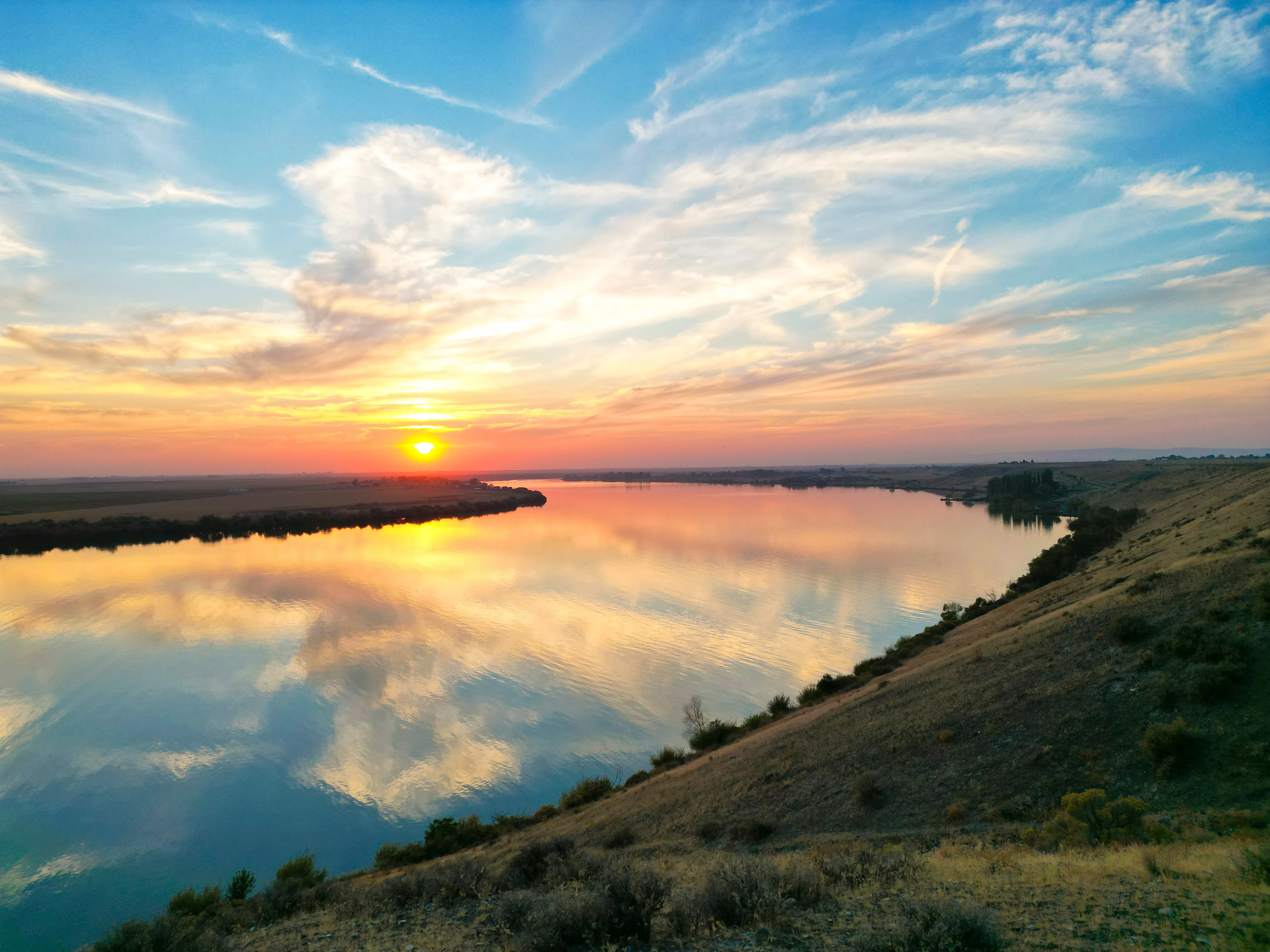
Local Expert Takeaway: If you're coming from Western Washington, recalibrate your expectations before your first showing. The same budget that gets you a townhouse in Tacoma gets you a three-bedroom on a real lot — possibly with lake views — here. Focus your search on the Peninsula and Cascade Valley if water access matters to you, and look at Larson if you want the most square footage per dollar. Avoid anchoring on Western Washington school district benchmarks when evaluating Moses Lake School District; instead, visit specific schools and ask about their individual programs. The buyers who thrive here are the ones who made the decision deliberately — they knew what they were trading and decided the lake, the space, and the financial runway were worth it.
✅ Moses Lake's median home price of around $355,000 is approximately 27% below the national average — making it one of the most accessible ownership markets left in Washington State in 2026.
⚠️ The 177-minute drive to Seattle is not a commute — it's a lifestyle boundary. Buyers who move here should have their professional and social life primarily oriented toward Eastern Washington, not the metro.
📍 The lake is the differentiator. With over 120 miles of shoreline and multiple public access points, the recreational lifestyle here is the value that doesn't appear on any cost-of-living calculator.
Is Moses Lake a good place for families?
Moses Lake can be a strong fit for families, particularly those for whom housing affordability and outdoor recreation are top priorities. The school district carries a C rating, so families with school-age children should visit specific schools and investigate individual programs before committing to a neighborhood — outcomes vary. The city has strong park infrastructure, youth sports leagues, and a community college that makes it a practical full-service environment for raising kids.
What is the crime rate in Moses Lake?
Moses Lake's violent crime rate runs approximately 4 incidents per 1,000 residents, which is broadly comparable to other small cities of similar size in Eastern Washington. Property crime runs higher at roughly 42 per 1,000 — a figure that reflects the reality of a working-class city with some economic stress — and prospective buyers should factor this into neighborhood selection, particularly around higher-traffic commercial corridors. Residential neighborhoods away from the main commercial strips tend to report better experiences.
How does Moses Lake compare to nearby cities like Ephrata or Quincy?
Moses Lake is the most amenity-complete city in Grant County by a significant margin — a hospital, a community college, a water park, a museum, a fairgrounds, and a full retail infrastructure are things Ephrata and Quincy don't offer at the same scale. Ephrata is quieter and slightly cheaper on paper, but buyers give up meaningful services. Quincy has attracted tech industry investment through data centers but lacks the community infrastructure of Moses Lake. For most buyers weighing options in Grant County, Moses Lake offers the best balance of affordability, services, and recreational access.
Explore the full Moses Lake series: The Ultimate Moses Lake Relocation Guide · Is Moses Lake Safe? · Cost of Living in Moses Lake · Best Neighborhoods in Moses Lake · Moses Lake Schools & Family Life · Moses Lake Youth Sports · Moses Lake Parks & Recreation · Retiring in Moses Lake · 1031 Tax-Deferred Exchange in Moses Lake · Moses Lake First-Time Homebuyers Guide · Moving to Moses Lake from California
Tell us what you need help with and we'll connect you with local resources.

About the Author
Todd Davidson is the founder of Living in Oregon and Living in Washington, where he publishes in-depth city guides, neighborhood resources, and local market insights covering more than 180 communities across the Pacific Northwest. While his background is in home financing and real estate, he created these digital platforms to help families research and compare regions before making a move.