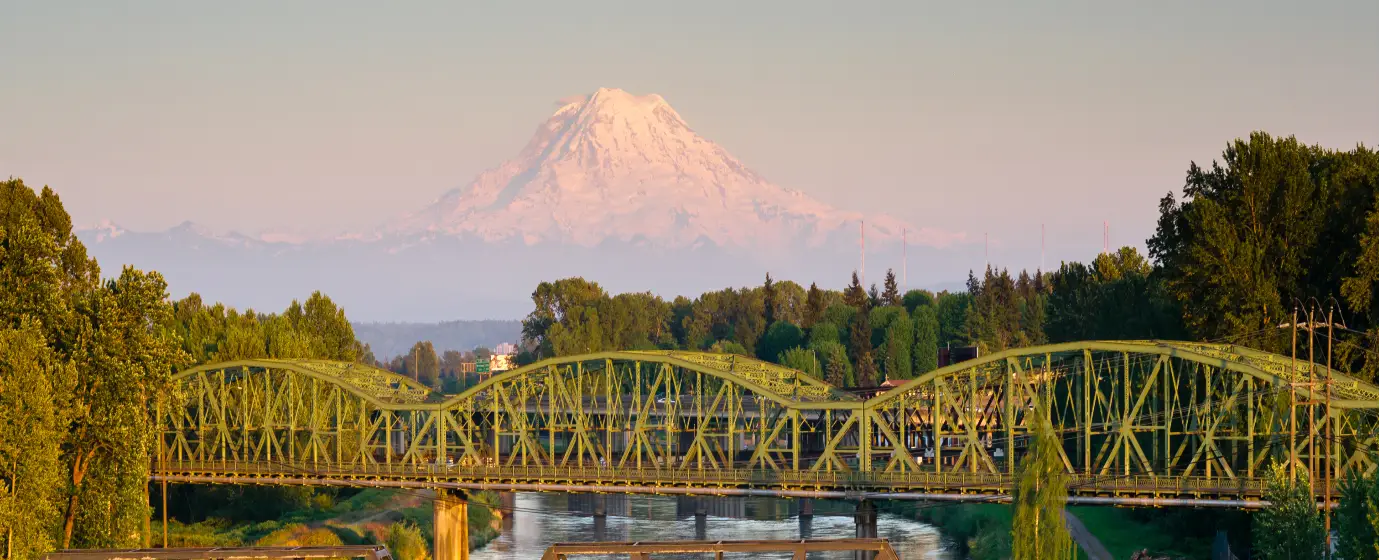
Puget Sound · Washington
Puyallup is one of those cities where buying in the wrong neighborhood doesn't just mean settling for a longer commute — it can mean an entirely different life. The difference between a home near downtown and one on South Hill isn't just a matter of square footage or price; it's walkable farmers markets versus big-box convenience, century-old street trees versus newly poured concrete, and school boundaries that shift dramatically within a few blocks. For a city of roughly 42,000 people, the internal variation is remarkable.
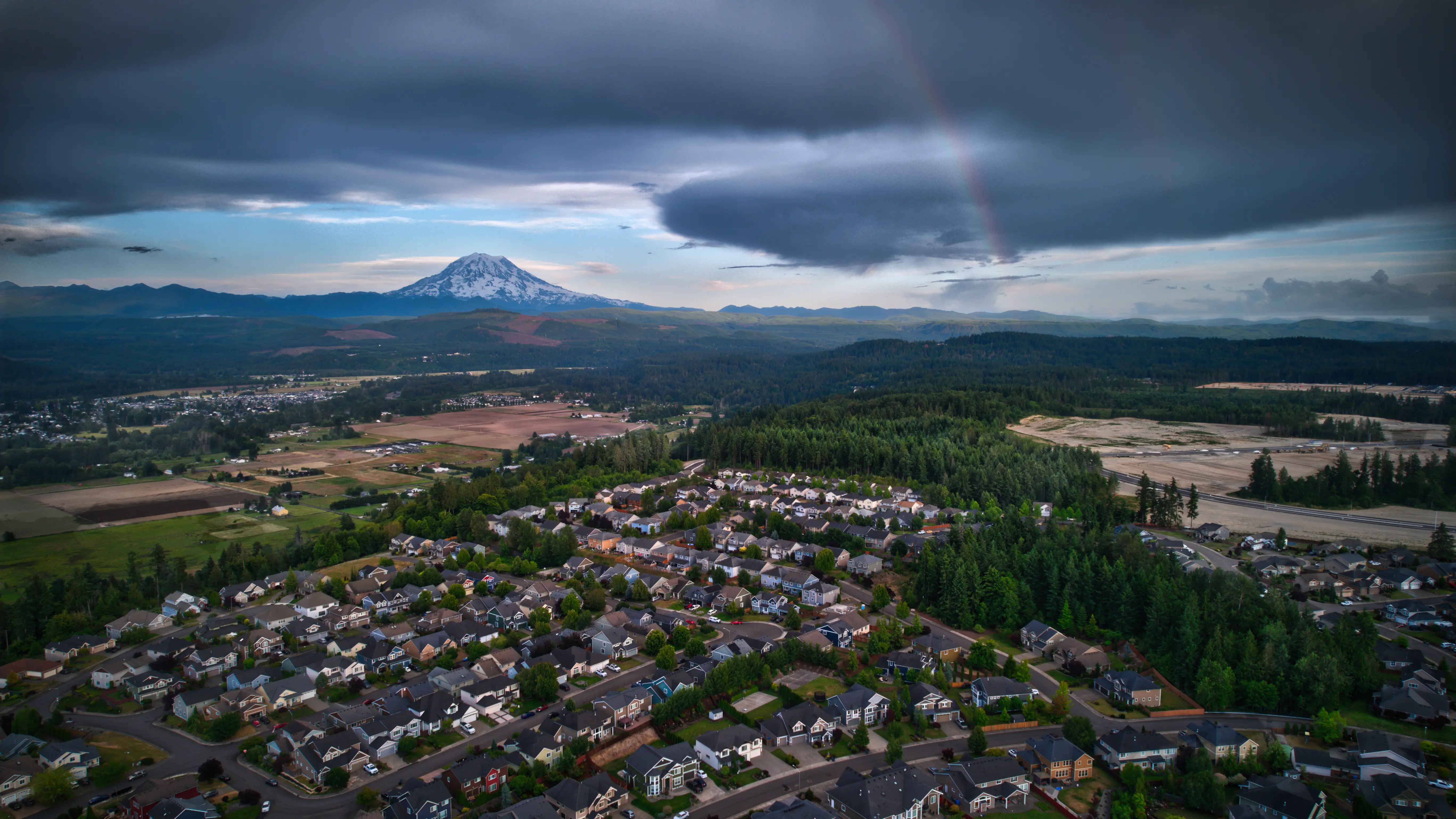
The sharpest divide runs along elevation. The valley floor — anchored by Downtown Puyallup, the Puyallup River corridor, and older neighborhoods along Meridian — feels like a genuine small town, with historic architecture, established trees, and a community cadence tied to things like the Puyallup Farmers Market and the Washington State Fair. South Hill, rising to the plateau above, feels like an entirely different city: newer construction, chain retail everywhere, and a suburban rhythm built around Highway 512 access and South Hill Mall. Neither is objectively better, but buyers who don't understand the divide often end up in the wrong one.
This guide breaks down where Puyallup's neighborhoods actually land — by price, character, trade-offs, and buyer type. Whether you're a first-time buyer comparing condos near downtown to starter homes in Sunrise, or a family weighing South Hill's school options against larger lots in the valley, you'll leave here with a clear picture of which neighborhood matches your priorities.
| Neighborhood | Best For | Price Range | Vibe |
|---|---|---|---|
| Downtown Puyallup | Walkability seekers, empty-nesters | $320K–$450K | Historic small-town, pedestrian-friendly |
| South Hill | Families, commuters, convenience | $550K–$750K | Suburban, commercial corridor, newer builds |
| Sunrise | Families with kids, newer construction | $500K–$680K | Master-planned, park-rich, polished |
| Northwest Puyallup | First-time buyers, commuters to Tacoma | $420K–$560K | Established, quieter, close-in |
| Southeast Puyallup | Large-lot buyers, privacy seekers | $480K–$620K | Semi-rural fringe, spacious, fewer amenities |
| Meridian | Budget buyers, renters in transition | $380K–$500K | Mixed-use corridor, aging stock, convenient |
| Manorwood | Luxury buyers, South Hill premium | $650K–$850K | Upscale suburban, newer custom homes |
| The Villages | Active adults, downsizers | $350K–$480K | Gated-feel community, low-maintenance |
| Deer Creek | Families, move-up buyers | $520K–$660K | Quiet subdivisions, family-oriented |
| Wildwood | Nature-adjacent buyers | $460K–$590K | Green surroundings, trail access, suburban |
| Buyer Type | Best Neighborhood | Why |
|---|---|---|
| First-time buyer | Northwest Puyallup | Lower entry price, established streets, shorter commute to Tacoma |
| Luxury buyer | Manorwood | Newer custom construction, South Hill views, premium finishes |
| Walkability seeker | Downtown Puyallup | Farmers Market, Meeker Mansion, coffee shops, and Meridian Ave on foot |
| Families with kids | Sunrise | Master-planned parks, newer schools planned, safe streets, polished community feel |
| Commuters to Seattle | South Hill | Direct access to SR 512 and Highway 167; 42-minute Seattle commute |
| Large-lot buyers | Southeast Puyallup | Larger parcels, semi-rural character, more space per dollar |
| Renters | South Hill / Meridian corridor | Most apartment inventory, transit-accessible, walkable to services |
Downtown is Puyallup's most walkable neighborhood and its most historically layered — Meridian Avenue features preserved early-20th-century storefronts alongside local restaurants, boutiques, and the Karshner Museum, and the Puyallup Farmers Market runs spring through fall just blocks away. Homes here skew toward older single-family bungalows, condos, and townhomes, with prices in the $320,000–$450,000 range — meaningfully below the citywide figure, though low sales volume means individual deals can swing significantly. The honest trade-off is that parking during the Washington State Fair is a seasonal ordeal, and some blocks near River Road carry noise from commercial traffic that doesn't let up.
Best for: Empty-nesters, young professionals, and buyers who prioritize walkability and neighborhood identity over square footage.
South Hill is where the majority of Puyallup's population growth has landed since the 1990s, and it shows — the Meridian Avenue corridor is a nearly unbroken stretch of Target, Costco, Home Depot, Safeway, and chain restaurants anchored by South Hill Mall. Homes run $550,000–$750,000 for typical 3–4 bedroom builds from the 1990s through 2010s, with direct access to SR 512 making the 42-minute Seattle commute genuinely manageable. The downside is that the suburban sameness is real: if you need a genuine town center, a local coffee shop, or a walkable Friday evening, South Hill requires driving to find it.
Best for: Families and commuters who prioritize convenience, school access, and newer construction over neighborhood character.
Sunrise is the most intentionally designed community in Puyallup — a 1,501-acre master-planned development with greenbelts, wetland buffers, Mt. Rainier views, and six dedicated parks woven into the layout. Prices in Sunrise typically land in the $500,000–$680,000 range, with newer construction and a polished suburban finish that appeals strongly to families with school-age children. The catch is that Sunrise sits roughly 4 miles south of SR 512, which means every errand and every commute funnels through the SR 161 corridor — when that road backs up, and it does regularly during peak hours, residents feel it.
Best for: Families wanting a safe, park-rich community with newer homes and a neighborhood feel that South Hill's commercial strips can't replicate.
Northwest Puyallup doesn't generate the buzz of South Hill or Sunrise, but it's quietly one of the most practical neighborhoods in the city for buyers watching their budget without wanting to compromise on location. Homes here — mostly 1970s–1990s single-family builds — come in at $420,000–$560,000, with shorter hops to Tacoma via River Road or SR 512 that shave meaningful time off westbound commutes. The trade-off is aging housing stock: buyers frequently encounter deferred maintenance on older roofs and plumbing systems, and the neighborhood doesn't have the walkable amenities of downtown or the park infrastructure of Sunrise.
Best for: First-time buyers and commuters to Tacoma who want an established neighborhood without the South Hill price premium.
Southeast Puyallup is where the city starts to breathe out — parcels get larger, tree cover increases, and the suburban density of South Hill gives way to a quieter, semi-rural fringe character. Prices in the $480,000–$620,000 range reflect that space premium, and buyers typically get more land per dollar here than anywhere else within city limits. The honest downside is that Southeast Puyallup trades convenience for quiet: grocery runs require a drive, transit access is limited, and the area lacks the community infrastructure — parks, walkable retail, neighborhood events — that defines Sunrise or downtown.
Best for: Buyers who prioritize lot size, privacy, and space over walkability or commute convenience.
Manorwood sits at the top of South Hill's residential tier — newer custom and semi-custom construction, larger lots than the surrounding South Hill subdivisions, and a finished quality that justifies prices in the $650,000–$850,000 range. The neighborhood draws buyers who've outgrown standard South Hill offerings and want something that reads more upscale without leaving the plateau's convenience behind. The one thing Manorwood can't escape is that it shares SR 512 with the rest of South Hill — peak-hour congestion at the 176th Street interchange is a daily reality for anyone commuting north.
Best for: Luxury buyers who want South Hill access and amenities with genuinely premium construction and finishes.
The Villages is Puyallup's answer to low-maintenance residential living — a community designed around ease of ownership, with a gated-feel layout, HOA management of common areas, and a demographic that skews toward active adults and downsizers. Prices in the $350,000–$480,000 range make it one of the more accessible options in the city for buyers who want newer construction without the larger lot obligations. Buyers under 40 sometimes find the social pace slower than they'd prefer, and HOA rules here are more restrictive than in surrounding areas — exterior modifications, parking, and landscaping all come with parameters.
Best for: Active adults, retirees, and downsizers who want a maintained community and a quieter residential pace.
Deer Creek offers the kind of quiet suburban subdivision life that attracts families who've done South Hill and want something with less commercial noise in the background — established streets, decent lot sizes, and a community feel that develops naturally when a neighborhood stops growing. Homes typically land in the $520,000–$660,000 range, reflecting mid-tier construction from the late 1990s and 2000s that's largely been well-maintained. The limitation is that Deer Creek lacks the park and recreation infrastructure of Sunrise, and buyers with younger children should verify school boundary assignments carefully before committing.
Best for: Families and move-up buyers who want a quieter subdivision setting within easy reach of South Hill services.
Looking to buy in Puyallup? Estimate your payment.
Enter your numbers to see an estimated monthly mortgage payment.
Estimate only. Excludes HOA fees and mortgage insurance.
Assuming South Hill is all one neighborhood. The corridor along Meridian Avenue from SR 512 south to Sunrise spans several miles and multiple micro-communities with meaningfully different characters, price points, and commute dynamics. Buyers who search "South Hill homes for sale" and then drive to a single open house often don't realize that a home near the 176th Street interchange feels nothing like a home down in the Sunrise sub-villages four miles south. Before committing to South Hill, drive the full stretch of SR 161 at 7:30 a.m. — the backup at the Meridian/SR 512 interchange is a daily fixture that surprises buyers who only visited on weekends.
Underestimating the SR 161 chokepoint. Highway 161 (Meridian Avenue) is Puyallup's primary north-south arterial connecting South Hill to Highway 512 and the broader commute network. There is no alternate route of comparable efficiency. Buyers who purchase in Sunrise or deeper South Hill without understanding that every grocery run, every school pickup, and every commute flows through this single corridor often regret it by month three — especially if they're making daily trips to Tacoma or Federal Way.
Focusing on square footage without checking school boundaries. Puyallup School District serves a large geographic area, but individual school boundaries don't follow neighborhood marketing names. A home listed as "South Hill" might feed into a different elementary than the one that drove your decision. Two homes on adjacent streets can feed into different schools entirely. Pull the boundary maps from the district website before you make an offer — not after.
Buying downtown without accounting for Fair season. Pioneer Park and the Washington State Fairgrounds sit within the Downtown Puyallup footprint, and when the Fair runs in September, the surrounding neighborhood becomes a different place. Parking evaporates, foot traffic multiplies, and the noise level climbs noticeably for three consecutive weekends. For most residents it's a beloved annual tradition, but buyers who move in expecting year-round quiet are often caught off-guard by the September reality.
| Area | Ideal For | Typical Rent Range | Trade-off |
|---|---|---|---|
| South Hill (Meridian corridor) | Families, commuters, professionals | $1,670–$2,500/mo | Heavy traffic on SR 161; suburban strip feel |
| Downtown Puyallup | Young professionals, walkability seekers | $1,400–$1,900/mo | Limited inventory; parking challenges near Fair |
| Sunrise community | Families wanting master-planned amenities | $1,800–$2,400/mo | Distance from SR 512; single access point |
| Meridian corridor (mid-city) | Budget renters, singles, first-year residents | $1,300–$1,750/mo | Aging apartment stock; limited walkability |
| Northwest Puyallup | Tacoma commuters, established-area renters | $1,500–$2,100/mo | Fewer amenities; older apartment inventory |
Puyallup's rental market has tightened modestly over the past year, with South Hill rents up roughly 3% year-over-year. The bulk of the apartment inventory is concentrated along the Meridian corridor and within South Hill proper — renters looking for newer construction or community amenities will find the best options inside the Sunrise master plan, though that convenience comes at a premium. Renters who want the most flexibility and the lowest monthly number will find the Meridian mid-city corridor offers the most inventory, though the trade-off in building quality and neighborhood polish is noticeable.
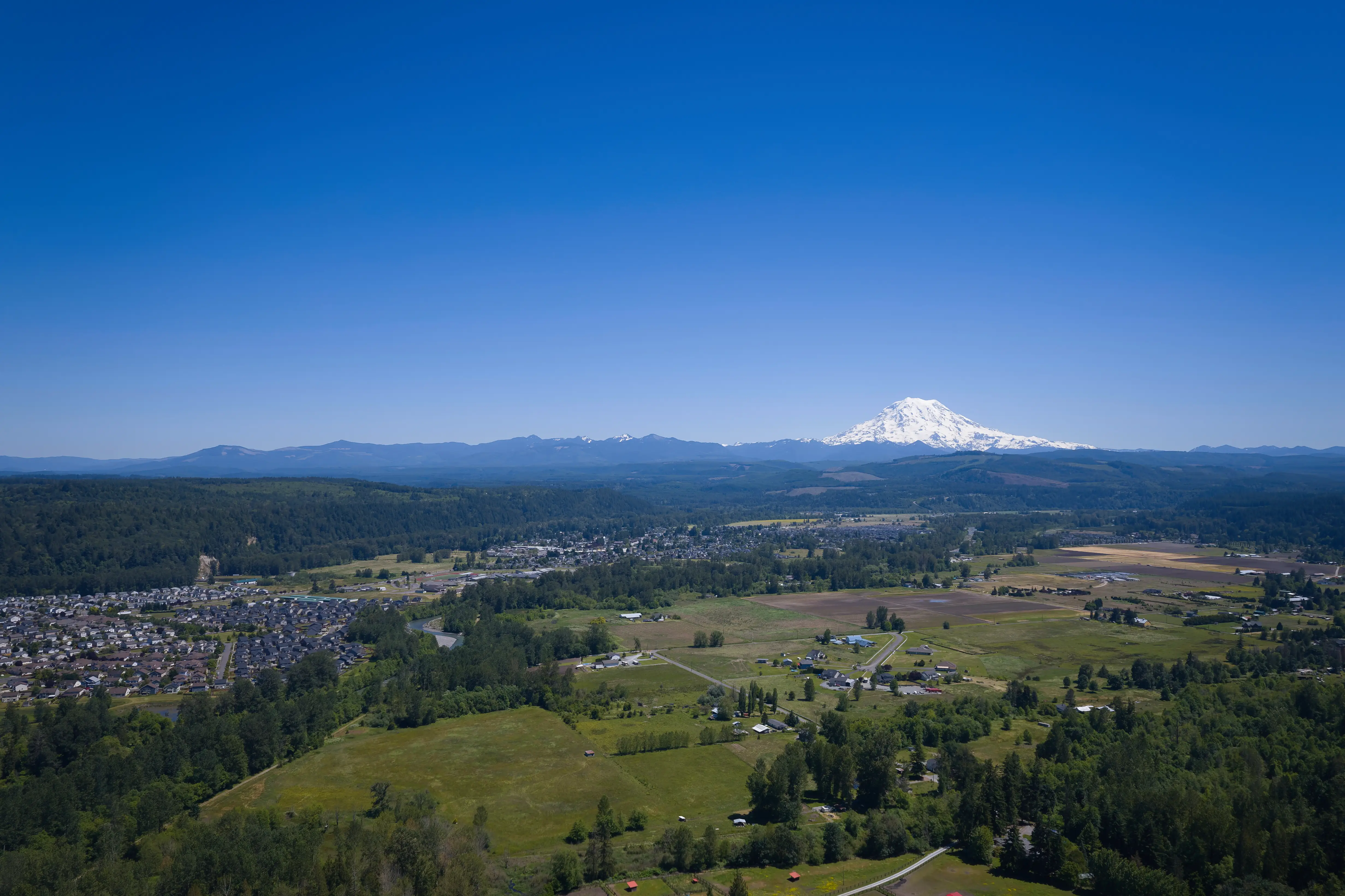
Local Expert Takeaway: Don't let the citywide median number drive your neighborhood search — Puyallup's price range runs from the low $300s for downtown condos to $850,000-plus in Manorwood, and where you land within that range determines your daily life more than any single data point. If you're buying for school quality and family infrastructure, Sunrise is worth the SR 161 commute trade-off. If walkability is non-negotiable, downtown at the $320,000–$450,000 range offers something no South Hill address can match. And if you're choosing between South Hill subdivisions, drive the 176th Street interchange at rush hour before you sign anything.
What are the best neighborhoods in Puyallup for families?
Sunrise and South Hill are the two neighborhoods families consistently gravitate toward in Puyallup. Sunrise offers a master-planned community with six dedicated parks, greenbelts, and a polished neighborhood feel, while South Hill provides direct access to major retail, services, and SR 512 for commuters. School boundary verification is important in both areas, as assignments vary within each neighborhood.
Is Downtown Puyallup a good place to live?
Downtown Puyallup is genuinely walkable by Pierce County standards — with the Farmers Market, Meeker Mansion, Karshner Museum, and local dining along Meridian Avenue all accessible on foot. Home prices in the $320,000–$450,000 range make it one of the more affordable options in the city, and the historic character is difficult to find elsewhere in Puyallup. Buyers should know that Washington State Fair season in September brings significant parking and traffic disruption to the surrounding blocks.
How does South Hill compare to other Puyallup neighborhoods?
South Hill is Puyallup's most commercially developed area and the most convenient for everyday errands — with South Hill Mall, Costco, Home Depot, and major grocery chains all within a short drive. Homes run $550,000–$750,000 for typical builds, making it more expensive than downtown or Northwest Puyallup but less than Manorwood's premium tier. The catch is that South Hill lacks a genuine town center or walkable neighborhood identity, and peak-hour congestion on SR 161 and the 176th Street interchange is a daily commuter reality.
Explore the full Puyallup series: The Ultimate Puyallup Relocation Guide · Is Puyallup Safe? · Cost of Living in Puyallup · Best Neighborhoods in Puyallup · Puyallup Schools & Family Life · Puyallup Youth Sports · Puyallup Parks & Recreation · Retiring in Puyallup · 1031 Tax-Deferred Exchange in Puyallup · Puyallup First-Time Homebuyers Guide · Moving to Puyallup from California
Tell us what you need help with and we'll connect you with local resources.

About the Author
Todd Davidson is the founder of Living in Oregon and Living in Washington, where he publishes in-depth city guides, neighborhood resources, and local market insights covering more than 180 communities across the Pacific Northwest. While his background is in home financing and real estate, he created these digital platforms to help families research and compare regions before making a move.