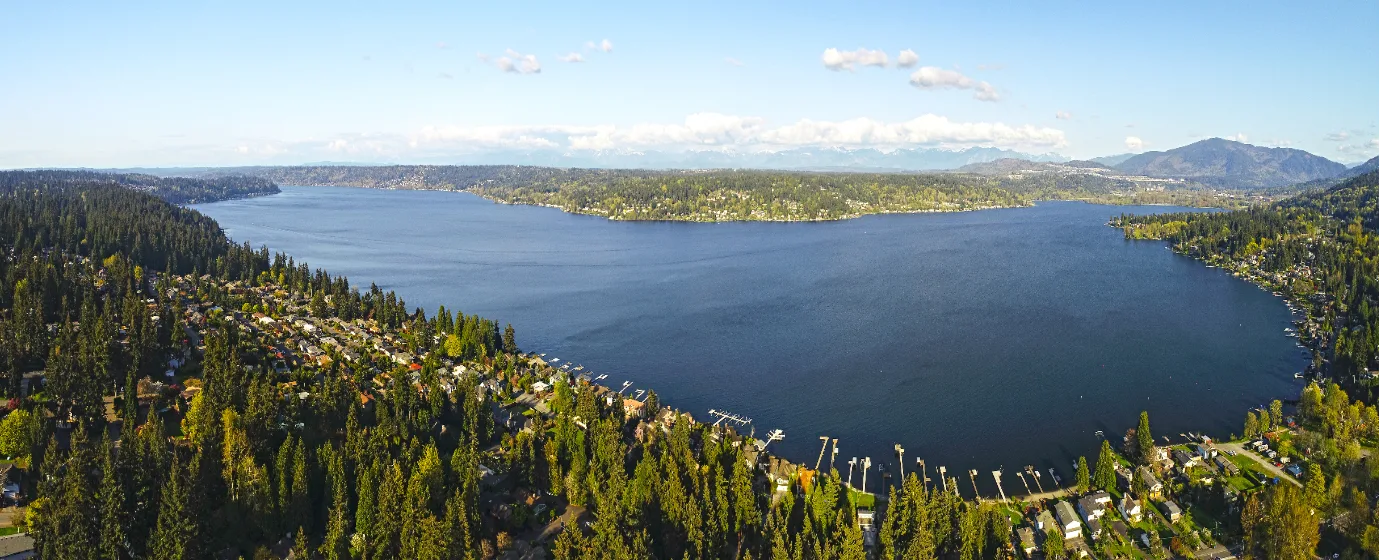
Puget Sound · Washington
There's a specific moment every first-time buyer in Sammamish experiences — usually sometime around the third open house. You walk through a 2,800-square-foot home in Pine Lake or Klahanie, it's clean, well-maintained, and sitting at $1.6 million. You do the math in your head, and the number that comes back stops you cold. Sammamish isn't cruel about this; it's just honest. The city offers genuinely exceptional schools, a 25-minute commute to Seattle, near-zero violent crime, and neighborhoods that hold their value through market cycles. But it demands real financial preparation from anyone who wants to own here — and especially from someone buying their first home.
The median home price in Sammamish sits at $1,600,000, a figure that makes it one of the most expensive housing markets in Washington State. What that gets you is typically a 2,800-to-3,100-square-foot single-family home in a well-maintained neighborhood, with Issaquah or Lake Washington School District attendance. The gap between renting and owning here is significant: renters commonly pay $3,000–$4,000 per month for a three-bedroom home, while owners at the median are carrying a mortgage payment well above $7,000 monthly. That math narrows considerably for buyers who can access the townhome and condo tier, where entry points start closer to $500,000–$700,000 and the financial picture starts to look more like a first-home decision than a generational wealth transfer.
This guide walks through the entire first-time buying process as it actually plays out in Sammamish — from credit score reality and income qualification to which neighborhoods offer realistic entry points and where buyers consistently make avoidable mistakes. If you've been reading generic Washington real estate advice and wondering why it doesn't quite fit what you're seeing in Sammamish, this is the guide written specifically for this market.
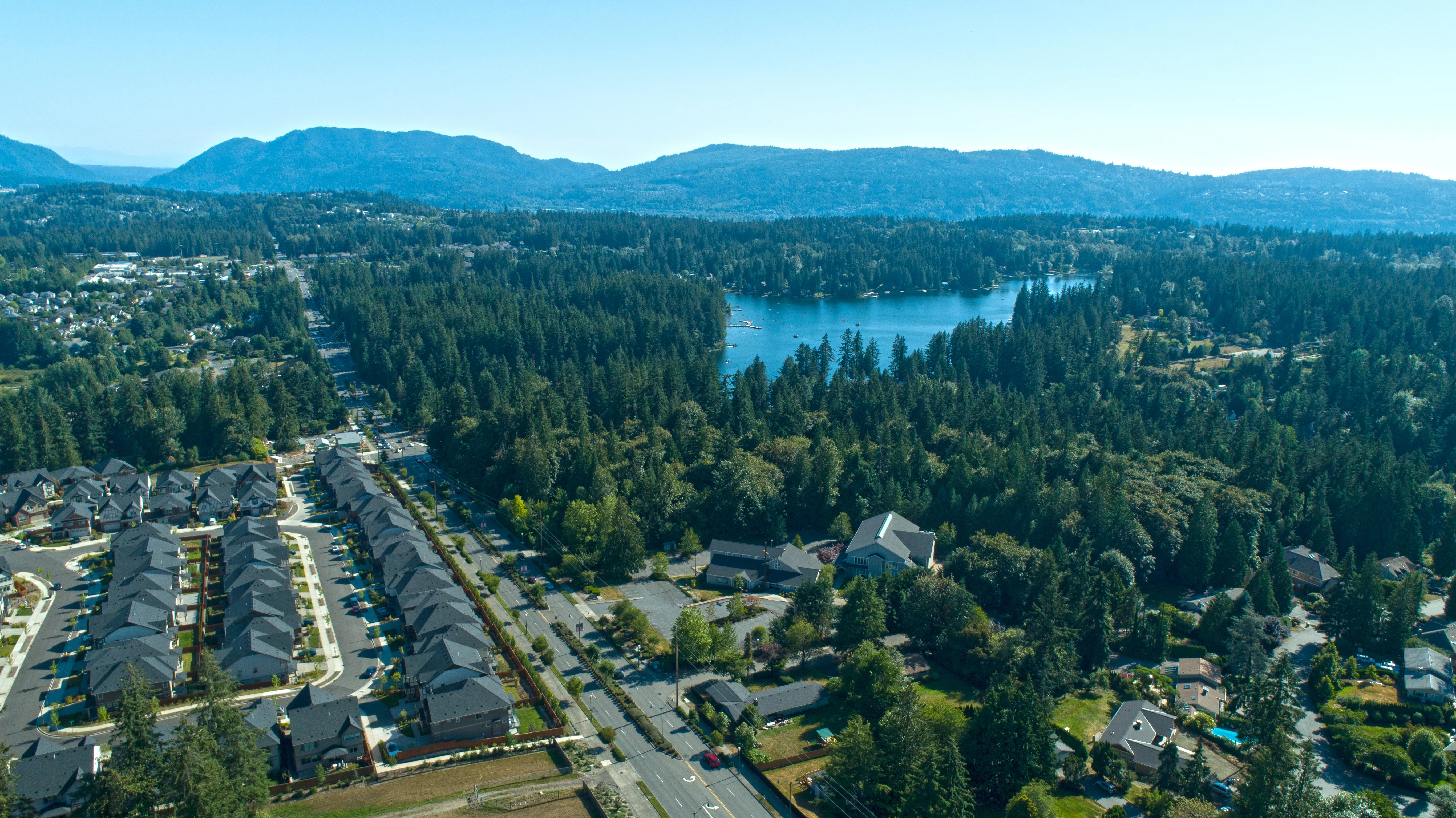
Sammamish rewards buyers who come in with a clear picture of what they're getting. The school quality alone — split between two A+ districts in Issaquah and Lake Washington — is a genuine differentiator that most nearby communities can't match at any price. The commute corridor to Microsoft in Redmond and to Seattle runs well, violent crime sits at just 1.7 per 1,000 residents, and neighborhoods like Klahanie and Trossachs offer the kind of established streetscapes that hold appeal for resale. For a first-time buyer with a strong household income and savings, Sammamish makes a compelling case.
Where it gets complicated is the entry price. There are currently only a handful of homes on the market below $400,000 in Sammamish — and most of those redirect to addresses in neighboring Issaquah or Redmond zip codes. The realistic first-time buyer entry point for a detached home starts around $700,000, and that typically means an older build, a smaller footprint, or a location that trades location convenience for price. Townhomes and condos, particularly around Providence Point, open the market at $523,000 and up. If your household income is above $150,000 and your down payment savings are substantial, Sammamish is absolutely worth pursuing. If you're right at the qualification edge, neighboring Issaquah often offers comparable school access at 20–30% lower prices.
The neighborhoods most realistic for first-time buyers at lower price tiers are Providence Point, which skews toward active adult living but has resale condos in the $500s, and pockets of Klahanie and Pine Lake where townhome-style attached homes occasionally appear in the $700,000–$900,000 range. First-time buyers coming from California or other high-income states often find that Washington's lack of a state income tax meaningfully boosts their qualifying power — sometimes by $30,000–$50,000 in annual take-home relative to what they've been living on. That one factor alone shifts the math enough to bring Sammamish into range for households that thought they were priced out.
| Price Range | What You Typically Find | Neighborhood Examples | Competition Level |
|---|---|---|---|
| Under $350K | No inventory in Sammamish proper; look to adjacent Issaquah or Redmond | N/A within city limits | N/A |
| $350K–$550K | Resale condos, select attached townhomes; limited supply (15 condos citywide) | Providence Point, Klahanie edges | Low-moderate |
| $550K–$800K | Older attached homes, select smaller townhomes, dated single-family on small lots | Pine Lake perimeter, Klahanie attached | Moderate |
| $800K–$1.2M | Older single-family homes (1990s builds), smaller square footage, entry neighborhoods | Trossachs, Beaver Lake, Timberline | Moderate-competitive |
| $1.2M+ | Modern single-family, 3–4 bedrooms, updated kitchens, primary neighborhood tier | Sahalee, Aldarra, Klahanie, Inglewood | Competitive |
The honest first-time buyer entry point in Sammamish — for someone purchasing a detached single-family home — starts at approximately $800,000 for older construction in neighborhoods like Trossachs or Beaver Lake. At that tier you're looking at 1990s builds, typically 1,800–2,400 square feet, with original or partially updated interiors. It's real homeownership in one of the best school districts in Washington, but it requires a down payment of $160,000–$200,000 and a household income comfortably above $200,000 to carry the payment without strain.
The best value entry for buyers who want to maximize school district access with the least financial stretch is the attached townhome and condo segment in the $550,000–$800,000 range. These properties carry lower price points, often come with lower maintenance responsibility, and frequently sit within the same school attendance zones as their seven-figure neighbors. The trade-off is limited inventory — Sammamish doesn't have the dense townhome stock you'd find in Bellevue or Redmond — so buyers in this tier need patience and quick response times when something comes on the market.
| Step | What Happens | Typical Timeline | What First-Timers Get Wrong |
|---|---|---|---|
| Get finances in order | Review credit, calculate savings, clarify debt | 1–3 months before buying | Underestimating how much cash is needed beyond down payment |
| Pre-approval | Lender pulls credit, verifies income and assets | 2–5 business days | Shopping at qualification ceiling, not comfort budget |
| Find an agent | Interview agents with specific Sammamish experience | 1–2 weeks | Choosing based on personality alone, not neighborhood knowledge |
| Active search | Tour homes, evaluate neighborhoods, track pricing | 2–8 weeks | Comparing listed price to value instead of recent closed comps |
| Making offers | Craft competitive offer with agent guidance | Days after finding right home | Underestimating how fast sellers expect responses |
| Under contract | Negotiate terms, deposit earnest money | 1–3 days after offer acceptance | Depositing too little earnest money for the price tier |
| Inspection | Hire inspector, review findings, negotiate credits | 5–10 days | Waiving inspection entirely in competitive situations |
| Appraisal | Lender orders appraisal to confirm value | 1–2 weeks | Not understanding gap coverage if appraisal comes in low |
| Final walkthrough | Verify home condition before closing | Day before or day of closing | Skipping it because "nothing will have changed" |
| Closing | Sign documents, wire funds, receive keys | 21–30 days from contract | Not having wire instructions verified against fraud |
In Sammamish's current market, offers typically move quickly — homes have been going to pending in roughly seven days on average, which means a Friday listing can be under contract by Tuesday. Earnest money in King County for a $1 million+ home typically runs 1–3% of purchase price, and sellers notice low earnest deposits the same way they notice low offer prices. First-time buyers sometimes open with the minimum out of caution, which communicates financial uncertainty rather than seriousness. Match what the market expects.
The inspection question is genuinely complicated here. In softer markets, buyers include standard inspection contingencies without second thought. In Sammamish, where desirable homes at the $900K–$1.2M tier can still attract multiple offers, some buyers choose a pre-inspection before submitting an offer to stay competitive while keeping their due diligence. Waiving inspection entirely on a 1990s-era home carries real risk — particularly for plumbing, roofing, and electrical systems in older builds. Talk to your agent specifically about what the inspection norm looks like for the exact neighborhood and price tier you're targeting.
Looking to buy in Estimate your payment.
Enter your numbers to see an estimated monthly mortgage payment.
Estimate only. Excludes HOA fees and mortgage insurance.
Most lenders will approve a conventional loan with a 620 credit score, but 620 isn't where you want to be in this market. The difference between a 650 and a 740 score on a $500,000 loan can run $150–$200 per month in interest — over a 30-year term, that's real money. FHA loans accept scores down to 580 with a 3.5% down payment, but they come with mortgage insurance that sticks for the life of the loan on most FHA structures. If your score is below 680, spending three to six months improving it before applying almost always pays for itself.
For income qualification, lenders typically use the 28% front-end debt-to-income ratio as a starting guideline — meaning your total housing payment (principal, interest, taxes, and insurance) shouldn't exceed 28% of your gross monthly income. On a $400,000 purchase at current rates, you'd need roughly $70,000–$80,000 in annual gross income to qualify comfortably. At $500,000, that threshold rises to approximately $90,000–$100,000. At $600,000, you're looking at $110,000–$120,000 in qualifying household income. These figures assume conventional financing and a solid credit profile — your actual number will shift based on your existing debts.
DTI — debt-to-income ratio — matters more than most first-time buyers realize. It's not just your mortgage payment lenders look at; it's that payment plus every other monthly obligation: car payments, student loans, minimum credit card payments. A buyer making $180,000 a year with $1,800 in monthly debt payments qualifies for a meaningfully smaller loan than one making the same salary debt-free. Clean up revolving balances before you apply. And if you're relocating to Washington from a state with income tax, run the numbers: Washington has no state income tax, which commonly adds $500–$1,000 per month in effective take-home for California or Oregon transplants. That's real qualifying power that catches a lot of relocating buyers by surprise.
Mistake 1: Comparing list price to what homes actually close at. In Sammamish, the relationship between list price and close price moves depending on neighborhood, condition, and how long the home has been sitting. In competitive pockets like Klahanie or Sahalee, well-priced homes routinely close at or above asking. In slower segments or on homes that have sat for more than three weeks, there's often room. Buyers who anchor to list price — either expecting to get a discount on a hot home or expecting a seller to be grateful on a stale one — frequently misjudge both situations. Pull the last 90 days of closed comps in the specific neighborhood before forming any opinion about what a fair offer looks like.
Mistake 2: Underestimating the true cost to close. On a $900,000 purchase with 10% down, the down payment is $90,000 — but closing costs typically add another $18,000–$25,000 for title, escrow, lender fees, and prepaid items. First-time buyers focused on the down payment target often arrive at closing short, or they drain reserves to get there and have nothing left for the inevitable repairs and move-in costs. Budget for 2–3% of the purchase price in closing costs on top of your down payment, not instead of it.
Mistake 3: Buying at the top of their qualification instead of the top of their comfort. Lenders tell you what you're approved for, not what you can comfortably live with. In Sammamish, where a $1.1 million townhome carries a $6,500–$7,000 monthly payment at current rates, the difference between a home you can technically afford and one you can afford without lifestyle strain is significant. Many first-time buyers get caught up in the Sammamish price tier — wanting to be in a specific school zone or neighborhood — and stretch to a number that works on paper but creates real stress on month three when the property tax bill arrives alongside HOA dues and a water heater replacement.
Mistake 4: Not understanding how school district boundaries affect resale. Sammamish sits across two of the best-rated school districts in Washington — Issaquah and Lake Washington. The district line runs through the city, and which side of it your home falls on matters to resale buyers, particularly families with children. Buyers who don't verify the specific school assignments for a given address — not just the general district — sometimes purchase in a zone that complicates future sale. This is especially relevant in the Trossachs and Timberline areas, where boundary lines can be street-by-street.
Mistake 5: Waiting for prices to drop in a supply-constrained market. Sammamish is entering 2026 with about five months of housing supply — softening from its peak, but still a market shaped by genuinely limited inventory relative to buyer demand. First-time buyers who waited through 2022–2025 for a meaningful correction are now facing prices that have moderated from their peak but remain near $1.6 million at the median. Timing the market in a city where available inventory is measured in the dozens, not hundreds, is a low-probability strategy. If the monthly payment works and the home fits your life, the attempt to thread the market window typically costs more in missed opportunity than it saves.
For first-time buyers working within realistic budgets below the Sammamish median, a handful of neighborhoods offer the best combination of entry price, school access, and resale fundamentals.
Klahanie is the most accessible neighborhood for buyers entering the Sammamish market below $1 million. The neighborhood includes a mix of single-family homes and attached townhomes, with some attached units appearing in the $700,000–$850,000 range. It's a planned community with shared amenities — pool, clubhouse, tennis courts — which adds HOA fees but also maintains property values. Klahanie sits within the Issaquah School District and offers strong commute access to both the SR-900 corridor and the 520 bridge route to Seattle.
Trossachs is one of the few established Sammamish neighborhoods where older single-family homes occasionally list in the $850,000–$1.1 million range — the most realistic detached entry point in the city. Homes here tend to be 1990s construction, typically 1,800–2,400 square feet, and have appreciated consistently. The neighborhood feeds into the Issaquah School District with solid elementary assignments. Buyers willing to accept an older kitchen or original bathrooms in exchange for getting into a detached Sammamish home find Trossachs worth careful attention.
Pine Lake sits on the eastern edge of the Sammamish Plateau near Pine Lake Park and offers a residential feel with slightly more price variability than the newer west-side neighborhoods. Entry-level finds here tend to be older construction on smaller lots, typically in the $900,000–$1.1 million range. The draw is the access to natural features — Pine Lake Park, the East Lake Sammamish Trail — combined with school district access that serves buyers prioritizing outdoor lifestyle alongside educational quality.
Providence Point is purpose-designed for buyers 55 and older, so it doesn't fit every first-time buyer profile. But for older first-time buyers — people buying later in life after renting for decades — it represents the most accessible price tier in Sammamish proper, with resale condos starting around $523,000. It's a gated community with significant amenities, and the association structure keeps maintenance manageable for buyers entering homeownership for the first time.
Local Expert Takeaway: The single most common mistake first-time buyers make in Sammamish is confusing what they're approved for with what they should spend. The qualification ceiling at this income level often runs $200,000–$300,000 higher than what the payment actually feels comfortable carrying once taxes, insurance, and HOA dues land. Run the full monthly number — not just the mortgage — before you set your search ceiling. And if you're torn between Trossachs and a stretch into Klahanie, remember that every dollar you don't spend on purchase price is a dollar that can cover the inspection, the move, and the furnace that will inevitably need attention in year two.
✅ Sammamish offers genuinely exceptional schools, low crime, and a 25-minute Seattle commute — but entry-level buyers need a minimum of $700,000 in purchasing power and a household income above $150,000 to compete realistically in this market.
⚠️ Waiting for a major price correction in Sammamish has historically cost buyers more than it's saved — the city's supply constraints and employer-driven demand mean inventory stays tight even when prices moderate.
📍 The most realistic entry neighborhoods for first-time buyers are Klahanie (attached homes in the $700K–$900K range), Trossachs (older single-family homes from $850K), and Pine Lake (1990s builds around $900K–$1.1M).
Can I buy a home in Sammamish as a first-time buyer?
Yes — but you need to go in with eyes open about what the market requires. A household income above $150,000, solid credit (680+), and meaningful down payment savings are the realistic baseline. Townhomes and older single-family homes in Klahanie and Trossachs represent the most accessible entry points for buyers who don't yet have the reserves to compete at the full Sammamish median.
How much do I need to buy my first home in Sammamish?
For a detached home starting around $850,000, plan for a minimum 10% down payment ($85,000) plus $17,000–$25,000 in closing costs — so $100,000–$110,000 cash to close as a working minimum. Going in with 20% down ($170,000) avoids private mortgage insurance and strengthens your offer in competitive situations. At the townhome tier around $650,000, a 10% down payment brings your cash requirement closer to $80,000–$90,000 total.
What credit score do I need to buy a house in Washington state?
Conventional loans require a minimum 620 credit score, and FHA loans accept down to 580 with 3.5% down. In practice, buyers with scores below 680 should expect meaningfully higher interest rates that add real cost over the life of the loan. In a market like Sammamish where purchase prices are high and every basis point matters, taking three to six months to push your score from 650 to 720 before applying typically saves more than the time costs.
Explore the full Sammamish series: The Ultimate Sammamish Relocation Guide · Is Sammamish Safe? · Cost of Living in Sammamish · Best Neighborhoods in Sammamish · Sammamish Schools & Family Life · Sammamish Youth Sports · Sammamish Parks & Recreation · Retiring in Sammamish · 1031 Tax-Deferred Exchange in Sammamish · Sammamish First-Time Homebuyers Guide · Moving to Sammamish from California
Tell us what you need help with and we'll connect you with local resources.

About the Author
Todd Davidson is the founder of Living in Oregon and Living in Washington, where he publishes in-depth city guides, neighborhood resources, and local market insights covering more than 180 communities across the Pacific Northwest. While his background is in home financing and real estate, he created these digital platforms to help families research and compare regions before making a move.