
Puget Sound · Washington
People relocating from California often assume anything north of Seattle's city limits will be dramatically cheaper than the city itself. Shoreline corrects that assumption quickly. With a median sold price of $770,000, this is not a discount suburb — it's a near-Seattle market with near-Seattle pricing, and buyers who arrive expecting a 20% haircut off Seattle rates tend to leave confused.
What shapes the cost picture here is proximity. Shoreline sits directly on Seattle's northern border, close enough that commuters reach downtown in roughly 22 minutes on a good day. The Link light rail extension into Shoreline has accelerated demand, and the neighborhoods closest to those stations have felt the pressure most. The result is a city where affordability is relative — cheaper than Queen Anne or Capitol Hill, yes, but not cheap in any absolute sense.
This guide walks through what it actually costs to live in Shoreline in 2026: what buyers and renters encounter at different price points, how property taxes and utilities stack up, how the city compares to its neighbors, and what a realistic monthly budget looks like for a household at the median income.
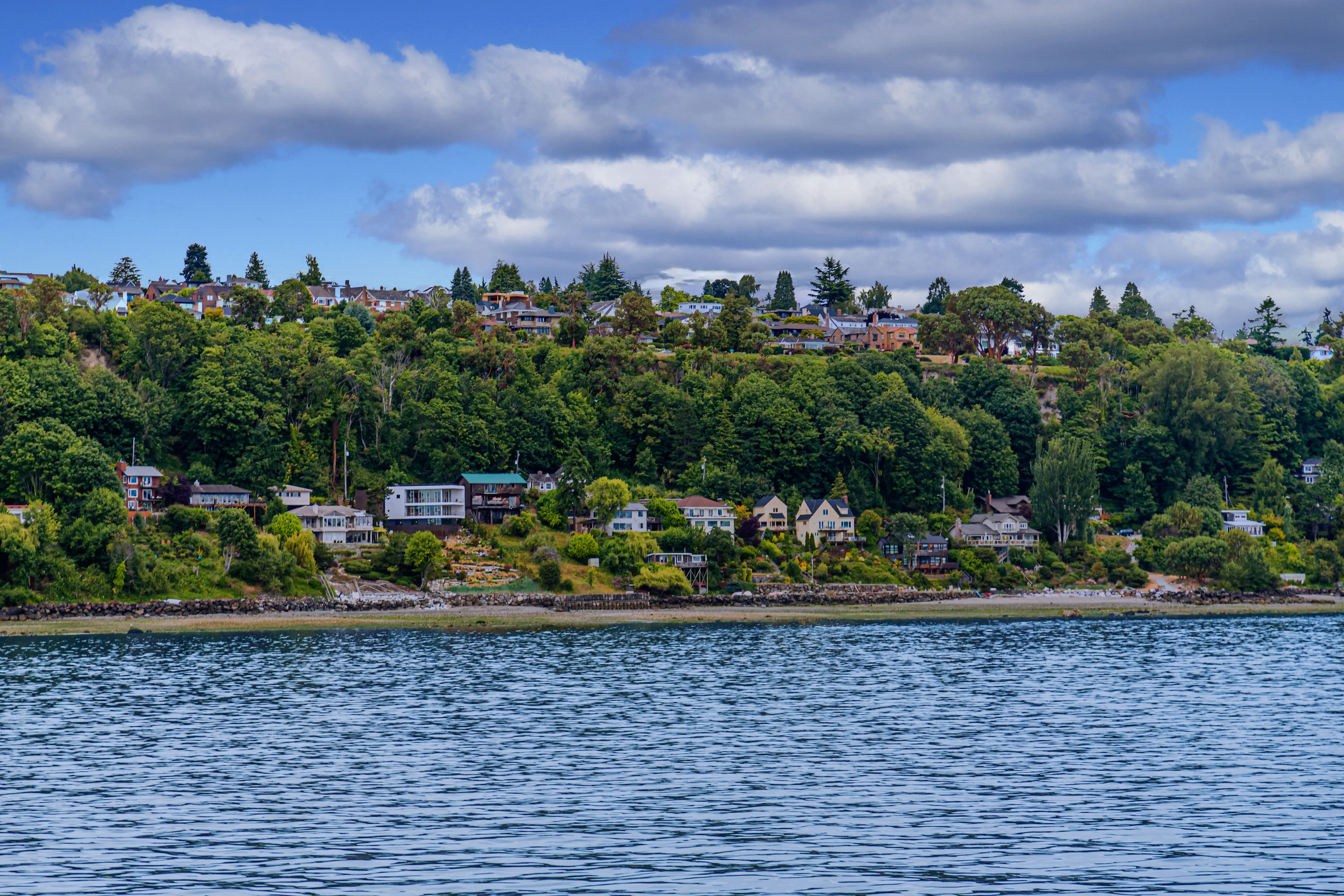
The median sold price in Shoreline currently sits at $770,000, with Zillow's home value index running slightly higher at around $776,000 — the two figures close enough to treat them as the same market reality. That number buys you a lot of house by Seattle standards: typically a three-bedroom, two-bath home built in the 1950s through 1980s, often on a modest lot with a one-car garage and some renovation potential. Buyers expecting move-in-ready finishes at the median will find fewer options than they'd like; much of the existing stock reflects the era when Shoreline was first built out, and updated homes command a meaningful premium.
Market pace has eased compared to the frenzied years of 2021 and 2022, but Shoreline is not a slow market. Homes have been moving in roughly seven days on average as of spring 2026, and bidding wars — while less common than before — still surface on well-priced homes in desirable pockets. Year-over-year prices are down modestly, around 3%, which has given buyers slightly more negotiating room without fundamentally changing the competitive landscape. Homes in the $650,000–$750,000 range tend to generate the most activity, particularly from buyers arriving from Seattle proper.
The spread between Shoreline's most affordable and most exclusive neighborhoods is wider than most buyers realize. Ballinger offers single-family homes closer to $600,000, while Richmond Beach, Innis Arden, and The Highlands operate in an entirely different universe — from $1 million to well north of $3 million. Understanding which part of Shoreline you're shopping in matters more than any citywide average.
| Budget Range | What You're Likely to Find |
|---|---|
| Under $600,000 | Older 2BR condos, 1BR/2BR townhomes, entry-level fixer SFRs in Ballinger |
| $600,000–$750,000 | Mid-century SFRs in Briarcrest, North City, Ridgecrest; some updated ranchers |
| $750,000–$950,000 | Updated 3–4BR homes in Meridian Park, Parkwood, Richmond Highlands, Highland Terrace |
| $950,000–$1.5M | Larger or view-adjacent homes in Hillwood, Echo Lake waterfront, Richmond Beach |
| $1.5M+ | Innis Arden wooded estates, Richmond Beach Sound-view properties, The Highlands gated community |
King County applies an effective rate of approximately 1.10% to Shoreline properties, which translates to roughly $8,470 per year on the $770,000 median home — or about $706 per month added to your housing payment. Washington State caps property tax levy increases at 1% annually for taxing districts, which provides some predictability for long-term owners even as assessed values fluctuate. Homeowners 61 and older with household income below the county threshold may qualify for King County's senior exemption program, which can freeze assessed value and reduce or eliminate portions of the levy — a meaningful benefit for retirees on fixed incomes who bought decades ago.
Shoreline's rental market reflects the same proximity premium as its for-sale market. About a third of Shoreline households rent, and the inventory skews toward older apartment complexes, converted duplexes, and a growing supply of townhome rentals near the light rail stations. Westminster Triangle sees some of the highest rents in the city, driven by newer construction and walkability to transit. Echo Lake and Highland Terrace sit at the more accessible end of the spectrum.
| Unit Type | Average Monthly Rent |
|---|---|
| Studio | $1,200–$1,500 |
| 1 Bedroom | $1,388–$2,175 |
| 2 Bedroom | $1,800–$2,600 |
| 3 Bedroom | $2,400–$3,200 |
| Townhome (2–3BR) | $2,500–$3,400 |
The range on one-bedroom units reflects genuine neighborhood variation — Highland Terrace averages around $1,295 per month, while Hillwood-area units run closer to $2,175. Renters who prioritize transit access will find the best value in Echo Lake and Ballinger, where prices remain below the city average and bus and light rail connections are convenient. New construction rental inventory near the Shoreline-area light rail stations has added supply in recent years, which has kept rents from climbing as aggressively as in some neighboring markets.
Puget Sound Energy serves most of Shoreline for electricity, with Seattle City Light covering portions of the southern edge near the city boundary. Natural gas is also provided by PSE for homes with gas service. Monthly utility costs for a typical single-family home — electricity, gas, water, and sewer — run in the range of $180–$280 depending on home size, season, and energy efficiency. Older homes from the 1960s and 1970s, which make up a large share of Shoreline's housing stock, can run on the higher end of that range in winter without modern insulation or updated HVAC systems.
Car dependency is the honest reality for most Shoreline residents, despite meaningful transit options. The Shoreline South/148th and Shoreline North/185th Link light rail stations — part of Sound Transit's 2 Line extension — give Seattle commuters a genuine alternative to I-5, and the Interurban Trail provides a safe corridor for cyclists willing to make the trip. But for daily errands, school runs, and anything outside the immediate transit corridor, a car is effectively required. Aurora Avenue North (Highway 99) is the commercial spine of the city, and while it concentrates grocery and retail options, the land use pattern is not designed for pedestrians making casual trips.
Grocery access is solid but not exceptional. Fred Meyer anchors day-to-day shopping for much of the city, and a Costco is accessible for bulk-buying households. Aurora Avenue also has a mix of ethnic grocery options and smaller specialty stores that locals rely on. Dining out in Shoreline runs cheaper than Seattle proper — a sit-down dinner for two at a mid-range restaurant lands around $55–$80, and the city has a reasonable selection of local spots, particularly around the North City area and along Aurora. Internet service comes primarily through Comcast/Xfinity and Ziply Fiber, with fiber availability expanding in newer and denser developments.
Looking to buy in Shoreline? Estimate your payment.
Enter your numbers to see an estimated monthly mortgage payment.
Estimate only. Excludes HOA fees and mortgage insurance.
Shoreline occupies a middle ground in the regional cost landscape — more expensive than Mountlake Terrace and Lynnwood to the north, cheaper than Seattle proper, and comparable to Kenmore and Lake Forest Park depending on the neighborhood.
| City | Median Home Price (2026) | Property Tax Rate | State Income Tax | Commute to Seattle |
|---|---|---|---|---|
| Shoreline, WA | $770,000 | ~1.10% | None | ~22 min |
| Seattle, WA | $870,000–$950,000 | ~0.93% | None | 0–15 min |
| Lake Forest Park, WA | $800,000–$850,000 | ~1.05% | None | ~25 min |
| Kenmore, WA | $750,000–$800,000 | ~1.05% | None | ~35 min |
| Edmonds, WA | $720,000–$780,000 | ~0.98% | None | ~40 min |
| Mountlake Terrace, WA | $620,000–$680,000 | ~1.15% | None | ~30 min |
| Lynnwood, WA | $580,000–$650,000 | ~1.12% | None | ~35–45 min |
The clearest trade-off in this table is Mountlake Terrace and Lynnwood: buyers save $100,000–$200,000 on the purchase price but add 8–20 minutes to a Seattle commute and lose access to Shoreline's school district. For households with kids enrolled in the Shoreline School District — rated A by most metrics — that trade-off often tips back toward Shoreline. Lake Forest Park offers a similar school and commute profile to Shoreline at a comparable or slightly higher price, making it the most direct competitor for the same buyer.
This table reflects a household purchasing a home at the $770,000 median with 10% down ($77,000), financed at current rates, in a mid-range Shoreline neighborhood.
| Expense Category | Estimated Monthly Cost |
|---|---|
| Mortgage (P&I, 10% down, ~6.5%) | $4,380 |
| Property Taxes (1.10% annual rate) | $706 |
| Homeowner's Insurance | $130–$180 |
| HOA (if applicable) | $0–$400 |
| Electricity & Gas | $180–$280 |
| Water, Sewer & Garbage | $90–$130 |
| Internet | $60–$100 |
| Groceries (household of 2–3) | $700–$950 |
| Transportation (1 car + gas/insurance) | $450–$700 |
| Dining Out & Entertainment | $300–$500 |
| Healthcare (employer-supplemented) | $200–$400 |
| Estimated Monthly Total | $7,200–$8,300+ |
That total — roughly $7,200 to $8,300 per month before childcare, savings, or lifestyle spending — is why financial advisors commonly cite a household income of $150,000 or more as the practical floor for comfortably owning at the Shoreline median. The city's median household income of $112,751 means a meaningful portion of current owners either bought years ago at lower prices, carry significant equity from a prior home sale, or are dual-income households near or above that $150,000 threshold.
Washington State's most buyer-friendly feature is simple: there is no state income tax. For households moving from California, Oregon, or other income-taxing states, this single fact can offset several thousand dollars per year in total tax burden. A household earning $150,000 moving from California effectively saves $10,000–$12,000 annually in state income taxes — which meaningfully changes the calculus on what they can afford to carry in housing costs.
Washington funds its public services primarily through sales tax (the combined state and local rate in Shoreline is approximately 10.2%), property tax, and business and occupation taxes. Sales tax on everyday purchases adds up faster than many transplants expect; a $2,000 appliance purchase carries roughly $204 in sales tax. But for high-earning households, the income tax elimination more than compensates. Seniors in Washington also have access to a property tax deferral program, separate from the exemption mentioned earlier, which allows qualifying homeowners to defer annual property tax bills until the home is sold — a significant cash-flow tool for retirees who may be asset-rich but income-constrained.
Local Expert Takeaway: The buyers who struggle most in Shoreline are those who budget for the mortgage but underestimate property taxes, insurance, and the cost of maintaining mid-century homes that need updated electrical, roofing, or HVAC systems. If you're targeting the $700,000–$800,000 range, budget at least $15,000–$20,000 in deferred maintenance as part of your purchase planning — not as a surprise, but as a line item. And if commute matters, pay the extra $30,000–$50,000 to land within walking distance of the 185th Street light rail station rather than depending entirely on Aurora Avenue traffic patterns for your daily schedule.
Is Shoreline, Washington an affordable place to live?
Affordable is relative in the greater Seattle market, but Shoreline is genuinely more accessible than Seattle proper. The $770,000 median home price requires strong household income to carry comfortably, but renters can find one-bedroom units starting around $1,300 per month, and the absence of Washington State income tax meaningfully reduces total tax burden for working households.
What are property taxes like in Shoreline?
Shoreline property owners pay approximately 1.10% of assessed value annually in property taxes, which works out to roughly $8,470 per year on a $770,000 home. Washington State caps annual levy increases at 1% for most taxing districts, providing more predictability than many other states. Homeowners 61 and older may qualify for King County's senior exemption to reduce or freeze their assessed value.
How does Shoreline's cost of living compare to Seattle?
Shoreline runs meaningfully less expensive than Seattle on the purchase side — the Seattle median home is roughly $100,000–$180,000 higher depending on the neighborhood. Daily living costs like groceries, utilities, and dining are comparable between the two cities. The primary financial advantages of Shoreline over Seattle are lower home prices, slightly more space per dollar, and a school district that many families find worth the commute premium over living in-city.
Explore the full Shoreline series: Living in Shoreline · Is Shoreline Safe? · Cost of Living · Best Neighborhoods · Schools & Family Life · Youth Sports · Parks & Rec · Retiring in Shoreline
Tell us what you need help with and we'll connect you with local resources.

About the Author
Todd Davidson is the founder of Living in Oregon and Living in Washington, where he publishes in-depth city guides, neighborhood resources, and local market insights covering more than 180 communities across the Pacific Northwest. While his background is in home financing and real estate, he created these digital platforms to help families research and compare regions before making a move.