
Puget Sound · Washington
The Bay Area software engineer who finally got a yard without giving up their salary. The San Diego family who stopped dreading the July utility bill and the seasonal wildfire smoke rolling in from the hills. The Sacramento buyer who closed on a four-bedroom house with a garage and a backyard for less than their Elk Grove townhome sold for. These are the real stories behind California-to-Spanaway migration, and they share a common thread: people who ran the numbers, felt the math in their chest, and moved. Spanaway — a Pierce County community of roughly 36,000 people south of Tacoma — keeps showing up in those calculations because it offers something rare in the Pacific Northwest: genuine affordability at a price point that makes California equity feel like a superpower.
The hard part is worth naming early. Spanaway is not California, and the transplants who struggle most are the ones who expected something closer to what they left. The gray season is real — 141 sunny days a year versus the 266 you got in San Diego. The food scene is thinner. The pace is slower in ways that feel peaceful at first and occasionally frustrating later. The cultural density of a Los Angeles or San Francisco neighborhood doesn't exist here, and it won't arrive soon. A buyer leaving Walnut Creek or Irvine for Spanaway is making a genuine trade, not just a lateral move with a bigger garage.
This guide is built for the California buyer who has already done the basic math and wants the full picture. You'll find a side-by-side cost comparison by California region, a breakdown of what your home equity actually buys here, the honest tax reality (it's better than you think), the weather truth (it's grayer than you hope), and an interactive tool to compare your specific California city directly against Spanaway.
| Spanaway, WA | Bay Area | Southern CA | Sacramento Metro | Central Valley | |
|---|---|---|---|---|---|
| Median Home Price (approx. 2026) | $485,000 | $1,300,000+ | $927,000–$954,000 | ~$550,000 | ~$430,000–$520,000 |
| Property Tax Rate (effective) | ~1.14% | ~1.1–1.2% (on purchase price) | ~1.1–1.2% (on purchase price) | ~1.1–1.2% (on purchase price) | ~1.1–1.2% (on purchase price) |
| State Income Tax | None | Up to 13.3% | Up to 13.3% | Up to 13.3% | Up to 13.3% |
| State Sales Tax | ~10.2% combined | ~8.625–10.75% | ~7.25–10.5% | ~8.75% | ~7.25–8.75% |
| Avg Utilities (monthly est.) | ~$175–$220 | ~$250–$350 | ~$280–$380 | ~$230–$310 | ~$220–$290 |
| Avg 1BR Rent (monthly est.) | ~$1,400–$1,700 | ~$2,800–$3,500 | ~$2,200–$3,000 | ~$1,600–$2,100 | ~$1,100–$1,500 |
A Bay Area buyer selling a $1.4 million home and purchasing in Spanaway at $485,000 is likely eliminating their mortgage entirely — or carrying a very small one at a dramatically reduced payment. Even a buyer leaving a $900,000 San Jose condo walks into Spanaway's median with six-figure cash remaining after a clean purchase. The savings aren't just on the sticker price; Washington has no state income tax. For a California household earning $150,000 annually, that single change puts an estimated $10,000 to $15,000 back into take-home pay every year — money that doesn't require a spreadsheet to feel.
The utility picture matters more than most buyers anticipate when comparing regions. Southern California's air conditioning load, tiered electricity rates, and year-round energy demand push monthly utility costs well above Spanaway's more moderate Pacific Northwest bills. Summers here are mild enough that many Spanaway households run AC infrequently, and the rainy season keeps landscaping costs low. For a family that was spending $300 a month on utilities in San Diego, the adjustment is noticeable within the first billing cycle.
Washington's no-income-tax advantage is the headline — and it's genuine. California runs the highest marginal income tax rate in the nation at 13.3%, and it kicks in at income levels that many professional households hit without feeling wealthy. A buyer earning $120,000 in California faces an effective state tax rate around 6–7%, meaning roughly $7,200–$8,400 per year sent to Sacramento that Washington simply doesn't collect. At $150,000, that figure climbs to approximately $10,000–$12,000 annually. At $200,000, the California state tax bill can approach $18,000–$20,000 per year — money that, in Washington, stays in your account.
| Tax Item | California | Washington | Net Impact for Transplant |
|---|---|---|---|
| State Income Tax | Up to 13.3% | Zero | $7,000–$20,000+/yr savings (income-dependent) |
| Property Tax (effective) | ~1.1–1.2% on purchase price | ~1.14% in Pierce County | Roughly neutral |
| Sales Tax | 7.25–10.75% combined | 6.5% + local (~10.2% in Spanaway area) | Slight CA advantage in some counties |
| Capital Gains Tax | Up to 13.3% (ordinary rates) | 7% on long-term gains over $262,000/yr | CA significantly higher for most sellers |
| Senior Property Tax Exemption | Limited, income-based | Yes — available at 61+, income-based | WA advantage for retirees |
Washington does impose a 7% capital gains tax, but only on long-term capital gains exceeding $262,000 in a single year — a threshold that doesn't affect most buyers' annual earned income. For California transplants selling investment property or a highly appreciated asset, this is worth modeling, but for W-2 earners and remote workers, it's largely irrelevant. The sales tax rate is meaningfully higher in Washington than in parts of California, which partially offsets the income tax advantage — but on most household incomes, the net math still favors Washington by a wide margin. The buyer earning $150,000 who saves $12,000 in income tax and spends an extra $2,000 in sales tax is still $10,000 ahead before they open their first utility bill.
Property taxes deserve a clear-eyed comparison. California's Proposition 13 caps reassessment at 1% of purchase price plus limited annual increases for long-term owners — but when you buy, you're assessed at current market value regardless. A buyer purchasing at San Jose's $1.5 million median pays roughly $15,000–$18,000 per year in property taxes. The same buyer purchasing in Spanaway at $485,000 pays approximately $5,529 annually at the 1.14% rate — a difference of $9,000 to $12,000 per year that compounds into real money over a decade of ownership.
A buyer leaving Palo Alto, Cupertino, or Walnut Creek with $1.4 million in net equity from a home sale is entering Spanaway's market at a level that most locals have never encountered. At $485,000 — the median — you're an all-cash buyer with $900,000 to spare. The top end of Spanaway's market runs $700,000 to $800,000 for premium properties near Spanaway Lake or larger lots in the Ridgeview Estates and Spiritwood areas. A Bay Area buyer at full equity can purchase the best available property in Spanaway outright, keep $600,000+ invested or in reserve, and eliminate a mortgage payment entirely.
That liquidity fundamentally changes monthly cash flow. A buyer who was carrying a $6,500 mortgage payment in the South Bay and converts to a zero-mortgage situation in Spanaway has effectively given themselves a $78,000 annual raise in cash flow terms — before accounting for the income tax savings. The neighborhoods worth looking at in this equity bracket are the Spanaway Lake corridor for waterfront access, and the quieter residential pockets of North Spanaway and Elk Plain for larger lots and newer construction without premium pricing.
A buyer selling in Irvine, La Jolla, or the South Bay and clearing $900,000 in equity is in an exceptionally strong position in Spanaway's market. That figure buys an all-cash purchase at the median with $400,000+ remaining — or a luxury-tier Spanaway home in the $650,000–$750,000 range with minimal financing. At that price point, buyers are accessing newer construction, larger square footage, and neighborhoods like Clover Creek and the eastern Spanaway developments that attract households relocating from high-cost metros.
Southern California buyers from more affordable pockets — the Inland Empire, parts of the San Fernando Valley — typically exit with $700,000 to $850,000 in equity. That still puts them at or above the Spanaway median with significant cash to spare. For a buyer leaving Riverside or San Bernardino where the median is around $575,000, the relative financial gain is narrower but the no-income-tax advantage starts doing heavy lifting immediately on monthly cash flow.
This buyer profile has the most nuanced math but often the most emotional resonance — because they're not escaping a $1.5 million zip code. They're escaping a Sacramento suburb or Temecula neighborhood where they paid $550,000 and their equity is $450,000. That equity still buys a Spanaway home outright or leaves them with a small loan on a house meaningfully better than what they'd afford at home.
The financial case here rests heavily on the income tax savings. A Sacramento household earning $130,000 is paying roughly $8,000–$10,000 annually to California in state income tax. Washington collects zero. Over five years, that's $40,000–$50,000 in compounding savings — enough to fully offset any transaction costs from the move and then some. In Spanaway specifically, that $450,000 equity targets the Nancy Estates and Sunnydale areas, where the inventory tends toward well-maintained single-family homes in the $420,000–$520,000 range.
A buyer leaving Fresno, Stockton, or Bakersfield with $350,000 in equity has a tighter relative advantage — but it's real. Central Valley home prices have risen sharply, and $350,000 in equity from a $480,000 Fresno sale translates into a solid down payment in Spanaway rather than an all-cash scenario. At 30–40% down on a $485,000 purchase, the monthly payment is substantially lower than any comparable California coastal market, and the income tax savings still apply fully.
The neighborhoods most accessible at this equity level are East Spanaway and the Pacific Avenue corridor, where the price-per-square-foot runs below the city median and buyer competition is somewhat lighter. These areas aren't as polished as the Spanaway Lake environs, but they offer real square footage and functional family homes for buyers who are working with equity in the $300,000–$400,000 range rather than $1 million-plus.
Looking to buy in Estimate your payment.
Enter your numbers to see an estimated monthly mortgage payment.
Estimate only. Excludes HOA fees and mortgage insurance.
Here's what a good friend who moved from San Diego three years ago would actually tell you: the first October hits differently than you expect, and the first February can feel relentless. Spanaway averages 141 sunny days a year — roughly half what San Diego gets. January brings highs around 46°F and lows near 36°F, with about a dozen rainy days that month and only a few hours of pale daylight between them. The gray isn't dramatic in the way a blizzard is dramatic; it's just persistent. Buyers who've lived in Portland or Seattle already understand this rhythm. Buyers coming from Los Angeles, where the sun is practically structural, need to prepare themselves genuinely.
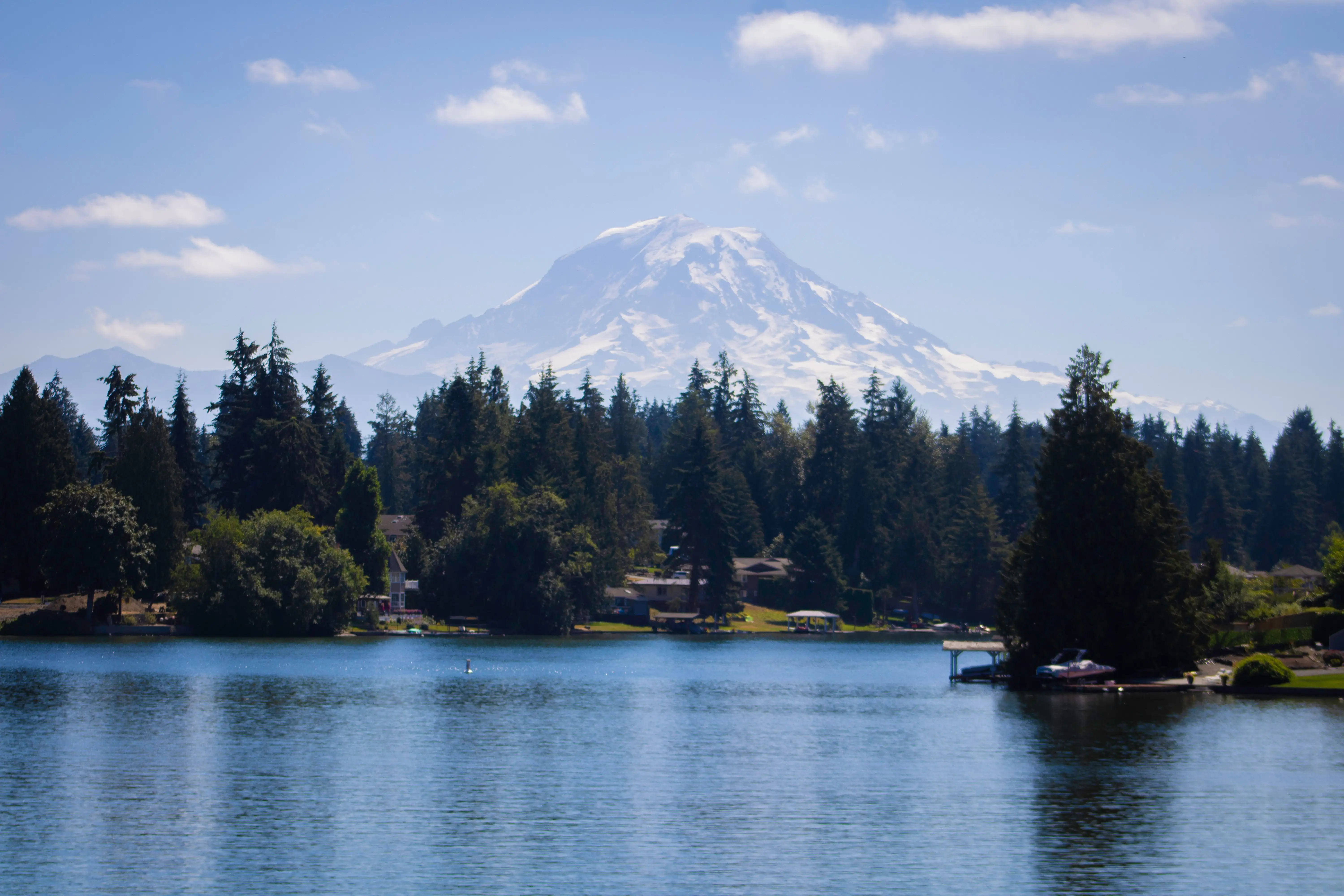
What California transplants consistently report loving after their first full year is the summer. Spanaway's July and August run warm, dry, and long — highs in the mid-70s, evenings that hold light until after 9 p.m., and a Pacific Northwest summer energy that feels earned after the gray months. Spanaway Lake comes alive from June through September with boating, swimming, and the kind of low-traffic outdoor access that would require a three-hour drive from LA. The housing space — actual yards, rooms with purpose, garages that fit cars — stops feeling novel and starts feeling necessary. The traffic, compared to the 405 or Highway 50 at rush hour, remains a genuine daily quality-of-life upgrade.
What they miss is specific: year-round beach access, the density of ethnic food options in a place like the San Gabriel Valley or South San Jose, the kinetic social energy of a coastal California city on a Saturday night. Spanaway is a suburban community in the Pacific Northwest, not a lifestyle destination. The farmers markets, the trails at Bresemann Forest, the classic recreation setup at Sprinker Recreation Center — these are genuinely good. They're just not Balboa Park or the Embarcadero, and pretending otherwise wouldn't serve anyone.
If you want to see how Spanaway compares directly to the city you're leaving, use the tool below — it covers the 120 largest California cities with current housing and tax data.
Home prices: Redfin median sale data, Q1–Q2 2026. Select your city to compare.
Ready to talk through what your specific California equity could do in Spanaway? Todd can model your exact scenario in a single call.
Mistake 1: Treating Spanaway as one uniform market. The gap between Spanaway Lake's waterfront-adjacent streets and the Pacific Avenue commercial corridor is not subtle. Pacific Avenue runs through a stretch of auto shops, fast food, and older commercial strips that doesn't reflect the residential neighborhoods even a mile away. A buyer who drives Pacific Avenue and decides Spanaway isn't for them has made their decision based on the wrong data. The Clover Creek neighborhoods, the Nancy Estates area, and the Spiritwood development feel nothing like the corridor — and the price points aren't dramatically different.
Mistake 2: Underestimating winter driving. California driving instincts — fast, confident, light on following distance — don't translate cleanly to Spanaway in December and January. The roads don't see serious snow most years (Spanaway averages only about 5 inches annually), but they do get frost, occasional ice, and steady rain that makes surface streets more demanding than California buyers anticipate. The commute on SR-7 toward Tacoma or the route up to JBLM during winter rain is measurably different from dry-pavement California highway driving. Budget more time and invest in better tires.
Mistake 3: Assuming the no-income-tax advantage is small. The most common reaction from California transplants after their first full Washington tax year is surprise at how large the number actually is. A household that was paying $11,000 per year in California state income tax and suddenly pays zero feels that difference not as an abstraction but as an extra month of mortgage savings, a full vacation funded, or a year of maxed retirement contributions. Buyers who didn't model this carefully before moving often say it changed their financial picture more than the home price difference did.
Mistake 4: Not researching school zones before choosing a neighborhood. Bethel School District serves Spanaway, and the district carries a C+ rating — a fact that matters differently depending on whether you have school-age children and what your priorities are. Within Spanaway, school assignment boundaries shift based on your exact address, and the quality difference between individual schools isn't uniform across the district. Buyers with children who prioritize school performance should research specific school assignments by address before falling in love with a particular neighborhood. Discovering that your preferred street falls in a different attendance zone after going under contract is an avoidable frustration.
Bay Area sellers with substantial equity are often best served by an all-cash offer strategy in Spanaway's market, where homes average about 43 days on market and cash buyers carry real negotiating leverage. At $485,000, a buyer with $1 million-plus in liquid equity faces no jumbo threshold and no rate sensitivity that meaningfully affects affordability. If the property being sold in California was an investment rather than a primary residence, a 1031 exchange into a Spanaway rental or multi-unit property is worth exploring — the Spanaway 1031 Exchange guide covers the mechanics in detail.
Southern California sellers moving into Spanaway at the median price typically don't need jumbo financing — the conforming loan limit covers most Spanaway transactions comfortably. A buyer with $400,000 to $600,000 in equity is likely looking at a conventional loan with 40–60% down, a payment well below what they were carrying in California, and strong enough financials to close competitively without waiving inspections. Sacramento and Inland Empire buyers with equity in the $350,000–$500,000 range should also investigate Washington State Housing Finance Commission's Home Advantage program, which offers down payment assistance and below-market rates for qualified buyers — income and purchase price limits apply, and Spanaway's median falls within range for many buyers in this category.
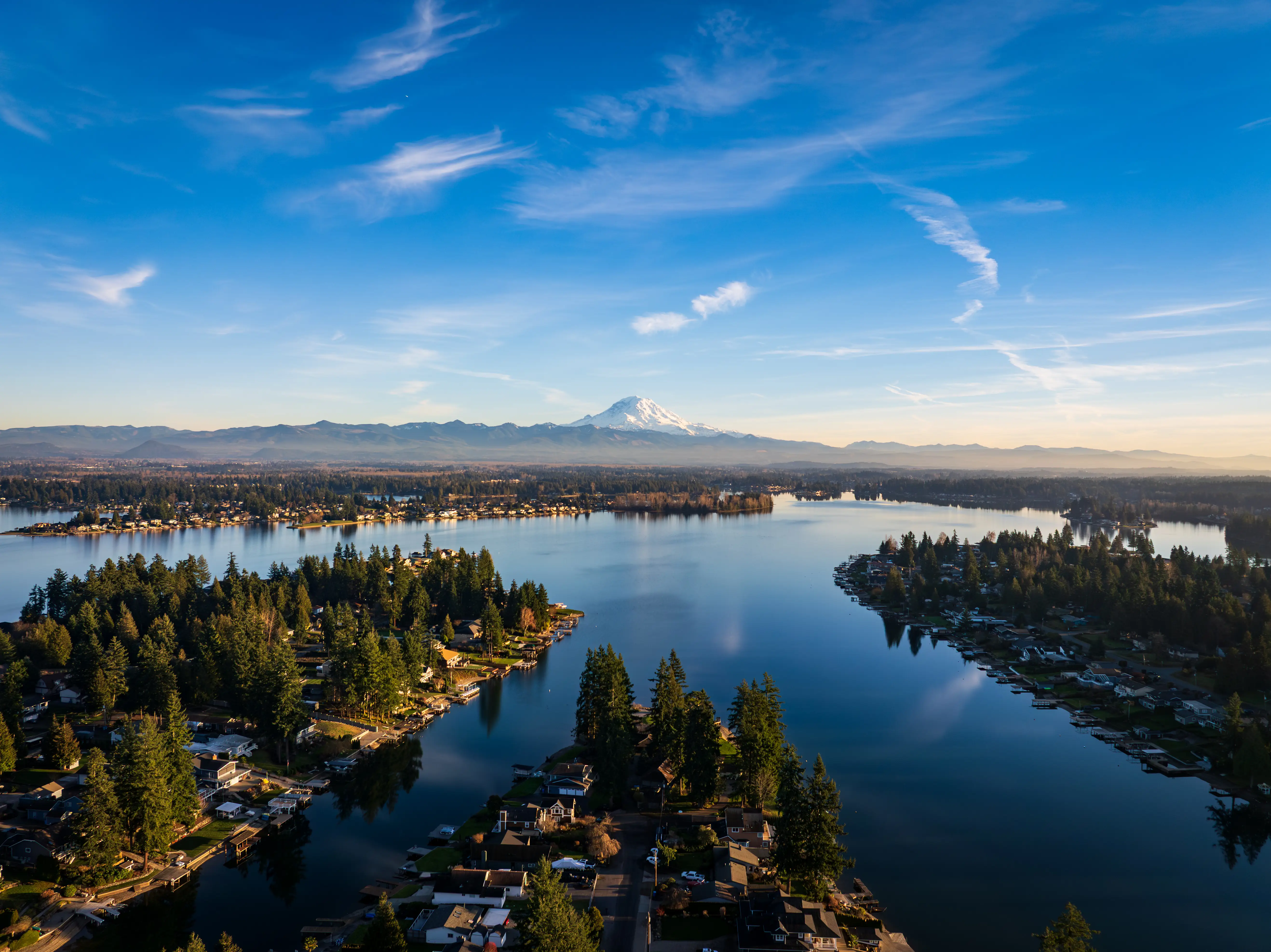
Local Expert Takeaway: The buyers who maximize their California equity in Spanaway are the ones who move fast after their California sale closes. Spanaway's market sits at "somewhat competitive" right now — homes typically receive 2 offers and sell in about 43 days — which means cash or high-equity buyers have a real window to negotiate terms that California's frenzied coastal markets never allowed. Don't park your equity in a money market account for six months while you research neighborhoods from a distance. Get into Spanaway, walk Clover Creek, drive past Spanaway Lake, talk to someone on the ground. The right house at this price point moves before most remote buyers have finished their Zillow search.
Is moving from California to Spanaway worth it?
For the right buyer, the financial case is difficult to argue against. A California household earning $150,000 annually saves an estimated $10,000–$15,000 per year in state income tax the moment they establish Washington residency — before accounting for the $400,000 to $900,000 reduction in home purchase price depending on their origin market. The trade-offs are real: grayer winters, a thinner food and culture scene, and a suburban pace. Buyers who run an honest lifestyle audit alongside the financial math consistently report the move was worth it after twelve months.
How much cheaper is housing in Spanaway vs. California?
Spanaway's median home price sits at $485,000. Against San Jose's $1.5 million median, that's more than $1 million in difference. Against Los Angeles County's $927,000 median, it's roughly $440,000 less for a comparable or larger home. Even against Sacramento's more modest $550,000 median, Spanaway comes in below — and the no-income-tax advantage makes the ongoing cost of ownership in Washington lower for most professional households even when home prices are similar.
What do I need to know about moving from California to Washington?
Washington has no state income tax on wages or salaries, a meaningfully different climate (plan for gray, not snow — Spanaway averages only about 5 inches of annual snowfall), and a real estate market where multiple competing offers are common but less frenzied than coastal California. You'll need to update your driver's license and vehicle registration within 30 days of establishing residency. California's Franchise Tax Board will pursue tax liability through the end of the year you move, so coordinate your move date with a tax professional familiar with dual-state residency transitions.
Explore the full Spanaway series: The Ultimate Spanaway Relocation Guide · Is Spanaway Safe? · Cost of Living in Spanaway · Best Neighborhoods in Spanaway · Spanaway Schools & Family Life · Spanaway Youth Sports · Spanaway Parks & Recreation · Retiring in Spanaway · 1031 Tax-Deferred Exchange in Spanaway · Spanaway First-Time Homebuyers Guide · Moving to Spanaway from California
Tell us what you need help with and we'll connect you with local resources.

About the Author
Todd Davidson is the founder of Living in Oregon and Living in Washington, where he publishes in-depth city guides, neighborhood resources, and local market insights covering more than 180 communities across the Pacific Northwest. While his background is in home financing and real estate, he created these digital platforms to help families research and compare regions before making a move.