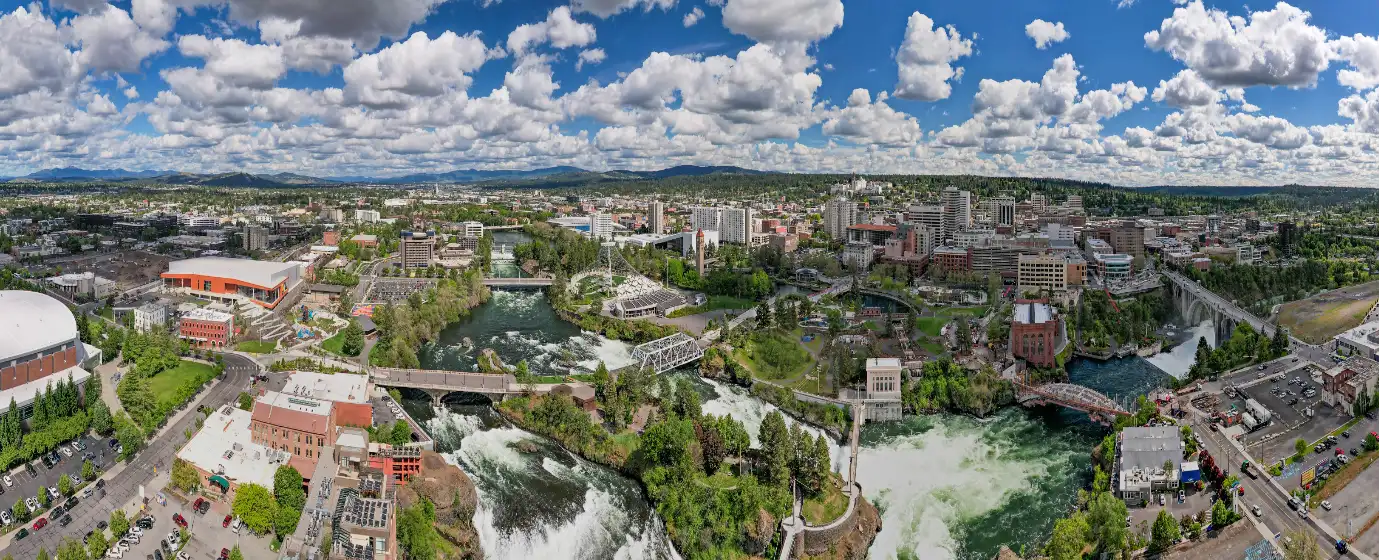
Eastern Washington · Washington
Spokane Valley isn't a city where every neighborhood tells the same story. At 110,000 residents spread across a wide eastern Washington corridor, it has enough geographic variety that two buyers with identical budgets can end up in completely different worlds depending on which part of town they land in. One buyer ends up with a half-acre lot backing up to a conservation area in Chester with mountain views and total quiet. Another ends up in a high-traffic Sprague Avenue corridor apartment where the nearest park is a parking lot away. The neighborhood you choose here matters more than in most mid-size cities — and most relocating buyers don't realize this until they've already made an offer.
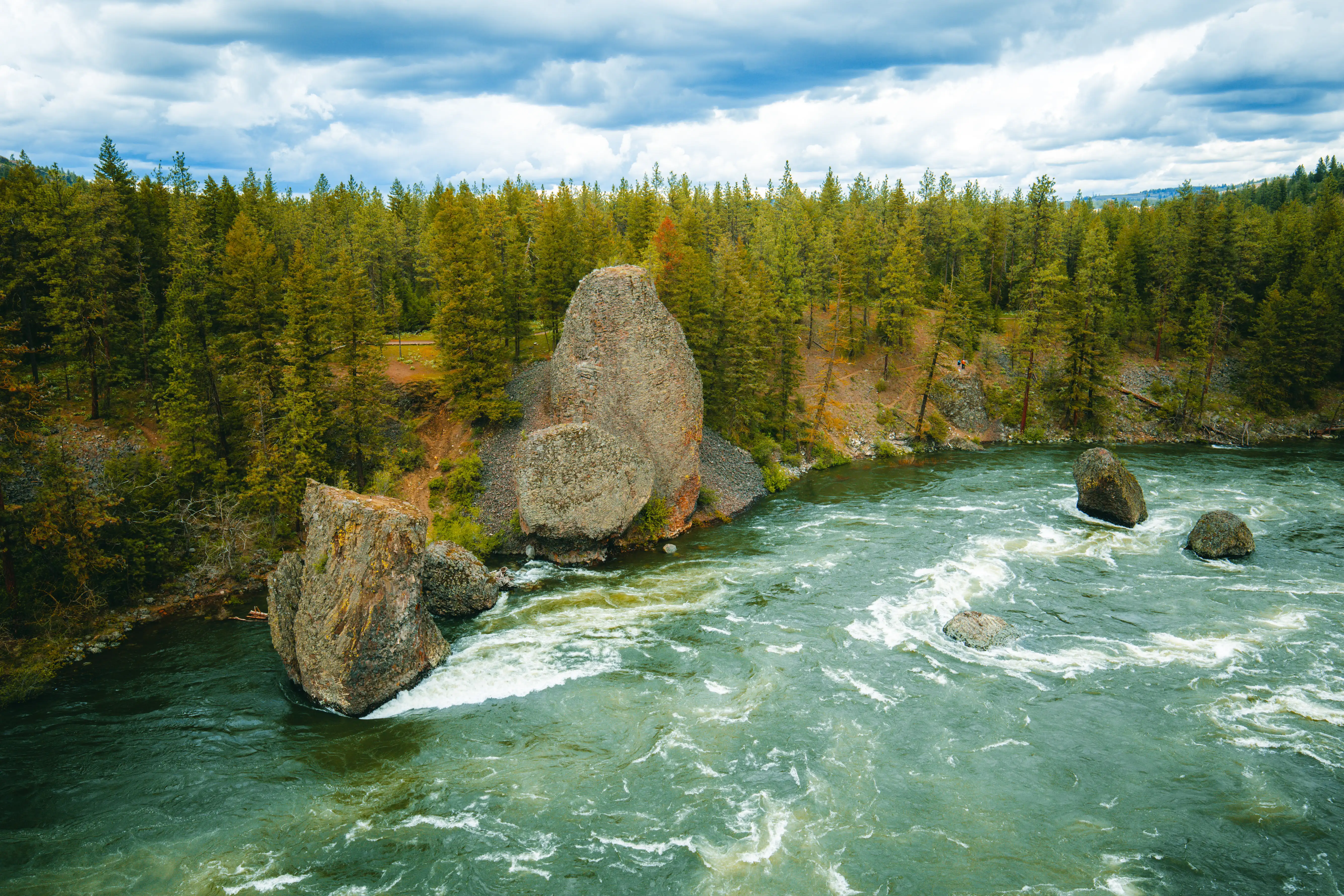
The geographic divide that shapes this decision runs roughly east to west along Interstate 90. North of the freeway, you get established residential pockets like Mirabeau and Trentwood — older stock, more affordable in spots, closer to the river and the Centennial Trail. South of the freeway, the terrain shifts toward newer subdivisions, larger lots, and the gradual transition into conservation land. The Dishman Hills Natural Area anchors the southwest; the Saltese Uplands define the southeast near Greenacres. The Sprague Avenue corridor cuts through the middle of all of it, functioning as both the city's commercial spine and, in some stretches, its most contentious real estate debate.
This guide breaks down the most significant neighborhoods across Spokane Valley — what they actually cost, who they're best suited for, and what most buyers get wrong before they start touring. Whether you're a first-time buyer stretching toward that $458,645 citywide median or a move-up buyer looking at Chester's upper end, the sections below give you the local framework to make a smarter decision.
| Neighborhood | Best For | Price Range | Vibe |
|---|---|---|---|
| Veradale | Families, newer construction | $425K–$544K | Suburban, well-amenitized |
| Greenacres | Outdoor lovers, new builds | ~$477K | Nature-adjacent, growing |
| Dishman Hills | Budget buyers, nature access | $385K–$405K | Affordable, wooded feel |
| Mirabeau | Central access, mixed stock | Citywide median range | Established, convenient |
| Trentwood | Affordability, river access | ~$472K | Quiet residential |
| Chester | Luxury, large lots | Up to $1M+ | Rural edge, conservation-adjacent |
| Opportunity | First-time buyers | $400K–$425K | Older, walkable-ish |
| Barker/Progress Road | Space, newer builds | $440K–$490K | Suburban frontier |
| South Pines | Families, school proximity | $430K–$475K | Established suburban |
| East Sprague | Renters, entry-level buyers | $320K–$375K | Urban edge, transitional |
| Buyer Type | Best Neighborhood | Why |
|---|---|---|
| First-time buyer | Opportunity or Dishman Hills | Most accessible price points in the $385K–$425K range |
| Luxury buyer | Chester | Large lots, conservation views, properties reaching above $1M |
| Walkability seeker | Veradale (Appleway Trail corridor) | 6-mile multi-use trail connects retail and restaurants on foot |
| Families with kids | Veradale or South Pines | Newer construction, Central Valley schools, park access |
| Commuters (to Spokane) | Mirabeau or Opportunity | Closest to I-90 on-ramps, 21-minute average drive to Spokane |
| Large lot buyers | Greenacres or Chester | Conservation adjacency, more land per dollar than Veradale |
| Renters | Dishman Hills or Opportunity | Among the most affordable rental zones in Spokane Valley |
Spokane Valley's citywide median sits at $458,645, but that single figure obscures more than it reveals. The entry-level band — Dishman Hills, Opportunity, and the East Sprague corridor — runs $385K to $425K and represents the most realistic starting point for first-time buyers and anyone relocating from a higher-cost market who wants to get into the city quickly. The mid-tier band, covering Veradale, South Pines, and Trentwood, runs roughly $430K to $477K and is where most move-up buyers and families land. At the top end, Chester and the larger-lot properties along the valley's rural edge push well past $1M, a tier that exists almost entirely outside the city's typical buyer pool.
Inventory conditions vary meaningfully by price band. The entry-level segment moves fastest, since affordability draws the largest pool of competing buyers — homes in Dishman Hills and Opportunity that are priced correctly and show well don't sit long. The mid-tier band, where Veradale and South Pines homes land, has a more balanced supply-demand picture, giving buyers slightly more room to negotiate inspection items or closing costs. Above $600K, inventory thins out considerably and showings slow down, which works in a buyer's favor if they're patient.
For relocating buyers, the practical takeaway is to treat Spokane Valley as several distinct micro-markets rather than one city-wide number. A buyer comparing listings purely against the $458,645 citywide median risks either overpaying in the entry-level band, where competition is real, or underestimating what it takes to compete for a well-located mid-tier home in Veradale or South Pines. Working with a local lender and agent who can speak to current activity in the specific neighborhood — not just the city average — makes a meaningful difference in how fast an offer needs to move.
Looking to buy in Spokane Valley? Estimate your payment.
Enter your numbers to see an estimated monthly mortgage payment.
Estimate only. Excludes HOA fees and mortgage insurance.
Veradale is the neighborhood that gets recommended first for good reason — it has the grocery stores (Fred Meyer and a Walmart Supercenter on Sullivan Road), the trail access (the Appleway Trail runs parallel to Sprague Avenue through the heart of this area), and proximity to the Spokane Valley Mall two miles north. Homes here lean newer, with a significant portion built after 2000, and the price range of $425K–$544K reflects that variation between older stock and recent construction. The downside is that Sullivan Road traffic can be genuinely bad during rush hour, and the commercial density along Sprague Avenue means some residential streets feel more urban-adjacent than the suburban quiet some buyers expect.
Best for: Families and dual-income households who want walkable retail access and newer construction without leaving Spokane Valley's eastern corridor.
Greenacres sits between the Spokane River and the Saltese Uplands Conservation Area, which gives it something most Spokane Valley neighborhoods can't claim: a genuine natural buffer on two sides. Subdivisions like Belle Terre, Midilome, and Painted Hills, along with the neighborhoods strung along Barker Road, give buyers a range of lot sizes and home ages. At a median around $477K, Greenacres runs slightly above the citywide figure — buyers are paying a premium for the newer builds and the outdoor access. The catch is that Greenacres still lacks the walkable retail density of Veradale, and the commute into central Spokane can stretch past the 21-minute average depending on where exactly you're coming from.
Best for: Buyers who want newer construction, outdoor recreation proximity, and a little more breathing room between neighbors.
Dishman Hills is where budget-conscious buyers find genuine value without completely sacrificing location. The 530-acre Dishman Hills Natural Area — the oldest land trust in Washington State — essentially creates a permanent green boundary that won't be developed, which has historically supported property values even as prices here remain among the most accessible in the valley. The median sold price has tracked in the $385K–$405K range, and while that's significantly below the citywide median, homes here have been appreciating — up roughly 13% year over year based on recent trailing data. Buyers should know that the housing stock skews older and more varied in condition, so due diligence on inspections matters more here than in a newer-build neighborhood.
Best for: First-time buyers or budget-conscious buyers who want nature access and are willing to trade newer finishes for a lower entry price.
Mirabeau sits squarely in the geographic center of Spokane Valley and functions as the neighborhood most aligned with the city's identity — it's where CenterPlace Regional Event Center and Mirabeau Point Park anchor the community calendar, and where the housing stock ranges from 1930s bungalows to 2020s builds in the same half-mile radius. That mix creates real price variation, and buyers need to look carefully at what they're actually getting within the Mirabeau label. The rental market here is among the pricier in Spokane Valley, which signals that the area attracts residents who want central access but haven't committed to buying — useful context for investors or buyers considering future rental potential.
Best for: Buyers who prioritize central location and access to the valley's main civic and recreational amenities.
Trentwood carries a median real estate price around $472K, which puts it slightly above Dishman Hills but still within a range that feels rational for what you get. The neighborhood runs along the northern edge of the valley, offering proximity to the Spokane River and the Centennial Trail without the commercial congestion of the Sprague corridor. It tends to attract buyers who want quiet residential streets and don't need to be adjacent to the mall or the main retail strip. The catch is that Trentwood has less retail infrastructure than Veradale or Mirabeau, meaning routine errands require a short drive rather than a short walk.
Best for: Buyers seeking a quieter residential setting with river and trail access who don't mind driving for groceries and retail.
Chester occupies the southeastern edge of Spokane Valley and represents the market's upper tier. Properties near the Iller Creek Conservation Area can push past $1 million, and the neighborhood's appeal is built on large lots, genuine privacy, and a rural character that feels distinct from the rest of the valley. If you're coming from a denser metro area and want acreage without leaving city limits, Chester delivers — but it requires accepting that the drive to central Spokane Valley amenities is longer than from anywhere else on this list. It's also the neighborhood where buyers most often underestimate how much the rural feel translates into fewer walkable options and slower emergency response times.
Best for: Buyers seeking larger properties, conservation adjacency, and genuine separation from the suburban grid — and willing to pay for all three.
Opportunity is one of Spokane Valley's older, more established residential areas, and that history shows in both the housing stock and the price point. The median in Opportunity tracks in the $400K–$425K range, making it one of the more accessible entry points in the city without pushing into the transitional East Sprague corridor. The neighborhood has some of the best proximity to I-90 on-ramps of any residential zone in the valley, which matters for buyers commuting into Spokane. Older homes mean more variable condition and potentially higher maintenance costs than a newer-build neighborhood — something buyers moving from newer suburban stock in other states often don't factor in early enough.
Best for: Commuters and first-time buyers who want established neighborhood character and quick freeway access at a below-median price.
South Pines sits along the Pines Road corridor south of I-90 and offers a blend of established suburban character and Central Valley School District access that draws families with school-age children. Homes in the area tend to fall in the $430K–$475K range, landing right around the citywide median — which means buyers get a fairly representative Spokane Valley experience here without the premium of Veradale or the discount of Dishman Hills. The area is well served by parks and has easy access to the Sprague retail corridor. The main limitation is that Pines Road itself can back up during school pickup and rush hour, and the neighborhood lacks the distinctive character of areas like Chester or Greenacres.
Best for: Families prioritizing Central Valley school access and established suburban amenities at or near the citywide median price.
Assuming the whole valley feels the same. Buyers who tour a home in Veradale and then make an offer in East Sprague without walking the block first are making one of the most common errors in this market. The stretch of Sprague Avenue east of Evergreen Road transitions quickly into commercial and light-industrial adjacent properties, and the residential character changes significantly within a few blocks. Treat each corridor independently, not as interchangeable parts of one uniform city.
Underestimating Sullivan Road and Pines Road at peak hours. Both roads are the primary north-south connectors across I-90, and both slow to a crawl between 7:30–8:30 a.m. and 4:30–6:00 p.m. Buyers who purchase in South Pines or Veradale and commute north across the freeway routinely discover that their 21-minute average commute to Spokane assumes they leave before 7:00 a.m. The Barker Road interchange can be a useful alternative for buyers in the eastern valley, but it adds distance for anyone headed to central Spokane.
Ignoring school boundary lines within Central Valley School District. The district earns a B+ rating overall, but individual school assignments vary by exact address — and those assignments can differ between homes on the same block depending on where boundaries fall. Buyers with school-age children who fall in love with a home near Trentwood or the northern valley edge should verify their elementary school assignment before making an offer, not after.
Overlooking the maintenance reality of older stock in affordable neighborhoods. Dishman Hills and Opportunity both offer below-median pricing, and the reason is partly age of housing stock. Buyers coming from newer-construction markets in Arizona, Nevada, or western Washington frequently underestimate the due diligence required on homes built in the 1960s and 1970s — roofs, electrical panels, HVAC systems, and foundation drainage are all worth scrutinizing. A great inspection contingency isn't optional in these neighborhoods; it's essential.
| Area | Ideal For | Typical Rent Range | Trade-off |
|---|---|---|---|
| Veradale | Working professionals, families | $1,289–$1,887/mo | Higher rents, traffic on Sullivan |
| Dishman Hills / Opportunity | Budget renters, students | $1,100–$1,350/mo | Older buildings, less retail access |
| Mirabeau | Central access seekers | $1,400–$1,700/mo | Among the pricier rentals in the valley |
| Greenacres | Nature-adjacent renters | $1,450–$1,600/mo | Less walkable, car dependent |
| East Sprague | Entry-level renters | $950–$1,200/mo | Transitional corridor, variable quality |
The Spokane Valley rental market has seen modest rent growth — roughly 1.8% over the past year in Veradale specifically — but remains significantly more affordable than comparable Puget Sound or Portland markets. The most affordable rental zones cluster around Dishman Hills, Opportunity, and the East Sprague corridor, while Mirabeau, Greenacres, and Veradale command the highest rents in the valley. Renters who don't need to be near the commercial core of Veradale will find the best dollar-per-square-foot value in the Opportunity and Dishman Hills areas, though the tradeoff is older building stock and fewer on-site amenities.
Local Expert Takeaway: The single most important geographic insight for Spokane Valley buyers in 2026 is the distinction between the I-90 corridor neighborhoods and the conservation-edge neighborhoods to the south and east. If your priority is walkable retail, newer construction, and school proximity, concentrate your search between Veradale and South Pines. If you want land, quiet, and long-term appreciation driven by natural boundary scarcity, look at Chester and Greenacres — where the Saltese Uplands and Iller Creek create permanent open-space buffers that protect surrounding property values. Don't let the citywide median of $458,645 flatten those two very different buying decisions into one.
What are the best neighborhoods in Spokane Valley for families?
Veradale and South Pines are consistently among the top picks for families with school-age children, thanks to their newer housing stock, access to Central Valley School District schools, and proximity to parks along the Appleway Trail and Pines Road corridor. Greenacres is also worth considering for families who want more outdoor space and don't mind a slightly longer drive to retail.
Is Spokane Valley more affordable than Spokane?
Spokane Valley actually runs slightly higher than the city of Spokane in median home prices — a fact that surprises many relocating buyers. The citywide median in Spokane Valley sits at $458,645, while Spokane proper typically tracks lower. That said, Spokane Valley remains dramatically more affordable than western Washington markets, running roughly 48% below comparable Puget Sound pricing.
What is the rental market like in Spokane Valley?
Rental prices in Spokane Valley vary significantly by neighborhood. The most affordable rental zones — Dishman Hills, Opportunity, and East Sprague — offer one-bedroom units in the $1,100–$1,350 range, while Mirabeau and Greenacres command $1,400–$1,700 or more. Rent growth has been modest, around 1.8% annually in well-tracked neighborhoods like Veradale, making the valley one of the more stable rental markets in the Pacific Northwest.
Explore the full Spokane Valley series: The Ultimate Spokane Valley Relocation Guide · Is Spokane Valley Safe? · Cost of Living in Spokane Valley · Best Neighborhoods in Spokane Valley · Spokane Valley Schools & Family Life · Spokane Valley Youth Sports · Spokane Valley Parks & Recreation · Retiring in Spokane Valley · 1031 Tax-Deferred Exchange in Spokane Valley · Spokane Valley First-Time Homebuyers Guide · Moving to Spokane Valley from California
Tell us what you need help with and we'll connect you with local resources.

About the Author
Todd Davidson is the founder of Living in Oregon and Living in Washington, where he publishes in-depth city guides, neighborhood resources, and local market insights covering more than 180 communities across the Pacific Northwest. While his background is in home financing and real estate, he created these digital platforms to help families research and compare regions before making a move.