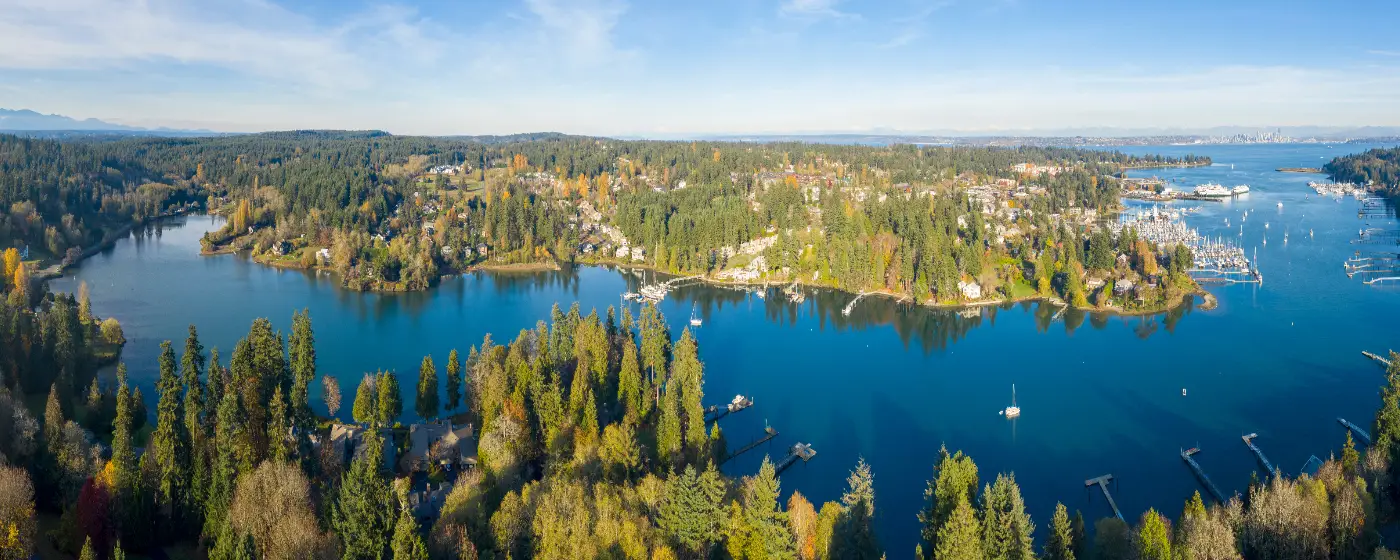
Puget Sound · Washington
Maybe you've been eyeing Seattle real estate for months, and someone finally said the quiet part out loud: "Have you looked at Bainbridge?" Maybe you're a remote worker who realized you can live somewhere genuinely beautiful if you stop anchoring to a zip code. Or maybe you work downtown Seattle, you've done the math on a $120 monthly ferry pass versus $3,800 a month for a Capitol Hill apartment, and the island that looked like a vacation destination is starting to look like a permanent address. Whatever brought you here, Bainbridge Island forces the same central question on everyone who considers it seriously: How much does the water between you and the city actually cost — in time, in money, in identity — and is the life on the other side worth it?
Geographically, Bainbridge Island sits in Puget Sound, nine and a half miles from downtown Seattle by water but a world apart in texture. The 27 square miles of land that make up the island are connected to Seattle by Washington State Ferries, a 35-minute crossing that is simultaneously the island's greatest asset and its most defining constraint. Everything about daily life here — where you shop, when you leave the house, whether you can make a last-minute dinner reservation in the city — bends around the ferry schedule. The island's closest mainland neighbors are Bremerton to the southwest and Poulsbo to the north, but the gravitational pull is eastward, toward Seattle. The island is also, notably, a single city: Bainbridge Island's city limits encompass the entire island.
This guide is built for people who need honest answers, not a tourism pitch. You'll find what the housing market actually looks like at a $1,049,000 median sold price, which neighborhoods suit which kinds of buyers, what the school district delivers, and the specific friction points that cause people to leave after a few years. By the end, you'll know whether Bainbridge Island is your answer — or whether a nearby city fits your life better.
Not every buyer is right for island life, and Bainbridge will tell you that clearly if you're listening. The table below cuts to what matters.
| Best For | Why |
|---|---|
| Seattle commuters (walk-on) | Free walk-on ferry from BI to Seattle; 35-minute crossing; Pier 52 drops you in the heart of downtown |
| Families with school-age children | Bainbridge Island School District ranks among the top 1% in Washington; low-density island setting with access to nature |
| Retirees and pre-retirees | Median age of 49; established arts scene, trails, and a slower pace with Seattle access when wanted |
| Remote workers | 3,786 residents already work from home; strong broadband available in most of the island |
| Buyers seeking natural surroundings | Forest trails, waterfront parks, and protected reserves woven through residential areas |
| Move-up buyers from Kitsap County | Island prestige, school quality, and proximity to Seattle without leaving Kitsap County |
Life on Bainbridge Island organizes itself around a rhythm most mainlanders have never experienced. The ferry schedule isn't just a transportation consideration — it's a social framework. Locals plan dinner reservations, school pickups, and evening commitments around the sailing times posted on the WSF app. Missing the 10:30 PM boat on a Saturday means either staying in Seattle or waiting for the 12:00 AM crossing. After six months of living here, most residents stop fighting that structure and start finding comfort in it — the island has a natural hard stop on late nights that many people, especially families, come to appreciate.
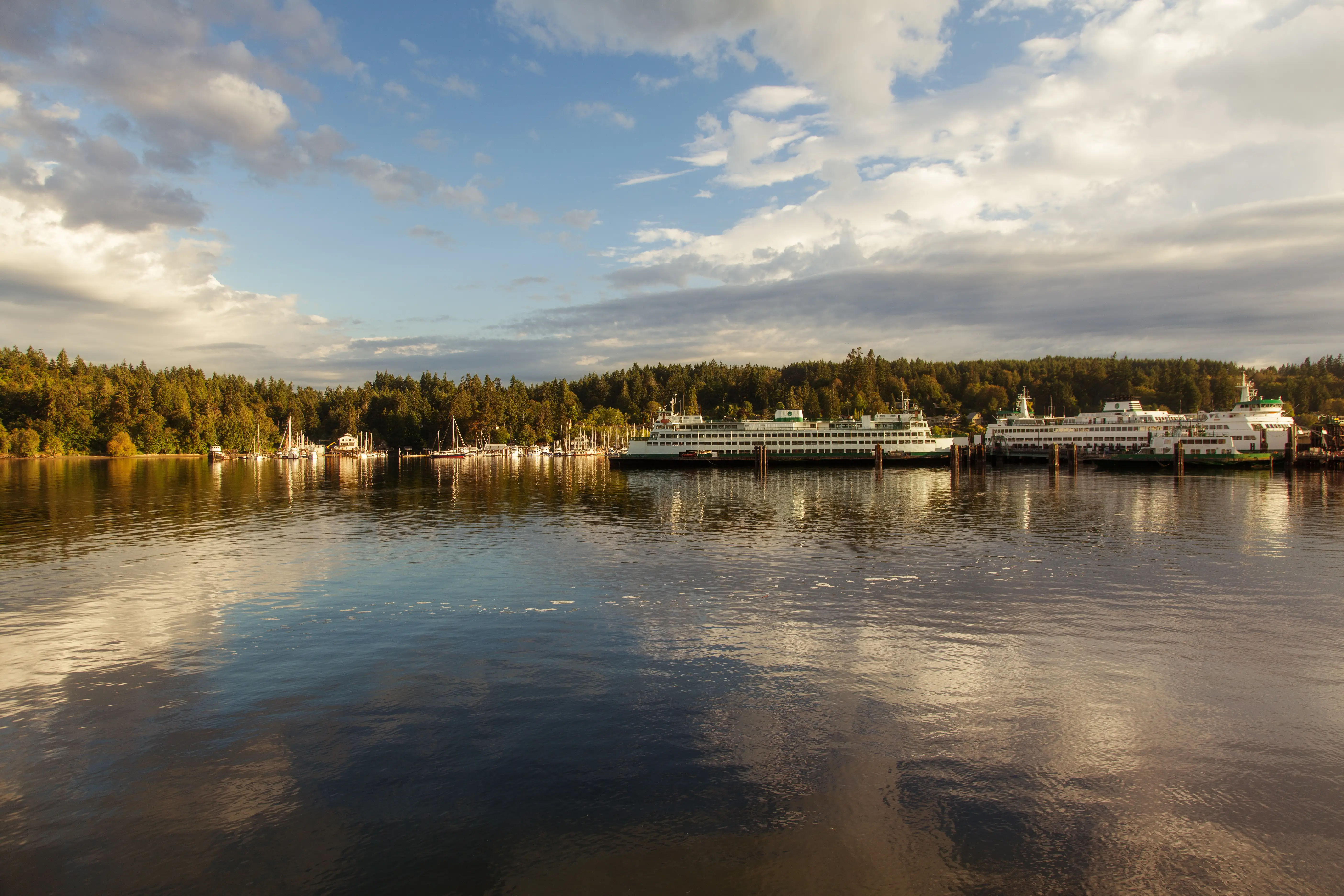
Winslow is the island's de facto town center, and it delivers a walkable downtown that feels genuinely rare for a community of 24,500 people. The Ferry Dock anchors the eastern edge, and within a half-mile stretch of Winslow Way you'll find independent bookstores, wine bars, local restaurants, a Saturday farmers market, and the Bainbridge Island Museum of Art. It's the kind of downtown that took decades to build and can't be manufactured. New residents often say their first summer in Winslow — sitting at an outdoor table with a view of Eagle Harbor and watching the ferry pull in — is when the island finally made sense to them.
The commute reality deserves a full accounting. Walk-on passengers from Bainbridge Island to Seattle ride free in the BI-to-Seattle direction; you pay only when returning from Seattle. A monthly passenger pass runs $120, which is extraordinary value for a 35-minute ride into the center of a major city. The catch is that adding Bellevue or the Eastside to your commute is genuinely punishing — budget an additional 30 to 40 minutes in rush hour once you're off the ferry, meaning some Eastside commuters find the calculus doesn't work. The island is best suited to people whose professional gravity pulls toward downtown Seattle or who work primarily from home.
What surprises most people after six months of living here is how completely they stop going to Seattle for casual reasons. The island has enough — groceries, healthcare, restaurants, trails — that spontaneous city trips become rare. Some residents love this; others quietly find the insularity starts to wear on them by year two.
The school district alone keeps a lot of families here longer than they planned. The Bainbridge Island School District serves roughly 3,594 students across ten schools and ranks within the top 1% of all 306 school districts in Washington State by math and reading proficiency. Math scores run 31 percentage points above the state average. Bainbridge High School's graduation rate sits at 98%, a figure that reflects both the academic culture of the district and a community where education is taken seriously. The district spends approximately $19,472 per pupil — well above national norms — and average teacher experience runs around 16.7 years. For families who've watched school quality determine resale value in other markets, Bainbridge is the rare place where the schools actually live up to their reputation.
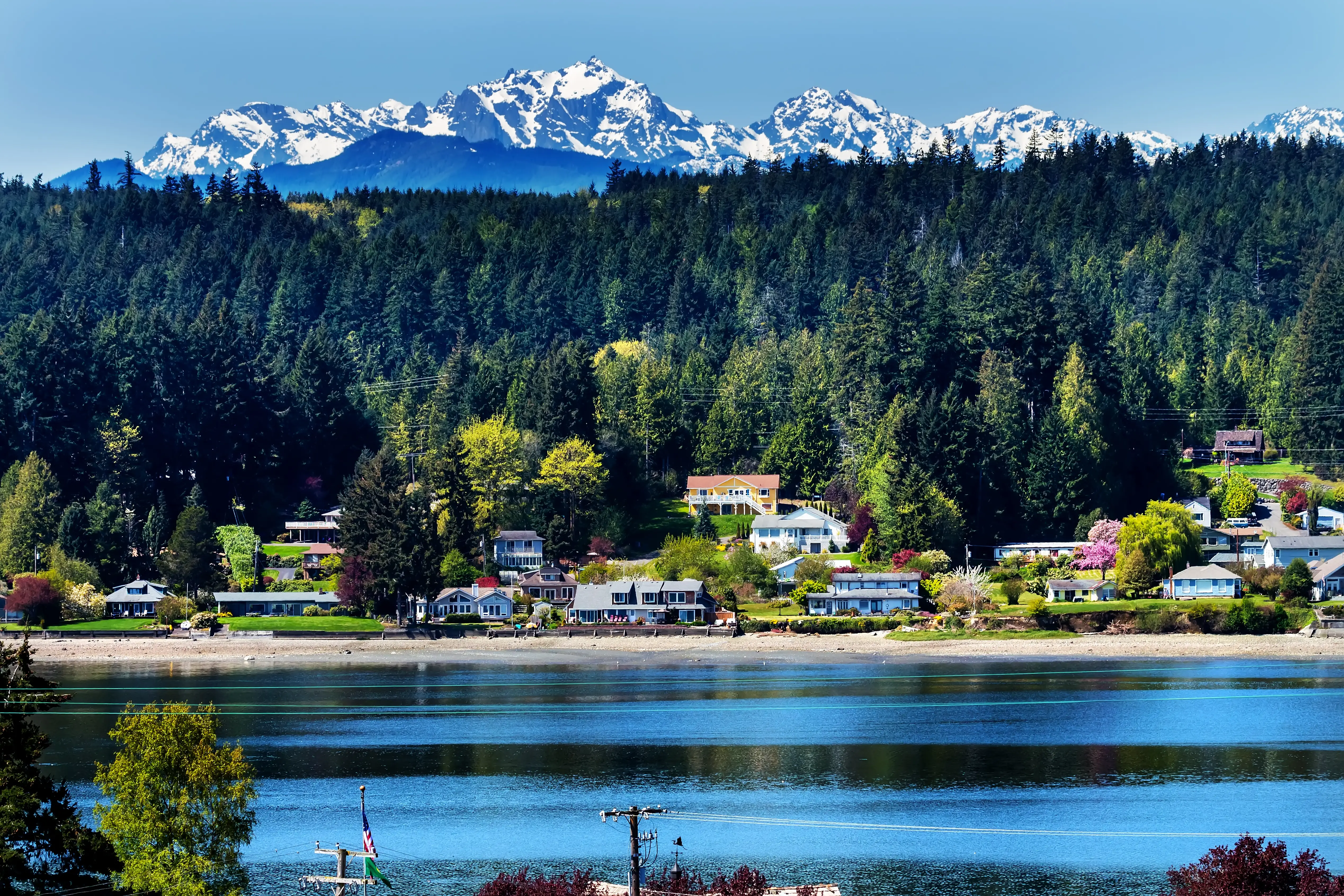
The natural environment is extraordinary in a way that doesn't diminish with familiarity. Bloedel Reserve, a 150-acre designed landscape in the island's north, draws visitors from across the region — but for residents, it's a place to spend a quiet Tuesday morning. Battle Point Park covers 94 acres near the island's center with athletic facilities, off-leash dog areas, and open grass that fills with families on summer evenings. The Grand Forest offers miles of wooded trails that feel genuinely wild despite being minutes from residential neighborhoods. Fort Ward Park on the island's southern tip preserves a decommissioned military installation surrounded by Puget Sound views. The Japanese American Exclusion Memorial near Yama, a sobering and beautifully maintained site, adds historical weight to the island's identity.
Property taxes run at an effective rate of 0.77% — lower than both the Washington state median and the national median — which matters significantly at the price levels common here. On a home at the island median, annual taxes run approximately $8,000 to $9,000, which is high in dollar terms but proportionally reasonable given home values. The low effective rate is a quiet but real financial advantage compared to markets in Oregon or California where buyers at similar price points pay substantially more.
The community has unusual density for a city this size — a median household income of $172,188 and a poverty rate of 3.5% reflect a concentrated, professionally accomplished population. That translates practically into well-funded local institutions, engaged school volunteers, active arts organizations, and a civic culture that tends to show up when something needs protecting or building. The island has more book clubs, land trust committees, and rowing teams per capita than most communities twice its size.
Looking to buy in Estimate your payment.
Enter your numbers to see an estimated monthly mortgage payment.
Estimate only. Excludes HOA fees and mortgage insurance.
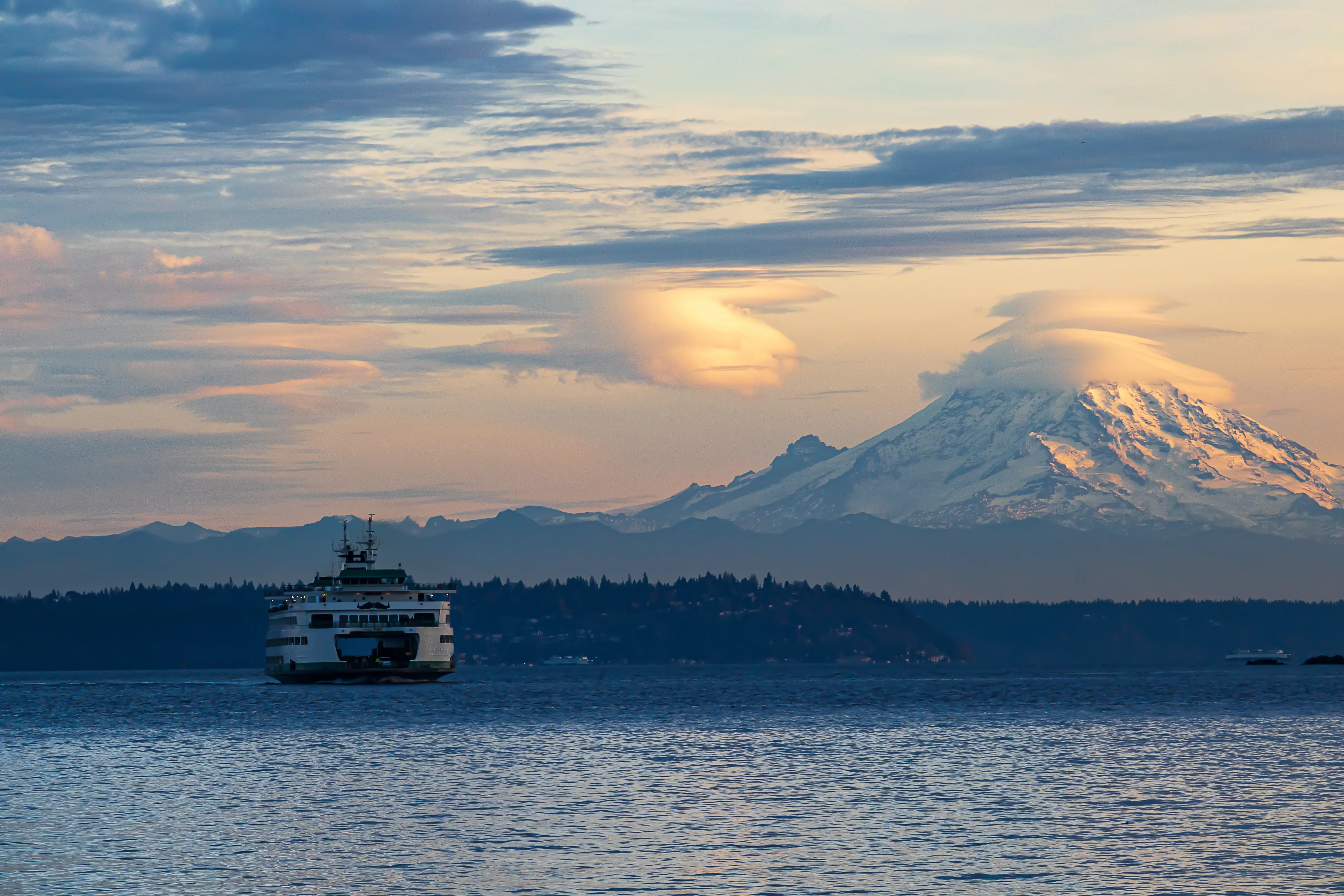
The ferry is freedom and a fence at the same time. On a clear summer morning, the 35-minute crossing through Puget Sound with the Olympics in the background is one of the better commutes in America. On a gray January morning when you've missed your boat by 90 seconds and the next one leaves in 50 minutes, the island can feel like a very expensive trap. Ferries are subject to weather delays, mechanical issues, and the occasional labor action. If your job has zero tolerance for tardiness, you'll need a plan B that accounts for the days the system doesn't run cleanly.
Car ownership is essentially mandatory for most residents. While Winslow itself is walkable, the rest of the island is not — homes in Fort Ward, Rolling Bay, or the island's interior require a car for grocery runs, school pickups, and most daily errands. Driving to Seattle requires a round trip on the ferry with your car, which means paying in both directions and adding loading time to the crossing. Many island residents keep a second car on the Seattle side, or make peace with the walk-on ferry and using ride-share when needed in the city — a workaround that works until you need to bring something large back to the island.
Why some people leave comes down to a short list of specific pressures. Childcare waitlists stretch for years on an island with limited provider supply. The social fabric can feel hard to penetrate — Bainbridge has a strong existing community, and newcomers sometimes find it takes longer than expected to feel genuinely embedded. Winter darkness hits harder when you're surrounded by water rather than city lights. And the financial ceiling is real: with a median at $1,049,000 and limited supply, buyers who need to upsize or downsize within the island market face a constrained inventory that rarely gives them easy options.
Getting to Bellevue or the Eastside for work or appointments is the commute that breaks some residents' resolve. The ferry gets you to downtown Seattle efficiently; everything east of the I-5 corridor adds substantial time that makes the island math work only for people with downtown-anchored professional lives.
Winslow is where Bainbridge Island makes its first impression and, for most residents, its most lasting one. Centered on Winslow Way and anchored by the ferry terminal and Eagle Harbor, it's the island's most walkable neighborhood by a wide margin — coffee, groceries, restaurants, the museum, and the Saturday farmers market are all accessible on foot from most addresses. As of mid-2026, homes in Winslow and the immediate downtown core start around $900,000 for smaller lots and run well past $1.5 million for renovated waterfront-adjacent properties.
Best for: Buyers who want genuine walkability and daily access to the ferry without owning a second car.
Wing Point sits on a peninsula jutting into Eagle Harbor, giving many homes direct waterfront exposure or at least strong water views across to the Winslow ferry terminal. The neighborhood has a quiet residential character despite being minutes from downtown, and the Wing Point Golf & Country Club anchors the social life of many longtime residents. Prices in Wing Point routinely clear $1.5 million and stretch significantly higher for true waterfront.
Best for: Buyers seeking golf course access, water views, and proximity to Winslow without the downtown foot traffic.
Rolling Bay is a small community node on the island's northeastern side, anchored by a historic post office building and a cluster of local businesses. Homes here sit among mature trees on larger lots, with a rural-residential feel that contrasts sharply with Winslow. City-wide median pricing applies broadly, though interior homes here can offer more land per dollar than the waterfront-heavy west side.
Best for: Buyers who want island life with a quieter, more rural feel and easy access to the north end parks and beaches.
Fort Ward occupies the island's southern tip and takes its name from the early-20th-century military installation that once sat here. The park that now preserves that history is one of the island's best, with saltwater shoreline, wooded trails, and extraordinary views of Rich Passage. Homes in this area tend to sit on larger parcels and offer more privacy than the north end — some buyers find the drive to the ferry adds 10 to 15 minutes compared to Winslow-adjacent addresses.
Best for: Buyers prioritizing privacy, proximity to Fort Ward Park, and larger lots over ferry-commute convenience.
Pleasant Beach is a small waterfront community on the island's southwestern shore with one of Bainbridge's most relaxed, low-key personalities. It sits near Lynwood Center and offers beach access and views across to the Kitsap Peninsula. Properties here vary widely — modest cottages exist alongside renovated waterfront homes — making this one of the more accessible entry points on the water.
Best for: Buyers who want waterfront character and beach access at a range that can occasionally start below the island median.
Lynwood Center is a small village on the island's south end that functions as the community hub for residents who live in Fort Ward, Pleasant Beach, and the surrounding south-island neighborhoods. It has a distinctly unhurried character — a handful of local businesses, community gathering spaces, and a residential feel well removed from the ferry traffic of Winslow. The south-end location means a longer drive to the terminal, which keeps prices in the surrounding area more moderate relative to the island center.
Best for: Buyers who want a genuine neighborhood identity and don't need daily ferry access.
Meadowmeer is a mid-island residential community that offers one of the better value propositions on Bainbridge — larger lots, wooded settings, and homes that can still come in at or below the city-wide median for buyers willing to trade waterfront views for land and privacy. The neighborhood has a quiet suburban feel and is convenient to Battle Point Park and the island's central trail network.
Best for: Buyers who need more space for the dollar and are prioritizing land, privacy, and school access over waterfront premiums.
Port Madison sits on the island's northern shore, overlooking the bay of the same name toward Suquamish and the Kitsap mainland. It's one of Bainbridge's older established communities, with a mix of longtime family properties and more recent waterfront development. The bay itself is popular for boating and kayaking, and the neighborhood has a settled, unpretentious character that differs from the more curated feel of Winslow.
Best for: Buyers interested in north-island waterfront access, boating, and a lower-traffic residential environment.
| City | Best For | Median Home Price | Commute to Seattle | Vibe |
|---|---|---|---|---|
| Bainbridge Island | Ferry commuters, families, nature access | $1,049,000 | 35 min (ferry) | Island living, walkable core, outdoors-forward |
| Bremerton | Budget buyers, military families, Kitsap value | ~$440,000 | 60 min (ferry) | Working-class port city, revitalizing downtown |
| Poulsbo | Nordic character, quieter pace, Kitsap families | ~$600,000 | 75–90 min (ferry + drive) | Small-town waterfront, strong community feel |
| Silverdale | Suburban convenience, retail access, no ferry | ~$500,000 | 90 min (drive/ferry+bus) | Suburban commercial hub, practical rather than scenic |
| Port Orchard | Affordability, acreage, Kitsap south | ~$425,000 | 60 min (ferry) | Small city, affordable, rural surroundings |
| Suquamish | Cultural significance, water views, lower prices | ~$550,000 | 55–70 min (drive + ferry) | Tribal community setting, less developed, water access |
| Metric | Detail |
|---|---|
| Population | ~24,500 (2026 estimate) |
| Median Household Income | $172,188 |
| Median Home Sold Price (2026) | $1,049,000 |
| Effective Property Tax Rate | 0.77% |
| Ferry Crossing Time | 35 minutes (Bainbridge Island to Pier 52, Seattle) |
| Monthly Walk-On Ferry Pass | $120 |
| School District | Bainbridge Island School District (A-rated) |
| Violent Crime per 1,000 Residents | 0.5 |
| Property Crime per 1,000 Residents | 9 |
| Median Age | 49 years |
| Residents Working from Home | ~3,786 |
| Months of Inventory (Mid-2026) | 2.7 months |
The ferry goodbye. Bainbridge residents develop an almost instinctive awareness of ferry times that visitors find bewildering. A party that runs until 9:45 PM will see a third of the room stand up simultaneously — not because they want to leave, but because the 10:30 boat waits for no one. It's a social norm unique to the island, and newcomers who don't internalize the schedule quickly will spend their first year missing boats and arriving late to everything.
Chilly Hilly. Every February, the Cascade Bicycle Club brings thousands of cyclists to Bainbridge Island for Chilly Hilly, a 33-mile loop around the island that has been running since 1975 and typically draws 2,000 to 4,000 riders on the coldest Sunday of the year. For residents, it's the clearest sign that spring is coming and also the one Sunday when driving anywhere on the island requires patience. It is genuinely beloved.
The farmers market rhythm. The Bainbridge Island Farmers Market runs on Saturday mornings from April through December in the Town Square near the ferry terminal. For many residents, it's less a shopping errand and more a weekly social ritual — the place where you run into your neighbor, learn about the school bond measure, and discover which local farm got their strawberries in first. First-time visitors are surprised by the quality; six-month residents can't imagine Saturdays without it.
What I would not do: I would not buy a home in Fort Ward or Lynwood Center assuming the commute to the ferry will feel manageable in January. In July, the 12-minute drive down Bainbridge's two-lane roads to the terminal feels pleasant. In a rainstorm on a dark morning when you've got a 7:20 AM boat to catch, the south end adds enough friction that some buyers who didn't account for it regret their neighborhood choice. If daily ferry commuting is core to your plan, buying within two miles of the Winslow terminal is the decision I've seen most consistently rewarded.
Local Expert Takeaway: Buyers who approach Bainbridge Island with mainland assumptions — that there's room to negotiate, that inventory will expand by summer, that waterfront homes ever get "overlooked" — tend to lose the homes they want. The island rewards preparation: get your financing buttoned up before you tour, decide whether you can live with a longer drive to the ferry terminal (because that decision eliminates or opens up significant price bands), and understand that the $1,049,000 median is being pulled down by interior homes — anything on the water or in Winslow starts meaningfully higher. Focus your search on neighborhoods like Meadowmeer or Rolling Bay if you need more square footage for the dollar; focus on Wing Point or Eagle Harbor if proximity to the ferry and water access are non-negotiable.
✅ Bainbridge Island delivers what it promises — extraordinary schools, a walkable downtown, extraordinary natural settings, and 35-minute ferry access to Seattle — for buyers who can manage the financial and logistical reality of island life.
⚠️ The ferry is not a commute option, it's a lifestyle commitment. It works beautifully for downtown Seattle workers and remote employees; it adds substantial friction for anyone whose professional life is on the Eastside.
📍 At a $1,049,000 median, entry-level buyers are working with limited options — the island's most accessible homes are in interior neighborhoods like Meadowmeer and Island Center, while waterfront and downtown-adjacent properties routinely push $1.5 million and above.
Is Bainbridge Island a good place to raise a family?
Few school districts in Washington match what the Bainbridge Island School District consistently delivers — top-1% statewide ranking, a commonly reported graduation rate above 95%, and per-pupil spending that reflects a community that prioritizes education. The island's low crime rate (0.5 violent incidents per 1,000 residents), access to parks and trails, and relatively low traffic density make it a strong environment for children. The honest limitation is childcare supply — waitlists for infant and toddler care run long on an island with constrained provider capacity, and families should plan for this well before a baby arrives.
How does Bainbridge Island's cost of living compare to Seattle?
Housing is the dominant variable. At the island median of $1,049,000, Bainbridge is priced above many Seattle neighborhoods, but you're typically getting more land, better schools, and lower crime for that premium. The effective property tax rate of 0.77% is actually more favorable than many buyers expect given Washington's reputation for high property taxes. Groceries, dining, and services run comparably to Seattle or slightly higher given the island's limited retail competition — you'll pay a bit more for the convenience of shopping locally rather than making a ferry run for every purchase.
What is it really like to use the ferry every day?
The daily rhythm becomes genuinely routine within a few months for most commuters. The walk-on fare from Bainbridge Island to Seattle is free; the monthly pass at $120 covers the return fare for a full month of crossings. The 35-minute crossing is productive time — regular commuters read, work, or sleep. The real challenge is schedule discipline: you cannot decide last-minute to stay late without consulting the sailing times, and weather or mechanical delays happen several times per year. Residents who commute daily almost universally say the crossing itself is the best part of their commute — the difficulty is the rigidity, not the ride.
Explore the full Bainbridge Island series: The Ultimate Bainbridge Island Relocation Guide · Is Bainbridge Island Safe? · Cost of Living in Bainbridge Island · Best Neighborhoods in Bainbridge Island · Bainbridge Island Schools & Family Life · Bainbridge Island Youth Sports · Bainbridge Island Parks & Recreation · Retiring in Bainbridge Island · 1031 Tax-Deferred Exchange in Bainbridge Island · Bainbridge Island First-Time Homebuyers Guide · Moving to Bainbridge Island from California
Tell us what you need help with and we'll connect you with local resources.

About the Author
Todd Davidson is the founder of Living in Oregon and Living in Washington, where he publishes in-depth city guides, neighborhood resources, and local market insights covering more than 180 communities across the Pacific Northwest. While his background is in home financing and real estate, he created these digital platforms to help families research and compare regions before making a move.