
Puget Sound · Washington
There's a specific moment most first-time buyers describe the same way: you're sitting across from a lender for the first time, pre-approval number in hand, and it finally becomes real — not just a someday plan, but an actual decision with actual stakes. For buyers doing this in Everett, that moment often comes with a mix of relief and recalibration. Relief because Everett's median home price of $570,000 sits meaningfully below what you'd face in Seattle or Bellevue. Recalibration because $570,000 is still a serious number, and this market — especially under $650,000 — moves faster than most first-timers expect. Everett is compelling for first-time buyers not because it's easy, but because it's genuinely achievable in a region where homeownership can feel like a moving target.
The math between renting and owning in Everett has been shifting in ownership's favor. A two-bedroom apartment in Everett typically runs $1,800–$2,200 per month, while a mortgage on a $500,000 home with 5% down sits in a similar monthly range once you account for Washington's 0.83% property tax rate and factor in the long-term equity build. The entry point for a single-family home starts around $450,000–$500,000 in neighborhoods like Lowell and Delta, with condos available from $250,000 downtown. What you get at the median is typically a 3-bedroom, 1970s-era home that's been updated in some rooms but not others — livable, buildable equity, not a turnkey showpiece.
This guide walks you through every stage of buying your first home in Everett — from figuring out whether your finances are actually ready, to understanding which neighborhoods make sense at your budget, to the specific mistakes that trip up first-timers in this particular market. Everett has its own personality, its own competitive dynamics, and its own set of programs that can meaningfully change what you can afford. Read this before you start touring homes.

Everett makes a strong case for first-time buyers who've been watching the Seattle market with a growing sense of defeat. Homes here are priced roughly 30–40% below Seattle proper, yet you're still within commuting range of major employment centers — about 38 minutes to downtown Seattle by car or a straight shot on Sounder North commuter rail. The Everett School District carries an A- rating, making it a serious consideration for households with children. And unlike some Snohomish County suburbs that feel purely residential, Everett has actual urban bones — a working waterfront, a real downtown, Boeing's massive manufacturing campus, and the Port of Everett Marina as a genuine civic anchor.
The honest challenge is that under $550,000, your options narrow quickly. Single-family homes at entry-level prices are concentrated in neighborhoods like Lowell, Delta, and Riverside — areas with real character and strong community ties, but not the polished curb appeal of Silver Lake or View Ridge. Below $450,000, you're primarily in condo and townhome territory. That's not necessarily a bad thing — a $340,000 townhome in north Everett with a two-car garage can be a smart first purchase that builds equity while you wait for your financial picture to strengthen. But buyers who come in expecting a single-family home with a yard for $380,000 are going to need a reality check before they start scheduling showings.
The neighborhoods that represent the most realistic and rewarding entry points for first-time buyers right now are Lowell, Delta, Pinehurst, and Cascade View. Lowell in particular tends to offer larger lots and older Craftsman-style homes under $500,000 that would cost considerably more in Edmonds or Mill Creek. Pinehurst offers suburban stability with solid resale dynamics. And downtown Everett condos — especially in the $300,000–$375,000 range — give buyers a foothold in a neighborhood undergoing genuine transformation, which matters for long-term value.
| Price Range | What You Typically Find | Neighborhood Examples | Competition Level |
|---|---|---|---|
| Under $350K | 1–2 bed condos, downtown lofts, fixer-upper townhomes | Downtown Everett, north Everett near Casino Road | Moderate — condos sit longer |
| $350K–$450K | 2-bed condos/townhomes, occasional fixer SFH | Delta, Riverside, Lowell (older stock) | Moderate-High |
| $450K–$550K | 3-bed SFH (1960s–1990s), some with updates | Lowell, Cascade View, Pinehurst, Delta | High — entry SFH tier moves fast |
| $550K–$650K | Updated 3-bed SFH, newer construction, townhomes | Silver Lake, Evergreen, Glacier View, Bayside | High |
| $650K+ | Larger SFH, premium lots, waterfront proximity, view homes | Boulevard Bluffs, Northwest Everett, View Ridge, Harborview | Moderate — fewer competing buyers |
The $450,000–$550,000 range is where the first-time buyer conversation gets real in Everett. That tier opens the door to actual single-family homes — typically three bedrooms, one and a half or two baths, built between 1965 and 1995, with updates that are partial rather than comprehensive. In Lowell, a buyer at $490,000 might land a three-bedroom with a full yard and a detached garage; in Pinehurst, the same budget gets something more suburban in character but potentially in better overall condition. These homes receive multiple offers and move in under two weeks, so buyers in this range need to be pre-approved and decisive.
The condo market below $400,000 deserves more credit than first-timers often give it. A two-bedroom condo in north Everett or near the downtown core around $330,000–$375,000 isn't a consolation prize — it's a real asset that builds equity, eliminates yard maintenance, and in many cases provides access to amenities that make urban living genuinely comfortable. For buyers who aren't sure how long they'll stay or who want to keep cash reserves strong after closing, entry-level condos represent the most financially flexible path into Everett homeownership.
| Step | What Happens | Typical Timeline | What First-Timers Get Wrong |
|---|---|---|---|
| Get finances in order | Review credit, pay down debt, stop opening new accounts | 1–6 months before buying | Waiting until they're "ready" — start 6 months earlier than you think you need to |
| Pre-approval | Lender pulls credit, verifies income/assets, issues letter | 1–3 business days | Shopping at the top of the approval number instead of their comfort zone |
| Find an agent | Interview 2–3 buyer's agents with Everett neighborhood experience | 1–2 weeks | Skipping this and going to listing agents directly — it costs you |
| Active search | Tour homes, track new listings, refine priorities | 2–8 weeks | Setting too many non-negotiables; the perfect home at the entry price doesn't exist |
| Making offers | Write offer with agent, compete on price/terms | Hours to days per offer | Coming in at list price expecting to win — many homes close above asking |
| Under contract | Seller accepts; earnest money (typically 1–3% in Snohomish County) deposited | Day 1–3 | Not having earnest money liquid and ready to wire immediately |
| Inspection | Licensed inspector reviews home; buyer evaluates condition | Days 5–10 | Skipping inspection on older stock or using it only for credits, not decisions |
| Appraisal | Lender orders independent value assessment | Days 10–20 | Not understanding that appraisal gap coverage may be expected by sellers |
| Final walkthrough | Confirm home's condition matches what you contracted for | Day before closing | Skipping it entirely — buyers sometimes discover last-minute issues here |
| Closing | Sign final documents, wire remaining funds, receive keys | Day 30–45 | Not budgeting for closing costs (typically 2–3% of purchase price) |
What makes the Everett buying process feel different from what most first-timers have read about online is the speed at entry-level price points. Homes priced between $450,000 and $600,000 regularly sell within 10–14 days and attract two to four competing offers. Earnest money norms in Snohomish County typically run 1–3% of the purchase price, and sellers in Everett increasingly expect buyers to demonstrate seriousness with a strong earnest money deposit upfront.
Inspection contingencies remain more common in Everett than in hyper-competitive Seattle submarkets, but don't take that as permission to be casual about it. Everett has significant older housing stock — much of it built before 1980 — and a proper inspection on a 1968 ranch house in Lowell or an older bungalow in Delta can surface foundation drainage issues, outdated electrical panels, or original cast-iron plumbing that matters for both your decision and your negotiating position. Buyers who waive inspection entirely to compete on a home in this age range are taking a risk that experienced local agents will push back on.
Closing timelines in Snohomish County typically run 30–45 days for conventional financing, slightly shorter for cash. One thing Everett-specific buyers should know: the county's recording process can occasionally add a day or two, so build a small buffer into any move-out plans on your current rental.

Looking to buy in Estimate your payment.
Enter your numbers to see an estimated monthly mortgage payment.
Estimate only. Excludes HOA fees and mortgage insurance.
Let's skip the theoretical and get to the numbers that actually determine what you can buy. For a conventional loan, the minimum credit score is 620, but the rate you receive at 620 versus 740 is meaningfully different. On a $450,000 loan, the difference between a 6.9% rate (roughly where a 650 score lands today) and a 6.4% rate (closer to what 740+ earns) is approximately $140–$160 per month. Over five years, that's nearly $10,000 in additional interest payments. If your score is in the mid-600s, spending two to three months paying down revolving balances before applying can be worth more than almost any other pre-purchase action you take.
FHA loans set the floor at 580 for the 3.5% down payment option, and 500 with 10% down. The catch with FHA is mortgage insurance that doesn't go away the way it does on a conventional loan once you hit 20% equity — it's built into the loan for the life of the term. For many first-timers, FHA is still the right move because the lower down payment preserves cash reserves, but it's worth running both conventional and FHA side by side with a lender before deciding. On income, the general guideline lenders use is that your total housing payment shouldn't exceed 28% of your gross monthly income — and your total debt (housing plus car, student loans, minimums on everything) shouldn't exceed 43%. In practical terms: qualifying comfortably for a $400,000 home requires roughly $6,200–$6,500 in gross monthly income. For $500,000, figure $7,700–$8,200. For $600,000, you're looking at $9,200–$9,800 depending on down payment and rate.
One factor that often goes unmentioned: Washington has no state income tax. For buyers relocating from California, Oregon, or any state with a meaningful income tax, this is a real increase in take-home pay — and real increase in qualifying power. A household earning $110,000 in California takes home significantly less than the same household in Everett. That delta can be the difference between qualifying comfortably and qualifying at the edge.
Mistake 1: Treating list price as the offer price. In Everett's sub-$600,000 market, homes routinely close above asking. A home listed at $519,000 in Pinehurst or Silver Lake may close at $535,000–$545,000 with escalation clauses. Buyers who walk into offers at list price or below — especially without an escalation clause — are learning this lesson expensively. Your agent should pull the sale-to-list ratio on any home you're serious about before you write the number.
Mistake 2: Skipping inspection on older Everett housing stock. A significant portion of Everett's entry-level single-family homes were built in the 1960s and 1970s. That era of construction frequently comes with aging electrical panels (some original), crawl spaces with drainage challenges, and original plumbing materials. In Delta and Riverside especially, skipping a home inspection to make an offer more competitive can expose you to repair costs that dwarf whatever you saved on the purchase price. A $700 inspection is cheap insurance.
Mistake 3: Qualifying for $550,000 and shopping at $550,000. Lenders tell you what you can borrow, not what you should borrow. In Everett, a buyer approved for $580,000 who stretches to that ceiling is one furnace replacement or car repair away from financial stress. Shopping at $490,000 with a $550,000 approval gives you competitive flexibility — you can escalate — without overextending your monthly budget.
Mistake 4: Ignoring school district boundary lines. The Everett School District boundary doesn't perfectly match city limits, and specific elementary school assignments can vary by street within the same neighborhood. For resale purposes, homes zoned to higher-performing elementary schools in areas like Silver Lake and South Forest Park carry a measurable premium — and sell faster. If you're buying in an area where you're uncertain about the school assignment, your agent can pull the boundary maps before you make an offer.
Mistake 5: Waiting for prices to drop. Inventory in Everett's entry-price single-family tier is structurally limited. Active listings are up year over year, which is a genuine improvement for buyers, but the city isn't building enough new homes to flood the market. First-timers who decide to wait for a 10–15% correction have been making that call for several years running, and the buyers who entered in 2022 or 2023 — even at rates that felt painful — now have equity and a locked payment. The cost of waiting is rarely zero.
Lowell is the neighborhood that consistently surprises buyers who haven't explored it. Situated in southeast Everett near the South Fork of the Snohomish River, Lowell offers single-family homes with real yards on lots that would be substantially more expensive in almost any comparable Snohomish County community. At $460,000–$510,000, you can find three-bedroom homes with garages and mature landscaping that would easily run $575,000–$625,000 in Mill Creek. The tradeoff is that Lowell's commercial core is modest and the neighborhood has a more working-class character — buyers who need a walkable coffee shop two blocks away will be disappointed. Buyers who prioritize square footage, outdoor space, and equity upside over curb-appeal polish will find it one of the strongest value propositions in the city.
Pinehurst offers the kind of suburban stability that first-timers with young children tend to find reassuring. The neighborhood sits in central Everett with consistent single-family character, good street connectivity, and homes that tend to be reasonably well-maintained. Entry prices in Pinehurst start around $480,000–$520,000 for a three-bedroom home, and the resale market here is predictable — not glamorous, but steady. For a first-time buyer who wants a safe, low-drama purchase with solid comps and reasonable holding risk, Pinehurst is one of the most sensible choices in Everett.
Delta is where the genuine fixer opportunity lives. Homes in Delta can be found below $430,000, and occasionally below $400,000 for single-family properties that need meaningful work. This is not a neighborhood for buyers who need to move in and let the mortgage breathe — renovation costs on a Delta fixer can run $40,000–$80,000 before you're truly done. But for a buyer with construction skills, trade connections, or sufficient reserves to hire work out, Delta can yield the strongest equity upside of any entry-level Everett neighborhood. Understand what you're buying and price the work honestly before you fall in love with a low list price.
Downtown Everett condos deserve specific mention for buyers in the $300,000–$400,000 range who want to own without overextending. The waterfront redevelopment is actively reshaping what downtown Everett looks like and feels like. A buyer who purchases a two-bedroom condo near the marina district or in the downtown core today at $340,000–$380,000 is positioned well for appreciation as that investment in the public realm pays off over the next five to seven years. The risk is that condo buildings come with HOA fees and association dynamics that single-family owners don't deal with — review the financials and reserve study before making an offer on any condo building.
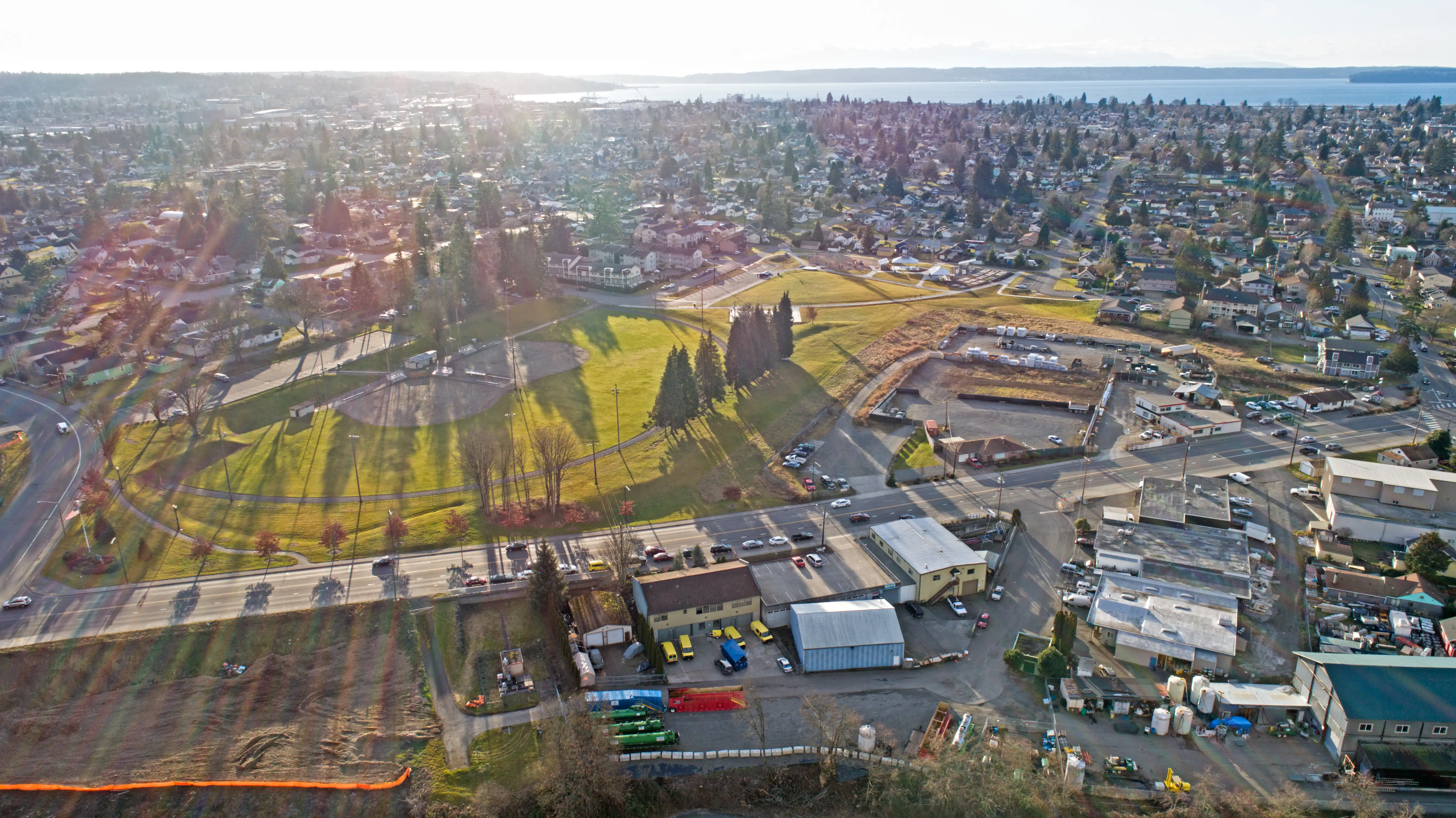
Local Expert Takeaway: The single most common mistake first-time buyers make in Everett is shopping at their approval ceiling instead of their comfort ceiling — then losing multiple offers because they have no room to escalate. Get pre-approved for what you're approved for, then decide what your actual comfortable payment looks like, and use the gap between those two numbers as your competing power. In Lowell and Pinehurst especially, buyers who came in $15,000–$20,000 above asking with a strong escalation clause have consistently won in 2025 and 2026. That's the playbook.
✅ Everett is one of the most accessible first-time buyer markets in the Puget Sound region — with a $570,000 median that undercuts Seattle significantly while still offering real employment access, A-rated schools, and a waterfront that's actively improving.
⚠️ Entry-level single-family homes in the $450,000–$550,000 range move fast and frequently close above asking — buyers who wait for a deal on a well-priced Lowell or Pinehurst home often lose it to someone who came in stronger.
📍 The ONE+ grant program (1% buyer down, 2% grant up to $7,000 from Rocket) is a real option for Snohomish County buyers at or below $107,200 income — it reduces the cash-to-close barrier without creating a debt you have to pay back at sale.
Can I buy a home in Everett as a first-time buyer?
Yes — Everett is one of the more realistic markets for first-time buyers in the Puget Sound region. The entry point for condos starts around $250,000–$350,000 downtown, and single-family homes become accessible around $450,000–$500,000 in neighborhoods like Lowell and Delta. With a 620+ credit score, steady income, and a real pre-approval, buying in Everett is achievable for many buyers who've been priced out of closer-in Seattle neighborhoods.
How much do I need to buy my first home in Everett?
On a $500,000 home with 3.5% down (FHA), you're looking at $17,500 for the down payment plus roughly $10,000–$15,000 in closing costs — so plan on $27,000–$32,000 cash to close in that range. With the ONE+ program on a $350,000 loan, you'd bring 1% down ($3,500) with Rocket contributing the rest up to 3%, which dramatically reduces the cash barrier. The exact figure depends on your loan type, rate, and negotiated seller concessions.
What credit score do I need to buy a house in Washington state?
FHA loans allow a 580 minimum for 3.5% down; conventional loans start at 620. But the score where your interest rate meaningfully improves is 680 and again at 720+. On a $450,000 loan, moving from a 650 to a 740 credit score can reduce your monthly payment by $140–$160. If you're below 680, spending 60–90 days paying down revolving balances before applying is often worth more than almost any other preparation step.
Explore the full Everett series: The Ultimate Everett Relocation Guide · Is Everett Safe? · Cost of Living in Everett · Best Neighborhoods in Everett · Everett Schools & Family Life · Everett Youth Sports · Everett Parks & Recreation · Retiring in Everett · 1031 Tax-Deferred Exchange in Everett · Everett First-Time Homebuyers Guide · Moving to Everett from California
Tell us what you need help with and we'll connect you with local resources.

About the Author
Todd Davidson is the founder of Living in Oregon and Living in Washington, where he publishes in-depth city guides, neighborhood resources, and local market insights covering more than 180 communities across the Pacific Northwest. While his background is in home financing and real estate, he created these digital platforms to help families research and compare regions before making a move.