
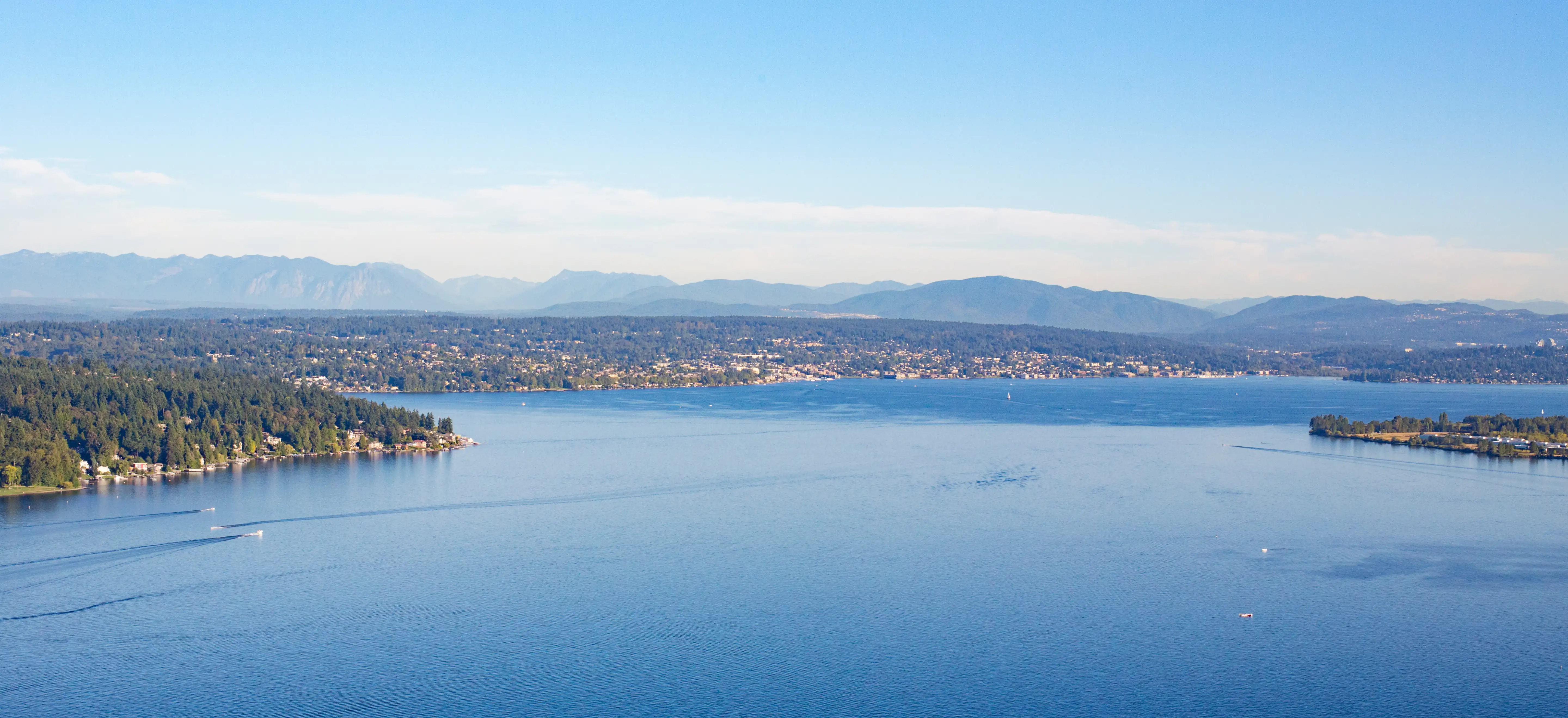
Puget Sound · Washington
The most common mistake people make when researching Kirkland is treating it like a generic Seattle suburb with elevated prices. It's not. Kirkland is one of the most expensive real estate markets in the entire Pacific Northwest — full stop — and the gap between what buyers expect and what they find at open houses is often jarring. The median household income here is $150,414, which is exceptional by national standards, and buyers still need to bring significant financial firepower to compete.
What shapes the cost picture is a combination of geography and employer concentration that few suburbs can match. The city sits directly on Lake Washington's eastern shore with a downtown core that genuinely functions as a destination, not just a pass-through. Google, Microsoft, Tableau, and INRIX all have meaningful footprints here, drawing a tech workforce whose income floors have permanently elevated what sellers expect. That dynamic doesn't ease just because national mortgage rates climb.
This guide breaks down exactly what it costs to live in Kirkland in 2026 — what buyers actually pay for single-family homes, how property taxes work, what renters face, and how the full monthly budget stacks up against neighboring cities. If you're deciding whether Kirkland fits your budget or trying to understand which part of the city gives you the best value, this is where to start.

Kirkland's single-family home market is operating at a level that surprises buyers who've been using broader King County averages as a benchmark. As of March 2026, the median sold price for homes in Kirkland sits at approximately $1.4 million — up about 2.6% year-over-year — with properties in the most competitive zip codes moving in roughly 13 days. That pace tells you something important: even at these prices, inventory doesn't linger.
What $1.4 million buys depends heavily on which part of the city you're targeting. In the 98033 zip code covering Downtown Kirkland and Houghton, the median sold price runs closer to $1.6 million and reflects homes with Lake Washington views, larger lots, and mid-century or newer construction on quiet streets. In the 98034 zip — Juanita, Totem Lake, and North Kirkland — that figure drops to approximately $1 million, which is still competitive but gives buyers more options in the under-$1.2 million range, particularly for updated ranchers and newer townhomes. Entry-level condos and townhomes in the Totem Lake corridor can be found in the $500s to $700s, making that area the most realistic starting point for first-time buyers.
The spread across neighborhoods is genuinely dramatic. The Market neighborhood near the waterfront is luxury territory with single-family medians around $3.5 million. Moss Bay runs approximately $2.8 million. On the more accessible end, Finn Hill's hillside homes carry a median closer to $1.2 million with larger lots and wooded settings that appeal to buyers trading waterfront proximity for square footage.
| Budget Range | What to Expect | Likely Neighborhoods |
|---|---|---|
| Under $800K | Condos, older townhomes, limited inventory | Totem Lake, Kingsgate |
| $800K–$1.2M | Townhomes, smaller SFH, updated ranchers | Finn Hill, South Juanita, Totem Lake |
| $1.2M–$1.8M | Mid-size SFH, wooded lots, 3–4 bed homes | Houghton, Rose Hill, North Juanita, Finn Hill |
| $1.8M–$3M | Larger SFH, lake views, renovated homes | Moss Bay, Central Houghton, Downtown |
| $3M+ | Luxury waterfront, premium finishes, rare inventory | Market, Juanita (waterfront), Moss Bay |
King County applies an effective property tax rate of approximately 0.82% in Kirkland, which on the $1.4 million median sold price works out to roughly $11,480 per year, or around $957 per month added to your housing cost. Washington State's levy limit system caps annual property tax increases at 1% on existing levies — a meaningful protection against sudden spikes in a fast-appreciating market — though voter-approved levies for schools and infrastructure can push effective rates modestly higher in some years. Homeowners 61 and older may qualify for King County's senior exemption program, which can reduce both the assessed value and the effective tax obligation depending on household income.
Kirkland's rental market reflects the same income profile as the ownership side — this is not a city where you'll find bargain apartments close to the waterfront. The most affordable rental inventory clusters in Totem Lake and Kingsgate, where proximity to I-405 and the retail corridor brings in more multi-family development. Downtown Kirkland and Moss Bay are among the priciest rental neighborhoods in the city, and the premium is real.
| Unit Type | Avg. Monthly Rent | Notes |
|---|---|---|
| Studio | $1,600–$1,900 | Most available in Totem Lake / Kingsgate |
| 1-Bedroom | $1,999–$2,892 | Range from Totem Lake ($1,999) to Downtown ($2,892) |
| 2-Bedroom | $2,600–$3,500 | Varies significantly by neighborhood |
| 3-Bedroom | $3,200–$4,500+ | Limited inventory; competes with SFH rental market |
| Downtown / Moss Bay 1BR | ~$2,892 | Premium lakefront and walkable neighborhoods |
| South/North Juanita 1BR | ~$2,186–$2,200 | Mid-tier rental zones with beach access |
Rental inventory in Kirkland skews toward newer construction, and that's reflected in pricing. Buildings with amenities — fitness centers, rooftop decks, covered parking — are common in the Totem Lake and Downtown corridors, and they command accordingly. Vacancy rates have remained relatively tight, which means tenants shopping in spring and summer are typically competing for units, particularly in the sub-$2,500 one-bedroom range.
Utilities in Kirkland are delivered by Puget Sound Energy for electricity and natural gas, with the City of Kirkland managing water and sewer services. A typical monthly utility bill — electricity, gas, water, sewer, and garbage — for a single-family home in the $1.4 million range runs approximately $250 to $350 depending on home size and season. Winters here are mild but wet, and heating costs are meaningfully lower than in colder inland markets.
Car ownership is functionally necessary for most Kirkland residents. The city lacks light rail service, and while King County Metro bus routes connect to downtown Seattle and Bellevue, the frequency and coverage aren't sufficient for most commuters to go car-free. The Cross Kirkland Corridor — a 5.75-mile multi-use trail along a former railroad right-of-way — is an excellent recreational and active transportation option, but it doesn't replace a vehicle for daily errands. Kirkland's 25-minute drive to Seattle assumes reasonable traffic; the SR-520 bridge corridor during peak hours can add 15–25 minutes, and buyers should test their specific commute route before committing to a neighborhood.
Groceries and daily shopping are well-served throughout the city. The Totem Lake area has the densest concentration of retail, with major grocery options, pharmacy chains, and dining. Downtown Kirkland's restaurant scene — centered along Lake Street and Central Way — is one of the strongest in the Eastside for a city of its size, with options ranging from waterfront dining to casual neighborhood spots. Expect to spend $150 to $250 per week on groceries for a typical household, consistent with broader King County norms. Gas prices in the area typically run $0.30 to $0.50 above the national average, which factors into the monthly transportation line.
Looking to buy in Kirkland? Estimate your payment.
Enter your numbers to see an estimated monthly mortgage payment.
Estimate only. Excludes HOA fees and mortgage insurance.
Kirkland's cost profile is most commonly compared against Bellevue to the south and Redmond to the east. The table below puts the full picture in context.
| City | Median Home Price | Property Tax Rate | State Income Tax | Commute to Seattle | Avg. 1BR Rent |
|---|---|---|---|---|---|
| Kirkland | $1,220,000 | ~0.82% | None | 25 min | $1,999–$2,892 |
| Bellevue | $1,500,000+ | ~0.85% | None | 20–25 min | $2,200–$3,200 |
| Redmond | $1,100,000–$1,250,000 | ~0.85% | None | 30–35 min | $1,900–$2,600 |
| Bothell | $850,000–$950,000 | ~0.90% | None | 35–45 min | $1,700–$2,200 |
| Kenmore | $900,000–$1,050,000 | ~0.88% | None | 35–40 min | $1,700–$2,100 |
| Seattle | $875,000–$950,000 | ~0.93% | None | 0–15 min (varies) | $1,800–$2,800 |
| Woodinville | $1,000,000–$1,200,000 | ~0.87% | None | 40–50 min | $1,800–$2,300 |
The honest takeaway from this comparison is that Kirkland commands a premium over Redmond and Bothell that is real and significant — roughly $200,000 to $400,000 on comparable single-family homes — and most of that premium is tied to lakefront access, walkability in the downtown core, and school district quality. Buyers who prioritize square footage and don't need the waterfront lifestyle often find better value in Bothell or Kenmore, both served by Lake Washington School District.
The budget below reflects a median-priced Kirkland home at approximately $1.4 million with 10% down ($140,000), financed at a 6.51% 30-year fixed rate. Property taxes are calculated at 0.82%.
| Expense Category | Monthly Estimate |
|---|---|
| Mortgage (P&I, ~$1.26M at 6.51%) | ~$7,980 |
| Property Taxes (~0.82% of $1.4M) | ~$957 |
| Homeowner's Insurance | ~$175–$225 |
| HOA (if applicable) | $0–$500 (varies) |
| Utilities (electric, gas, water, sewer) | ~$275 |
| Internet & Phone | ~$130 |
| Groceries | ~$900–$1,100 |
| Dining Out | ~$400–$700 |
| Transportation (gas, maintenance, insurance) | ~$600–$800 |
| Childcare or School Activities | ~$500–$1,500 |
| Healthcare (employer plan typical) | ~$400–$600 |
| Total Estimated Monthly | ~$12,300–$14,700 |
To comfortably sustain this budget without financial strain, most financial planners would suggest a household income in the $275,000 to $325,000 range — well above the city's already-strong median. The households making it work at the median price are typically dual-income tech couples, or buyers who arrive with substantial equity from a prior sale.
Washington State has no personal income tax — and for high-earning tech workers relocating from California, New York, or Oregon, that single fact can shift the monthly math dramatically. A household earning $250,000 in California faces a state income tax bill of roughly $20,000 or more annually; that same household in Kirkland pays zero. The practical effect is that Washington's higher property values and elevated home prices are partially offset for high earners by what they save on income tax.
Washington does impose a capital gains tax on profits above $262,000 from the sale of financial assets (not real estate), introduced in 2022, but primary residence sales remain exempt. The state also has no inheritance tax below the $2.193 million exemption threshold. For retirees or those approaching retirement, Washington's Senior Property Tax Exemption program allows qualifying homeowners aged 61 and older with income under $67,411 to freeze their assessed value and reduce their tax obligation — a meaningful benefit in a market where assessed values have climbed sharply over the past decade. Washington also offers a property tax deferral program for seniors and people with disabilities, allowing qualified residents to defer taxes until the property is sold or transferred.

Local Expert Takeaway: The 98033 versus 98034 decision is the most financially consequential choice a Kirkland buyer makes, and most buyers don't fully understand the gap until they're already in contract. If your budget is in the $1.0 to $1.3 million range, the Finn Hill and North Juanita corridors in 98034 give you the Lake Washington School District, larger lots, and meaningful equity upside — without the premium that Houghton or Moss Bay commands. Buyers stretching into the $1.5 to $1.8 million range should look hard at Houghton before assuming they need to be in Moss Bay; the lifestyle difference is minimal and the price difference is not.
Is Kirkland an affordable place to live?
Kirkland is one of the more expensive cities in the Pacific Northwest, with a single-family home median around $1.4 million and one-bedroom rentals starting near $2,000 per month in the more accessible neighborhoods. The city's high median household income of $150,414 reflects the tech and professional workforce that sustains these prices, but buyers coming from lower-cost markets should budget carefully and test whether the 98034 zip code meets their needs before assuming they need to be in 98033.
How do Kirkland property taxes compare to neighboring cities?
Kirkland's effective property tax rate sits at approximately 0.82%, which is on the lower end for King County. Comparable cities like Bothell, Kenmore, and Seattle carry rates closer to 0.88%–0.93%. On a $1.4 million home, the 0.82% rate translates to roughly $957 per month — still a meaningful line item, but more favorable than buyers often expect given the region's reputation.
Is it cheaper to live in Kirkland or Bellevue?
Kirkland generally comes in below Bellevue on median home price, with Bellevue's single-family market running well above $1.5 million across most neighborhoods. Both cities share Washington's no-income-tax advantage and similar property tax structures. Kirkland offers a more walkable, village-oriented downtown compared to Bellevue's more urban commercial core, and many buyers find they prefer Kirkland's waterfront character — making the modest price gap feel like straightforward value rather than a tradeoff.
Explore the full Kirkland series: The Ultimate Kirkland Relocation Guide · Is Kirkland Safe? · Cost of Living in Kirkland · Best Neighborhoods in Kirkland · Kirkland Schools & Family Life · Kirkland Youth Sports · Kirkland Parks & Recreation · Retiring in Kirkland · 1031 Tax-Deferred Exchange in Kirkland · Kirkland First-Time Homebuyers Guide · Moving to Kirkland from California
Tell us what you need help with and we'll connect you with local resources.

About the Author
Todd Davidson is the founder of Living in Oregon and Living in Washington, where he publishes in-depth city guides, neighborhood resources, and local market insights covering more than 180 communities across the Pacific Northwest. While his background is in home financing and real estate, he created these digital platforms to help families research and compare regions before making a move.