
Puget Sound · Washington
Maybe your orders just came through and you're headed to Naval Air Station Whidbey Island with three months to find housing on an island most of your family has never heard of. Maybe you've been watching Puget Sound real estate prices climb for five years and someone finally said the words "Whidbey Island" in the context of something you could actually afford. Maybe you drove the bridge over Deception Pass on a clear day, pulled over at the overlook, and thought — seriously, people live here? All three are common paths into Oak Harbor, and none of them quite prepare you for the city's central tension: this is simultaneously one of the most naturally stunning places to live in the Pacific Northwest and one of the most logistically challenging.
Oak Harbor occupies the north end of Whidbey Island — the longest island in the contiguous United States — in Island County, roughly 65 miles north of Seattle as the crow flies. But crows don't take ferries, and neither do your groceries or your commute. Getting on or off this island requires either the Deception Pass bridge on Highway 20 or a Washington State Ferry from Clinton or Coupeville. That geographic reality shapes everything: what you pay, where you shop, how often you visit the mainland, and how quickly you either fall in love with island pace or grow impatient with island limitations. The military base brings a rotating population of young families and a stabilizing economic anchor. The water, the wildlife, and the farmland bring everyone else.
This guide is built for the person trying to decide whether Oak Harbor is actually right for them — not just whether it's pretty, but whether the commute math works, whether the neighborhoods align with your life stage, and whether the trade-offs are ones you can genuinely live with. By the end, you'll have a clear picture of who thrives here, who tends to leave, and which parts of town deserve a closer look on your next drive through.
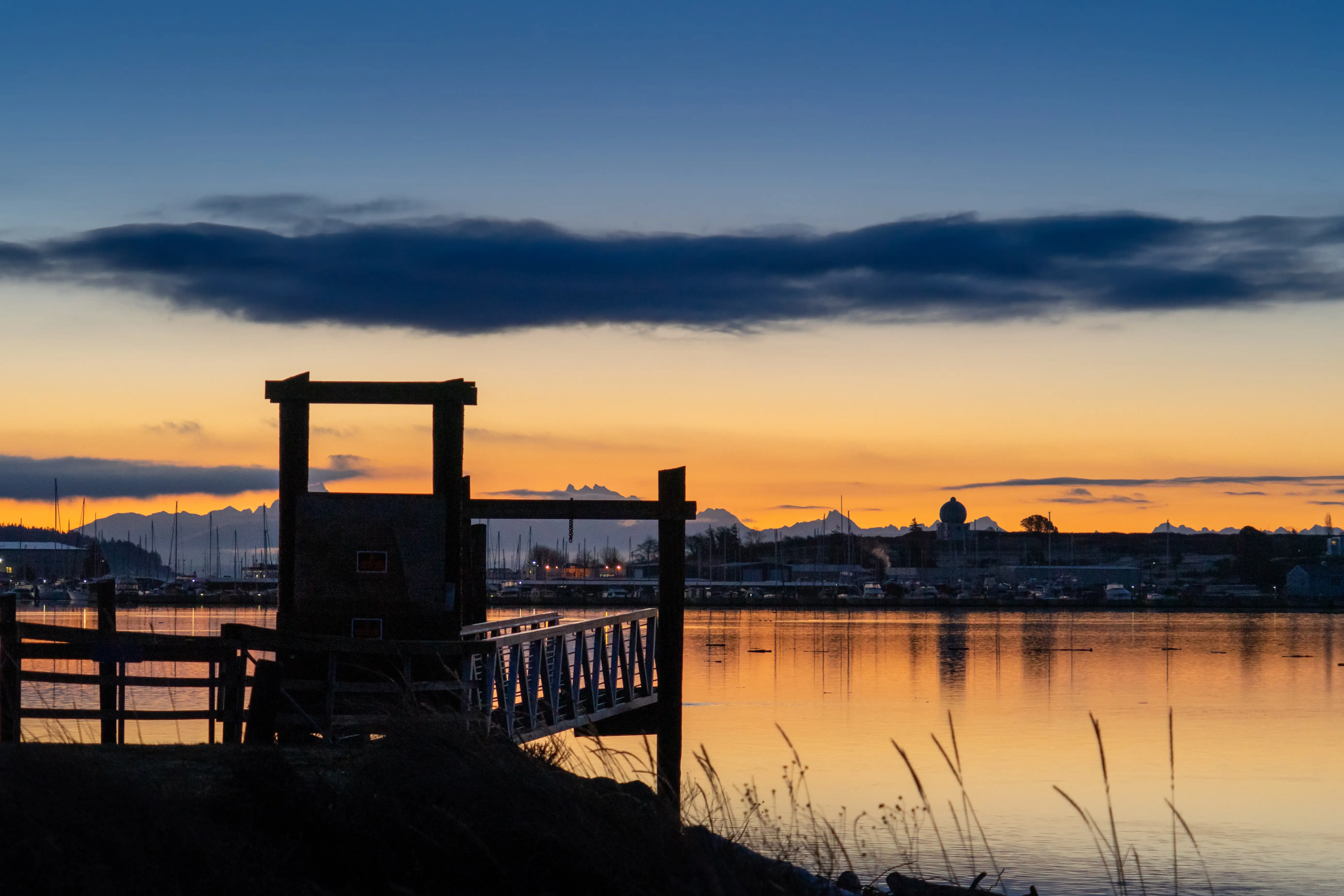
Not every city works for every buyer, and Oak Harbor has a specific pull. The table below is a shortcut — honest assessments of who finds real long-term satisfaction here versus who tends to feel the limitations most acutely.
| Best For | Why |
|---|---|
| Military families | On-island base access, military community infrastructure, BAH-aligned pricing |
| Families with young children | B+ schools, low violent crime, outdoor recreation, tight-knit community |
| Remote workers | Below-average home prices, island quality of life, no state income tax |
| First-time buyers | Entry-level homes available in the $380K–$450K range, low property tax rate |
| Retirees with island mindset | Scenic waterfront, slower pace, lower cost than mainland Puget Sound |
| Outdoor enthusiasts | Deception Pass, Penn Cove, whale watching, kayaking, cycling, birding |
The day-to-day reality of Oak Harbor life is quieter and more self-contained than most mainland Pacific Northwest cities. Downtown Oak Harbor is centered around Pioneer Way and SE Pioneer Way, where you'll find local restaurants, a coffee shop or two, the main library branch, and the kind of small-town commercial core that's genuinely walkable — if not especially dense. Windjammer Park sits right on the water adjacent to the marina, and on summer evenings it functions as the city's living room: families on the grass, boats in the water, the sound of something cooking somewhere nearby.
The commute reality deserves its own honest paragraph. Getting to Seattle takes approximately 102 minutes under reasonable conditions — that means either driving north over Deception Pass to catch I-5 near Burlington, or driving south to the Clinton ferry terminal for a water crossing to Mukilteo, then fighting Mukilteo-to-Seattle traffic. Neither route is fast, and neither is reliable during peak summer tourist season when Highway 20 near the bridge backs up considerably. This is not a city for reluctant commuters. If your employer requires three days a week in downtown Seattle, Oak Harbor will wear on you by month six. If you're remote, military-assigned on the island, or work in Anacortes or Mount Vernon, the calculus changes dramatically.
What surprises most people after six months of living here is how little they miss the mainland. The island creates a natural rhythm — you batch your errands, you stop impulse-driving to Target, and you start actually using the parks and waterfront that you moved here for. Costco runs become a bi-weekly event; the Oak Harbor Walmart and Safeway handle most daily needs. The farmers market at Windjammer Park connects residents to Whidbey Island's agricultural backbone. Most long-term residents describe an adjustment period of about 90 days, after which the island's pace starts to feel like a feature rather than a constraint.
The median age here skews young — around 31, driven largely by the military base population — which gives Oak Harbor a different social energy than you might expect from a small island city. There are young couples everywhere, kids everywhere, and a transient layer of the community that cycles on three-year orders. That turnover creates a perpetually fresh social scene but also limits the depth of some community institutions that rely on long-term continuity.
The natural setting is genuinely extraordinary. Deception Pass State Park sits at the northern tip of Whidbey Island, and it's not a scenic overlook — it's one of the most visited state parks in Washington, with old-growth forest, dramatic tidal straits, miles of hiking trails, and the kind of scenery that makes visitors pull over and take the same photograph from the bridge that locals stopped taking years ago because they see it every week. Penn Cove, just south of town, is internationally known for its mussels and is equally known among kayakers and birders for the protected calm-water paddling it offers. Joseph Whidbey State Park and City Beach Park add more waterfront access within the city itself. If outdoor recreation is part of why you're moving to the Pacific Northwest in the first place, Oak Harbor delivers more per dollar than almost any comparable market.
The housing value equation is real. At a median sold price in the $510K–$530K range and a property tax rate of approximately 0.72%, Oak Harbor is meaningfully more accessible than Anacortes, Bellingham, or the Eastside suburbs. That same $485,449 — the city's median home price figure — buys a single-family home with a yard on most of the island, not a condo three miles from the nearest grocery store. Entry-level inventory does exist in the $380K–$450K range, primarily in older construction and townhomes. For buyers priced out of the Eastside or even Snohomish County, the math here is hard to argue with.
The military community infrastructure creates an environment that's particularly supportive for families with children. More than half of Oak Harbor School District students are military dependents, which means the schools are accustomed to welcoming new students, the recreation programs are built around families with active schedules, and the social networks for newcomers are well-worn. The base's economic anchor also insulates Oak Harbor from the boom-bust cycles that hit more tourism-dependent island economies. NASWI has supported roughly 12,925 jobs and tens of millions in regional tax revenue — that stability translates into consistent local services and a housing market that doesn't crater when Seattle sneezes.
Washington's lack of a state income tax adds quietly but meaningfully to the long-term financial case. Combined with Oak Harbor's below-average property tax burden, the overall tax picture for residents here is genuinely favorable. For a military household or a remote worker comparing net take-home across different states, Washington's tax structure is a legitimate advantage.

Looking to buy in Estimate your payment.
Enter your numbers to see an estimated monthly mortgage payment.
Estimate only. Excludes HOA fees and mortgage insurance.
The island geography that makes Oak Harbor beautiful also makes it inconvenient in ways that compound over time. The Deception Pass bridge is a single point of failure — when it's foggy, icy, or under emergency maintenance, you're looking at a significant ferry detour. The Clinton ferry crossing runs regularly but adds 30–40 minutes to an already-long commute south. Highway 20 through the pass becomes a genuine traffic problem from Memorial Day through Labor Day, when tourist volume surges. Buyers who move here from the mainland underestimate how much they relied on spontaneous trips to IKEA, a good specialty grocery, or a same-day urgent care facility until those options require a 45-minute drive plus a bridge or a boat.
Healthcare access is a legitimate concern for anyone with complex medical needs. WhidbeyHealth Medical Center — the main hospital facility — is actually located in Coupeville, not Oak Harbor, and while the system operates walk-in clinics in Oak Harbor, major procedures and specialist care typically require mainland travel to Anacortes, Mount Vernon, or Burlington. For a young, healthy family this may never register. For retirees or households managing chronic conditions, it's worth understanding before you buy.
Why some people leave comes down to two patterns. The first is the commute math — after a year or two of 100-minute commute days, many residents who took remote-friendly jobs that later shifted back to hybrid find themselves making a difficult choice between the lifestyle they love and the professional reality they're managing. The second pattern is retail and service limitations. Oak Harbor has a Walmart, a Safeway, a Home Depot, and the major fast-food chains, but it lacks the restaurant depth, the boutique retail, and the cultural amenities of even a mid-sized mainland city. Residents who want a diverse dining scene, live music venues, or easy access to a major airport eventually feel the ceiling.
The school district earns a solid B+ rating overall, and Oak Harbor High School posts a graduation rate around 93%, which is commendable. But math proficiency scores lag significantly — roughly 27% of students testing proficient in math — which is a real gap. Parents with children heading toward STEM-focused high school coursework or competitive college admissions should factor that in and investigate what the district's advanced program offerings look like before buying.
Harbor View is one of Oak Harbor's most desirable residential areas, offering elevated positions with water views and convenient proximity to downtown and the marina district. Homes here skew toward established single-family construction with mature landscaping, and pricing reflects the premium — expect to land in the upper range of Oak Harbor's market, typically above the city-wide median. The downside is limited lot size in some blocks, and the area's popularity means inventory moves quickly.
Best for: Buyers who want the full Whidbey Island waterfront experience within the city limits without paying full waterfront pricing.
Olympic Gardens is a stable, middle-market residential neighborhood that draws families looking for more space per dollar than the waterfront-adjacent areas offer. The housing stock tends to be well-maintained single-family homes from the 1980s and 1990s, with yard space and quiet streets. Pricing generally runs close to or slightly below the city-wide median.
Best for: Families with school-age children who want square footage, neighborhood calm, and proximity to elementary school corridors.
Penn Cove Park is a neighborhood that benefits from its association with one of Whidbey Island's most photographed geographic features — the cove itself sits just south of the city. Residential streets here lean toward modest single-family homes and attract both long-term island residents and buyers seeking a quieter approach to island living. It's among the more active neighborhoods by listing volume, which means more inventory turns over here than in tighter submarkets.
Best for: Buyers who want a recognizable address with natural surroundings and don't need to be walkable to downtown Oak Harbor.
Central Oak Harbor is the commercial-residential heart of the city — Pioneer Way and the surrounding blocks — where mixed-use zoning puts residents within walking distance of coffee shops, the library, local restaurants, and the waterfront at Windjammer Park. Housing options here include older single-family homes, townhomes, and some attached housing. Prices vary widely depending on condition and proximity to the water.
Best for: Remote workers or couples who want walkable daily life and easy marina access without the premium of Harbor View.
Crescent Harbor is the neighborhood most directly adjacent to Naval Air Station Whidbey Island's Seaplane Base area, which makes it the natural landing zone for military families arriving on orders. Housing here tends to be practical, often in good condition due to the turnover cycle, and priced accessibly for BAH-eligible buyers. The community infrastructure for military households — spouse networks, child care proximity, commissary access — is the strongest here of any neighborhood in the city.
Best for: Active-duty military families who want to minimize commute to the base and plug directly into the existing military community network.
Castilian Hills sits in the higher-elevation residential areas of Oak Harbor, where longer sight lines and hillside positioning offer some of the best views in the city's interior. Homes here tend to run slightly larger than average with more lot depth, and the neighborhood has a reputation among local agents as a reliable mid-to-upper segment of the market. The catch is that Castilian Hills is more car-dependent than central neighborhoods — everything requires a short drive.
Best for: Move-up buyers who want more space and views without paying waterfront prices and don't need walkable access to daily amenities.
Polnell Shores sits at the southern edge of the Oak Harbor area along the waterfront, offering some of the most direct water access of any residential neighborhood in the city. This is a quieter, more private stretch — lower density, larger lots in places — and pricing reflects the scarcity of true waterfront positions. It's not the right fit for buyers who want to walk to coffee or dinner, but for those prioritizing the water itself over convenience, it's hard to beat.
Best for: Buyers whose primary requirement is water proximity and who are comfortable with full car dependency for everyday errands.
Rolling Hills is one of Oak Harbor's more established suburban residential areas, with a layout that feels more like a mainland Pacific Northwest neighborhood than an island enclave. Streets are well-maintained, the housing stock runs from modest ranchers to larger two-story homes, and the price range covers a wide band of the market from first-time buyer territory upward. It lacks the character of the waterfront neighborhoods but delivers reliable livability at a fair price.
Best for: First-time buyers or families seeking a conventional suburban feel with good value relative to other Oak Harbor neighborhoods.
| City | Best For | Home Price | Commute to Seattle | Vibe |
|---|---|---|---|---|
| Oak Harbor | Military families, outdoor enthusiasts, island buyers | ~$510K–$530K | ~102 min | Island town, military-anchored |
| Anacortes | Ferry access, retirees, boaters | ~$580K–$620K | ~85–95 min | Maritime, quieter, older demographic |
| Coupeville | Historic character, small-town purists | ~$450K–$500K | ~110 min | Historic, slow-paced, artistic |
| Mount Vernon | Commuters, affordability, mainland access | ~$480K–$520K | ~70 min | Agricultural hub, growing suburb |
| Langley | Artists, retirees, boutique lifestyle | ~$550K–$650K | ~105 min (ferry) | Artsy, intimate, seasonal tourist draw |
| Freeland | Mid-island quiet, compromise pricing | ~$470K–$510K | ~100 min (ferry) | Suburban-rural blend, family-friendly |
| Metric | Data |
|---|---|
| Population | Approximately 24,362 (2026 estimate: ~24,900) |
| Median Home Price | $485,449 (city median); typical sold range $510K–$530K |
| Property Tax Rate | Approximately 0.72% |
| Median Household Income | $76,084 |
| Commute to Seattle | Approximately 102 minutes |
| Violent Crime per 1,000 | 1.1 — well below national average |
| Property Crime per 1,000 | 8.8 |
| School District Rating | B+ (Oak Harbor School District) |
| Major Employer | Naval Air Station Whidbey Island |
| County | Island County |
Oak Harbor hosts the Holland Happening Festival every April — a celebration of the city's Dutch heritage that brings tulips, wooden shoe races, Dutch-costumed residents, and a street fair to downtown. It's one of the genuinely authentic local traditions rather than a manufactured tourism event, and it's been running for decades. If you're moving to Oak Harbor in March, you'll see the community start preparing for it almost immediately, and it's a useful entry point for meeting long-term residents.
Penn Cove Water Festival is a late-spring event centered on the cove's Indigenous maritime heritage, featuring traditional canoe races, cultural demonstrations, and community gathering. It draws participation from across the region and is a reminder that Oak Harbor's history runs considerably deeper than the Navy's 1942 arrival. Locals treat it as a genuine cultural fixture, not a tourist attraction.
The Growler noise reality is something no one warns you about explicitly enough. EA-18G Growler jets operate out of NASWI, and their flight patterns take them directly over parts of Oak Harbor. On training days — which are frequent — the sound is significant. Residents adapt, and some genuinely stop noticing after a few months. But if you're planning to work from home and your office is under a flight path, test-drive the noise level on a Tuesday afternoon before signing a purchase agreement. The neighborhood you choose matters considerably here — some parts of town are appreciably louder than others.
What I would not do is buy in the neighborhoods immediately adjacent to the main runway approach without spending at least one full weekday morning in the area during active flight operations. This is not a deal-breaker for the right buyer, but it's the most common piece of information that surprises new residents who didn't ask the right questions during their walkthrough.
Local Expert Takeaway: Oak Harbor's sweet spot in 2026 is the buyer who is either military-affiliated, fully remote, or commuting only occasionally to the mainland — that person gets the full benefit of island quality of life, favorable property taxes, and entry pricing that would be $150K–$200K higher for comparable square footage in Anacortes or South Bellingham. Before you make an offer, drive Highway 20 on a Friday afternoon in July to understand what seasonal traffic actually looks like, and spend a morning under the Growler flight path in whatever neighborhood you're targeting. Both experiences will either confirm your decision or save you from a costly mistake.
✅ Oak Harbor delivers genuine Pacific Northwest value — a $485,449 median home price, a 0.72% property tax rate, and no state income tax put more financial runway in buyers' hands than comparable Puget Sound locations.
⚠️ Island logistics are real, not theoretical — the 102-minute Seattle commute, limited specialist healthcare, and ferry or bridge dependency require honest self-assessment before you commit.
📍 Neighborhood selection matters more here than in most cities — flight path noise, water proximity, and military community density vary significantly by micro-location, and the wrong choice is harder to correct when inventory is limited.
Is Oak Harbor a good place to raise a family?
Oak Harbor is genuinely well-suited for families, particularly those with any military connection. The school district earns a B+ rating overall, Oak Harbor High School posts a graduation rate around 93%, and the violent crime rate of 1.1 per 1,000 residents is well below the national average. Outdoor recreation is exceptional, and the community infrastructure for families — youth sports, parks, military spouse networks — is well-developed. Parents focused on advanced STEM coursework should investigate the high school's academic offerings directly, as math proficiency scores lag behind overall graduation performance.
What is the cost of living like in Oak Harbor compared to the rest of Washington?
Oak Harbor's overall cost of living index runs approximately 125 against a national baseline of 100, making it moderately more expensive than the U.S. average but roughly 5% below the average Washington city. Housing is the dominant cost variable, and on that dimension Oak Harbor compares favorably to most Puget Sound communities. The lack of a Washington state income tax provides ongoing savings that compound meaningfully over time for households relocating from California, Oregon, or other income-tax states.
How does living on Whidbey Island compare to living on the mainland?
The practical difference is significant but manageable depending on your lifestyle and work situation. Island residents develop routines around batched errands, ferry schedules, and less spontaneous mainland travel — most long-term residents describe this as an adaptation period followed by genuine lifestyle satisfaction. The mainland offers more retail variety, faster healthcare access, and shorter commutes to major employment centers. The island offers natural beauty, lower crime, a quieter pace, and housing value that the mainland Puget Sound corridor no longer delivers at this price point.
Explore the full Oak Harbor series: The Ultimate Oak Harbor Relocation Guide · Is Oak Harbor Safe? · Cost of Living in Oak Harbor · Best Neighborhoods in Oak Harbor · Oak Harbor Schools & Family Life · Oak Harbor Youth Sports · Oak Harbor Parks & Recreation · Retiring in Oak Harbor · 1031 Tax-Deferred Exchange in Oak Harbor · Oak Harbor First-Time Homebuyers Guide · Moving to Oak Harbor from California
Tell us what you need help with and we'll connect you with local resources.

About the Author
Todd Davidson is the founder of Living in Oregon and Living in Washington, where he publishes in-depth city guides, neighborhood resources, and local market insights covering more than 180 communities across the Pacific Northwest. While his background is in home financing and real estate, he created these digital platforms to help families research and compare regions before making a move.