
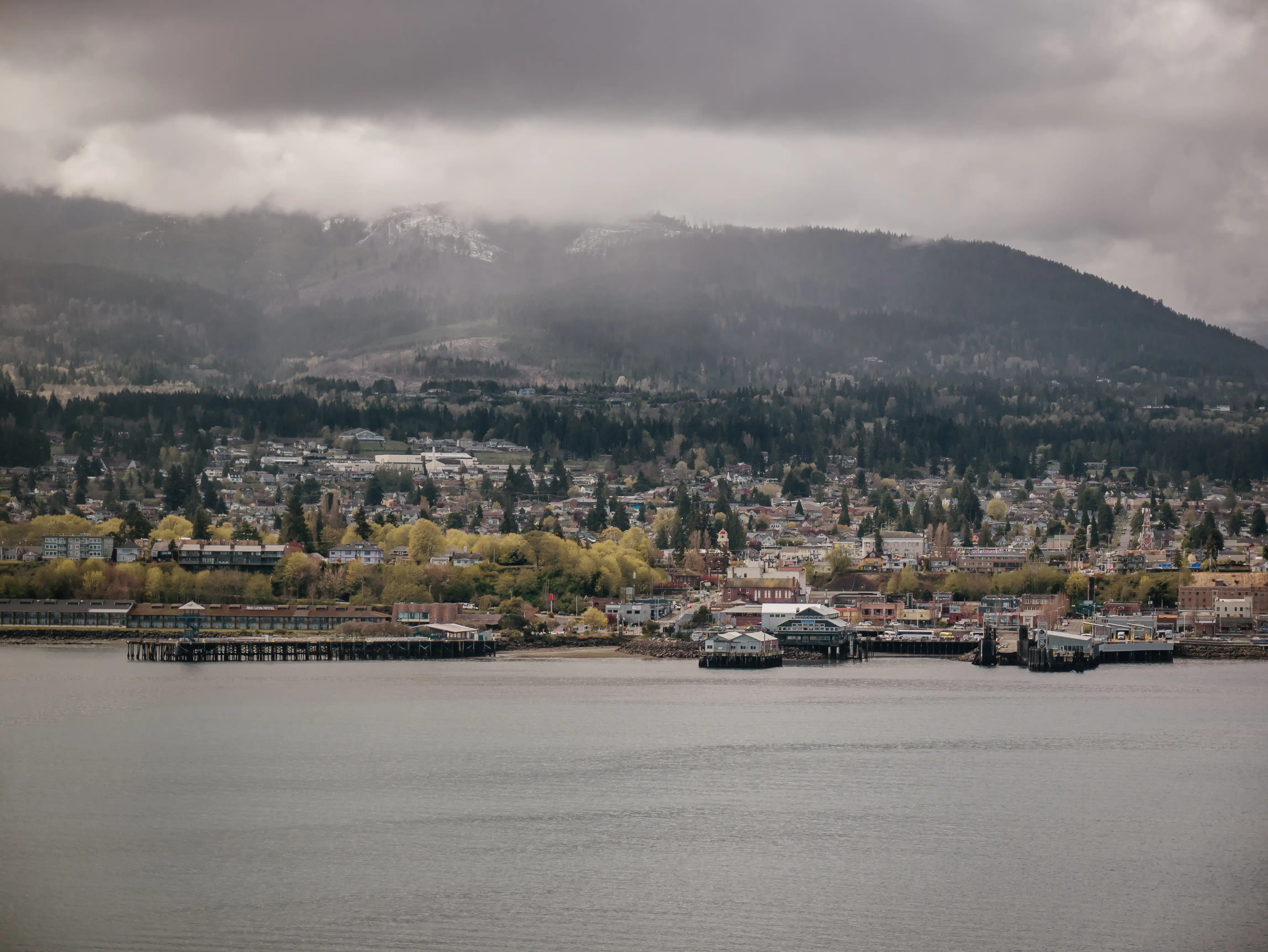
Olympic Peninsula · Washington
Port Angeles School District isn't the flashiest school system on the Olympic Peninsula, and the district will tell you that honestly. With a B- overall grade and a district-wide graduation rate that has climbed to roughly 82% over the past five years, this is a system doing genuine work in a genuinely challenging environment — serving a geographically enormous territory that stretches from Lake Crescent in the west to the foothills of Olympic National Park in the south, with a student body where nearly half of families qualify as economically disadvantaged. That context matters enormously when you're evaluating whether this district is right for your kids.
What shapes school quality here isn't a single bad decision or a single great one — it's the Olympic Peninsula's particular combination of geographic isolation, a slowly declining enrollment trend, and a community that has historically leaned on its schools as anchors. The district is currently in the middle of a significant capital construction cycle, with three new school buildings expected to open in 2028. That investment signals something: this is a community choosing to bet on itself.
This guide helps relocating families answer the practical questions: Which elementary schools are actually inside Port Angeles city limits? What does the graduation rate mean for your high schooler? Where does the district fall short, and what private or alternative options exist if it does? By the end, you'll have a clear picture of whether Port Angeles schools fit your family's specific needs — not just the district's marketing materials.

| Metric | Port Angeles SD | WA State Average |
|---|---|---|
| Total Enrollment | ~3,223–3,285 (K–12 FTE, 2024–25) | — |
| Number of Schools | 9 (5 elementary, 1 middle, 1 high school, 1 alternative HS, 1 K–12 virtual) | — |
| Student-Teacher Ratio | 17:1 | 18:1 |
| Average Teacher Experience | Not publicly reported | — |
| Per-Pupil Spending | $15,448–$16,863 (vs. state median ~$19,251) | ~$19,251 |
| Math Proficiency | 45% | 41% |
| Reading Proficiency | 55% | 53% |
| Graduation Rate (PAHS) | 90%+ (principal-confirmed, May 2025) | 84% |
| District Graduation Rate | ~82% (district-wide, 2022–23) | 84% |
| Economically Disadvantaged | 44.1% | — |
| Minority Enrollment | ~30% | 52% |
| State Academic Rank | Top 30% of WA districts (approx. #77 of 306) | — |
The district operates five elementary schools serving grades PK–6, but only three of them sit physically inside Port Angeles city limits. That distinction matters if walkability, proximity to your neighborhood, or after-school logistics are part of your family's calculus.
Hamilton Elementary (1822 W 7th St) is the academic standout among district elementaries, with roughly 62% of students scoring proficient or above in both math and reading — the highest dual-proficiency rate in the system. It's the right fit for west-side families who want the strongest academic environment in the district. The catch is that 61% of students are economically disadvantaged, which creates a classroom environment that demands strong teachers and support staff; the school has both, but the resource pressure is real.
Jefferson Elementary (218 E 12th St) serves central Port Angeles and sits less than half a mile from the high school campus, making it the most logistically convenient option for families living in the city's core neighborhoods. Enrollment runs around 253 students, the smallest of the five, which translates to a close-knit feel and accessible teachers. Public test-score data for Jefferson is less comprehensive than for Hamilton, so families prioritizing academic benchmarks should ask the district for current proficiency figures before assuming.
Franklin Elementary (2505 S Washington St) is in active transition — a replacement building is under construction as part of the district's capital projects program, which is worth knowing if you're buying in the south or east parts of the city. Current publicly available ratings have been lower than the other in-city schools, though construction timelines and a new facility often correlate with improved program investment. Families buying near Franklin today are buying into a school in the process of rebuilding its reputation alongside its building.
Dry Creek Elementary (25 Rife Rd) sits outside city limits to the west, near the Lower Elwha Klallam Reservation, but it serves families in the western portions of the district and is consistently one of the top academic performers alongside Hamilton. Its enrollment of roughly 370 makes it the largest elementary in the system. The school has a meaningful cultural connection to the Lower Elwha Klallam tribal community, and that relationship shapes the school's identity in ways families from outside the region often find unexpectedly enriching.
Roosevelt Elementary (106 Monroe Rd) is also outside city limits to the east, serving the rural fringe of the district. For buyers purchasing in the Agnew corridor or further east toward Sequim, Roosevelt is worth understanding as the likely elementary assignment.
The district runs a single middle school serving grades 7–8, then channels all students into Port Angeles High School — with Lincoln High School available as an alternative pathway for students who need a different structure.
Stevens Middle School currently serves the district's 7th and 8th graders, and like the elementary level, it's heading into a construction replacement cycle with a new building expected by 2028. Stevens sits in the middle of the district's academic performance range — reading proficiency at the middle school level runs around 52%, with math closer to 43%. Students who arrive from Hamilton or Dry Creek typically arrive ahead of grade-level expectations; those transitioning from Franklin sometimes face a sharper adjustment. The district's 17:1 ratio holds at the middle level, which helps teachers catch struggling students before patterns set in.
Port Angeles High School (PAHS) is the district's most important story for relocating families with older kids. The school has maintained a graduation rate above 90% for the past five years — a figure confirmed by the principal in May 2025 and higher than the state average of 84%. PAHS competes in the 2A WIAA classification, meaning athletic programs face competitive but accessible field at the state level. The student who thrives here is self-directed and comfortable in a smaller-school environment where there aren't seventeen AP sections to choose from; the student who struggles is one who needs a deep bench of gifted or specialized programming, which PAHS simply cannot offer at the same scale as larger districts.
Lincoln High School serves as the district's alternative high school for students who need a non-traditional academic structure. It's a genuine option, not a last resort — small cohorts, flexible scheduling, and dedicated staff make it effective for students who don't fit the traditional PAHS mold.
Looking to buy in Estimate your payment.
Enter your numbers to see an estimated monthly mortgage payment.
Estimate only. Excludes HOA fees and mortgage insurance.
The B- district grade surprises families in two directions. Some arrive expecting worse and are relieved. Others arrive expecting a West Sound suburban experience and feel the gap.
What parents who've relocated here consistently report after their first school year is that teacher quality is the variable that matters most. Class sizes are manageable, staff turnover in the stronger schools is relatively low, and the community's size means that teachers and parents tend to know each other by name rather than by email. That relationship-driven culture compensates for some of what the district lacks in specialized programming.
The schools are not evenly distributed across the city in terms of performance, and where you buy genuinely matters. Families on the west side near Hamilton tend to report the most satisfaction with elementary placement. Families in the center of the city near Jefferson describe a solid, close-knit experience. The south and east sides involve more variability, and Franklin's in-progress renovation story is worth watching before you decide.
One thing that surprises most families after six months: how much Olympic National Park functions as an extension of the curriculum. Field trips to Hurricane Ridge and the park visitor center aren't novelties here — they're woven into what the district does, and children in Port Angeles develop an environmental literacy that is genuinely uncommon. That's not on any Niche ranking, but parents mention it consistently.
Be honest with yourself on this one. If your child is academically accelerated and you've been relying on an IB program, a dedicated gifted cohort, or a deep AP course menu, Port Angeles will feel limiting. The district doesn't currently offer an IB program, and the AP course selection at PAHS is narrower than at larger 3A or 4A schools.
Families with children who need robust special education services — particularly for complex learning profiles — should contact the district's special services department directly before committing to a purchase. The district has legally mandated supports in place, but the specialist depth available in a district of 3,200 students differs from what families may be accustomed to in larger metro systems.
For competitive club athletics at the pre-high school level, the district's rural geography and smaller population create real limitations on travel times and competitive scheduling. Sequim School District, roughly 17 miles east, is often mentioned by families whose children are serious athletes as offering a slightly broader athletic infrastructure at the middle school level.
Families specifically seeking a Spanish immersion or language-focused curriculum should know that Port Angeles does not offer that program currently. Port Townsend, further east, has attracted some families with those priorities, though the commute from Port Angeles makes it impractical as a daily school run.
| School | Type | Grades | Notes |
|---|---|---|---|
| Queen of Angels Catholic School | Private, Catholic | K–8 | Long-established, faith-based academics |
| Olympic Christian School | Private, Christian | K–12 | Small enrollment, faith-integrated curriculum |
| Seaview Academy (PASD) | Public Virtual K–12 | K–12 | District-run, full-time online option |
Several licensed in-home childcare providers operate throughout the city, concentrated on the west and central sides. The YMCA of the Greater Olympic Peninsula runs before- and after-school care programming that coordinates with Hamilton and Jefferson, making it a practical choice for working parents whose school day doesn't align with work schedules.
For families with infants and toddlers, Port Angeles Early Learning Center offers developmental programming and is one of the more established early childhood facilities in the county. Spots in quality infant care are genuinely limited — if this is part of your relocation equation, start your search before you finalize a purchase timeline, not after.
Port Angeles functions as a small city with a genuine sense of communal rhythm, and much of it runs through the North Olympic Library System, which operates the Port Angeles main branch on South Peabody Street. The library runs active children's programming year-round, including summer reading challenges that dozens of district families use to maintain literacy engagement between school years.
The Juan de Fuca Festival of the Arts, held annually over Memorial Day weekend at the waterfront, has become a reliable family gathering point — multiple stages, arts programming for children, and a scale that feels accessible rather than overwhelming for families new to the area. The Port Angeles Farmers Market, running on Saturdays through the growing season at downtown's Lincoln Park area, is where many families actually meet their neighbors and build the social infrastructure that makes relocating feel like arriving rather than just landing.
The Port Angeles Swim Club and the city's aquatics programs through the Port Angeles Aquatic Center on West 18th Street give children structured programming outside the school day. The Olympic Discovery Trail, which runs east-west through the region, is used by families for after-school biking and weekend recreation in a way that genuinely sets Port Angeles apart from most communities of this size — the outdoors here isn't a weekend destination, it's Tuesday afternoon.

Local Expert Takeaway: Buy in Hamilton Elementary's service area on the west side if academics are your top priority — it's the strongest-performing in-city elementary and the neighborhood surrounding it is priced well below what comparable school-access would cost in Sequim or Port Townsend. If you have a high schooler, Port Angeles High School's 90%+ graduation rate and manageable WIAA 2A competitive environment are legitimate strengths. The one thing I'd do before signing: call the district office, give them your specific address, and confirm your elementary assignment — this district's geography means assumptions about which school you'll feed into are wrong more often than buyers expect.
Are Port Angeles schools good for families relocating from larger cities?
Port Angeles School District performs above state averages in both math and reading proficiency and maintains a graduation rate at the high school level that exceeds the state benchmark. Families accustomed to large suburban districts with IB programs or extensive AP menus will find the offerings narrower, but the smaller class sizes and teacher-to-student ratios — 17:1 versus the state average of 18:1 — tend to compensate in meaningful ways during the adjustment year.
Which elementary school is best in Port Angeles?
Hamilton Elementary on West 7th Street consistently posts the district's highest academic proficiency numbers, with roughly 62% of students scoring proficient or above in both math and reading. It's inside city limits, serves the west side of Port Angeles, and draws the most positive feedback from parents who've relocated here specifically for elementary school quality. Jefferson Elementary in central Port Angeles is the second in-city option, with a smaller, closer-knit environment that suits families who want accessibility and community feel.
Does Port Angeles have private school options?
Yes — Queen of Angels Catholic School and Olympic Christian School both operate in the Port Angeles area, offering K–8 and K–12 options respectively for families seeking faith-based or alternative academic environments. The district also runs Seaview Academy as a full K–12 virtual option for families whose circumstances make traditional school attendance difficult.
Explore the full Port Angeles series: The Ultimate Port Angeles Relocation Guide · Is Port Angeles Safe? · Cost of Living in Port Angeles · Best Neighborhoods in Port Angeles · Port Angeles Schools & Family Life · Port Angeles Youth Sports · Port Angeles Parks & Recreation · Retiring in Port Angeles · 1031 Tax-Deferred Exchange in Port Angeles · Port Angeles First-Time Homebuyers Guide · Moving to Port Angeles from California
Tell us what you need help with and we'll connect you with local resources.

About the Author
Todd Davidson is the founder of Living in Oregon and Living in Washington, where he publishes in-depth city guides, neighborhood resources, and local market insights covering more than 180 communities across the Pacific Northwest. While his background is in home financing and real estate, he created these digital platforms to help families research and compare regions before making a move.