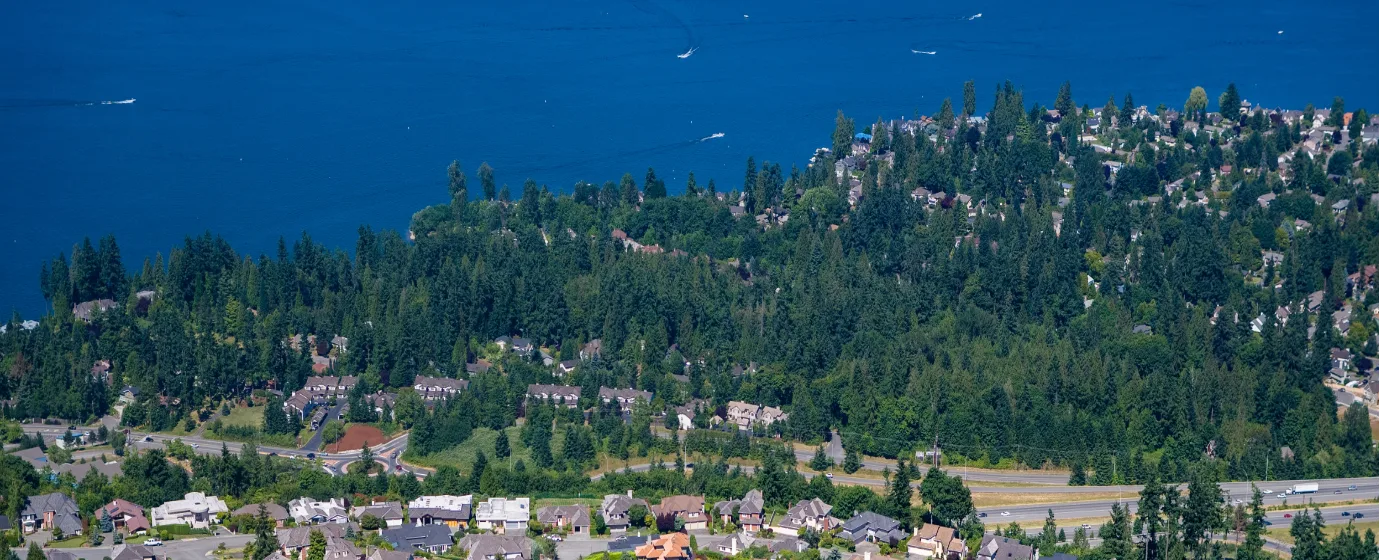
Puget Sound · Washington
If you've been told that Issaquah is a more affordable alternative to Bellevue, that's partially true — and partially a trap. The median home price in Issaquah sits at approximately $1,070,000, and while that's lower than the peak Bellevue luxury tier, it's still well above what most people picture when they hear "Seattle suburb with room to breathe." The gap between what buyers expect and what they find at their first open house is real, and it catches a lot of relocating households off guard.
What shapes the cost picture here is geography and planning history. Issaquah is a city of distinct micro-markets, from master-planned hilltop communities like Issaquah Highlands to the older bungalows of Olde Town near Gilman Village. A home in Montreux can cost $2 million. A home just three miles away in Downtown Issaquah might come in under $900,000. Same school district, different financial universe. That variation makes price comparisons tricky and means that "Issaquah home prices" as a blanket statement covers an enormous range of buyer situations.
This guide breaks down exactly what it costs to live here — whether you're buying or renting, what your property taxes will look like, how much you'll spend on groceries and utilities, and how Issaquah stacks up against the cities you're probably also considering. By the end, you'll have a clear picture of whether Issaquah fits your budget, and which part of the city gives you the best value for your specific situation.
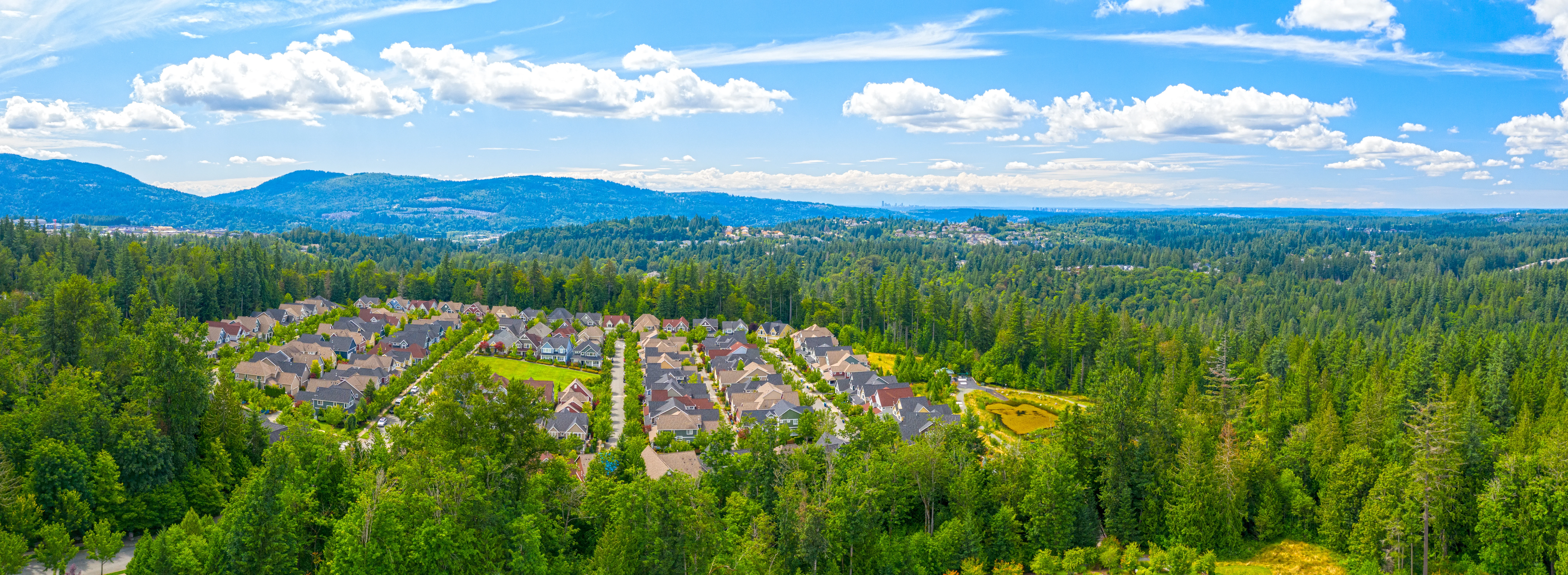
The Issaquah housing market in 2026 is more balanced than it's been in several years. Inventory is up nearly 50% year-over-year, days on market have stretched from under a week to around 11 days, and price reductions — which were rare in 2022 and 2023 — have become common enough that buyers who missed out on previous cycles now have genuine leverage. The median sold price over the most recent 90-day rolling period sits closer to $937,000, while the broader city-wide value index lands around $1,070,000 — the gap between those two figures reflects how dramatically neighborhood location affects outcomes.
What that money buys depends almost entirely on where in Issaquah you're shopping. At the $950,000–$1.1 million range, you're typically looking at newer construction townhomes in Talus or Klahanie, older single-family homes in Olde Town, or entry-level detached homes in Issaquah Highlands with a small yard and a garage. Push past $1.2 million and the picture expands: larger lots near Squak Mountain, newer construction with mountain views in the Highlands, or well-maintained homes with more square footage in Grand Ridge. Montreux starts where most other Issaquah neighborhoods peak — homes there routinely list above $1.5 million, with the upper end pushing past $2.5 million for the estate parcels overlooking Lake Sammamish.
The competitive dynamics are worth understanding before you write an offer. Issaquah scores an 85 out of 100 on competitive market indexes, and homes still tend to receive multiple inquiries quickly even in a cooler market. The best windows for negotiation are longer-tenured listings — properties sitting past 20 days often have room that didn't exist six months ago.
| Price Range | What You're Likely Buying |
|---|---|
| $800K–$950K | Olde Town/Downtown older SFH, Talus townhomes, entry Klahanie |
| $950K–$1.2M | Issaquah Highlands entry, Klahanie SFH, Mirrormont ranch homes |
| $1.2M–$1.5M | Squak Mountain lots, Highlands upper tier, Talus newer SFH |
| $1.5M+ | Montreux gated estates, lakefront, luxury Highlands custom homes |
King County applies a levy rate of approximately 0.96% in Issaquah — which on a home at the city-wide median translates to roughly $10,270 per year, or about $856 per month added to your housing cost. Washington uses a 1% annual increase cap on property tax levies, which prevents sudden assessment shocks even when home values climb quickly — a meaningful protection compared to states with uncapped reassessment systems. Homeowners 61 and older may qualify for Washington's senior exemption program, which can reduce or freeze the assessed value used for tax calculation depending on income level, making Issaquah meaningfully more affordable for retirees who own here long-term.
Issaquah isn't a traditional renter's market, but it has more rental inventory than the ownership-heavy reputation might suggest — roughly 41% of households here rent. The average monthly rent across all unit types runs approximately $2,743, with the largest share of listings falling in the $2,500–$3,000 range. That's about 31% above the national average, which is consistent with the broader Eastside rental market.
| Unit Type | Average Monthly Rent | Avg. Size |
|---|---|---|
| Studio | $1,983 | 577 sq ft |
| 1 Bedroom | $2,272 | 778 sq ft |
| 2 Bedroom | $2,782 | 1,114 sq ft |
| 3 Bedroom | $3,269 | 1,390 sq ft |
Rental prices vary considerably by neighborhood. Olde Town is consistently the most affordable end of the rental spectrum, with one-bedroom units sometimes available around $1,900 per month — a meaningful discount compared to the city average. Newport and Greenwood Point run slightly higher but remain below $2,500 for a one-bedroom. Issaquah Highlands sits at the opposite extreme: average one-bedroom rents there approach $3,700 per month, reflecting the HOA-managed amenities, newer construction, and mountain views baked into the lifestyle. For a household budgeting to rent comfortably in Issaquah, an annual income of approximately $90,000 is the practical floor for a one-bedroom — and well above that for a two-bedroom in the Highlands.
Utilities in Issaquah are consistent with the broader Pacific Northwest — Puget Sound Energy handles electricity and natural gas for most of the city. A typical household in a 1,500–2,000 square foot home runs $150–$200 per month on electricity and $80–$120 on gas through the winter heating season. Internet service is well-served, with Comcast Xfinity providing cable broadband through most of the city and Ziply Fiber expanding its footprint in newer developments — typical monthly costs run $60–$90 for standard speeds.
Transportation is where Issaquah's geography imposes its most significant cost on residents. The city is fundamentally car-dependent outside of Issaquah Highlands, where a walkable core and internal trail network reduce some errand trips. The commute to Seattle via I-90 averages 25 minutes under normal conditions, but that figure is optimistic during the morning peak — the I-90 merge from the Issaquah exit toward the Mercer Island bridge is a well-known bottleneck that can double or triple travel time on bad days. Most Issaquah households own two vehicles; budget accordingly. King County Metro Route 554 connects Issaquah Transit Center to downtown Seattle, and Sound Transit's planned Eastlink expansion continues to shape long-term transit options.
Groceries and daily essentials are plentiful but not budget-oriented. A Fred Meyer anchors the practical end of grocery shopping, and a QFC serves Issaquah Highlands. Whole Foods and other premium options require a short drive toward Bellevue or Sammamish. Dining in Issaquah skews casual and independent, with Gilman Village supporting a cluster of local restaurants; expect to spend $15–$25 per person for lunch and $40–$60 per couple for a mid-tier dinner out.
Looking to buy in Issaquah? Estimate your payment.
Enter your numbers to see an estimated monthly mortgage payment.
Estimate only. Excludes HOA fees and mortgage insurance.
Issaquah occupies an interesting position on the Eastside — more affordable than Bellevue and Mercer Island at the high end, but comparable to or slightly above Sammamish and Renton depending on which neighborhood you're comparing.
| City | Median Home Price | State Income Tax | Property Tax Rate | Avg. Commute to Seattle |
|---|---|---|---|---|
| Issaquah | ~$1,070,000 | None | 0.96% | 25 min |
| Bellevue | ~$1,450,000 | None | ~0.93% | 20 min |
| Sammamish | ~$1,180,000 | None | ~0.88% | 35 min |
| Renton | ~$680,000 | None | ~1.05% | 20 min |
| Newcastle | ~$950,000 | None | ~0.95% | 25 min |
| Mercer Island | ~$1,750,000 | None | ~0.83% | 15 min |
| Snoqualmie | ~$900,000 | None | ~1.02% | 40 min |
The most instructive comparison for most buyers is Issaquah versus Sammamish. They're neighbors, they share similar school quality reputations, and the price gap has narrowed considerably. What Issaquah offers that Sammamish doesn't is walkability in pockets like Olde Town, direct I-90 access, and more neighborhood character diversity. The catch is that Sammamish sometimes undercuts Issaquah on price-per-square-foot in comparable new construction. Renton, by contrast, is the clear winner for buyers who prioritize purchasing power over address prestige — but the lifestyle and school district calculus is different enough that most buyers aren't choosing between the two cities directly.
The table below reflects a household purchasing at the city-wide median price with 10% down, financing approximately $963,000.
| Category | Monthly Cost |
|---|---|
| Mortgage (principal + interest) | $5,900 |
| Property Taxes | $856 |
| HOA (where applicable — Highlands, Klahanie) | $100–$350 |
| Homeowner's Insurance | $180 |
| Electricity | $165 |
| Natural Gas | $90 |
| Internet | $75 |
| Water/Sewer/Garbage | $120 |
| Groceries (household of 3-4) | $900 |
| Transportation (2 vehicles, gas + maintenance) | $600 |
| Dining Out / Entertainment | $500 |
| Childcare / School Activities | $500–$1,200 |
| Total Estimated Monthly | ~$10,000–$11,000 |
A household at the median income of $154,669 — roughly $12,890 per month gross — lands reasonably within range of this budget before discretionary spending and savings. It leaves limited cushion, which is why financial planners working with Issaquah buyers typically recommend targeting a home in the $850,000–$950,000 range to maintain healthier ratios, particularly if one income is variable or one spouse is planning to reduce hours.
Washington State levies no personal income tax — which is one of the primary financial reasons high-income tech workers at Microsoft, Amazon, and T-Mobile concentrate on the Eastside rather than in Portland or other comparable metro areas. For a household earning $154,000 annually, moving from California (13.3% top bracket) to Issaquah can represent a five-figure annual tax savings. That reality is factored into home prices here — sellers know buyers are arriving with freed-up income.
Washington funds its state budget heavily through sales tax, which in Issaquah runs approximately 10.1% — among the higher combined rates in the country. Everyday purchases, furniture, appliances, and vehicles are all taxed at that rate. For buyers relocating from income-tax states, the adjustment is psychological as much as financial: you're no longer seeing deductions on your paycheck, but you're paying at every register instead.
Washington also offers a Property Tax Deferral program for senior and disabled homeowners that allows eligible residents to defer property taxes until the property is sold or transferred — effectively an interest-free loan from the state for qualifying households. Combined with the senior exemption on assessed value, these programs make Issaquah ownership materially more sustainable for older residents on fixed incomes than the headline tax figures suggest.
Local Expert Takeaway: The single most common financial mistake Issaquah buyers make is stretching to Issaquah Highlands when they'd be better positioned buying in Olde Town or Klahanie. The school district is identical, the commute difference is negligible, and the $100,000–$150,000 you save creates breathing room for the HOA fees, childcare, and lifestyle costs that make Eastside living sustainable long-term. If your goal is building equity in a strong school district without being house-poor, start your search in the $850,000–$950,000 range before letting a weekend of open houses in the Highlands recalibrate your expectations upward.
Is Issaquah affordable compared to other Eastside cities?
Issaquah sits below Bellevue and Mercer Island on price but above Renton and Snoqualmie. At a city-wide median around $1,070,000, it's not an entry-level market, but it offers better value per square foot than Bellevue in many comparable neighborhoods. Buyers who prioritize school quality and outdoor access over proximity to downtown Bellevue often find the trade-off worthwhile.
What are the property taxes in Issaquah?
Issaquah's levy rate is approximately 0.96%, which produces an annual tax bill of roughly $10,270 on a home at the city median. Washington caps annual levy increases at 1%, which provides meaningful long-term predictability. Homeowners 61 and older may qualify for senior exemptions that reduce the assessed value used for tax purposes.
How does Washington's lack of income tax affect cost of living in Issaquah?
For high-income households relocating from California, Oregon, or New York, eliminating state income tax can recover $15,000 to $30,000 or more per year depending on earnings. That savings partly offsets Issaquah's premium home prices and contributes to why Eastside property demand — and pricing — remains elevated even during national market corrections. The practical offset is a 10.1% sales tax that applies to most purchases.
Explore the full Issaquah series: The Ultimate Issaquah Relocation Guide · Is Issaquah Safe? · Cost of Living in Issaquah · Best Neighborhoods in Issaquah · Issaquah Schools & Family Life · Issaquah Youth Sports · Issaquah Parks & Recreation · Retiring in Issaquah · 1031 Tax-Deferred Exchange in Issaquah · Issaquah First-Time Homebuyers Guide · Moving to Issaquah from California
Tell us what you need help with and we'll connect you with local resources.

About the Author
Todd Davidson is the founder of Living in Oregon and Living in Washington, where he publishes in-depth city guides, neighborhood resources, and local market insights covering more than 180 communities across the Pacific Northwest. While his background is in home financing and real estate, he created these digital platforms to help families research and compare regions before making a move.