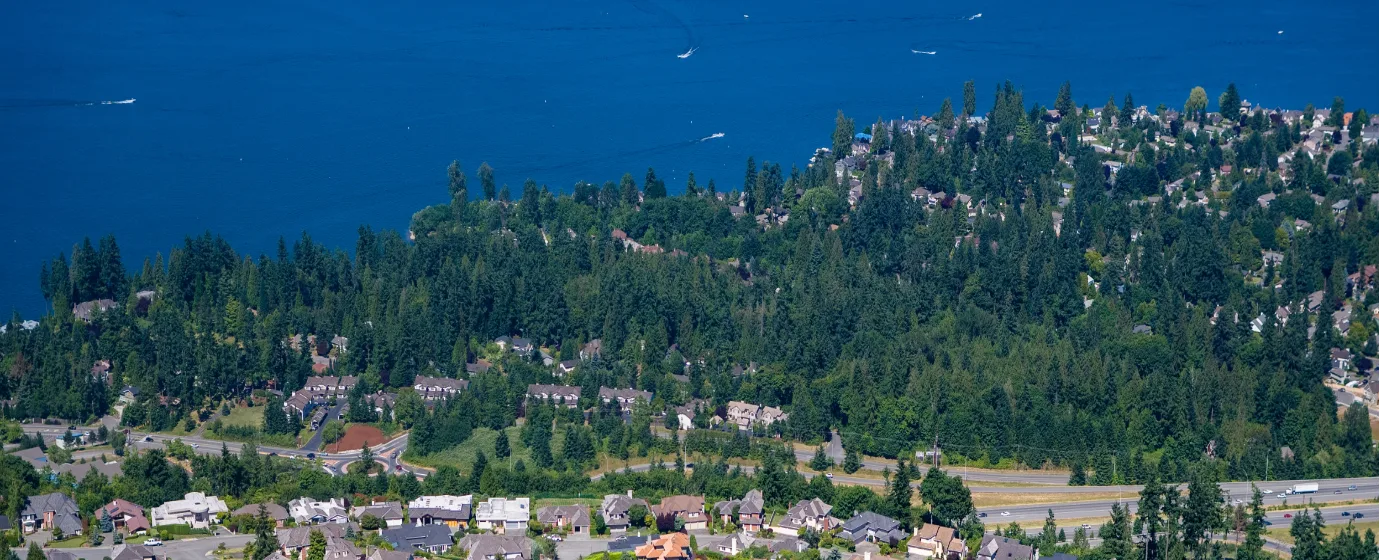
Puget Sound · Washington
There's a specific moment most first-time buyers in Issaquah experience — usually somewhere between pre-approval and their third rejected offer — when the gap between what they expected and what this market actually requires becomes undeniable. The school ratings drew you here. The tech-corridor commute made sense. The trails, the mountain backdrop, the feeling that Issaquah isn't quite a suburb in the way Bellevue is — all of that tracked. Then you saw the median price. Then you lost a bid. Then someone told you the winning offer waived inspection, came in $60,000 over ask, and was all cash. That's the emotional reality of buying your first home in Issaquah in 2026, and pretending otherwise won't serve you.
The citywide median sold price sits at approximately $1,070,000 as of mid-2026. At that price, you're typically looking at a 3-bedroom home in a planned community like Issaquah Highlands, or an older 4-bedroom in need of updates in neighborhoods closer to downtown. The gap between renting and owning here is real but narrowing — Issaquah's market has shifted toward balance for the first time since 2019, with inventory up significantly from last year and days on market stretching to around 28. For a first-time buyer with patience, a solid pre-approval, and a clear-eyed view of which neighborhoods fit their budget, this is actually a better entry window than the city has seen in years.
This guide walks you through the entire process — from getting your finances in order through closing day — with specific attention to what trips up first-time buyers in this particular city. You'll find honest breakdowns by price tier, the neighborhoods where your dollars go furthest, the mistakes that keep buyers stuck, and every down payment resource currently available in King County. Issaquah is worth the effort. The key is going in knowing exactly what the effort requires.
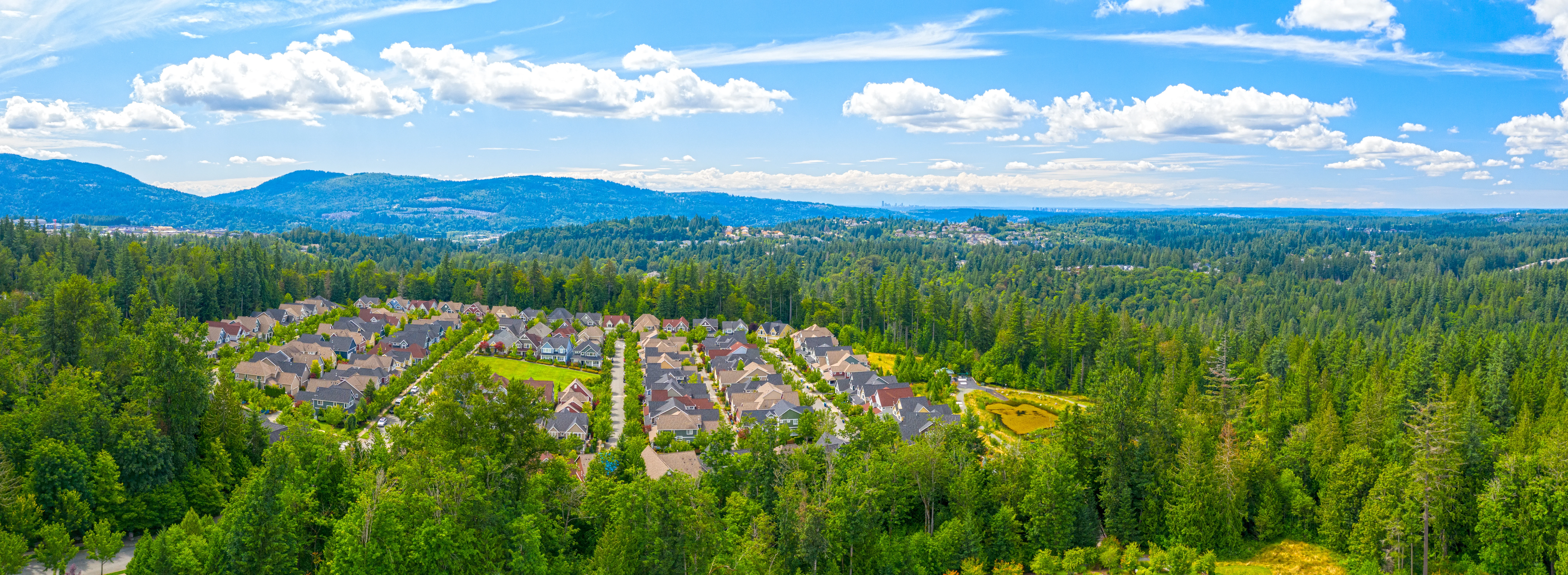
Issaquah makes a compelling case for first-time buyers willing to think long-term. The Issaquah School District consistently ranks among the top school districts in Washington state, which drives resale demand that holds even when broader markets soften. The commute to Seattle runs around 25 minutes under normal conditions, and the presence of major employers — Costco's headquarters, Microsoft's Redmond campus less than 20 minutes away, Boeing facilities across the region — means dual-income households here tend to qualify more comfortably than buyers in comparable markets. Compared to Bellevue or Mercer Island, Issaquah still offers meaningful value at the entry level, even with a $1.07M citywide median.
The honest challenge is that the entry-level inventory here skews heavily toward condominiums and townhomes, and the freestanding single-family homes under $800,000 that do come available move fast. Neighborhoods like Klahanie and Central Issaquah represent the most realistic first-time buyer entry points — you'll find townhomes in the $600,000–$750,000 range and the occasional older single-family home closer to the lower end of that window. Downtown Issaquah and the Olde Town pocket also produce periodic inventory in the $700,000s for buyers who don't need the newest construction. Issaquah Highlands, while highly desirable, typically prices out true first-timers — entry there starts closer to $800,000 for a townhome and climbs from there.
What makes Issaquah genuinely different from what buyers read about Washington real estate generally is the micro-neighborhood pricing dynamic. A home in Issaquah Highlands can command $150,000 more than a similarly sized home just two miles away. That gap isn't arbitrary — it reflects school proximity, HOA amenities, and construction vintage. Understanding which micro-market you're targeting, rather than shopping the city as a whole, is what separates buyers who close here from buyers who spend a year frustrated.
| Price Range | What You Typically Find | Neighborhood Examples | Competition Level |
|---|---|---|---|
| Under $350K | Not available — no single-family or townhome inventory at this price point citywide | N/A | N/A |
| $350K–$550K | Condos, 1–2 bedroom units; occasional older condo in need of updates | Central Issaquah, older complexes near downtown | Low to moderate |
| $550K–$750K | Townhomes, 2–3 bedrooms; older single-family homes needing work | Klahanie, Central Issaquah, south of I-90 corridors | Moderate |
| $750K–$900K | Newer townhomes, entry-level single-family in established neighborhoods | Issaquah Highlands entry, Olde Town, North Issaquah | Moderate to competitive |
| $900K–$1.07M+ | 3–4 bedroom single-family homes, good condition, planned communities | Issaquah Highlands, Grand Ridge, Klahanie SFH | Competitive |
The realistic first-time buyer budget in Issaquah — meaning someone with solid income, conventional financing, and 10–20% down saved — typically lands in the $600,000–$800,000 range before the monthly payment becomes genuinely uncomfortable. At $700,000 with 10% down and a 6.8% rate, the principal and interest payment runs approximately $4,100 per month, and with property taxes at the city's 0.96% rate plus insurance, the total monthly housing cost lands north of $4,800. That's significant, but for dual-income households earning near or above the city's $154,669 median household income, it's achievable without financial overextension.
The best value entry point right now is the $600,000–$750,000 townhome tier in Klahanie and Central Issaquah. These are genuine homes with functional layouts, good school access, and strong resale fundamentals — not compromise purchases. Buyers who stretch to $800,000 or above will find broader selection and more single-family options, but the monthly payment math tightens considerably.
| Step | What Happens | Typical Timeline | What First-Timers Get Wrong |
|---|---|---|---|
| Get finances in order | Pull credit, pay down revolving debt, document income and assets | 1–3 months before pre-approval | Waiting until they find a home they love |
| Pre-approval | Lender reviews income, assets, credit; issues pre-approval letter | 1–5 days | Confusing pre-qualification with a real pre-approval |
| Find an agent | Interview local buyers' agents familiar with Issaquah micro-markets | 1–2 weeks | Choosing based on personal connection alone, not local expertise |
| Active search | Tour homes, track market, build comp awareness | 2–8 weeks | Shopping beyond their pre-approval ceiling consistently |
| Making offers | Write competitive offers with agent guidance on price, terms, escalation | Ongoing | Lowballing in a market where sellers read comp data too |
| Under contract | Mutual acceptance, earnest money due within 2 days | 24–48 hours post-offer | Not having earnest money liquid and ready |
| Inspection | Professional inspection; negotiate repairs or credit | 5–10 days | Waiving inspection without understanding what that costs them on older homes |
| Appraisal | Lender orders appraisal to confirm value | 7–14 days | Not understanding appraisal gap risk in a competitive offer situation |
| Final walkthrough | Confirm home condition matches contract | 24–48 hours before closing | Skipping it |
| Closing | Sign documents, funds wire, keys transferred | 20–30 days post-acceptance | Being surprised by total cash-to-close amount |
Issaquah's market in mid-2026 sits in a genuinely balanced state, which is meaningfully different from the frenzied environment of 2021–2023. Inventory is up sharply from a year ago, and buyers have more negotiating room than at any point in recent memory. That said, well-priced homes in desirable neighborhoods — particularly in Issaquah Highlands and Klahanie — still draw multiple offers, and the expectation of a clean, complete offer with solid financing remains the baseline.
Earnest money in King County typically runs 1–3% of purchase price. On a $700,000 home, that means $7,000–$21,000 needs to be liquid and ready to wire within 48 hours of mutual acceptance. First-time buyers who aren't prepared for that speed routinely lose homes they could have closed on. The inspection contingency question is genuinely situation-dependent — on newer construction in Issaquah Highlands, some buyers do waive it, but on older homes in Olde Town or downtown Issaquah, a professional inspection is worth protecting regardless of competitive pressure. Closing typically takes 20–30 days, and same-day or 24-hour pre-approval letters are now standard — any agent expecting you to write an offer without one is behind the times.

Looking to buy in Estimate your payment.
Enter your numbers to see an estimated monthly mortgage payment.
Estimate only. Excludes HOA fees and mortgage insurance.
A conventional loan requires a minimum 620 credit score, but the difference between 650 and 740 is not trivial. On a $450,000 loan, a buyer at 650 might see a rate around 7.25%, while a buyer at 740 qualifies closer to 6.5%. That spread translates to roughly $230 per month — nearly $83,000 over the life of the loan. If your score sits in the low-to-mid 600s, spending three to six months aggressively paying down revolving credit before applying is almost always worth the wait.
FHA loans allow a minimum 580 score with 3.5% down, which can be a genuine entry point for buyers who have the income to qualify but haven't accumulated a large down payment. The trade-off is mortgage insurance that stays on the loan for its life if your down payment is under 10%. On a $550,000 purchase, that adds roughly $200–$250 per month that you won't recover until you refinance or sell. It's not a dealbreaker, but it's real money.
For income qualification using the standard 28% front-end debt-to-income ratio, the approximate gross monthly income needed works out as follows: a $400,000 home at 6.8% with 10% down requires roughly $8,200 per month (about $98,400 annually); a $500,000 home requires roughly $10,200 per month (about $122,400 annually); a $600,000 home requires roughly $12,000 per month (about $144,000 annually). DTI — debt-to-income ratio — is the percentage of your gross monthly income that goes toward all debt payments including your new mortgage. Lenders want the total at or below 43–45%, and tighter is always stronger. One thing buyers relocating from California, Oregon, or any income-tax state consistently underestimate: Washington has no state income tax, which meaningfully increases take-home pay and, in turn, real qualifying power. A California household earning $160,000 brings home roughly $12,000–$15,000 more per year after moving to Washington — a figure that can shift qualification on a $600,000 loan.
Mistake 1: Shopping by list price instead of comp price. Issaquah homes routinely close above asking — sometimes $20,000–$60,000 above — even in a more balanced market. A buyer who budgets to the list price and writes at-ask offers will consistently lose to buyers who understand that the list price is a starting point, not a ceiling. Your agent should be pulling 90-day sold comps in the specific neighborhood you're targeting before you write a single offer.
Mistake 2: Skipping inspection on older downtown inventory. Homes in Olde Town and the original downtown Issaquah core were built in the 1960s through 1990s and carry real deferred maintenance risk — foundation issues, older electrical panels, aging roofs. Waiving inspection in competitive situations may be acceptable on 2010s-era construction in Issaquah Highlands, but doing the same on a 1975 colonial near Gilman Village is how first-time buyers end up with a $30,000 repair bill in year one. Protect the inspection contingency wherever the home's age warrants it.
Mistake 3: Qualifying for the maximum instead of the comfortable. Lenders will approve you for more than you should spend. Getting approved for $900,000 doesn't mean your life works well at a $5,200 monthly payment. Most financial planners suggest keeping total housing costs — mortgage, taxes, insurance — under 30% of gross income. Run that number before you run your maximum qualification number.
Mistake 4: Ignoring school boundary lines within the district. The Issaquah School District is consistently rated among Washington's best, but specific elementary school boundaries affect both your children's assignment and your home's resale demand. Homes within the Issaquah Highlands attendance zone for Cascade Ridge Elementary carry a measurable price premium relative to nearby homes just outside those boundaries. Buyers who assume the district name is uniform throughout the city are consistently surprised at resale.
Mistake 5: Waiting for prices to drop significantly. Issaquah's housing supply is structurally constrained — the city is literally surrounded by mountains, state forests, and the I-90 corridor. New developable land is limited, which provides a floor under prices that doesn't exist in sprawling suburban markets. Buyers who spent 2023 and 2024 waiting for a major correction watched inventory tighten again by spring 2026. Timing the market perfectly is nearly impossible; buying when your finances are ready and your timeline makes sense is almost always the better strategy.
Klahanie is the most frequently recommended entry neighborhood for first-time buyers, and the reasons are practical. Townhomes here run in the $625,000–$775,000 range depending on size and vintage, the community has established HOA infrastructure and trails, and it sits close enough to the SR-900 and I-90 corridors to make both Bellevue and Seattle commutes manageable. The neighborhood feels complete — grocery access, restaurants, parks — in a way that newer developments sometimes don't.
Central Issaquah catches buyers who want proximity to downtown amenities without paying Issaquah Highlands premiums. This area includes a mix of older condos, townhomes, and small single-family homes, with some inventory in the $550,000–$700,000 range. It's not the most polished neighborhood in the city, but the walkability to Gilman Village, the Farmer's Market, and Confluence Park is genuine, and the value-per-square-foot is among the best within city limits.
Olde Town appeals to buyers who want character over uniformity — the stock here includes older craftsman and mid-century homes that occasionally surface below $750,000, particularly when they need cosmetic work. The neighborhood has strong identity, walkable streets, and sits adjacent to the historic depot and creek corridor. The catch is that renovation surprises are more common here than anywhere else in the city, which circles back directly to why inspection matters.
For buyers whose budget genuinely caps at the $600,000–$650,000 level, the condo market in Central Issaquah and along the I-90 corridor offers the most realistic ownership path. These aren't compromise homes — they're legitimate starting points in a market where the long-term appreciation case remains solid and the school district access is identical to anywhere else inside city limits.
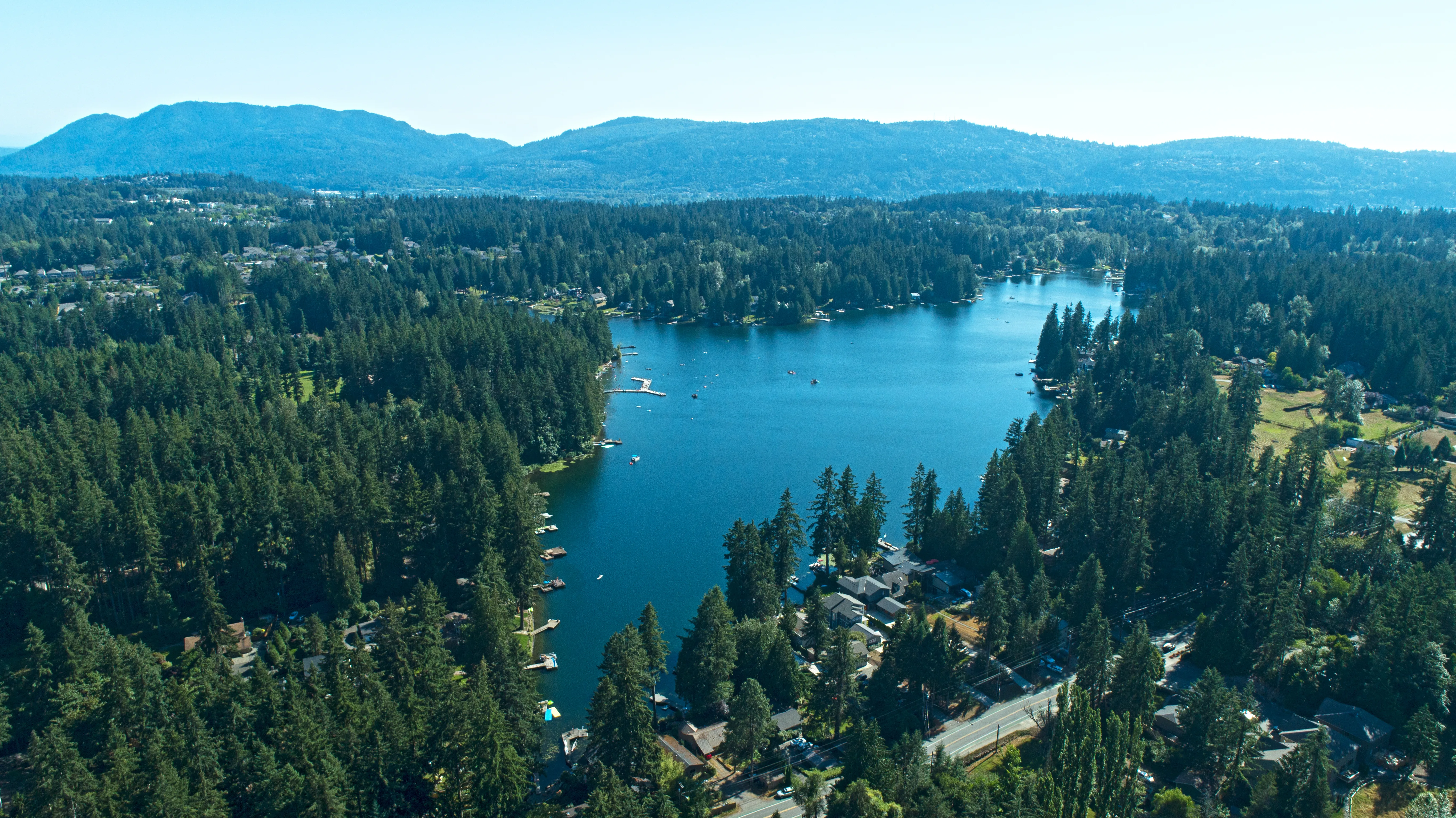
Local Expert Takeaway: The single most common mistake first-time buyers make in Issaquah is treating the $1.07M median as the market they're shopping in, then feeling defeated before they start. The actual first-time buyer market here lives in the $600,000–$800,000 tier — in Klahanie townhomes, Central Issaquah condos, and the occasional Olde Town single-family — and that tier has real inventory, reasonable competition, and strong resale fundamentals. Get pre-approved for that specific range, focus your search there, and stop watching the citywide median as if it applies to your purchase.
✅ Issaquah's market has shifted to balanced conditions for the first time since 2019 — inventory is up, days on market have stretched to around 28, and first-time buyers have more room to negotiate than in recent years.
⚠️ The citywide median of $1,070,000 reflects the full market, not the entry-level tier. Realistic first-time buyer options start around $600,000 in townhomes and condos in Klahanie and Central Issaquah.
📍 Washington has no state income tax, which increases take-home pay and qualifying power for buyers relocating from income-tax states — a meaningful advantage that many first-time buyers from out of state underestimate.
Can I buy a home in Issaquah as a first-time buyer?
Yes, though it requires clear-eyed budgeting. The entry-level market for first-time buyers in Issaquah sits primarily in the $600,000–$800,000 range, with townhomes in Klahanie and condos in Central Issaquah offering the most accessible price points. With solid income, a pre-approval, and a focused neighborhood strategy, first-time buyers close here regularly.
How much do I need to buy my first home in Issaquah?
At the $650,000 price point with a conventional loan at 5% down, you'd need approximately $32,500 for the down payment plus $8,000–$13,000 in estimated closing costs — so roughly $40,000–$45,000 in total cash to close. FHA at 3.5% down reduces the down payment but adds ongoing mortgage insurance.
What credit score do I need to buy a house in Washington state?
The minimum for a conventional loan is 620, and the minimum for FHA at 3.5% down is 580. In practice, scores of 680 and above unlock meaningfully better interest rates — the difference between 650 and 740 on a $450,000 loan can be $200+ per month. Washington state has no additional credit requirements beyond federal loan guidelines.
Explore the full Issaquah mortgage and buying series: Issaquah First-Time Homebuyers Guide · 1031 Tax-Deferred Exchange in Issaquah · Moving to Issaquah from California
Explore the full Issaquah series: The Ultimate Issaquah Relocation Guide · Is Issaquah Safe? · Cost of Living in Issaquah · Best Neighborhoods in Issaquah · Issaquah Schools & Family Life · Issaquah Youth Sports · Issaquah Parks & Recreation · Retiring in Issaquah
Tell us what you need help with and we'll connect you with local resources.

About the Author
Todd Davidson is the founder of Living in Oregon and Living in Washington, where he publishes in-depth city guides, neighborhood resources, and local market insights covering more than 180 communities across the Pacific Northwest. While his background is in home financing and real estate, he created these digital platforms to help families research and compare regions before making a move.