
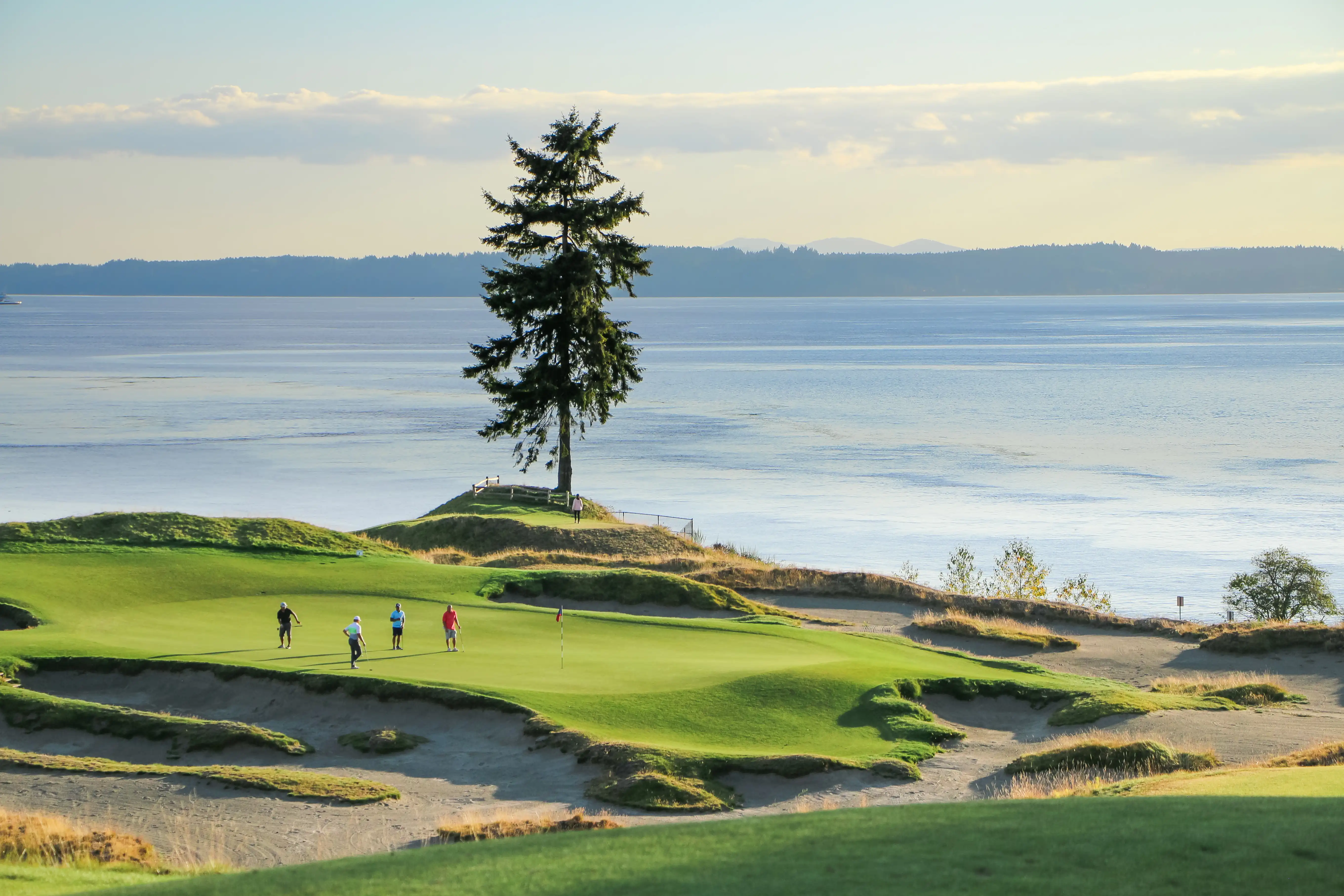
Puget Sound · Washington
There's a moment every first-time buyer in Lakewood eventually hits — usually somewhere between the pre-approval call and the third house tour — when the abstract idea of "buying a home" becomes a very specific and slightly terrifying financial decision. The numbers stop being hypothetical. The neighborhood stops being a concept. And suddenly you're standing in a 1960s rancher off Steilacoom Boulevard doing math in your head while the listing agent checks her phone. Lakewood is worth that moment of discomfort. With prices meaningfully below what's happening in Tacoma proper and a real mix of housing stock from lakes to subdivisions, this is one of the more accessible entry points into Pierce County homeownership left in 2026.
The median sold price for a single-family home in Lakewood sits at approximately $526,500 as of mid-2026, though the broader housing index — which blends condos and manufactured homes — reflects $484,495. For a first-time buyer, that spread matters. At $484,495, you're likely shopping among condos, townhomes, and manufactured homes on land. To get into a detached single-family home in a traditional residential neighborhood, expect to compete in the $480,000–$550,000 range. The gap between renting and owning has narrowed slightly as rent in the area has risen, but the carrying costs of homeownership — including taxes at roughly 1.03% and mortgage insurance on low-down loans — still require honest planning.
This guide walks you through everything a first-time buyer needs to navigate Lakewood specifically: what your budget actually buys here, how to get qualified without surprises, which neighborhoods offer the best entry-level value, and the specific mistakes that cost Lakewood first-timers time and money. Washington state has no income tax, which changes the math in ways most out-of-state buyers don't fully account for until they get their first paycheck. By the end of this guide, you'll know exactly where you stand.

Lakewood's core appeal for first-time buyers comes down to price relative to proximity. You're 15 minutes from downtown Tacoma, inside the Joint Base Lewis-McChord commute zone, and within range of MultiCare and St. Clare Hospital employment — and yet you're paying meaningfully less than Tacoma's west-side neighborhoods or University Place to the north. The Clover Park School District earns a solid B rating, which is honest-to-goodness middle-tier performance rather than a marketing stretch. For families with school-age children, the district functions well for most households without requiring private school costs.
What works against Lakewood for first-timers is the same thing that complicates it for everyone: the housing stock is uneven. Older homes from the 1950s through 1970s dominate much of the city, which means inspection surprises are common and renovation budgets should be planned for, not hoped against. The entry-level tier — homes priced under $400,000 — leans heavily on condos, manufactured homes, or houses that need real work. Realistic first-time buyers in Lakewood are shopping somewhere between $400,000 and $530,000 for a move-in-ready detached home, with neighborhoods like Tillicum and Northeast Lakewood offering the most accessible price points and Oakbrook representing a step up in both condition and cost.
The good news heading into 2026 is that Pierce County has shifted toward buyer's market conditions. Lakewood homes were sitting an average of 59 days on market in April 2026, with a median of 38 days — meaning roughly half of listings moved in five weeks or less, but you're no longer in a war-offer environment for every property. That shift creates real negotiating room for first-time buyers who aren't trying to compete with all-cash investors.
| Price Range | What You Typically Find | Neighborhood Examples | Competition Level |
|---|---|---|---|
| Under $350K | Condos, townhomes, manufactured homes on land, very dated 2BR/1BA single-family | Point East Condominiums, Chambers Creek Crossing, Tillicum pockets | Low |
| $350K–$450K | Older 3BR/1–2BA ranchers, 1950s–1970s stock needing updates, some townhomes | Tillicum, Northeast Lakewood, Lake City area | Moderate |
| $450K–$550K | Updated 3BR/2BA single-family homes, newer construction condos, entry-level lakeside adjacents | Oakbrook Meadows, Northeast Lakewood, Southeast Lakewood | Moderate to High |
| $550K–$650K | Well-maintained 3–4BR homes, larger lots, good school proximity, some lake-adjacent | Oakbrook, Lake Steilacoom perimeter, Gravelly Lake perimeter | Moderate |
| $650K+ | Lake-view or lakefront, premium lots, fully updated interiors, American Lake adjacents | American Lake Garden Tract, Gravelly Lake, Lake Steilacoom | Low (niche) |
The realistic first-time buyer budget in Lakewood in 2026 falls between $400,000 and $500,000. Below $400,000, you're largely in condo or manufactured home territory, which can work well but carries different financing rules — FHA loans on condos require project approval, and manufactured homes have their own lending requirements. The $450,000–$530,000 range is where the best entry-level value lives right now: you can find a 3-bedroom, 2-bath detached home in Northeast Lakewood or the outer Oakbrook area, move-in ready or close to it, without the price premium of lakefront or the renovation risk of the lowest-priced stock.
If you're financing with a conventional loan at 5% down on a $490,000 purchase, expect a monthly payment in the neighborhood of $3,100–$3,400 including taxes and mortgage insurance. That's a meaningful commitment, but it's also building equity in a market where you're paying less per square foot than comparable neighborhoods in Tacoma or University Place.
| Step | What Happens | Typical Timeline | What First-Timers Get Wrong |
|---|---|---|---|
| Get finances in order | Pull credit, pay down revolving balances, gather tax docs, bank statements | 2–8 weeks before applying | Applying before cleaning up credit costs them 0.5%+ on their rate |
| Pre-approval | Lender reviews income, credit, assets; issues a pre-approval letter | 1–3 business days | Getting pre-approved at max qualification, not comfortable payment |
| Find an agent | Interview 1–2 buyer's agents who know Lakewood neighborhoods specifically | Before active search | Using a part-time or unfamiliar agent in a neighborhood-specific market |
| Active search | Tour homes, track market movement, watch for new listings | 2–8 weeks typically | Waiting for the "perfect" home instead of learning the market by touring |
| Making offers | Write offer with agent guidance — price, terms, contingencies | 1–3 days after finding a home | Offering list price on overpriced listings without comp research |
| Under contract | Mutual acceptance; earnest money deposited (typically 1–2% of purchase price in Pierce County) | Day 1–3 after acceptance | Under-depositing earnest money, which weakens the offer signal |
| Inspection | Hire a licensed inspector; review report; negotiate repairs or credits | Days 5–10 typically | Waiving inspection on older Lakewood housing stock — a real risk here |
| Appraisal | Lender orders appraisal; property must value at or above purchase price | Days 14–21 typically | Not understanding that a low appraisal triggers renegotiation or gap-fill |
| Final walkthrough | Confirm home condition matches what was agreed; verify repairs completed | Day before closing | Skipping it or treating it as a formality |
| Closing | Sign documents, fund the loan, receive keys | Days 30–45 from mutual acceptance | Not reviewing the Closing Disclosure 3 days before and showing up surprised |
The offer environment in Lakewood in 2026 is notably less frantic than it was in 2021–2022, but that doesn't mean anything goes. On well-priced homes in Northeast Lakewood or Oakbrook, you may still see 2–3 competing offers within the first week. Inspection contingencies have largely returned to being standard practice here — and you should absolutely use one. Lakewood's older housing stock includes plenty of homes with original wiring, dated plumbing, and roof ages that matter enormously to an FHA or VA lender.
Earnest money norms in Pierce County typically run 1–2% of the purchase price. On a $490,000 home, that's $4,900–$9,800 deposited within 2–3 days of mutual acceptance — held in escrow, credited toward your closing costs at the end. Closing timelines of 30–45 days are standard, with some lenders pushing toward 21–day closes for conventional financing if all documentation is in order.
Looking to buy in Estimate your payment.
Enter your numbers to see an estimated monthly mortgage payment.
Estimate only. Excludes HOA fees and mortgage insurance.
A conventional loan technically starts at 620, but 620 earns you a materially worse interest rate than 680 or above. On a $450,000 loan, the difference between a 650 and a 740 credit score can mean a rate gap of 0.75%–1.25%, which translates to roughly $200–$350 more per month. That difference compounds over time and affects how much home you can qualify for in the first place. If your score is in the 640–670 range, it's often worth 60–90 days of credit cleanup before applying — paying down credit card utilization below 30% moves scores quickly for most buyers.
FHA loans require a 580 minimum for 3.5% down, making them the most accessible loan for buyers without large savings. The catch is mortgage insurance: FHA loans charge an upfront premium of 1.75% (rolled into the loan) plus an annual premium of around 0.55%–0.85% for most loan terms, which doesn't automatically fall off until the loan is paid down to 80% — and even then, requires refinancing out of FHA. For buyers with solid credit and at least 5% saved, conventional financing with PMI that cancels automatically at 80% LTV often makes more long-term sense.
On the income side, lenders use a 28% front-end ratio as a general guideline for housing costs relative to gross monthly income. To comfortably qualify for a $400,000 home, you're looking at roughly $75,000–$80,000 annual income. For a $500,000 purchase, that figure climbs to approximately $95,000–$100,000 depending on your specific rate and down payment. Buyers relocating from California, Oregon, or any income-taxed state should factor Washington's lack of state income tax into their numbers — a household earning $90,000 annually in Washington takes home approximately $400–$600 more per month than the same household in a state with a 5–7% income tax. That improves your qualifying power without changing your salary.
Mistake 1: Treating the Zillow estimate as the purchase price. The blended housing index for Lakewood reflects $484,495, which includes condos and manufactured homes. First-time buyers who show up expecting to buy a 3-bedroom single-family home for that figure often find themselves priced out of the neighborhoods they actually want. The median sold price for a detached home runs closer to $526,500, and in Oakbrook or around Lake Steilacoom, you'll pay more. Know which number applies to what you're actually buying.
Mistake 2: Skipping inspection on older housing stock. A significant portion of Lakewood's residential inventory was built between 1950 and 1975. Many of those homes still have original galvanized plumbing, aluminum wiring, or aging electrical panels that aren't immediately visible. In the heated market of 2021, waiving inspection became common. In today's Lakewood market, it's unnecessary and risky. A $600 inspection that reveals $15,000 in deferred maintenance is the best money a first-time buyer spends.
Mistake 3: Qualifying at maximum and budgeting for minimum. Lenders will often approve you for more than you should comfortably spend. A household earning $90,000 might qualify for a $520,000 mortgage — but between taxes, PMI, utilities, and the inevitable repair costs of an older home, that payment can feel strangling by month six. The discipline move is to get pre-approved at your maximum and then set your active search ceiling $50,000–$75,000 below that figure.
Mistake 4: Ignoring school district boundary lines. Lakewood is entirely within the Clover Park School District, but individual school assignments vary by address. For buyers planning to resell in 5–10 years, homes that feed into the higher-rated Clover Park elementary schools tend to hold value better — and buyers will ask. Looking up the specific school assignment for any address you're seriously considering takes five minutes and matters at resale.
Mistake 5: Waiting for prices to fall further. Pierce County shifted toward buyer's market conditions in spring 2026, and that has already created negotiating room. But the drivers of Lakewood's long-term demand — JBLM employment, healthcare sector growth, relative affordability versus Seattle-area suburbs — haven't changed. Buyers who waited in 2023 "for the market to crash" largely missed two years of equity building. In a market where homes are sitting 38–59 days, you have negotiating leverage right now. Use it.
Northeast Lakewood is the most realistic entry point for buyers in the $400,000–$490,000 range who want a detached single-family home. The housing stock here is older — lots of 1960s and 1970s ranchers — but the bones are typically solid and the lots are generous. It's closer to the Lakewood Towne Center corridor, which means you're not driving far for errands, and the commute to Tacoma or JBLM runs clean on most mornings. Expect to compete mildly on the better-condition homes and to find genuine deals on anything that needs cosmetic work.
Tillicum sits in the southern end of Lakewood closer to the DuPont border and offers some of the most affordable single-family prices in the city. Homes here often come in under $400,000 — sometimes meaningfully so — and while the neighborhood is more modest, it's functional and well-connected. For buyers who prioritize monthly payment over neighborhood prestige and plan to build equity through value-add renovation, Tillicum is worth a serious look.
Oakbrook is a step up in price — entry-level homes here typically start closer to $490,000–$520,000 — but it offers more consistent housing quality, larger lots, and a neighborhood character that tends to resonate with buyers who want a traditional suburban feel. The Oakbrook area around Oakbrook Golf Course has genuine street appeal, and the schools assigned to this area are among the stronger Clover Park options. If your budget stretches here, it's worth it for the resale profile alone.
Southeast Lakewood, particularly the pockets near Fort Steilacoom Park and Waughop Lake, offers a quieter residential character with some homes in the $460,000–$530,000 range. The park system access here is genuine — Fort Steilacoom Park covers over 340 acres and makes the neighborhood feel substantially less suburban than the price suggests. For buyers who want outdoor access baked into their daily life without paying lake-adjacent premiums, this corridor deserves attention.

Local Expert Takeaway: The single most expensive mistake first-time buyers make in Lakewood is shopping in the $480,000–$500,000 range without understanding what they're actually competing for at that price point. In Northeast Lakewood and Tillicum, that budget gives you real negotiating room on updated ranchers with solid bones. In Oakbrook, that same budget puts you at the lower edge of the market, where competition is tighter. Know which neighborhood tier your budget actually puts you in before you fall in love with a listing — and have your inspection contingency ready regardless of how clean the house looks at the open house.
✅ Lakewood's $484,495 housing index reflects a blended market including condos and manufactured homes — first-time buyers targeting detached single-family homes should plan for the $450,000–$550,000 range and focus on Northeast Lakewood and Oakbrook for the best entry-level value in 2026.
⚠️ Lakewood's older housing stock makes inspection contingencies non-negotiable — homes built in the 1950s–1970s frequently carry deferred maintenance that isn't visible at a showing and that FHA and VA appraisers will flag regardless.
📍 Washington has no state income tax — buyers relocating from California, Oregon, or other income-taxed states should factor the monthly take-home pay increase into their qualifying calculations, as it meaningfully affects how much home they can comfortably carry.
Can I buy a home in Lakewood as a first-time buyer?
Yes — Lakewood is one of the more accessible entry points in the Pierce County market, with genuine inventory in the $400,000–$530,000 range and a buyer's market shift that has created real negotiating room heading into 2026. FHA, conventional, and VA loans all work here, and first-time buyers with a 620 credit score and modest down payment have multiple viable paths to ownership.
How much do I need to buy my first home in Lakewood?
With FHA financing at 3.5% down on a $490,000 purchase, you'd need approximately $17,150 for the down payment plus closing costs in the range of $8,000–$12,000 — so plan for $25,000–$30,000 in total cash to close as a baseline.
What credit score do I need to buy a house in Washington state?
FHA loans are available with a 580 minimum credit score for 3.5% down. Conventional loans technically start at 620, but buyers with scores between 680 and 740 access meaningfully better interest rates — often 0.5%–1% lower — which reduces the monthly payment and the total cost of the loan significantly over 30 years.
Explore the full Lakewood series: The Ultimate Lakewood Relocation Guide · Is Lakewood Safe? · Cost of Living in Lakewood · Best Neighborhoods in Lakewood · Lakewood Schools & Family Life · Lakewood Youth Sports · Lakewood Parks & Recreation · Retiring in Lakewood · 1031 Tax-Deferred Exchange in Lakewood · Lakewood First-Time Homebuyers Guide · Moving to Lakewood from California
Tell us what you need help with and we'll connect you with local resources.

About the Author
Todd Davidson is the founder of Living in Oregon and Living in Washington, where he publishes in-depth city guides, neighborhood resources, and local market insights covering more than 180 communities across the Pacific Northwest. While his background is in home financing and real estate, he created these digital platforms to help families research and compare regions before making a move.