
Puget Sound · Washington
Maybe your company is relocating you to Joint Base Lewis-McChord and you've been handed a list of Pierce County cities with no context for which ones to take seriously. Maybe you've been watching Tacoma prices climb and someone suggested Lakewood as the affordable alternative — only to find that "affordable" is doing a lot of work in that sentence. Or maybe you drove through Lakewood on I-5, saw the Towne Center exits and the fast-food strips, and figured you had the place figured out. You don't. Lakewood has a split personality that takes a few months to fully see: a city with genuine lakefront estates and golf-course neighborhoods on one side, and military-adjacent rental corridors on the other. The central tension here is real, and it shapes where you should buy, what you should pay, and whether this city fits your life.
Lakewood sits in Pierce County, roughly 10 miles southwest of downtown Tacoma and about 45 miles south of Seattle. American Lake, Lake Steilacoom, Gravelly Lake, and Lake Louise give the city a water-rich character that surprises first-time visitors who only know the I-5 corridor version of Lakewood. Joint Base Lewis-McChord anchors the southern edge, employing tens of thousands of military and civilian personnel and creating a rental market unlike anything in neighboring University Place or Steilacoom. Pierce College, Clover Park Technical College, and a cluster of healthcare employers — MultiCare Health System, St. Clare Hospital, and Western State Hospital — round out an economic base that keeps the city's employment relatively stable even when the broader market softens.
This guide is designed to help you figure out which version of Lakewood you'd actually be buying into. You'll find honest assessments of the neighborhoods, real price data, commute reality, the tradeoffs that locals rarely talk about online, and a clear-eyed comparison with the nearby cities most buyers are weighing against it. Whether you're a military family, a first-time buyer who got priced out of Tacoma, or someone who's been told Lakewood is "up and coming" for the last decade, here is what you actually need to know.
Not every city fits every buyer, and Lakewood is more honest about that than most. The table below cuts through the noise with intent-based verdicts based on what this city actually delivers.
| Best For | Why |
|---|---|
| Military families & JBLM personnel | Minutes from the main gate, strong rental and buy-in market, large military community already established |
| First-time buyers | Entry-level inventory below the regional average, more square footage per dollar than Tacoma or University Place |
| Healthcare & education workers | MultiCare, St. Clare, Pierce College, and Clover Park Tech all based locally — short or no commute |
| Lakefront lifestyle seekers | Four named lakes within city limits, with waterfront homes on American Lake and Gravelly Lake that rival anything in the region |
| Tacoma commuters | 15-minute drive to downtown Tacoma, direct Sounder train access at Lakewood Station |
| Retirees & downsizers | Single-level ranch homes abundant, golf community living in Oakbrook, lower price floor than Gig Harbor or University Place |
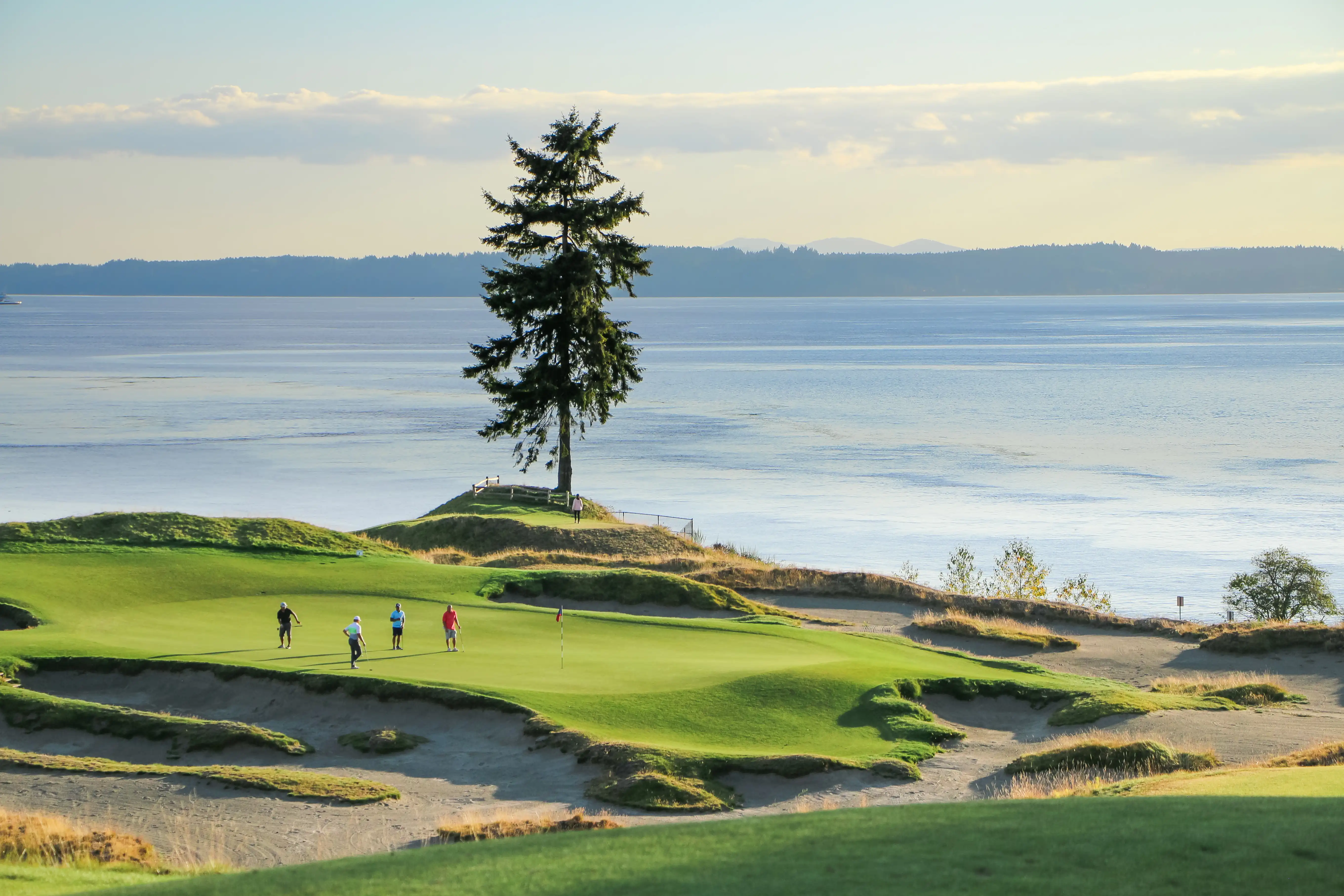
The daily texture of Lakewood depends almost entirely on which part of the city you land in. In Oakbrook, daily life feels like a quiet Pacific Northwest suburb — winding roads through established trees, neighbors walking dogs past mid-century ranches, the low hum of golf carts near the fairways. In Tillicum, a few miles south, the vibe is dominated by the rhythms of military base life: fast turnover, rentals with rotating tenants, and a commercial strip built around convenience over character. These two realities exist inside the same city limits, and the difference between a great experience and a mediocre one often comes down to a single zip code decision.
Lakewood Towne Center is the city's primary retail and gathering hub, anchored by national chains and serving most of the city's everyday shopping needs. It gets the job done, but it's not the kind of walkable town center that makes people fall in love with a place. The more interesting version of Lakewood's commercial life runs along Motor Avenue in the Lakewood Colonial Center district, where a more local business character has taken hold and where the city holds its annual street festival. For groceries, coffee, and daily errands, Lakewood Towne Center is convenient but not particularly special — most longtime residents supplement with trips into Tacoma's Proctor District or University Place's Bridgeport Way for the experience that Lakewood's retail doesn't quite deliver.
The commute math works in Lakewood's favor. Fifteen minutes to downtown Tacoma is a genuine daily reality for most of the city, not an optimistic estimate. Lakewood Station on the Sounder commuter rail line makes Seattle reachable in roughly 70 minutes on train days, which is relevant for hybrid workers who commute north two or three days a week. The friction point is I-5 itself — southbound between exits 127 and 123 during the 7:00 to 8:30 a.m. window can back up significantly, and anyone whose JBLM commute involves the Steilacoom Boulevard gate knows that 8:00 a.m. on a Monday is a different animal than 9:00 a.m. The city's internal traffic moves reasonably well by South Sound standards, but the I-5 on-ramps have their moments.
What surprises most people after six months of living here is how much outdoor access they end up using. American Lake, Waughop Lake at Fort Steilacoom Park, and Lake Steilacoom pull residents outdoors in ways that aren't immediately obvious from the commercial corridors that frame the city's first impression. Fort Steilacoom Park — one of the largest urban parks in Pierce County — offers trails, open fields, and lake access that locals treat as a genuine backyard. Newcomers who expected a purely suburban bedroom community find themselves kayaking or trail running on weekday evenings, and that tends to change how they feel about the city pretty quickly.
The lakes are not a marketing line. American Lake offers some of the most genuinely beautiful freshwater waterfront in Pierce County, with estates featuring private docks and boat slips that would command premium prices anywhere in the region. Gravelly Lake, adjacent to the historic Lakewold Gardens, has an executive residential character that feels like a different world from the I-5 corridor. Lake Steilacoom covers over 300 acres and is stocked for trout fishing. Lake Louise rounds out the set with a quieter, more neighborhood-level waterfront feel. For a city of 62,000 people, the density of recreational water access here is genuinely exceptional.
The price-per-square-foot advantage relative to the broader Puget Sound region keeps Lakewood relevant for buyers doing honest comparisons. The city-wide median sold price runs in the $525,000 to $538,000 range, but the average home delivers around 2,100 square feet — meaningfully more space than buyers typically find at those prices in north Tacoma or University Place. Craftsman cottages, ranch-style homes, and spacious split-levels dominate the inventory, and the mid-century construction era means many homes sit on larger lots with established trees and defined yards that newer developments can't replicate.
The employer base delivers something underrated: genuine job stability for non-remote workers. JBLM is one of the largest military installations in the country, and its civilian workforce is large enough that a significant portion of Lakewood's employed population works within a 10-minute drive of home. Add Pierce College, Clover Park Technical College, St. Clare Hospital, and the MultiCare system, and Lakewood has enough local employment concentration that a household can have two full-time jobs without either partner facing a significant commute. That's a real quality-of-life factor that doesn't show up in city ranking lists.
Lakewood's demographic diversity — a majority-minority city where roughly 54% of residents identify as people of color — creates a cultural breadth that shows up in the restaurant scene, the school community, and the general texture of public life. The Clover Park School District serves a student body that reflects this diversity, and families who value multicultural community often cite it as a feature rather than incidental. For buyers relocating from more homogeneous markets, the community composition is one of the things that sticks out positively during the first year of living here.
Looking to buy in Estimate your payment.
Enter your numbers to see an estimated monthly mortgage payment.
Estimate only. Excludes HOA fees and mortgage insurance.
Lakewood's property crime rate — approximately 36 incidents per 1,000 residents — is elevated relative to Washington state averages, and it's the number that tends to surface first when buyers start researching the city. Vehicle break-ins and package theft are the most commonly cited concerns, and they are concentrated in certain corridors rather than distributed evenly across the city. The neighborhoods along South Tacoma Way and portions of the Tillicum area see disproportionate property crime activity, while Oakbrook and Central Lakes post significantly better numbers. Choosing the right neighborhood is not just a lifestyle decision in Lakewood — it's also a safety decision, and conflating the city-wide figure with the best residential areas is one of the most common mistakes relocating buyers make here.
The retail and dining experience lags behind neighboring cities. University Place's Bridgeport Way corridor and downtown Tacoma both offer restaurant and shopping options that Lakewood's town center doesn't match. Lakewood Towne Center handles the basics efficiently, but buyers who value walkable independent dining tend to find themselves driving to Tacoma or University Place more often than they anticipated. This is a livability gap that the city has been slowly addressing, but it remains a real part of daily life for residents who care about local food culture.
Why some people leave Lakewood after a few years usually comes down to one of two things: the school performance gap relative to University Place or Steilacoom, or a growing sense that the city's two identities — the lakefront residential community and the military-adjacent rental corridor — never quite resolved into a coherent whole. Families with older children who are weighing school quality as a deciding factor often move to University Place or Gig Harbor when their kids reach middle school age. That's not a condemnation of Lakewood's schools, but it's a pattern worth understanding before you buy.
The rental market dynamic is worth naming directly. JBLM's proximity creates a high density of short-term military renters in portions of the city, particularly Tillicum, which shapes the character of those neighborhoods in ways that owner-occupant families sometimes find frustrating. High turnover, investor-owned properties, and less neighborhood cohesion are the byproducts. If you're buying as an owner-occupant, knowing which neighborhoods have the highest owner-occupancy rates — Oakbrook and Central Lakes lead on this metric — matters as much as price.
Best for: Buyers who want Lakewood's strongest combination of neighborhood stability, lot size, and property values — and don't mind paying a modest premium for it.
Best for: Real estate investors targeting military-adjacent rental demand, or first-time buyers comfortable with a less established neighborhood character in exchange for the lowest price floor in the city.
Best for: Buyers who want genuine lakefront living at a slightly more accessible price point than American Lake, with strong recreational access included.
Best for: Buyers seeking the city's most coveted waterfront addresses and willing to pay accordingly for limited-supply lakefront property.
Best for: Buyers who value a quieter, more established residential character and proximity to Lakewood's most architecturally significant outdoor space.
Best for: Buyers seeking a quieter, more affordable waterfront community where neighborhood cohesion matters as much as square footage.
Best for: Buyers for whom daily convenience and access to retail, transit, and employers trumps the lifestyle appeal of the lake neighborhoods.
Best for: Budget-conscious buyers who need to be in Lakewood proper and are prioritizing purchase price over neighborhood polish.
| City | Best For | Home Price (Median) | Commute to Tacoma | Vibe |
|---|---|---|---|---|
| Lakewood | Military families, lakefront lifestyle, value buyers | ~$525,000–$538,000 | 15 min | Diverse, split identity, lake-rich |
| University Place | Families prioritizing schools, suburban polish | ~$600,000–$650,000 | 20 min | Well-kept, family-focused, quieter |
| Steilacoom | Historic character, small-town feel, ferry access | ~$650,000+ | 20 min | Tight-knit, walkable, premium small city |
| DuPont | New construction, young families, planned community | ~$520,000–$560,000 | 25 min | Planned, safe, newer builds |
| Spanaway | Affordability, space, JBLM commuters | ~$420,000–$450,000 | 30+ min | Rural-suburban, price-driven |
| Tacoma | Urban lifestyle, nightlife, Puget Sound views | ~$475,000–$520,000 | 0–10 min | Gritty-cool, arts-forward, gentrifying |
| Category | Detail |
|---|---|
| Population | Approximately 62,254 (2026 estimate) |
| Median Home Price (Sold) | $484,495 (Zillow index); median sold price ~$525,000–$538,000 |
| Median Household Income | $74,720 |
| Property Tax Rate | Approximately 1.03% |
| Commute to Tacoma | ~15 minutes |
| School District | Clover Park School District (rated B) |
| Major Employers | JBLM, MultiCare, Pierce College, St. Clare Hospital, Pierce Transit |
| Lakes Within City | American Lake, Lake Steilacoom, Gravelly Lake, Lake Louise |
| Avg Days on Market | ~41 days |
| Violent Crime per 1,000 | 9.2 |
Lakewood's most beloved annual tradition is the Lakewood Colonial Center Street Festival, held along Motor Avenue in the historic Lakewood Colonial Center district. The event draws vendors, local food, live music, and a genuine cross-section of the city's diverse population — it's one of the few community events that feels authentically local rather than corporate-sponsored, and longtime residents treat it as a social anchor.
Fort Steilacoom Park's history is genuinely unusual and worth knowing. The park sits on the grounds of the former Western State Hospital campus, one of Washington's oldest psychiatric institutions, and the grounds include a historic farmstead, lakes, trails, and open meadows that the hospital patients once worked on. This history is woven into the park's character in ways that locals take pride in — it's a piece of Pacific Northwest institutional history that most out-of-state transplants don't expect to find in a suburban park.
The Lakewood Farmers Market runs seasonally and has grown from a modest local market into one of Pierce County's more active mid-week community gathering points. It draws residents from across the city and serves as something of a social equalizer — where the Oakbrook golf community and the multicultural families of Central Lakes occupy the same aisles.
What I Would Not Do if Moving to Lakewood: I would not buy in the South Tacoma Way corridor near Ponders Corner without a thorough neighborhood walk at multiple times of day. The price looks compelling on paper, and the commute access is genuinely good — but the property crime pattern in that corridor is the one part of Lakewood where the city-wide statistics actually reflect daily experience. There are excellent entry-level options in Northeast Lakewood and Central Lakes that deliver better surroundings for comparable or modestly higher prices. Don't let the lowest price in the city be the deciding factor without doing the homework first.
Local Expert Takeaway: The single most important decision in a Lakewood purchase is neighborhood selection — not price negotiation. The gap in daily experience between Oakbrook or Central Lakes and the South Tacoma Way corridor is larger than the price difference suggests. If you're working with a budget in the $480,000 to $530,000 range, push hard for Central Lakes or Northeast Lakewood rather than drifting east toward Ponders Corner to save $20,000. And if waterfront is your goal, Lake Steilacoom is where to start — American Lake moves too fast for buyers who aren't already pre-approved and neighborhood-ready.
✅ Lakewood's four named lakes — American Lake, Lake Steilacoom, Gravelly Lake, and Lake Louise — give the city a genuine outdoor lifestyle that most Pierce County suburbs at this price point can't match.
⚠️ The city-wide property crime rate of 36 per 1,000 residents is elevated, but it's heavily concentrated in specific corridors. Oakbrook and Central Lakes report significantly safer conditions than the city-wide figure implies.
📍 Lakewood Station on the Sounder commuter rail line makes this city a legitimate option for hybrid workers commuting to Seattle two or three days a week — a feature that becomes more valuable as South Sound prices continue to rise.
Is Lakewood a good place for families?
Lakewood offers a workable family environment with genuine strengths — outdoor access, diverse schools, affordable square footage, and strong employer stability — but families prioritizing school district rankings above all other factors often find themselves comparing Clover Park School District's B rating unfavorably against University Place or Peninsula School Districts. Families who value multicultural community, outdoor recreation, and housing value tend to stay long-term; those who hit middle school and prioritize academic competition sometimes move on.
What is the crime rate in Lakewood?
Lakewood's violent crime rate runs approximately 9.2 per 1,000 residents, and property crime is commonly reported around 36 per 1,000 — both figures are higher than Washington state averages. Those numbers are meaningful context, but they mask significant variation across the city; the neighborhoods consistently cited as safest — Central Lakes and Oakbrook — post materially better figures than the corridors near South Tacoma Way that pull the city-wide average upward.
How does Lakewood compare to nearby University Place?
University Place typically offers higher school ratings, more consistent neighborhood character, and a slightly more polished suburban feel, but buyers pay for it — median prices there run $80,000 to $120,000 higher than Lakewood's sold median. Lakewood counters with four named lakes, a 15-minute Tacoma commute, more housing diversity, and a community demographic composition that many families actively prefer. The decision usually comes down to how heavily a buyer weights school ratings against price-per-square-foot value and access to recreational water.
Explore the full Lakewood series: The Ultimate Lakewood Relocation Guide · Is Lakewood Safe? · Cost of Living in Lakewood · Best Neighborhoods in Lakewood · Lakewood Schools & Family Life · Lakewood Youth Sports · Lakewood Parks & Recreation · Retiring in Lakewood · 1031 Tax-Deferred Exchange in Lakewood · Lakewood First-Time Homebuyers Guide · Moving to Lakewood from California
Tell us what you need help with and we'll connect you with local resources.

About the Author
Todd Davidson is the founder of Living in Oregon and Living in Washington, where he publishes in-depth city guides, neighborhood resources, and local market insights covering more than 180 communities across the Pacific Northwest. While his background is in home financing and real estate, he created these digital platforms to help families research and compare regions before making a move.