Puget Sound · Washington
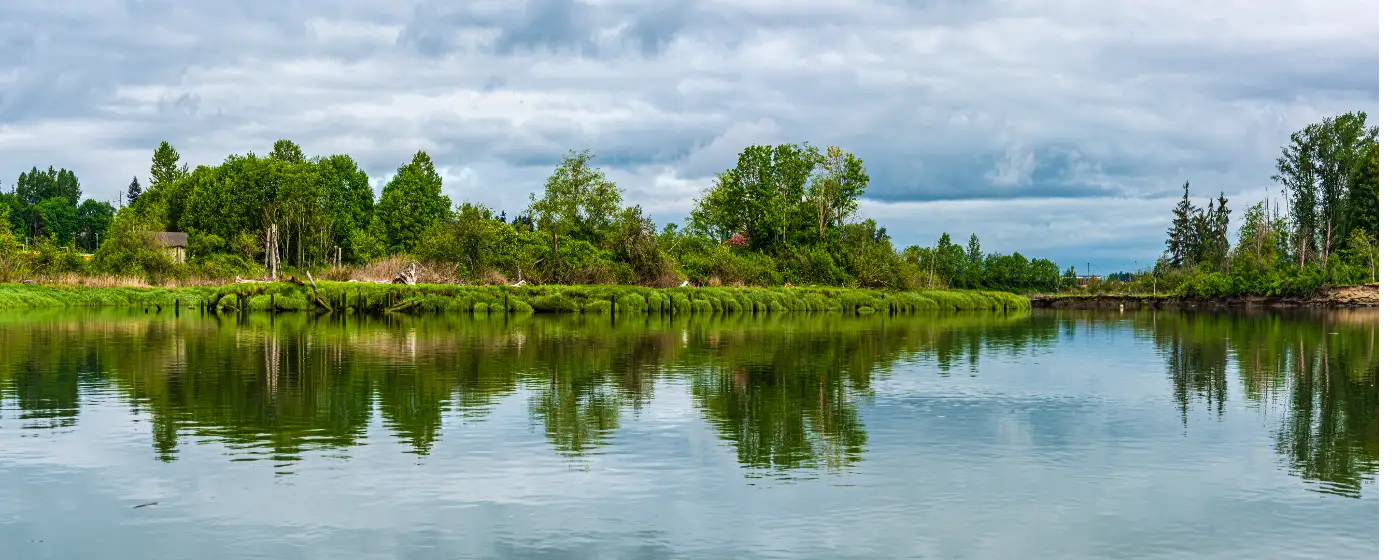
Snohomish won't wow you with a dedicated retirement district or a sprawling active-adult campus. What it offers instead is something harder to find: a genuinely livable small town with a walkable historic core, serious natural beauty, and tax conditions that make Washington state one of the most financially favorable places in the country to retire. If you've been watching the Puget Sound market from a distance and wondering whether the value is still there, Snohomish sits at a compelling crossroads — smaller and quieter than Everett, more affordable than most of King County, and far more interesting on a Tuesday afternoon than most suburban alternatives.
The retirees who thrive here tend to be people who want engagement on their own terms. They like a Saturday farmers market, a glass of wine on a porch in the Historic District, a long trail walk along the Centennial Trail, and a low-key dinner downtown — not a fitness class schedule and a resort-style pool. If you're someone who values privacy, natural surroundings, and a real town rather than a master-planned community, this city has a quiet pull that's difficult to explain until you've spent a weekend here.
This guide covers the financial picture for Washington retirees, the healthcare infrastructure serving Snohomish, what senior living options actually look like on the ground, and the honest day-to-day reality of retiring in a small city of under 11,000 people. By the end, you'll know whether Snohomish fits your version of retirement — or whether a neighboring city makes more sense.
Washington state's retirement tax advantage is real, significant, and often undersold. The table below summarizes how common retirement income sources are treated under state tax law.
| Income Type | Washington State Tax Treatment |
|---|---|
| Social Security benefits | Not taxed — Washington has no state income tax |
| Pension income (public or private) | Not taxed |
| 401(k) / IRA withdrawals | Not taxed |
| Capital gains (under $262K threshold) | Not taxed at state level below threshold |
| Capital gains (over $262K threshold) | 7% state capital gains tax applies |
| Investment dividends and interest | Not taxed |
| Property tax | Assessed at approximately 0.93% of assessed value |
| Sales tax | Approximately 9.2% combined state and county rate |
| Estate/inheritance tax | Washington estate tax applies above $2.058M threshold |
Washington also offers a meaningful property tax exemption for senior homeowners. Residents 61 years or older with a combined household income under $58,423 may qualify for the Senior Citizen and Disabled Persons Exemption, which can reduce the assessed value subject to property taxation. At Snohomish's median sold price of $750,000 and the approximately 0.93% property tax rate, that full-price calculation runs around $6,975 per year — making the senior exemption worth pursuing if income qualifies. Oregon, by comparison, collects state income tax on most retirement income sources while offering its own property tax deferral program, so the cross-border comparison isn't as simple as it looks on the surface. For most retirees, Washington comes out ahead.
Providence Regional Medical Center Everett is the cornerstone of healthcare for Snohomish residents, and it's a facility that punches well above what you'd expect for a city this size. Located roughly 10 to 12 miles from downtown Snohomish — typically a 20-minute drive — PRMCE operates as a 595-bed acute care tertiary hospital and holds the distinction of being the only Level II trauma center in Snohomish County. That designation matters for retirees: it means the hospital is equipped to handle serious trauma, complex surgical cases, and the kinds of acute cardiac and neurological events that become more relevant with age.
PRMCE operates on two campuses. The Colby Campus at 1700 13th Street in Everett handles emergency medicine, adult trauma, the cancer center, cardiac and stroke response, and critical care. U.S. News & World Report has recognized this campus as a Seattle Metro Best Regional Hospital for 2025–26, with High Performing ratings in stroke, heart attack, pneumonia, spinal fusion, colon cancer surgery, and abdominal aortic aneurysm repair. For a retiree making a long-term decision about healthcare proximity, those specific ratings are the ones worth paying attention to — stroke and heart attack response times and outcomes are not details to gloss over. The Pacific Campus on 900 Pacific Avenue handles rehabilitation and transitional care, which becomes relevant for recovery from orthopedic procedures or post-surgical rehab.
For highly specialized oncology, organ transplant, or research-tier interventional cardiology, the University of Washington Medical Center in Seattle is approximately 35 to 40 miles south — a realistic drive for scheduled appointments, though not always convenient for ongoing treatment. Most retirees in Snohomish who need routine and moderate-acuity care will find Providence sufficient. Those managing complex, ongoing specialist relationships may want to factor in that commute when thinking about where they want to be.
The Everett Clinic, one of the region's largest multispecialty physician groups, operates multiple locations in and around Snohomish County, offering primary care, cardiology, orthopedics, and most routine specialty needs without requiring a trip to Seattle. For day-to-day healthcare management, that network provides solid coverage.
The senior living landscape in Snohomish proper runs small and residential in character. The city has roughly 20 senior housing options, skewed heavily toward adult family homes — small licensed residential settings housing four to six residents — rather than large campus-style communities. That profile suits some retirees perfectly and feels limiting to others. Here's the verified landscape.
| Community | Type | Location | Est. Monthly Cost |
|---|---|---|---|
| The Cottages of Snohomish (Care Partners) | Assisted Living / Memory Care | Near Hwy 2 & Hwy 9, Snohomish | $4,500–$6,500 |
| Kenwanda Adult Care Home | Adult Family Home | 13405 Kenwanda Dr, Snohomish | $3,500–$5,500 |
| Paradise Lake Senior Care Home | Adult Family Home | 10121 219th St SE, Snohomish | $3,500–$5,500 |
| Alliance Nursing | Assisted Living (Medicaid/Medicare) | 13027 Dubuque Rd, Snohomish | $3,000–$5,000 |
| The Mustard Seed Adult Family Home | Adult Family Home | 8906 172nd St SE, Snohomish | $3,500–$5,000 |
| Oasis Elder Care | Adult Family Home | 1808 181st Ave NE, Snohomish | $3,500–$5,000 |
| MorningStar Senior Living at Silver Lake | Independent / Assisted / Memory Care | Everett (8 miles) | $4,500–$7,500 |
| Cogir Senior Living | Independent / Assisted | Mill Creek / Everett | $4,000–$7,000 |
| Ashley Pointe Senior Living | Independent / Assisted | Lake Stevens (nearby) | $3,800–$6,500 |
| Cascade Village (Josephine Caring Community) | Life Care CCRC | Marysville / Smokey Point (opening 2026) | Varies by contract |
Cascade Village in Marysville deserves specific attention for anyone planning ahead. Anticipated to open in 2026, it's projected to be the only true Life Care (Continuing Care Retirement Community) in Snohomish County — a contract model that locks in access to escalating levels of care, protecting residents from unpredictable long-term care costs. For retirees in their early to mid-60s thinking 20 years ahead, it may be worth adding to your research list now.
Looking to buy in Estimate your payment.
Enter your numbers to see an estimated monthly mortgage payment.
Estimate only. Excludes HOA fees and mortgage insurance.
The honest answer about walkability in Snohomish is: it depends almost entirely on where you live. Downtown and the Historic District are genuinely walkable in the Pacific Northwest sense — First Street is lined with antique shops, wine bars, galleries, and locally owned restaurants within a few blocks of each other. Running errands on foot isn't realistic, but strolling to dinner, coffee, or the Saturday Farmers Market absolutely is. Anywhere outside that core, you will need a car.
The Centennial Trail is one of the genuine daily-life assets for retirees in Snohomish. The paved multi-use trail runs 30 miles along a historic rail corridor, passing through downtown Snohomish and connecting north toward Arlington and south toward Woodinville. It's flat, well-maintained, and accessible for walkers, cyclists, and anyone who just wants an hour outdoors without getting in a car. Lord Hill Regional Park adds another dimension — over 1,400 acres of forested trails above the Snohomish River valley, where a serious hiker can spend a full morning without retracing a step.
The cultural calendar is modest but consistent. The Snohomish Farmers Market runs seasonally at the Carnegie Building on Union Avenue and draws locals who treat it as a social event as much as a shopping errand. The Snohomish Street Rod Classic, held each summer downtown, brings hundreds of vintage cars through the Historic District and has the kind of all-ages, small-town atmosphere that's increasingly rare in Pacific Northwest cities. The Tim Noah Thumbnail Theater hosts intimate performances and has developed a genuinely devoted following among longtime residents.
Getting around without a car is the one honest limitation. Community Transit serves Snohomish with bus routes connecting to Everett Station and the broader Snohomish County network, but frequency and coverage are not at a level that supports car-free retirement in the way a larger city might. Rideshare is available, but rural pockets outside the urban core can see wait times. Retirees who need to give up driving eventually, or who want to prioritize walkable urban access over acreage, should think carefully about this before committing to a home far outside the downtown corridor.
What surprises many people after six months of living here is how much the social fabric of a small town compensates for what the city lacks in density. Neighbors know each other in a way that feels rare in 2026. The coffee shop regulars, the Saturday market vendors, the trail regulars — Snohomish has that quality of place where showing up consistently means being recognized. For a certain kind of retiree, that's worth more than a fitness center membership.
| City | Median Home Price | Hospital Access | Walkability | Senior Living Depth | Overall Retirement Fit |
|---|---|---|---|---|---|
| Snohomish | $750,000 | PRMCE Level II (20 min) | Moderate (downtown only) | Limited in-city, strong nearby | ★★★★☆ |
| Everett | $580,000–$620,000 | PRMCE on-site | Moderate | Strong — most options here | ★★★★☆ |
| Monroe | $580,000–$640,000 | Valley General (25 min) | Low | Modest | ★★★☆☆ |
| Lake Stevens | $620,000–$680,000 | PRMCE (25 min) | Low | Moderate | ★★★☆☆ |
| Mill Creek | $700,000–$780,000 | PRMCE (20 min) | Low-moderate | Moderate — Cogir present | ★★★★☆ |
| Marysville | $520,000–$580,000 | Providence Marysville / PRMCE | Low | Modest + Cascade Village | ★★★☆☆ |
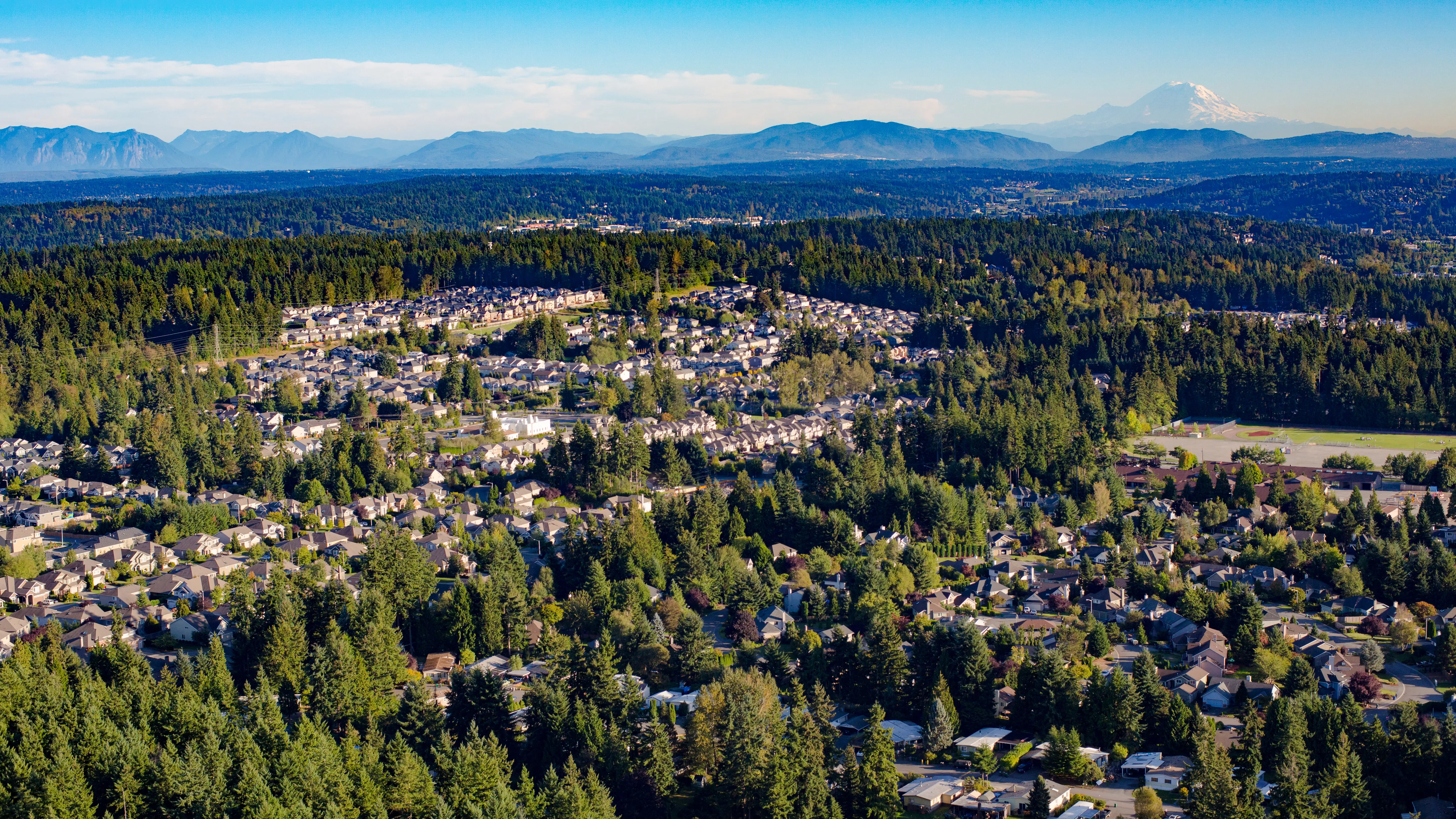
Mill Creek draws comparisons for households seeking newer construction and a manicured feel, but it lacks Snohomish's downtown culture entirely. Marysville is the budget option, and the upcoming Cascade Village CCRC gives it a specific appeal for retirees planning very far ahead — but the city itself lacks the destination quality that makes Snohomish's retirement case compelling.
Local Expert Takeaway: Retirees who thrive in Snohomish are typically those planting themselves within a half-mile of downtown — specifically in the Historic District, on or near First Street, or in the Pilchuck District's quieter blocks. The Centennial Trail and Saturday Farmers Market become part of their weekly rhythm within a month. Retirees who need a dense senior living campus, daily walkable errands, or car-free living should look seriously at Everett's core or communities closer to Providence Regional. But if a small-town Pacific Northwest lifestyle with a strong tax picture and genuine community character sounds like your version of retirement, Snohomish is one of the most underappreciated options in the county.
Is Snohomish a good place to retire?
For the right type of retiree, yes — particularly those drawn to a walkable historic small-town core, Pacific Northwest outdoor access, and Washington's favorable retirement tax environment. The Centennial Trail, the downtown Farmers Market, and the Historic District give daily life a texture that many retirees find hard to leave. The trade-off is limited in-city senior living options and the need for a car outside the downtown core.
What is the closest major hospital to Snohomish?
Providence Regional Medical Center Everett is approximately 10 to 12 miles from downtown Snohomish — typically a 20-minute drive. It's a 595-bed Level II trauma center, the only one in Snohomish County, and has received High Performing national recognition in stroke, heart attack, and several surgical categories that matter significantly for retirees.
How does Snohomish compare to Everett for retirement?
Everett offers lower home prices, PRMCE on-site, and a deeper inventory of senior living communities — making it the more practical choice for budget-focused retirees or those who want more medical proximity. Snohomish commands a premium for a reason: the Historic District, the small-town atmosphere, and the outdoor recreation access create a quality of daily life that Everett's urban grid doesn't replicate. Most buyers who visit both cities know immediately which one fits them.
Explore the full Snohomish series: The Ultimate Snohomish Relocation Guide · Is Snohomish Safe? · Cost of Living in Snohomish · Best Neighborhoods in Snohomish · Snohomish Schools & Family Life · Snohomish Youth Sports · Snohomish Parks & Recreation · Retiring in Snohomish · 1031 Tax-Deferred Exchange in Snohomish · Snohomish First-Time Homebuyers Guide · Moving to Snohomish from California
Tell us what you need help with and we'll connect you with local resources.
About the Author
Todd Davidson is the founder of Living in Oregon and Living in Washington, where he publishes in-depth city guides, neighborhood resources, and local market insights covering more than 180 communities across the Pacific Northwest. While his background is in home financing and real estate, he created these digital platforms to help families research and compare regions before making a move.