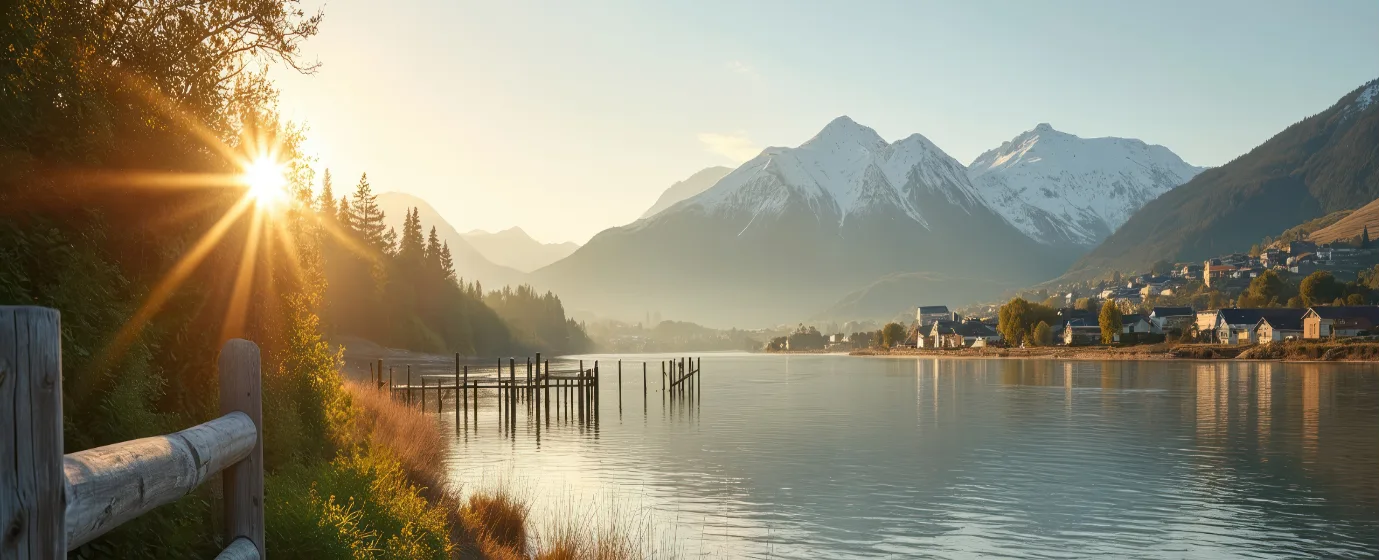
Puget Sound · Washington
Maybe your company is relocating you to the greater Seattle metro and someone on the hiring team casually mentioned Marysville as "a more affordable option up north." Maybe you've been watching King County home prices climb past what any reasonable salary supports and a friend told you that $628,000 in Marysville buys something completely different than $628,000 in Kirkland. Maybe you just drove through on I-5, saw the exit signs, and wondered what's actually up here. Whatever brought you to this search, the central tension of a Marysville decision is this: you're trading proximity for space, and the question isn't whether the trade is fair — it's whether it fits your life.
Marysville sits in southern Snohomish County on Possession Sound, roughly 35 miles north of Seattle and just a few miles above Everett. I-5 cuts straight through the city, which means the spine of your daily geography is a freeway — you're either heading south toward the Puget Sound employment corridor or east toward the Cascades for a weekend. The Tulalip Indian Reservation borders the city to the west, State Route 9 traces the eastern edge, and the Snohomish River snakes through the landscape giving the whole area a greener, more rural texture than the cities to the south. Marysville once earned the nickname "Strawberry City" from the farms that defined it for decades, and while the strawberry fields are mostly subdivisions now, that agricultural, small-town character hasn't entirely disappeared.
This guide will help you figure out whether Marysville fits your specific situation — your commute tolerance, your school priorities, your housing budget, and how much you value elbow room over walkability. It covers the neighborhoods locals actually discuss, the honest tradeoffs nobody mentions in the listing brochure, and the kind of daily-life detail that only matters after you've signed the papers.
Before diving into the specifics, it's useful to know upfront who tends to thrive here and who tends to leave within two years.
| Best For | Why |
|---|---|
| Seattle/Eastside commuters who need space | $628,000 median buys a 3–4 BR home with a yard — often newer construction — where the same budget gets a small condo closer to the city |
| Families with school-age children | Suburban lot sizes, parks access, and youth sports infrastructure make this a practical family environment |
| Remote workers and tech professionals | Marysville has a disproportionately high share of computer and math workers; no state income tax amplifies take-home pay |
| First-time buyers priced out of Everett | Downtown Marysville and south-side neighborhoods offer entry points closer to the mid-$400s |
| Military families stationed at Naval Station Everett | Short drive to the base, wide range of home sizes and price points, established military community nearby |
| Retirees seeking suburban comfort | Quiet neighborhoods, access to Providence Regional Medical Center in Everett, and lower cost than closer-in communities |
The honest answer is that Marysville feels like a suburb that grew faster than its infrastructure expected. The neighborhoods are newer and the lots are generous, but the road network is catching up to the population count. On a clear Tuesday morning, the drive south on I-5 to downtown Everett takes about 15 minutes. On a rainy Monday with a fender-bender at the 88th Street interchange, that same drive can stretch to 45. The 45-minute commute to Seattle is achievable off-peak and genuinely optimistic during the 7–9 a.m. window — most residents who commute daily into the city budget closer to an hour in the morning.
Daily life revolves around a handful of commercial corridors rather than a walkable town center. State Avenue and 4th Street anchor the older downtown core, where the Marysville Opera House — a genuine 1920 landmark — sits alongside coffee shops and local restaurants. The Smokey Point area at the northern end of the city has evolved into the primary retail hub, with big-box stores, chain restaurants, and the kind of strip-mall density that makes errands fast but doesn't produce much of a neighborhood feeling. Most residents pick a grocery store near their subdivision and structure their errands around it.
What surprises most people after six months of living here is how much time they spend in their neighborhood rather than in "the city." Marysville's parks infrastructure is genuinely strong — 435 acres of parks, trails, and green space, anchored by Jennings Memorial Park along the waterfront and the Centennial Trail stretching east. Weekend life for families often means a walk to Jennings Nature Park, a bike ride on the Centennial Trail, or a drive to one of the Cascade trailheads that suddenly feel accessible in a way they never did from a Capitol Hill apartment. The community identity is quieter and more self-contained than Everett, which some buyers love and others find limiting.
The community leans suburban and practical. Marysville has a measurable Hispanic and Latino population, a growing multiracial demographic, and a history rooted in Indigenous land — the Tulalip Tribes operate both the Tulalip Resort Casino and Quil Ceda Creek Casino just west of city limits, representing one of the region's most significant economic and cultural presences. That relationship shapes the area in ways that most relocation guides don't mention.
The housing dollar goes significantly further here than anywhere in King County. The $628,000 median sold price reflects homes with actual square footage — three bedrooms, two-car garages, and yards where children can play without neighbors hearing every word. East Sunnyside single-family homes in the $560,000–$800,000 range represent what buyers would spend $900,000 or more to acquire in Bothell or Kenmore. For households making the area's median income of roughly $104,000, homeownership is genuinely achievable in a way that simply isn't true 30 miles south.
The natural environment is a real asset, not just a marketing line. Possession Sound is minutes away, the Cascades are visible from elevated streets on clear days, and Mount Pilchuck — the 5,300-foot peak that appears on the city's flag — looms on the eastern horizon as a daily reminder that serious hiking is close. Jennings Memorial Park and Ebey Waterfront Park put trail access and water views within reach without a weekend road trip. The Centennial Trail connects Marysville to Snohomish and eventually to the broader Snohomish County trail network, making cycling commutes and recreational rides more practical than in most suburban cities.
No Washington state income tax remains a genuine financial advantage for professionals relocating from California, Oregon, or the East Coast. Combined with a cost of living that, while elevated relative to the national average, is meaningfully lower than the Seattle or Eastside core, the math tends to work in favor of households that plant themselves here for five or more years. The Boeing supply chain, Naval Station Everett, Providence Regional Medical Center, and the Tulalip Tribes' growing economic footprint create a diversified employment base that doesn't depend entirely on any single sector.
The community infrastructure for families is solid and still expanding. Youth sports programs are well-established, parks are maintained, and the grocery and retail coverage — while concentrated in commercial corridors rather than walkable neighborhoods — is comprehensive enough that daily life doesn't require a drive to Everett for anything essential. Quil Ceda Village, the Tulalip Tribes' commercial district immediately west of the city, adds a Costco, Target, and assorted retail that Marysville residents access as naturally as any city-operated shopping area.
Looking to buy in Estimate your payment.
Enter your numbers to see an estimated monthly mortgage payment.
Estimate only. Excludes HOA fees and mortgage insurance.
Traffic is the tax you pay for the lot. The I-5 corridor through Marysville and into Everett is a legitimate bottleneck, and the internal road network hasn't scaled with the housing growth. The 88th Street NE intersection near I-5 is the specific chokepoint that locals mention most — heading southbound toward Everett during the 7:30–8:30 a.m. window regularly backs up well past the exit ramp. If your employer is in downtown Seattle and you're not driving against traffic, budget 60 minutes on a standard workday. If you're remote three days a week and only commuting two, the math changes considerably.
The school district is a real conversation to have before buying. Marysville School District carries a C+ rating and has faced documented challenges with performance consistency across schools. This doesn't mean every school underperforms — there is genuine variation within the district, and many families are satisfied with their neighborhood school's specific environment. But buyers who are accustomed to the A-rated districts of Northshore or Issaquah should go in with clear expectations and do building-level research rather than trusting the district-wide average.
Walkability is limited by design. Marysville is a car-dependent city, full stop. The older downtown core has some pedestrian character, but most of the city's residential neighborhoods require a car for groceries, school dropoff, and errands. If you're moving from a neighborhood where you walked to coffee every morning, the adjustment is real. Some residents genuinely adapt and find they don't miss it; others find it isolating after the novelty of the bigger house wears off.
Why some people leave comes down to a simple calculation: when the commute extends past 90 minutes round-trip on a regular basis — whether from traffic or the need to travel beyond Everett — the space and price advantages start feeling like a smaller offset. Families whose school expectations aren't being met also tend to look toward Lake Stevens or Arlington within a few years, where district ratings are stronger and the suburban character is similar.
Downtown anchors the city's oldest and most historic core, centered on 4th Street and State Avenue near the waterfront. The Marysville Opera House, built in 1920, gives the neighborhood an architectural identity you won't find in the newer subdivisions, and Ebey Waterfront Park and Comeford Park are walkable from most blocks. Home prices here run lower than the city median — the Downtown sub-market has registered median sold prices closer to $472,000 — which makes it one of the more accessible entry points in the city.
Best for: First-time buyers or buyers who want walkable character and don't need the newest construction.
The Jennings Park neighborhood clusters around Jennings Memorial Park and Jennings Nature Park, giving residents immediate trail and green space access that most Marysville neighborhoods can only approximate. Homes here tend to be a mix of established single-family construction and some newer builds, priced broadly in line with the city median. The neighborhood's identity is tied directly to the parks it borders, which makes it one of the more sought-after residential areas for households that prioritize outdoor access.
Best for: Families and outdoor-oriented buyers who want green space as a daily feature, not a weekend drive.
Sunnyside sits west of SR-9 in the central portion of the city and functions as one of Marysville's established residential cores. The neighborhood has a mix of home ages and sizes, with pricing that broadly tracks the city median. Community infrastructure is well-developed here, and the neighborhood's positioning gives reasonable access to both I-5 and the retail corridors along State Avenue.
Best for: Buyers who want a proven residential neighborhood with established community feel at around the city median price.
East Sunnyside is where Marysville's housing value proposition becomes most visible. Single-family homes in the $560,000–$800,000 range commonly feature three to five bedrooms, larger lots, and newer construction than anything comparable at that price point in King County. The neighborhood sits east of the SR-9 corridor with good access to the Centennial Trail and is frequently where buyers relocating from the Eastside land when they start running the numbers seriously.
Best for: Eastside transplants and families who want newer construction and more square footage at a meaningful discount to King County comps.
Whiskey Ridge occupies elevated terrain in the northeastern part of the city, and the elevation isn't incidental — some homes here carry genuine views toward the Cascades and Possession Sound that buyers in flat subdivisions don't get. Pricing tends to run above the city median for view-line properties, and the neighborhood has a more premium residential character than much of central Marysville. It's one of the areas local agents tend to mention when buyers ask where Marysville's more desirable streets are.
Best for: Buyers prioritizing views, larger lots, and a more established premium residential feel.
Cedarcrest is a quieter residential neighborhood in the central-to-eastern part of the city, with tree cover and a more rural texture than the grid-pattern subdivisions closer to I-5. Home sizes are generally generous, and the neighborhood tends to attract buyers who want suburban privacy without being at the far edge of the city. Access to State Route 9 and the Centennial Trail puts both commuting routes and outdoor recreation within a short drive.
Best for: Buyers who want space and tree cover without the premium of Whiskey Ridge's view properties.
Smokey Point functions as Marysville's commercial and retail anchor at the northern end of the city, and the residential areas around it benefit from extraordinary convenience — everything from groceries to urgent care to hardware is within a short drive. The catch is that the neighborhood feel is more utilitarian than residential, with commercial development shaping the character of the surrounding streets. Homes here tend to be newer and priced broadly around the city median.
Best for: Buyers who prioritize retail access and don't want to drive far for anything, and commuters heading north toward Arlington or Bellingham.
Lakewood sits in the southern part of Marysville and tends to offer some of the more affordable entry points in the city. The neighborhood is closer to Everett's northern edge than much of Marysville's newer growth, which can make the southbound commute slightly more manageable. Home prices here track toward the lower end of the city range, making it a practical starting point for first-time buyers who want to be in Marysville without stretching to the $700s.
Best for: First-time buyers and budget-conscious households who want Marysville's suburban character at below-median pricing.
| City | Best For | Median Home Price | Commute to Seattle | Vibe |
|---|---|---|---|---|
| Marysville | Space, value, suburban quiet | $628,000 | ~45–60 min | Suburban, growing, car-dependent |
| Everett | Urban amenities, shorter commute | ~$540,000 | ~35–45 min | Urban-suburban mix, more walkable core |
| Lake Stevens | Top-rated schools, newer neighborhoods | ~$650,000 | ~50–65 min | Quiet suburban, family-oriented |
| Arlington | Rural character, more space per dollar | ~$575,000 | ~55–70 min | Small-town, agricultural edges |
| Stanwood | Coastal quiet, small-town community | ~$585,000 | ~65–80 min | Rural-coastal, slower pace |
| Mukilteo | Boeing commute, waterfront access | ~$750,000 | ~30–40 min | Established, higher-priced, commuter-oriented |
| Category | Detail |
|---|---|
| Population | Approximately 76,000–78,800 (2025–2026 estimates) |
| Median Sold Home Price | $628,000 (March 2026) |
| Median Household Income | ~$103,974 |
| Property Tax Rate | Approximately 1.17% (levy rate; effective rate varies with exemptions) |
| Commute to Seattle | 45–60 minutes (I-5 southbound, traffic-dependent) |
| Violent Crime Rate | 2.3 per 1,000 residents |
| Property Crime Rate | 19 per 1,000 residents |
| School District | Marysville School District (rated C+) |
| Major Employers | Boeing, Naval Station Everett, Tulalip Tribes, Providence Regional Medical Center, Marysville School District |
| Parks & Green Space | 435+ acres; Jennings Memorial Park, Ebey Waterfront Park, Jennings Nature Park, Centennial Trail |
| State Income Tax | None (Washington state) |
Marysville takes its "Strawberry City" identity seriously, and the Marysville Strawberry Festival remains one of the genuine community traditions in Snohomish County — a multi-day summer event centered on downtown that draws crowds from across the region and gives the older core a community energy that's harder to find during the rest of the year. If you're moving here with kids, plan to go in your first summer. It's the kind of local event that actually builds a sense of place.
The Centennial Trail is a local asset that out-of-towners routinely underestimate. It's a paved multi-use trail running from Marysville southeast through Snohomish and beyond — nearly 30 miles of connected trail that puts cycling, running, and walking infrastructure at a level most suburban cities can't match. Residents who build their weekend routine around it tend to feel more rooted in the community than those who treat Marysville purely as a sleeping suburb.
The Tulalip Resort Casino west of the city provides live entertainment — concerts, comedy shows, a well-regarded dining program, and a spa — that gives Marysville residents an evening-out option that doesn't require driving to Seattle. For retirees especially, this is more relevant than it might sound. It operates at a consistently high level and draws performers and events that would otherwise require a Seattle venue.
What I would not do if moving here: I would not buy in a subdivision immediately adjacent to the I-5 corridor near the 88th Street interchange without spending a weekday morning in the area first. The traffic noise is one thing — manageable with modern construction — but the commute experience from that specific pocket of the city is genuinely the worst version of the Marysville-to-Seattle drive. Adding five minutes of neighborhood distance from that chokepoint often adds 15 minutes to your morning commute in the wrong direction. Look at the map carefully before assuming that being close to the freeway means being close to moving traffic.
Local Expert Takeaway: If your budget is $600,000–$700,000 and you're choosing between a townhouse in Bothell and a detached single-family home in East Sunnyside or Whiskey Ridge, the Marysville option wins on square footage and lot size without much contest — the real variable is whether your commute is two days a week or five. Buyers who are remote-first or commute against the flow of traffic toward Everett rather than toward Seattle should treat Marysville as a primary option, not a fallback. The one thing worth doing before you write an offer is driving the specific morning commute route from the exact neighborhood — not a Saturday afternoon simulation — so the 45-minute estimate either confirms or corrects your expectations.
✅ Marysville offers genuine housing value — the $628,000 median sold price buys a detached single-family home with a yard, often newer construction, in a price range where King County delivers townhouses or small condos.
⚠️ The commute requires honest assessment — 45 minutes to Seattle is achievable off-peak; real-world morning commute times frequently run 60–75 minutes during the typical 7:30–8:30 a.m. window.
📍 Neighborhood selection matters more here than in most suburban cities — price ranges, school feeder zones, commute patterns, and daily convenience vary significantly across Marysville's neighborhoods, and buying without understanding those differences is the most common mistake relocating buyers make.
Is Marysville a good place for families?
Yes, Marysville offers the combination of lot sizes, parks access, and youth sports infrastructure that families with school-age children typically prioritize. The 435 acres of parks and trails, the Centennial Trail, and established youth recreation programs make outdoor and active family life practical year-round. The caveat is the school district's C+ rating — families with strong school priorities should research individual schools and feeder zones carefully rather than relying on the district average.
What is the crime rate in Marysville?
Marysville's violent crime rate runs approximately 2.3 per 1,000 residents, which is meaningfully lower than national averages for cities of similar size. Property crime comes in around 19 per 1,000 residents — lower than the national average and broadly comparable to other growing suburban cities in the Pacific Northwest. The city is generally considered safe for a community of its population and growth rate, though as with any city, specific neighborhoods vary.
How does Marysville compare to nearby Everett?
Everett offers a more urban feel, a slightly lower median home price, and a shorter average commute to Seattle, but with smaller lots and a denser residential character. Marysville's primary advantage over Everett is space — more square footage, larger yards, and newer construction at roughly similar price points. Buyers who prioritize walkability and urban amenities typically prefer Everett; buyers who prioritize lot size, suburban quiet, and proximity to the Cascade foothills tend to land in Marysville.
Explore the full Marysville series: The Ultimate Marysville Relocation Guide · Is Marysville Safe? · Cost of Living in Marysville · Best Neighborhoods in Marysville · Marysville Schools & Family Life · Marysville Youth Sports · Marysville Parks & Recreation · Retiring in Marysville · 1031 Tax-Deferred Exchange in Marysville · Marysville First-Time Homebuyers Guide · Moving to Marysville from California
Tell us what you need help with and we'll connect you with local resources.

About the Author
Todd Davidson is the founder of Living in Oregon and Living in Washington, where he publishes in-depth city guides, neighborhood resources, and local market insights covering more than 180 communities across the Pacific Northwest. While his background is in home financing and real estate, he created these digital platforms to help families research and compare regions before making a move.