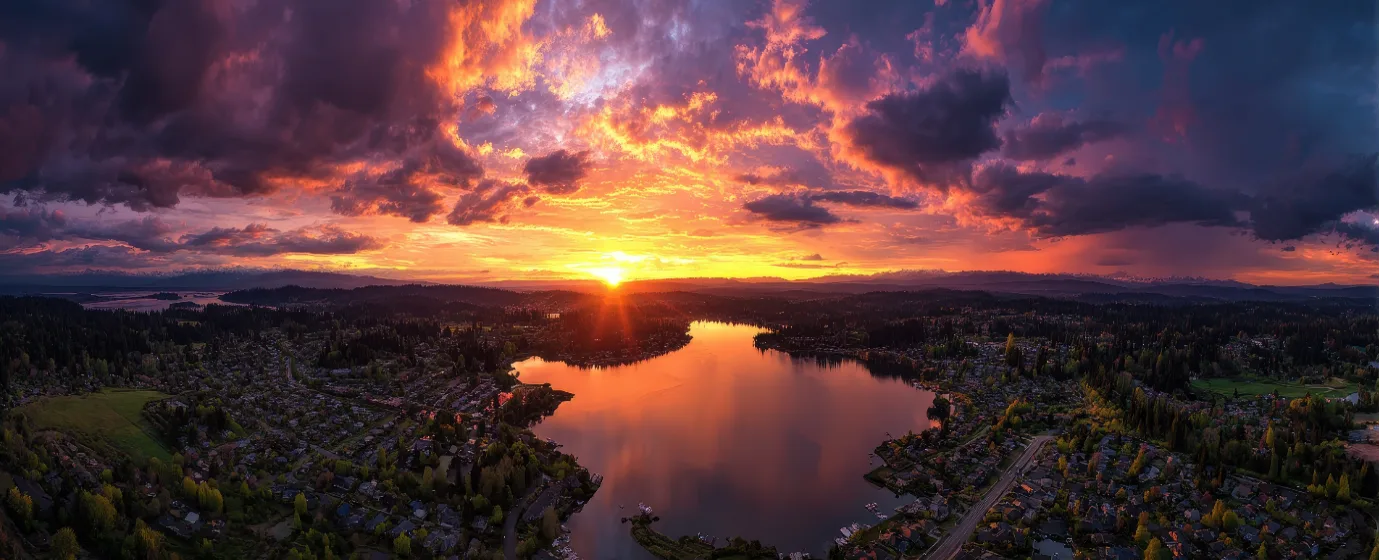
Puget Sound · Washington
The Lake Stevens School District earns an A- from Niche and ranks among the top 20% of Washington's 300+ public school districts — a credential that's driven real estate searches and relocation decisions for families leaving Everett, Marysville, and out-of-state altogether. With over 10,000 students across 16 campuses and a graduation rate that clears the state average, the district delivers measurable results. That said, "top 20%" covers a lot of ground, and families moving from high-performing suburban districts in California or the Eastside should spend some time understanding exactly what they're getting.
Two forces shape school quality in Lake Stevens more than any single test score. First, the district is growing fast — enrollment jumped from roughly 9,800 to over 10,100 in a single year, and the district's own Capital Facilities Plan projects continued growth through 2044. Second, the city's geographic spread means school quality and access vary meaningfully by where you buy. Families in newer developments near the north end of the lake tend to land at different campuses than those in older west-side neighborhoods, and those distinctions matter when you're shopping at $687,000.
This guide is designed for the family that's already found a house they like and now needs to understand what the schools actually look like — not just the letter grade, but which elementaries stand out, what the high school experience feels like, where the district genuinely struggles, and what life looks like for kids outside the classroom.
| Metric | Lake Stevens SD | WA State Average |
|---|---|---|
| Total Enrollment (2024–25) | ~10,117 students | — |
| School Campuses | 16 (7 elementary, 2 middle, 1 high school, 1 mid-high, alternative/specialty programs) | — |
| Student-Teacher Ratio | ~19:1 | ~18:1 |
| Teacher Licensing Rate | ~89% licensed | — |
| Per-Pupil Spending | ~$16,390/yr | ~$19,251/yr |
| Math Proficiency | ~54% | ~41% |
| Reading Proficiency | ~64% | ~53% |
| Graduation Rate (2023–24) | ~88% | ~84% |
| Economically Disadvantaged | ~25.7% of students | — |
| Minority Enrollment | ~40% | ~52% |
| District Ranking (SchoolDigger) | Top 25 of 247 WA districts | — |
What those numbers mean in daily life is this: your child will likely land in a classroom where the odds of grade-level proficiency are better than average, but the school won't feel small. A 19:1 student-teacher ratio is close to the state norm, not a standout, and per-pupil spending that runs roughly $3,000 below the state median means you'll notice the difference in program variety compared to wealthier districts. The district's real strength is in the fundamentals — reading scores that beat the state by double digits, a graduation rate that holds up, and a culture that tends to reward families who engage early and advocate clearly.
The district runs seven elementary schools, and the differences between them are real enough to factor into your neighborhood search. Here are the six most relevant to families relocating.
Stevens Creek Elementary is frequently cited as the district's standout performer, with GreatSchools rating it 10/10 and proficiency rates clearing 60% in both ELA and math — a level only matched by one other campus in the district. It draws families who've done their research and specifically searched for a school by name, which speaks to the reputation it's built in the community.
Skyline Elementary posts the lowest free/reduced lunch rate in the district at roughly 27.5%, reflecting the more established neighborhoods it serves, and its composite school score places it first or second depending on the ranking source. The enrollment of around 552 keeps class sizes manageable, though the smaller campus means fewer specialized electives than larger peers.
Hillcrest Elementary is the district's largest elementary at approximately 778 students, earns an A- on Niche, and ranks in the top 200 public elementaries in Washington. That size means more course variety and a larger community feel — the downside being that kids who need more individualized attention can get lost in a larger building.
Glenwood Elementary serves around 650 students and posts proficiency rates above 60% in both core subjects, making it one of only two elementaries at that performance tier. Families in the south and southeast quadrants of the city will likely feed here; it's a reliable campus without the specific buzz of Stevens Creek.
Highland Elementary sits near the high school corridor at 113th Ave NE, enrolls around 564 students, and draws from west-side and north-end neighborhoods. Its performance tracks close to district averages, making it a solid but not exceptional option — the main draw is often proximity rather than a standout academic reputation.
Mt. Pilchuck Elementary rounds out the six and serves families in outlying areas of the district. Published performance data is thinner than for other campuses, which isn't necessarily a red flag but does make it harder to compare directly.
The district runs two traditional middle schools and one mid-high configuration, which is worth understanding before you buy.
Lake Stevens Middle School serves grades 6–8 and feeds directly into the high school. Reading proficiency at the middle level district-wide runs around 60%, with math closer to 44% — a drop from elementary-level performance that's consistent with state patterns but worth watching if your child is approaching middle school.
North Lake Middle School is the district's second 6–8 campus and serves families in the northern sections of the city. Performance data mirrors district middle-level averages broadly; families in the north end will typically feed here rather than to LSMS.
Cavelero Mid-High School at 8220 24th St SE is a 7–12 campus that serves families in the mid-south corridor and functions more like a smaller community school within the district. For students who do better in a tighter-knit, less anonymous environment than a 1,800-student high school, Cavelero is worth understanding — but it doesn't carry the same breadth of AP offerings or athletics as the main campus.
Lake Stevens High School at 2908 113th Ave NE is a 4A WIAA school competing in the Wesco League, with a graduation rate typically reported around 88% — four points above the state average. Students who thrive here tend to be self-directed; the school is large enough that students who don't seek out teachers, counselors, and AP courses can float through without much friction. High school reading proficiency runs around 73%, which is genuinely strong, while math at the high school level sits closer to 39–42% — the district's most honest weak spot.
Looking to buy in Estimate your payment.
Enter your numbers to see an estimated monthly mortgage payment.
Estimate only. Excludes HOA fees and mortgage insurance.
The letter grade and the top-quartile ranking are real, but they come with context that matters. Parents who've moved here from more affluent suburban districts — places like Issaquah, Northshore, or affluent California districts — often report that the schools feel solid but not exceptional in the first year. Test scores beat the state average, but program depth in arts, world languages, and gifted education is noticeably thinner than what families expect when they see an A- rating.
What surprises people positively is the community feel. Lake Stevens is still a tight-knit enough city that teachers tend to stay, parent involvement in school events runs high, and sports programs carry genuine pride across the district. The high school's football program draws the whole city on Friday nights in a way that families from bigger metro areas often find unexpectedly refreshing.
The geographic reality is that not every neighborhood has equally easy access to the highest-performing campuses. Stevens Creek Elementary, for instance, has a specific attendance boundary — buying a house because you love the school and discovering at enrollment that you're actually zoned for a different campus is a real and avoidable mistake. The district website maintains current boundary maps, and a five-minute check before making an offer is worth doing.
Be honest with yourself here. If your family is specifically coming from a district with an International Baccalaureate program, a dedicated gifted and talented pathway, or a specialized arts or STEM magnet school, Lake Stevens doesn't currently offer those. The district has no IB program and no publicly documented dedicated gifted track — advanced learners are generally served through differentiated instruction within the regular classroom, which works for some kids and frustrates others.
Families with children who require robust special education services or highly specialized support should contact the district directly before buying — not because services are absent, but because availability and staffing vary and the commute to specialized programs outside the district from Lake Stevens can be meaningful.
For competitive club-level athletics, the closest alternatives with more established year-round club infrastructure are in the Everett-to-Bothell corridor. The nearest district with a well-documented gifted education program is Northshore School District, which is roughly 25 minutes south — a move that also adds $100,000 to $200,000 to your home purchase.
Private school families looking for K–12 options within a short drive will find limited supply directly in Lake Stevens, which is the other honest gap.
| School / Program | Type | Grades | Notes |
|---|---|---|---|
| Everett Christian School | Private, Christian | K–12 | ~15 min west; established K–12 option |
| Valley Christian School | Private, Christian | K–12 | Snohomish-area; serves east Snohomish County families |
| Lighthouse Christian Academy | Private, Christian | K–12 | Marysville; ~15 min north |
| Montessori Children's House of Marysville | Private, Montessori | PK–6 | Closest Montessori option; Marysville |
For preschool and childcare, Lake Stevens has a growing supply of licensed providers but limited center-based options relative to its size. The Lake Stevens School District operates its own Early Learning Center at 9215 29th St NE, which serves the district's youngest learners including early childhood special education. KinderCare and Learning Tree franchises operate in the broader Everett-Marysville corridor and draw from Lake Stevens families. Home-based licensed daycare is common and often the practical solution for families in the outer neighborhoods — the city's Facebook community groups are frequently the most current source for opening slots.
The city's strongest community anchor outside school is Lake Stevens Community Park, which sits at the water's edge and hosts a consistent rotation of family events through the Lake Stevens City Parks department. The Lake Stevens Family Fest in summer draws families from across the area and has become one of the community's defining annual traditions. The lake itself is the organizing feature of family life here — summer evenings at Davies Beach Park and North Cove Park are where families from different school zones actually mix, and the lake culture softens some of the geographic fragmentation that comes with a spread-out city.
The Sno-Isle Libraries system serves Lake Stevens through the Lake Stevens Branch, which runs regular story times, summer reading programs, and family programming year-round. For families accustomed to large urban library systems, the branch is smaller, but the programming quality is consistent and the system's interlibrary loan reach covers a broad catalog.
Youth programs through Lake Stevens Parks & Recreation run seasonally and include swimming lessons at the lake, youth sports leagues, and camp programs that keep the summers structured without requiring a long drive. The Lake Stevens Soccer Club and local Little League chapters fill a significant chunk of the after-school and weekend calendar for families with school-age children, and both have strong community reputations.
Local Expert Takeaway: If you're buying in Lake Stevens specifically for the schools, do two things before you finalize any offer: confirm your specific address is within the Stevens Creek or Skyline attendance zones if those campuses are driving your decision, and ask your agent about new development timelines in the north end — several neighborhoods feeding the highest-rated elementaries have active construction nearby that will reshape school boundaries within a few years. Families who buy in the established west-side corridors near Highland tend to find a more settled school community with less boundary uncertainty.
Are Lake Stevens schools good enough to justify moving here from out of state?
For families prioritizing a strong public school district without paying Eastside prices, yes — the district's A- rating, top-quartile state ranking, and 88% graduation rate represent genuine academic value. Families coming from high-powered suburban districts should calibrate expectations around program depth rather than test scores.
What elementary school is best in Lake Stevens?
Stevens Creek Elementary consistently earns the highest ratings in the district, with a 10/10 on GreatSchools and proficiency rates above 60% in both core subjects. Skyline Elementary is a close second, particularly for families in the more established north-end neighborhoods. Both have specific attendance boundaries — verify your address before assuming enrollment.
How does Lake Stevens School District compare to Everett and Marysville?
Lake Stevens ranks above both neighboring districts on most composite measures, including overall Niche grade and state proficiency comparisons. Marysville School District has faced well-documented challenges in recent years, and Everett's district is larger with more variable school-to-school quality. For families choosing between these three cities, the school district is one of the clearest differentiators in favor of Lake Stevens.
Explore the full Lake Stevens series: The Ultimate Lake Stevens Relocation Guide · Is Lake Stevens Safe? · Cost of Living in Lake Stevens · Best Neighborhoods in Lake Stevens · Lake Stevens Schools & Family Life · Lake Stevens Youth Sports · Lake Stevens Parks & Recreation · Retiring in Lake Stevens · 1031 Tax-Deferred Exchange in Lake Stevens · Lake Stevens First-Time Homebuyers Guide · Moving to Lake Stevens from California
Tell us what you need help with and we'll connect you with local resources.

About the Author
Todd Davidson is the founder of Living in Oregon and Living in Washington, where he publishes in-depth city guides, neighborhood resources, and local market insights covering more than 180 communities across the Pacific Northwest. While his background is in home financing and real estate, he created these digital platforms to help families research and compare regions before making a move.