
Puget Sound · Washington
Maybe your employer just announced a hybrid schedule and you finally have the flexibility to leave Seattle or Tacoma proper. Maybe you've been scrolling Redfin at midnight, watching Pierce County listings and wondering why Gig Harbor keeps appearing — gorgeous waterfront photos, tree-lined streets, a median price that sits well above the county average and yet still draws buyers from across the Pacific Northwest. Or maybe you drove across the Narrows Bridge on a clear day, caught a glimpse of the harbor at low tide, and started doing math you weren't expecting to do. Whatever brought you here, Gig Harbor has a way of making people take it seriously — and then making them work to understand it.
The central tension in Gig Harbor is this: it is a small waterfront town with big-city price tags, a genuine community identity, and a commute reality that demands honest reckoning. With roughly 12,700 to 12,900 residents depending on the source, the city is genuinely small — the kind of place where you recognize faces at the farmers market and where the same families have been showing up at the same waterfront dock for thirty years. But the median sold price sits in the $790,000 to $830,000 range, the cost of living index runs approximately 54% above the national average, and getting to Seattle on a weekday morning routinely takes 80 minutes or more. Geography shapes everything here: the Tacoma Narrows Bridge is the one way in and the one way out, and how you feel about that bridge on a rainy Tuesday will determine how you feel about life in Gig Harbor.
This guide exists to give you an honest, specific picture of what it actually means to live here — not the postcard version, not the listing description version. You'll find neighborhood-by-neighborhood breakdowns, a real look at who Gig Harbor suits and who it frustrates, and the local quirks that don't show up in any relocation packet. By the end, you should know whether Gig Harbor is the right fit for your household, your budget, and your tolerance for bridge traffic.
Not every buyer who falls in love with the harbor actually belongs here. The city rewards certain lifestyles and quietly punishes others. Before you spend a weekend at open houses, it's worth a clear-eyed look at who tends to thrive.
| Best For | Why |
|---|---|
| Remote workers | No daily bridge commute; strong sense of community; walkable downtown for mid-day breaks |
| Retiring couples | Older median age (46.6), established healthcare at St. Anthony Hospital, peaceful waterfront lifestyle |
| Families with school-age children | Peninsula School District, strong community programming, Sehmel Homestead Park and youth sports infrastructure |
| Commuters to Tacoma | 20–30 minutes south; manageable without bridge dependency |
| Move-up buyers from Pierce County | A significant step up in lifestyle from Lakewood or South Tacoma without leaving the region |
| Buyers seeking Pacific Northwest character | Authentic waterfront downtown, working marina, farmers market, established local food scene |
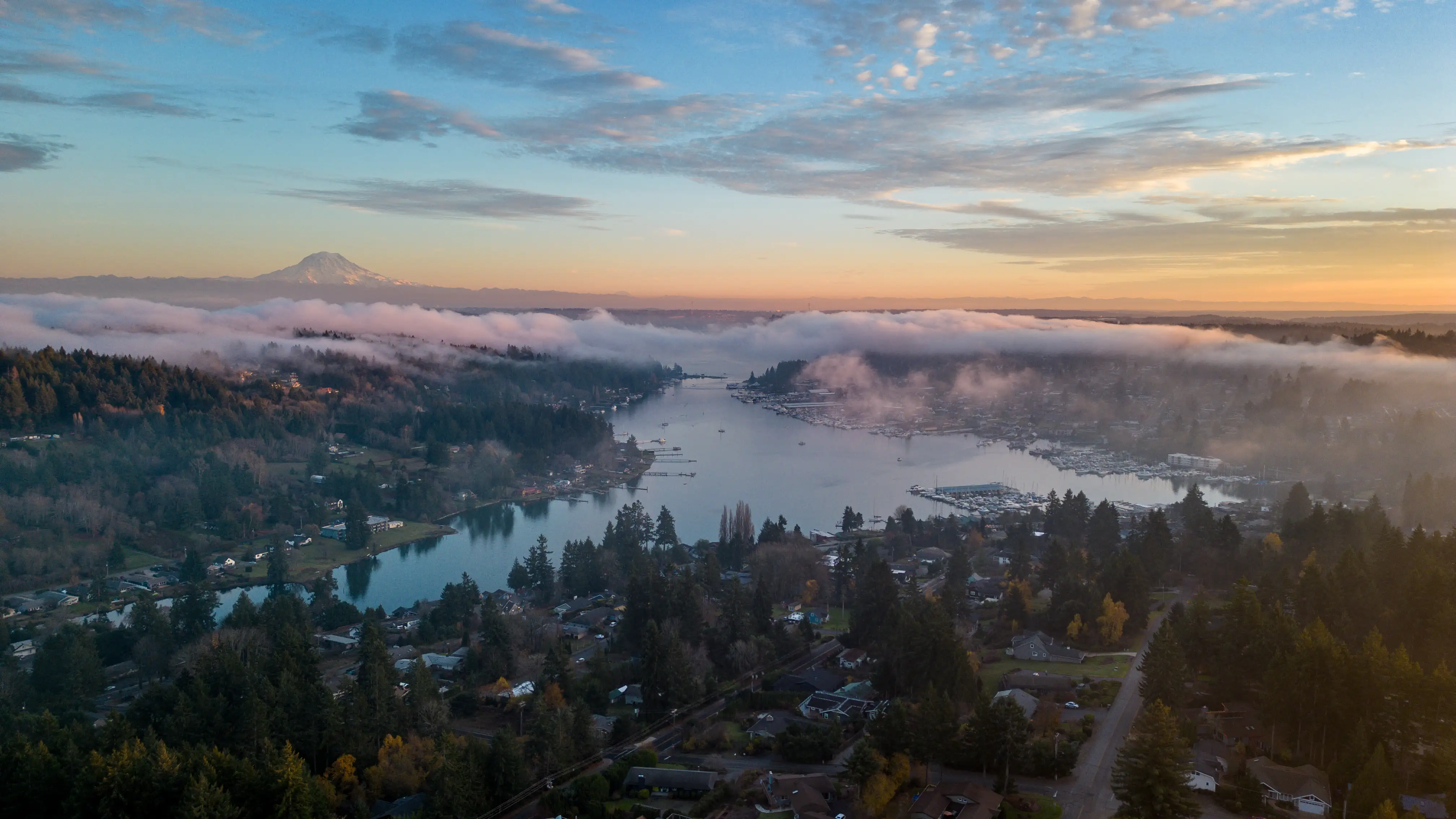
The geographic reality of Gig Harbor is that it is a peninsula within a peninsula. The city sits on the Kitsap-adjacent side of the Tacoma Narrows, connected to the rest of Pierce County by one bridge and to everyday life by Highway 16. This matters because everything about daily logistics flows through that chokepoint. Groceries, school pickups, medical appointments, and commutes all funnel through the same stretch of road. Most residents learn quickly that leaving before 7:15 a.m. heading eastbound and avoiding the 4:30–6:30 p.m. return window is the only reliable way to maintain sanity on the bridge.
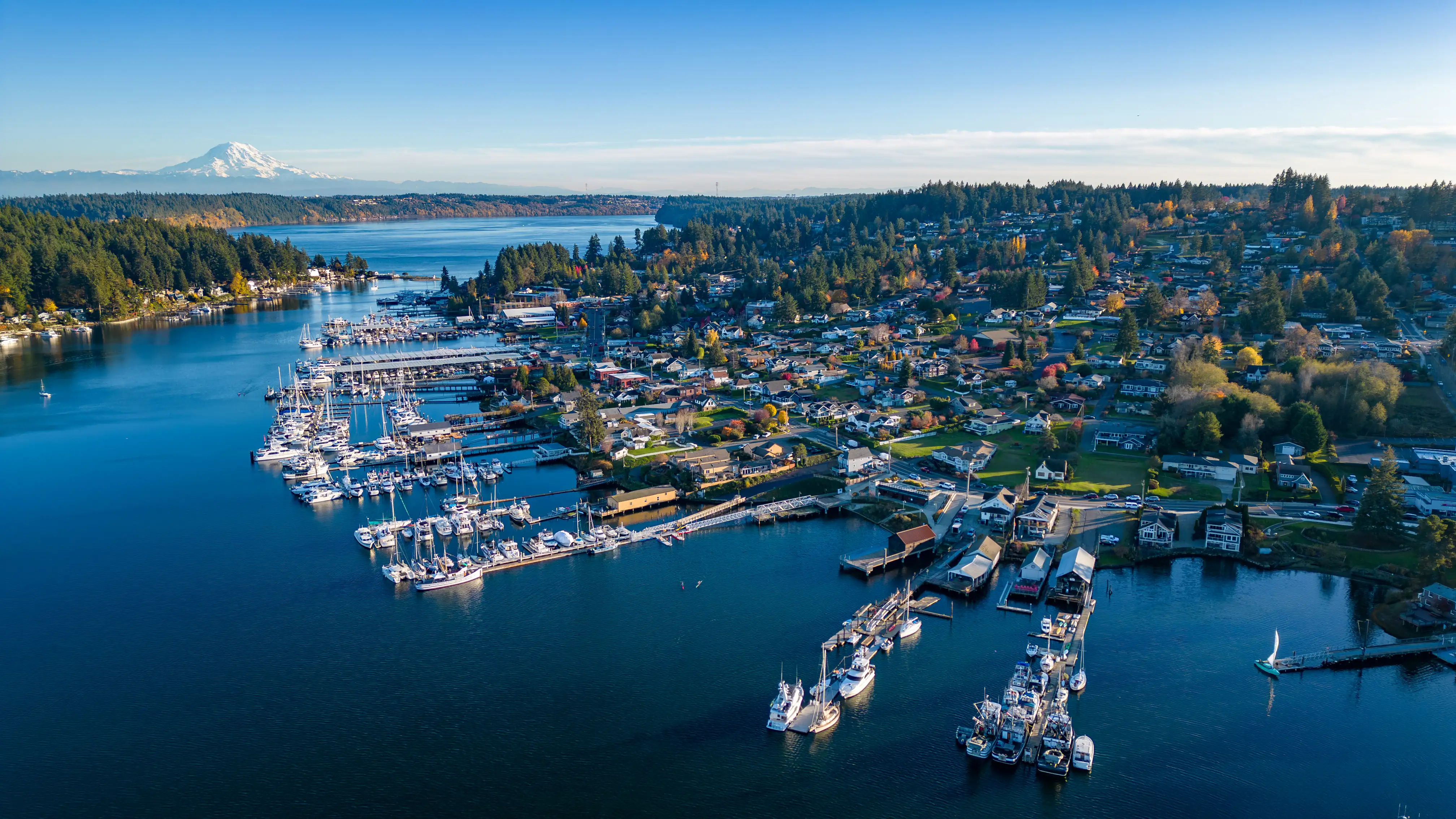
Within the city itself, the experience divides fairly cleanly between the old and the new. The original downtown waterfront — Harborview Drive, the Finholm District, the working marina — is where Gig Harbor's identity lives. Boats tie up alongside restaurants, the Harbor History Museum anchors the north end of the waterfront walk, and the Tides Tavern, now operating under the Anthony's family umbrella after 2026's ownership transition, still draws locals who remember when it opened in 1973. This end of town is walkable, genuinely so, and has the density of a small coastal village. Then there's Gig Harbor North, the commercial spine built around Highway 16, where Costco, Target, and Home Depot cluster around newer subdivisions and where most of the city's day-to-day retail life actually happens. Both feel like Gig Harbor, but they feel like different versions of it.
The community's median age of 46.6 years tells you something important about the social texture. This is not a city with a loud bar scene or a young professional networking circuit. What it has instead is deep civic engagement, well-funded youth sports programs, a thriving waterfront farmers market that runs May through September on Saturdays, and the kind of local knowledge that only accumulates when people stay for decades. New arrivals consistently report that six months in, they're surprised by how quickly they feel rooted — which is not something people say about most suburban communities.
What surprises most people after six months of living here is how rarely they cross the Narrows Bridge. Once you're settled into the rhythms of Gig Harbor — coffee at a waterfront café, weekend hikes at Kopachuck State Park, errands at Gig Harbor North — the instinct to drive to Tacoma or Seattle fades faster than expected. The city is more self-contained than it appears from the outside.
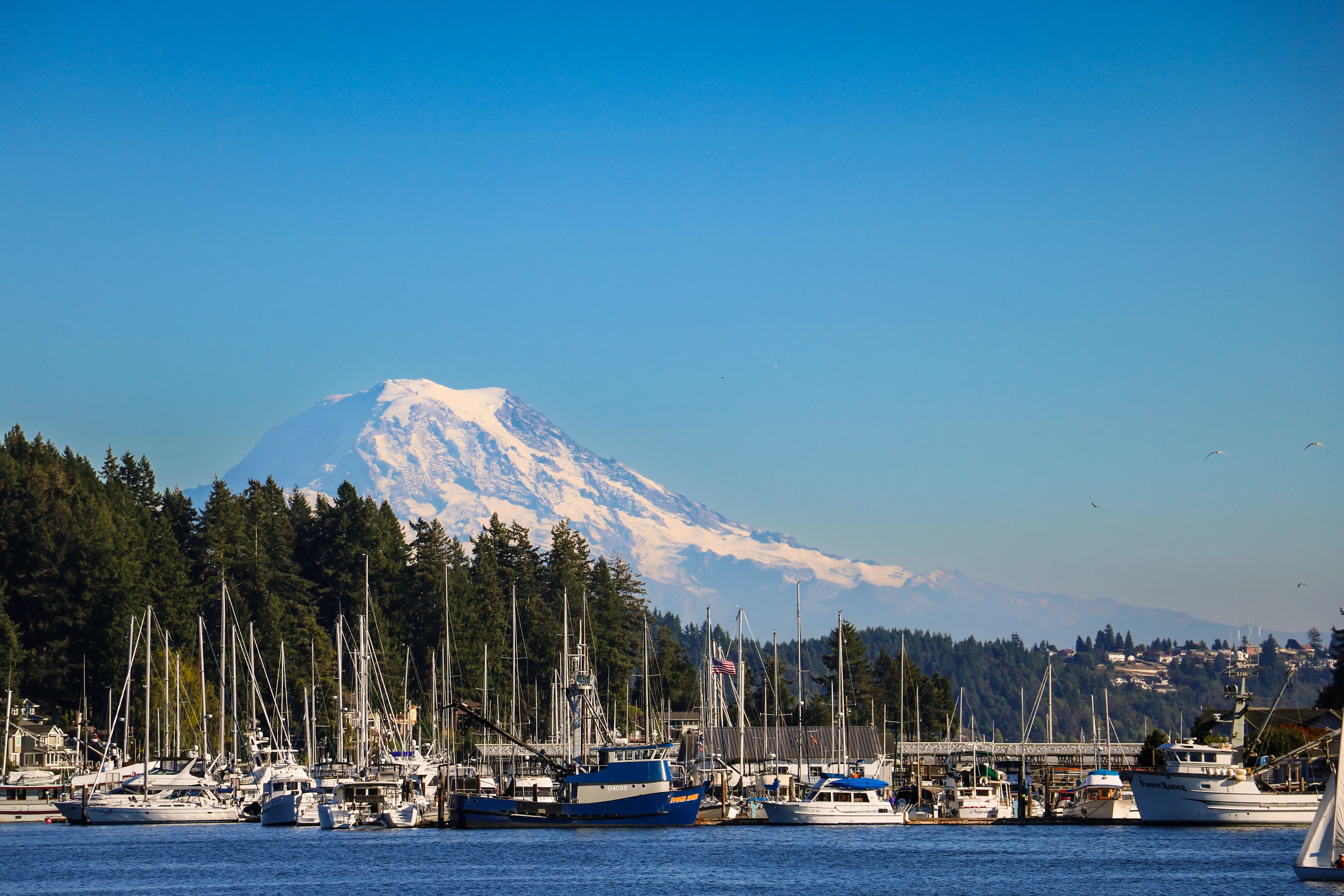
The waterfront is the obvious answer, but it's also the incomplete one. Harborview Drive at 6 p.m. on a summer evening, with Mount Rainier visible over the marina and the fishing boats coming in, is genuinely one of the finer places to be in Washington. That view is available to anyone who parks a car, and it's a short walk from most of the city's best restaurants. The access to natural beauty here is not abstract — it's the Cushman Trail, 9.5 miles of paved multi-use path connecting Gig Harbor to Purdy; it's Kopachuck State Park with its beaches and tide pools; it's Sunrise Beach Park, largely unknown outside the peninsula, where locals picnic without the crowds that show up at more publicized sites.
Healthcare infrastructure earns consistent praise from residents, particularly from families with young children and from those planning to age in place. St. Anthony Hospital operates within city limits, supported by the broader Franciscan Health System network, which means specialist access that most comparably sized cities cannot offer. This is one of the reasons Gig Harbor punches above its population weight in terms of quality of life for older residents — you're not giving up medical access the way you might be in a more remote waterfront community.
The school system adds another layer of stability. The Peninsula School District serves Gig Harbor, and while we'll cover schools more thoroughly in a separate guide, the district has a strong enough reputation that it regularly drives purchase decisions for families with school-age children. Graduation rates are commonly cited in the high 90th percentile range, and the district's B rating reflects a system that outperforms most of Pierce County. The presence of multiple parks — Sehmel Homestead Park's 243 acres in particular — means that the youth sports and outdoor recreation infrastructure that families rely on is genuinely exceptional for a city of this size.
Perhaps the most underrated upside is what Gig Harbor is not. It is not a bedroom suburb that dissolved its own identity into a commuter schedule. The working marina, the boutiques that have survived multiple economic cycles, the farmers market, the annual Maritime Gig festival, and the deeply local food scene all point to a community that resisted the homogenization that swallowed most Pierce County suburbs. That resistance is visible in small ways — the mix of fishing boats and sailboats in the harbor, the fact that the city's most beloved restaurant operated in the same building for over forty years before changing ownership, the way locals talk about the bridge not with frustration but with something closer to pride in their own separateness.
Looking to buy in Estimate your payment.
Enter your numbers to see an estimated monthly mortgage payment.
Estimate only. Excludes HOA fees and mortgage insurance.
The bridge is the starting point for any honest conversation about Gig Harbor's limitations. For anyone commuting to Seattle daily, the 80-minute average is not a worst-case estimate — it's a reasonable baseline on a normal Tuesday. On days when there's an accident or construction on I-5, that figure can climb well past 90 minutes, and the single-bridge dependency means there's no alternate route. Buyers who tell themselves they'll "get used to it" sometimes do; a meaningful number of them sell within three years and move closer to their office. Be honest with yourself about your commute tolerance before you're emotionally committed to a specific house.
The cost of living deserves its own clear-eyed paragraph. With a cost of living index around 154, Gig Harbor is meaningfully more expensive than most of Washington and dramatically more expensive than most of America. The median sold price in the $790,000 to $830,000 range is just the entry point — average sale prices run closer to $942,000, waterfront and water-view properties command substantial premiums on top of that, and even homes needing significant work cost more than comparable properties in neighboring cities. Rents are not a relief valve: the median rent runs approximately $2,097 per month. This is a city that prices out a significant share of the people who want to live here, and that reality affects the social fabric.
The lack of nightlife and young-adult infrastructure is not a problem for everyone, but it is a problem for some. The 25-to-29 age group represents only 3.6% of the population — the smallest cohort in the city. If you're relocating as a young professional hoping for an active social scene, dating life, or the kind of spontaneous energy that comes from a higher density of people your age, Gig Harbor will likely feel too quiet within the first year. The city rewards those who've already built their social infrastructure or who are explicitly seeking the quieter, more established lifestyle it delivers.
Why some people leave: The most common reasons residents eventually move on are the commute (specifically Seattle-bound commuters who underestimated the cumulative toll), the cost of living increasing faster than their household income, and — most honest of all — the realization that the lifestyle Gig Harbor offers is better suited to a different life stage than the one they were in when they moved there. The city is excellent for the life it's designed for; it's simply not the right design for everyone.
The original waterfront neighborhood is the city's most walkable and most identity-rich corner. Harborview Drive anchors the experience — boutiques, galleries, the Harbor History Museum, and water-access dining define the streetscape. The Finholm District offers a slightly more casual, local feel just north of the main strip. Home prices here skew toward custom builds and older waterfront cottages, with a wide range depending on water proximity; expect to pay above the city median for anything with a genuine harbor view. The honest downside is that parking during summer weekends becomes a real frustration, and the limited residential density means you're competing with restaurants and tourism foot traffic for basic infrastructure.
Best for: Buyers who want to walk to dinner and live inside the city's authentic character rather than commute to it.
Artondale covers nearly 14 square miles in central and southern Gig Harbor, and it reads as the quintessential Pacific Northwest residential neighborhood — larger lots, mature trees, established homes, and a quieter pace than anything near the commercial corridor. It sits roughly 10 minutes from both downtown and the Narrows Bridge, which makes it genuinely well-positioned. Prices here tend to track near or slightly below the city-wide median, making it one of the more accessible options for buyers who want privacy and established character without paying the Wollochet or Canterwood premium.
Best for: Families and buyers who want established neighborhood character, space, and easy access to both downtown and the highway without the luxury price tag.
Rosedale is where Gig Harbor's rural edge shows up most clearly — rolling hills, working farms, waterfront views, and a landscape that feels more like rural Kitsap County than a Pierce County suburb. It sits just off Highway 16, so access to groceries, retail, and the Narrows Bridge is practical, but the feel is genuinely pastoral. Buyers who move here tend to be intentional about wanting that trade — they're giving up density and walkability in exchange for land, views, and quiet.
Best for: Buyers seeking rural character and waterfront views who are comfortable with car-dependent living for all errands.
Gig Harbor North is where the city's practical daily life happens for a large share of residents. Costco, Target, Home Depot, and a dense cluster of service retail all sit along the Highway 16 corridor, making this the most convenient neighborhood for households that prioritize logistics over atmosphere. The median sold price has run in the $809,000 to $840,000 range, with newer construction offering updated finishes and HOA-managed communities. What buyers give up is the waterfront identity and the walkability that draws people to Gig Harbor in the first place.
Best for: Households who value new construction, retail convenience, and shorter school run logistics over the waterfront lifestyle.
Wollochet commands some of the highest prices in the Gig Harbor area — the neighborhood median sits around $960,000, making it more expensive than roughly 89% of U.S. neighborhoods. The draw is Wollochet Bay itself, established mature landscaping, and a combination of privacy and community that's difficult to replicate in newer developments. The neighborhood occupies the west side of Gig Harbor, sharing the established Pacific Northwest feel of Artondale but with significantly more waterfront influence and higher price points. Rental prices in Wollochet have been tracked near $3,260 per month, which signals the premium attached to the address.
Best for: Established buyers prioritizing waterfront proximity, mature landscaping, and a luxury residential setting.
Canterwood is Gig Harbor's premier gated community — a golf course development where median prices land above $1 million and where the neighborhood effectively functions as its own ecosystem of custom homes, manicured grounds, and a controlled-access lifestyle. It draws executives, retirees with significant assets, and buyers who want the security and homogeneity of a gated address. The Canterwood Golf and Country Club anchors the social infrastructure. The compromise, as with any gated community, is that the insularity that attracts some buyers can feel limiting to others.
Best for: High-net-worth buyers and retirees seeking a premium gated lifestyle with golf community amenities.
Harbor Hill represents the newer-construction end of Gig Harbor's residential market, with median sold prices that tracked around $840,000 through late 2025. It sits in a well-connected position relative to both Gig Harbor North retail and Highway 16, making it practical for commuters heading toward Tacoma. The neighborhood has a more suburban feel than the established older areas, with newer builds, more homogeneous architecture, and HOA structures. Days on market here have run on the longer side — closer to 73 days by some measures — which gives buyers more negotiating room than in the city's tighter sub-markets.
Best for: Buyers who want newer construction with predictable costs and strong highway access without paying Canterwood or Wollochet prices.
North Creek occupies a quieter residential position in the broader Gig Harbor area, offering single-family homes with a suburban character that tends to attract families and buyers who want livable square footage at prices that track closer to — or slightly below — the city-wide median. It's less prominently featured in real estate marketing than Wollochet or Canterwood, which in practice means less competition and more opportunity for buyers willing to look past the marquee addresses. Access to Gig Harbor North retail and Highway 16 makes logistics straightforward.
Best for: Families and practical buyers seeking value within Gig Harbor's market without requiring a waterfront or gated-community address.
| City | Best For | Median Home Price | Commute to Seattle | Vibe |
|---|---|---|---|---|
| Gig Harbor | Waterfront lifestyle, families, retirees | ~$790K–$830K | ~80 min | Maritime small-town, affluent |
| Tacoma | Urban amenities, affordability, culture | ~$420K–$460K | ~45 min | Mid-size city energy, up-and-coming |
| Port Orchard | Lower cost of entry, Kitsap access | ~$430K–$470K | ~90 min (ferry) | Small city, working-class roots |
| Bremerton | Ferry commuters to Seattle, affordability | ~$380K–$420K | ~60 min (ferry) | Industrial base, revitalizing downtown |
| University Place | Suburban Tacoma adjacency, families | ~$500K–$560K | ~50 min | Quiet suburban, school-focused |
| Fox Island | Maximum seclusion, rural lifestyle | ~$750K–$850K | ~90+ min | Remote, land-focused, no services |
The honest comparison most buyers face is Gig Harbor versus Tacoma. Tacoma offers 40% lower home prices, genuine urban energy, a growing arts and restaurant scene, and a materially shorter Seattle commute. What it doesn't offer is Gig Harbor's waterfront character, the school district's track record, or the kind of community cohesion that comes from a smaller, more intentional residential city. The decision usually comes down to whether you're buying the lifestyle or the logistics — in Gig Harbor, those two things cost the same.
| Metric | Detail |
|---|---|
| Population | Approximately 12,700–12,900 (2026 estimates) |
| Median Sold Home Price | $790,000–$830,000 (mid-2025 to early 2026) |
| Average Sale Price | ~$942,000 |
| Median Household Income | $118,395 |
| Property Tax Rate | Approximately 0.98% |
| Commute to Seattle | ~80 minutes (weekday average) |
| Violent Crime Rate | 2.8 per 1,000 residents |
| Property Crime Rate | 18.8 per 1,000 residents |
| School District | Peninsula School District (B rating) |
| Median Age | 46.6 years |
| Cost of Living Index | ~154 (national average = 100) |
| Unemployment Rate | ~2.6% |
The Maritime Gig Festival is Gig Harbor's longest-running community tradition, typically held in mid-June along the waterfront. It's been running for decades and draws the kind of crowd that reveals exactly what kind of city Gig Harbor is: boats, local vendors, people who've lived here for thirty years standing next to people who moved here six months ago and already feel like regulars. If you visit Gig Harbor in June for any reason, plant this weekend in your calendar.
The Saturday Farmers Market at Skansie Brothers Park runs May through September and functions as much as a community gathering point as a produce market. Regulars bring dogs, run into neighbors, and linger in a way that has nothing to do with buying vegetables. For new residents trying to understand the social fabric of Gig Harbor, this is the fastest on-ramp to the community.
The Finholm View Climb is one of those local details that only regulars know about — a set of stairs connecting the waterfront level to the Finholm District above, offering one of the better views of the harbor and the Narrows in the entire city. It's not marked on most tourist maps, and most residents treat it as a daily ritual rather than an attraction.
What I would not do if moving to Gig Harbor: I would not buy in Gig Harbor North assuming you'll feel connected to what makes the city worth the premium. The retail corridor at Highway 16 and Olympic Drive is convenient, but it's indistinguishable from any other suburban commercial strip in Pierce County. If the waterfront, the community identity, and the small-town character are part of what's driving your interest in Gig Harbor, buying at the far north end and commuting down to the harbor for "the experience" is a compromise that many buyers come to regret. Spend the extra time to find a property in Artondale, Rosedale, or closer to downtown proper — the price difference is not always as large as the lifestyle difference.
Local Expert Takeaway: If you're serious about Gig Harbor, start your search within 10 minutes of Harborview Drive — Artondale, Rosedale, and properties between the marina and the Narrows Bridge corridor. The city's identity lives in that geography, and buyers who anchor too far north in the Highway 16 retail zone often find themselves paying Gig Harbor prices for a suburban-strip experience. With inventory up more than 50% year-over-year and roughly a third of listings taking price reductions, mid-2026 is one of the more favorable entry points this market has offered in years — go in prepared to negotiate, and don't mistake extended days-on-market for a problem with the property.
✅ Gig Harbor offers a rare combination of genuine waterfront character, strong schools, and excellent healthcare infrastructure in a small-city package — buyers willing to pay the premium tend to stay for decades.
⚠️ The Narrows Bridge commute is the single biggest lifestyle risk factor for buyers here. Seattle-bound commuters at 80 minutes each way on a good day should model their actual schedule honestly before committing.
📍 With inventory up significantly and a meaningful share of listings taking price reductions, mid-2026 represents one of the better buyer opportunities Gig Harbor has seen in several years — patience and preparation matter more than urgency right now.
Is Gig Harbor a good place for families?
Yes, with significant caveats worth understanding. The Peninsula School District has a strong reputation and graduation rates commonly cited in the high 90th percentile, youth sports infrastructure is substantial, and the community's civic engagement creates a genuinely supportive environment for families with school-age children. The tradeoff is that the median sold price in the $790,000 to $830,000 range puts homeownership out of reach for many households, and families commuting to Seattle daily face a legitimate quality-of-life challenge that no school rating can fully offset.
What is the crime rate in Gig Harbor?
Gig Harbor's violent crime rate is approximately 2.8 per 1,000 residents, which sits below the Washington state average and well below the national average for cities of comparable size. Property crime runs around 18.8 per 1,000 residents — higher than the violent crime figure, as is typical in affluent communities with significant retail activity, but not alarming by regional standards. The city is broadly considered safe, and most residents cite safety as one of the reasons they chose Gig Harbor over Tacoma or other nearby cities.
How does Gig Harbor compare to Tacoma for relocating buyers?
The core difference is lifestyle versus affordability. Tacoma's median home prices run roughly 45% to 50% lower than Gig Harbor's, the commute to Seattle is shorter by 30 or more minutes, and the city offers genuine urban energy, a growing cultural scene, and neighborhood diversity that Gig Harbor doesn't replicate. What Tacoma doesn't offer is the waterfront village character, the cohesive small-city identity, or the school district track record that makes Gig Harbor compelling for a specific kind of buyer. Most people who choose Gig Harbor over Tacoma are making a deliberate lifestyle purchase — and most of them, six years in, will tell you it was the right call for the life they were building.
Explore the full Gig Harbor series: The Ultimate Gig Harbor Relocation Guide · Is Gig Harbor Safe? · Cost of Living in Gig Harbor · Best Neighborhoods in Gig Harbor · Gig Harbor Schools & Family Life · Gig Harbor Youth Sports · Gig Harbor Parks & Recreation · Retiring in Gig Harbor · 1031 Tax-Deferred Exchange in Gig Harbor · Gig Harbor First-Time Homebuyers Guide · Moving to Gig Harbor from California
Tell us what you need help with and we'll connect you with local resources.

About the Author
Todd Davidson is the founder of Living in Oregon and Living in Washington, where he publishes in-depth city guides, neighborhood resources, and local market insights covering more than 180 communities across the Pacific Northwest. While his background is in home financing and real estate, he created these digital platforms to help families research and compare regions before making a move.